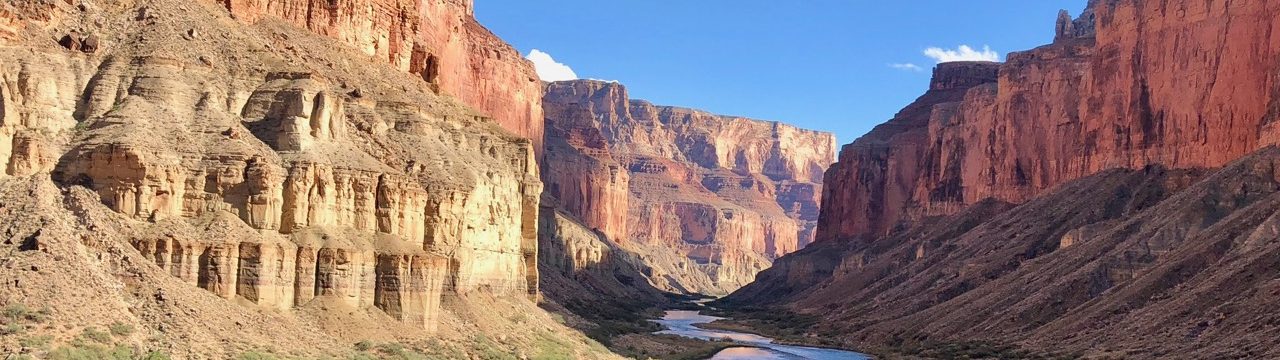
Trip Background: After getting a chance to ride in a dory on our Main Salmon and Stillwater/Cataract river trips, I knew that I wanted to do a dory trip down the Grand Canyon. So in the fall of 2024, after we had decided we would be moving to Flagstaff in 2025, I put in a trip request with OARS to get on a dory trip in the spring of 2026. I was hoping for an April trip, as our raft trip in 2018 was in the fall and I thought it would be fun to see the canyon in the spring. Happily, I got my top choice, a 17 day/16 night trip from Lee’s Ferry to Pearce Ferry, launching on April 14, 2026. And I would be doing this trip solo, as Sue decided that 17 days in a dory would be too much for her.
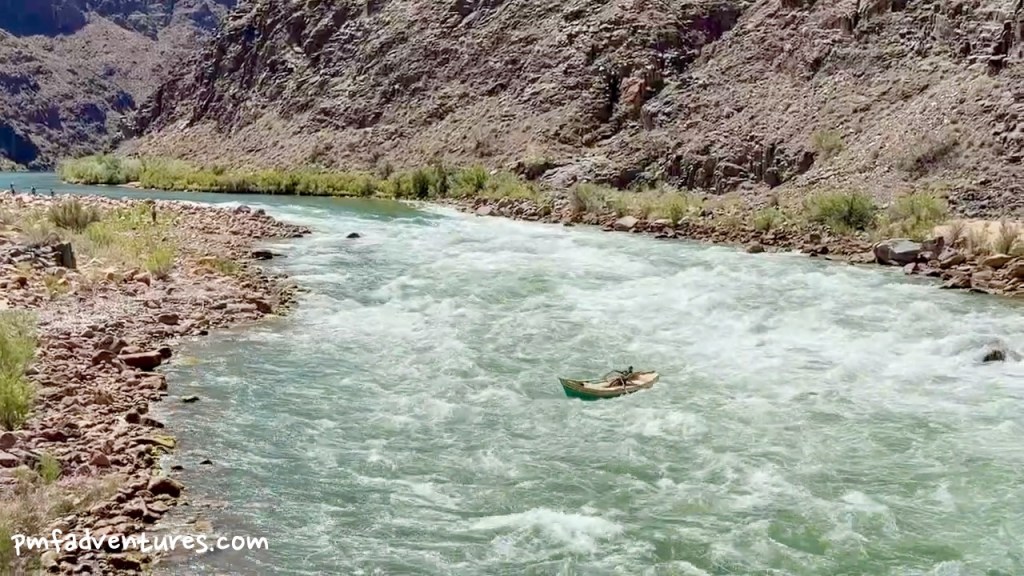
I’m very thankful that I decided to do this trip in 2026, as the dire water situation in the Colorado River Basin is going to make it increasingly challenging to run dory trips down the Grand Canyon. With Lake Powell at 25% of capacity and record low snowpack across the west, there just isn’t very much water available to be released from Glen Canyon Dam. And unlike rafts, which can usually bounce off the rocks that are exposed at low water, dories don’t do very well when they hit rocks. In anticipation of my trip, I started paying attention to the planned releases from the dam this spring. For April, the Bureau of Reclamation indicated the releases would fluctuate between 8,000 and 8,400 cfs. This seemed like an improvement over the 6,000 to 9,000 cfs fluctuation that occurred in March, especially since it meant that our guides wouldn’t have to worry about timing our runs through specific rapids based on the highs and lows. But 8,000 cfs isn’t a lot of water, so I was curious to see how that might impact the trip.
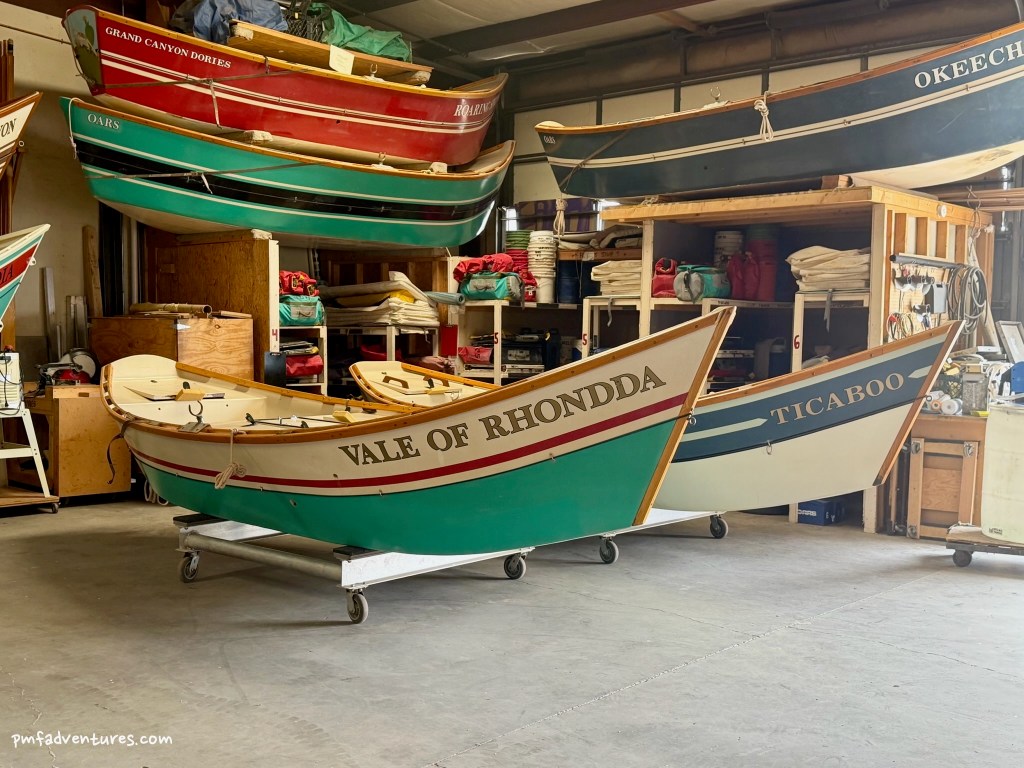
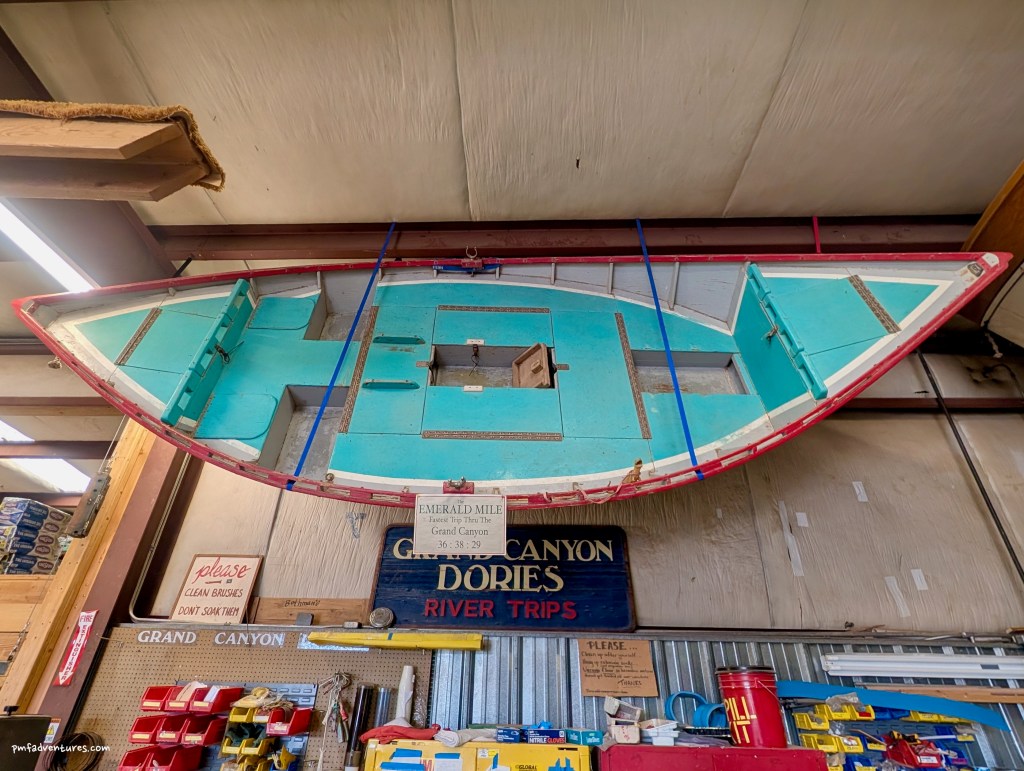
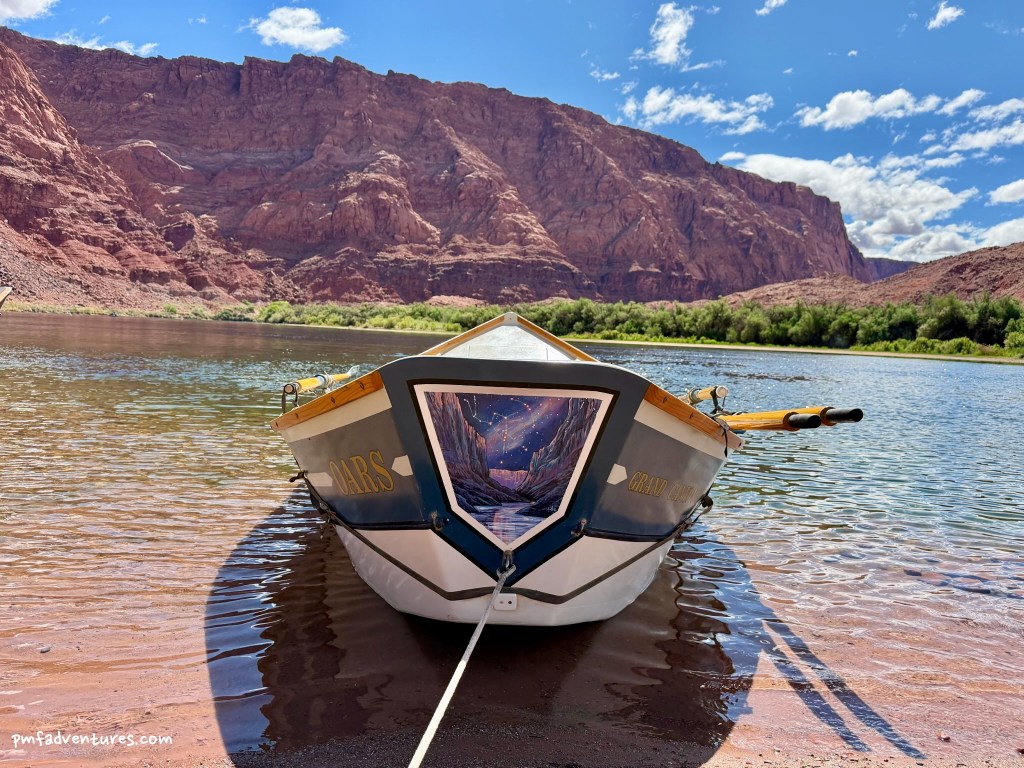
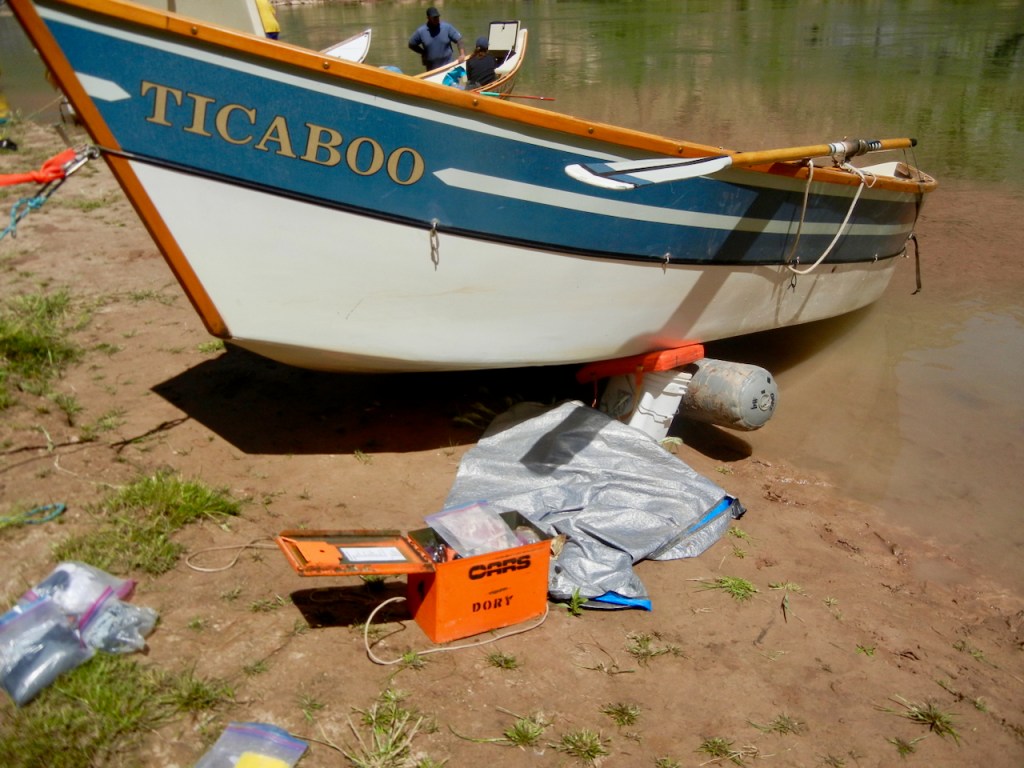
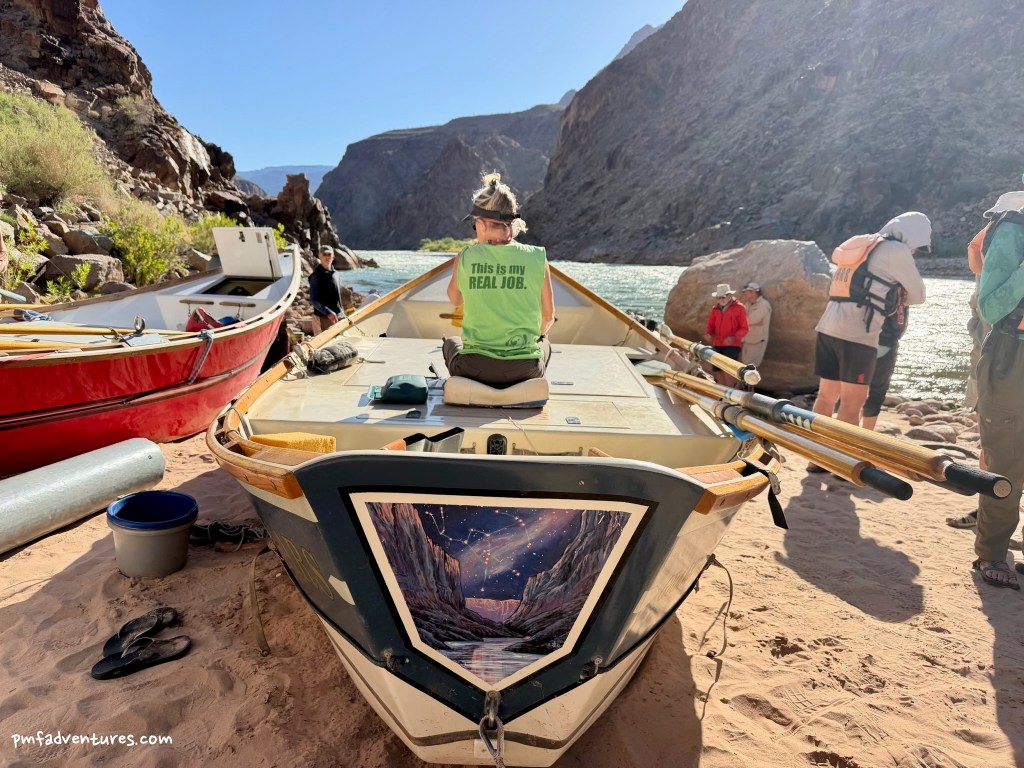
One perk of being in Flagstaff is that I was able to stop by the OARS warehouse a few days before the launch to drop off my beverages for the trip. An added benefit is that I got to see all the cool dories, including the Ticaboo and Vale of Rhondda for our trip, and the famous Emerald Mile hanging on the wall. At our pre-trip meeting on the evening of 4/13, I met our trip leader, Roger Dale, and the other guests with whom I would be floating down the river — six others who would be doing the full trip like me and nine who would only be doing the first seven days and then hiking out the Bright Angel Trail. As I expected, Roger indicated that the low water levels would make for some exciting rapids in the dories, and there were probably three rapids that the guests would have to walk around so that the guides could run the dories empty.
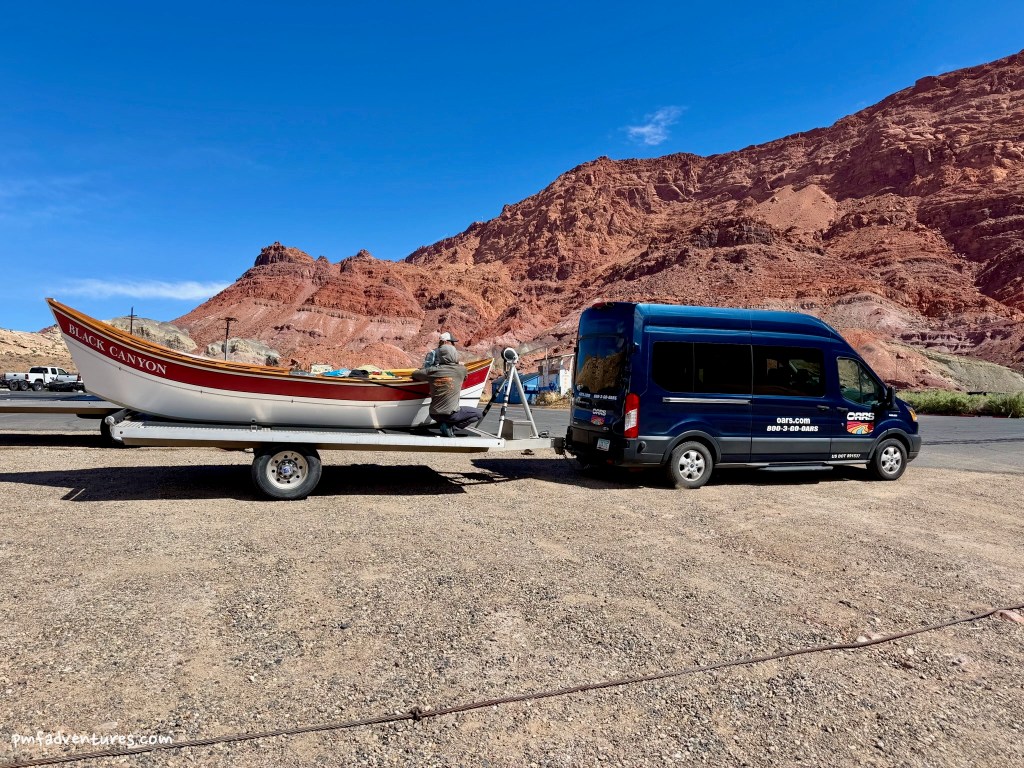
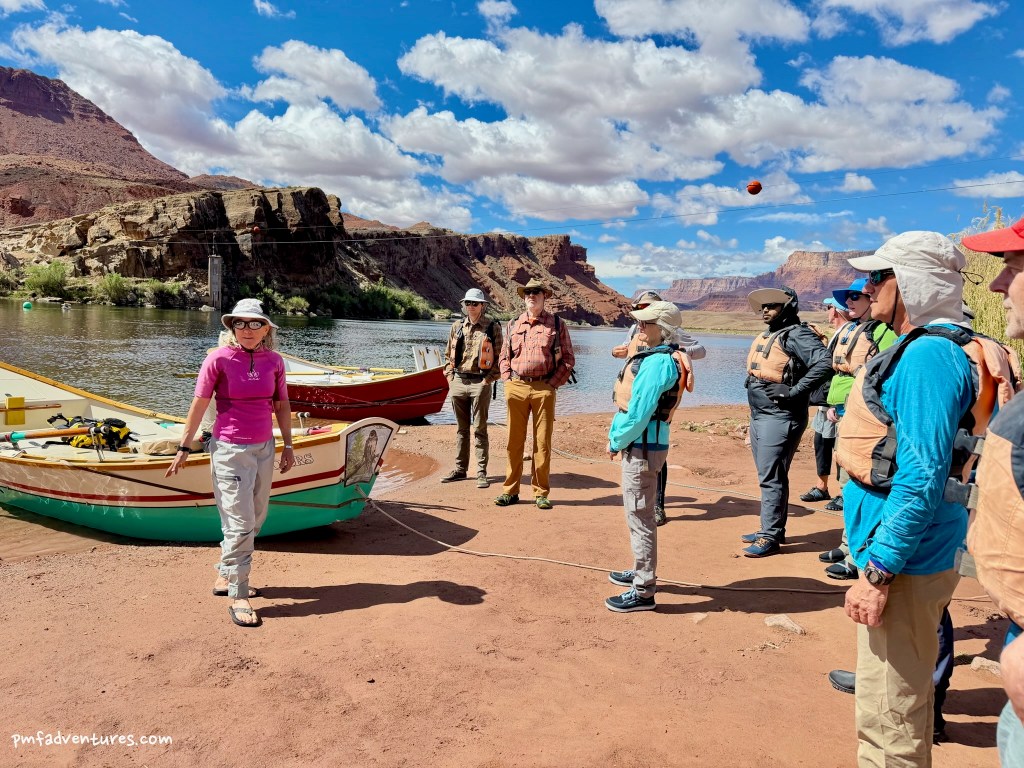
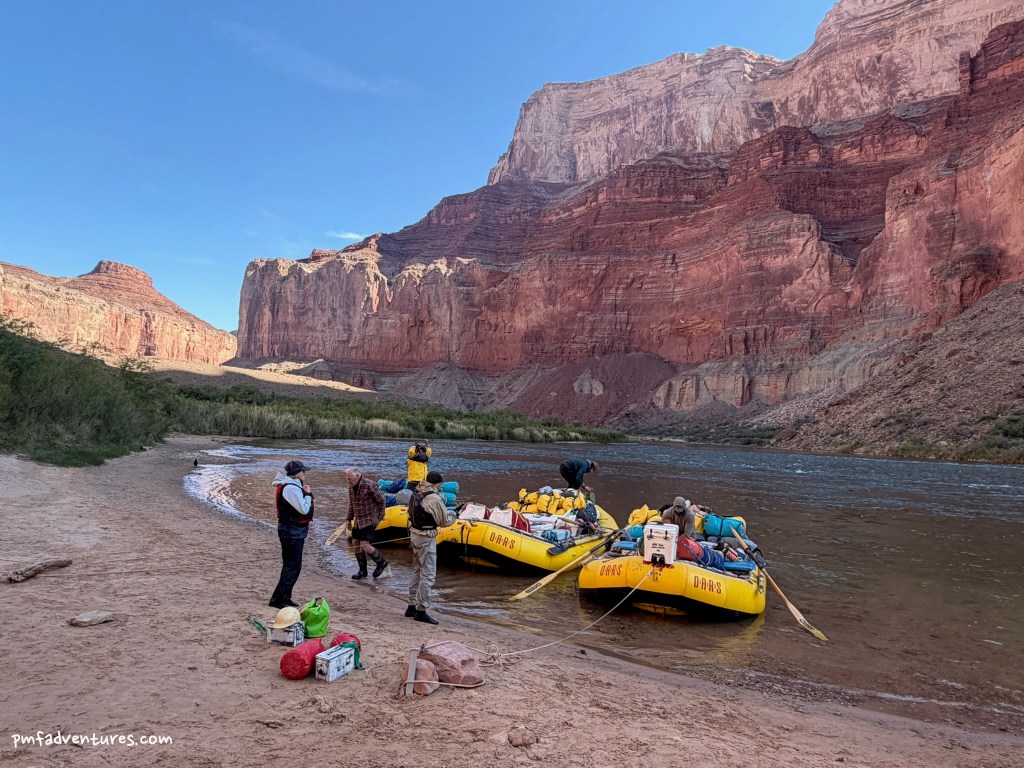
Day 1 (4/14/2026) – Lee’s Ferry to Soap Creek: Sue dropped me off at the Doubletree at 6:30 AM, and the two OARS vans were on the road to Lee’s Ferry by 7. We got to Lee’s Ferry around 10 and met the rest of the crew — dory guides Cindell “Dellie” Dale, Monte Tillinghast, and Andre Potochnik, baggage raft rowers Cam Yates, Dan Biegert, and Ren Shields, and assistants Mary Mullaney and Ralph Mossman. I was thrilled to be on a trip with Dellie, a inspirational dory guide who was featured in the documentary “About Damn Time: The Dory Women of Grand Canyon.” And there were two familiar faces on the crew — Cam from our Stillwater/Cataract trip and Ren from our Main Salmon trip.
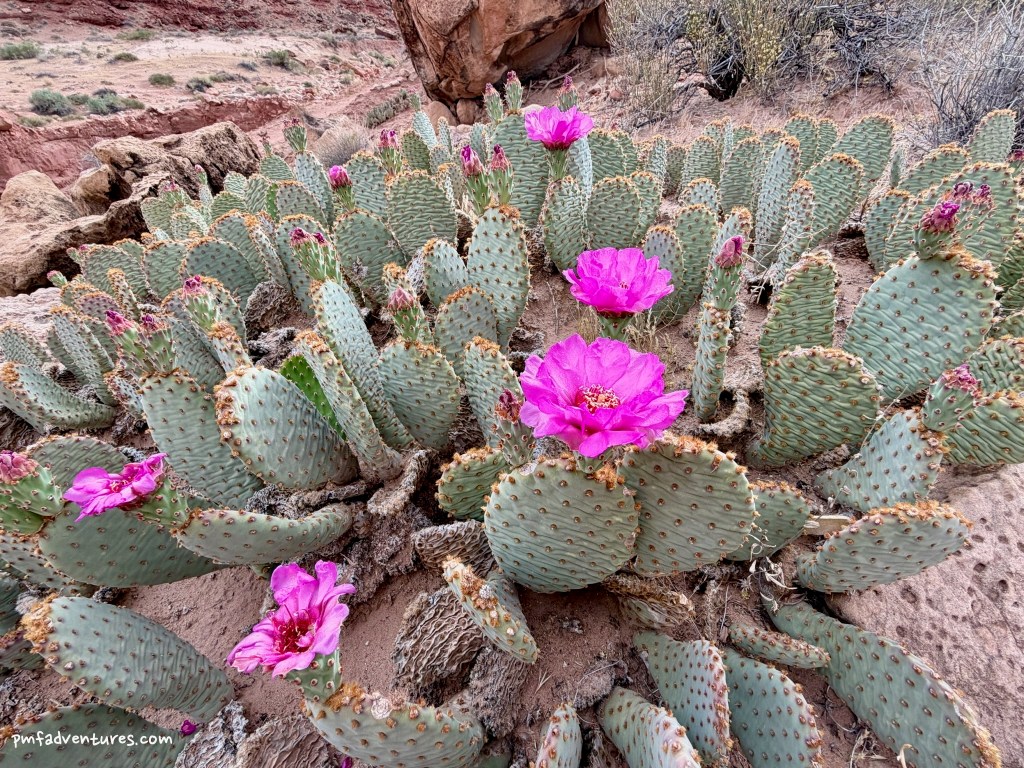
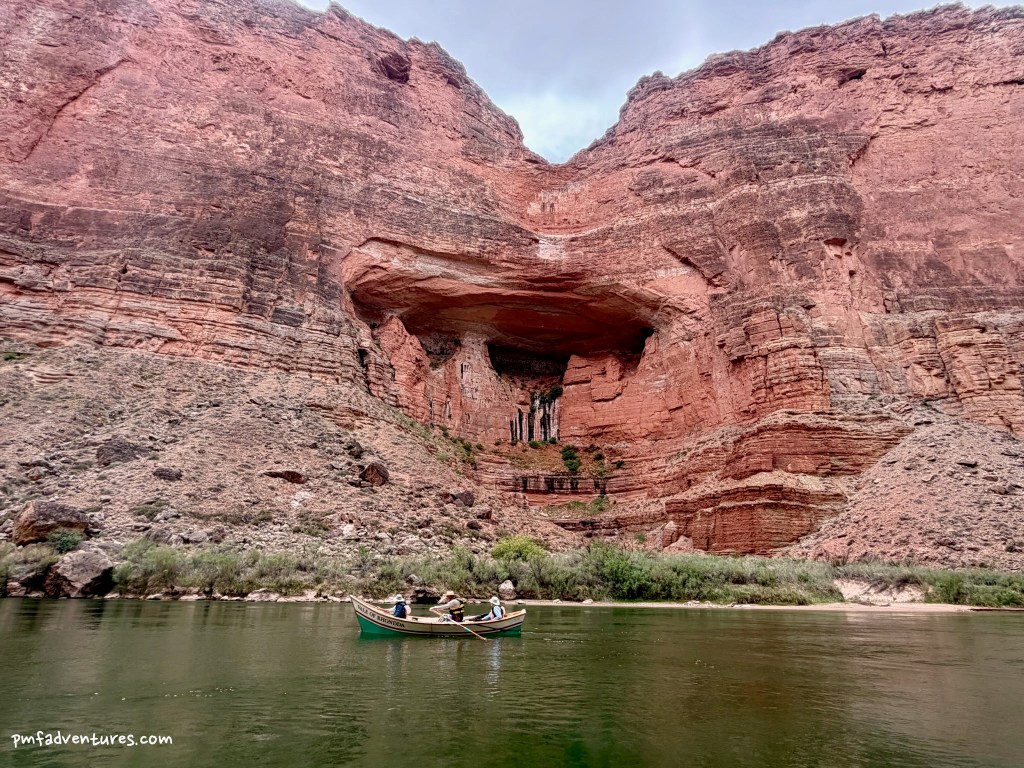
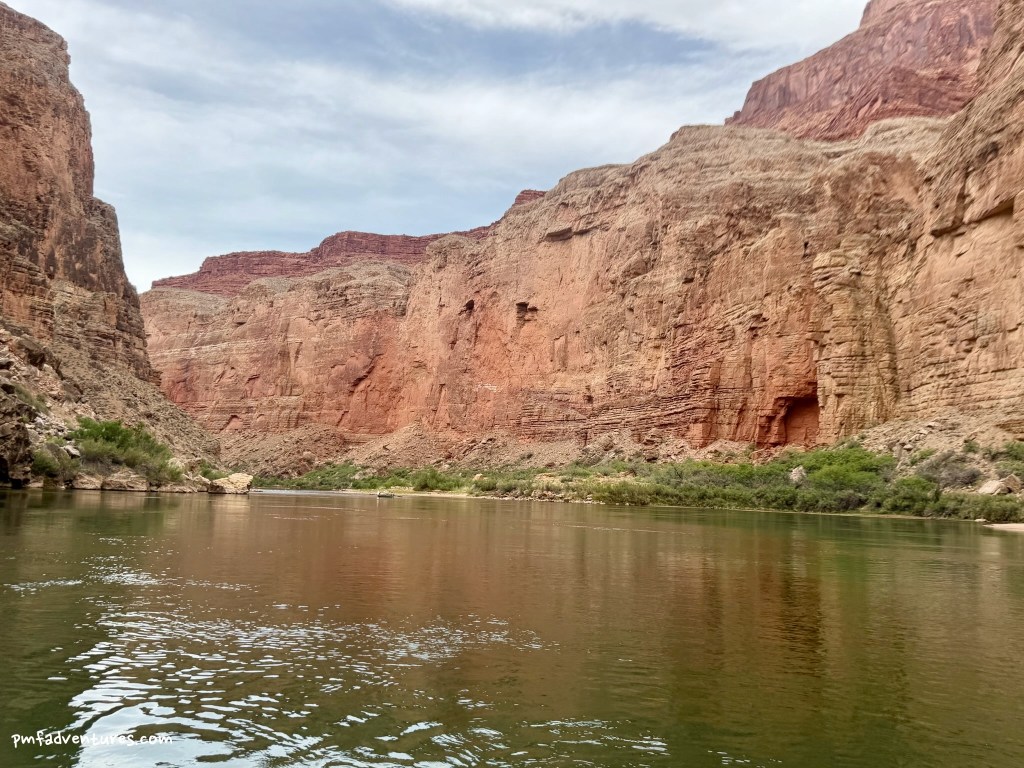
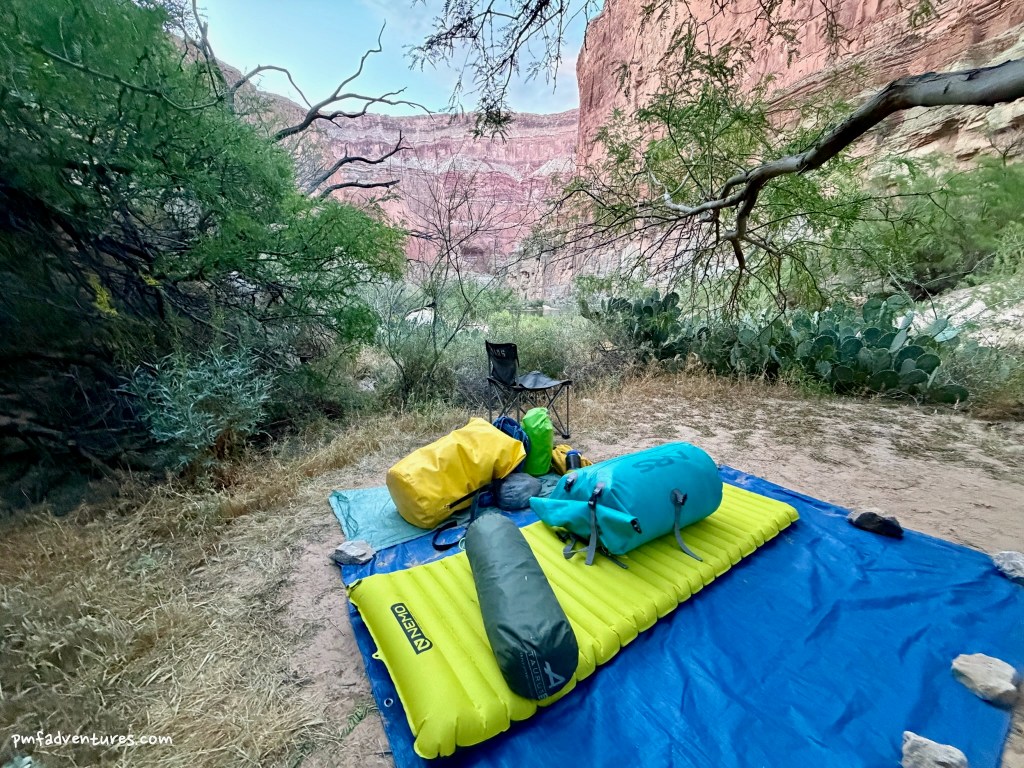
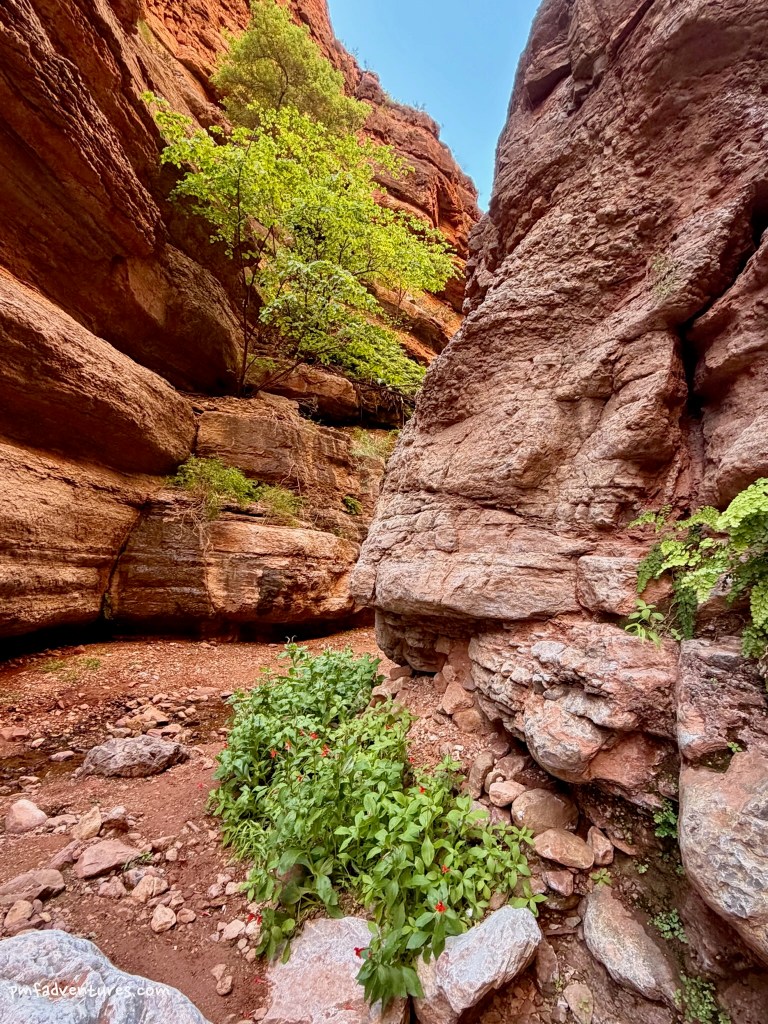
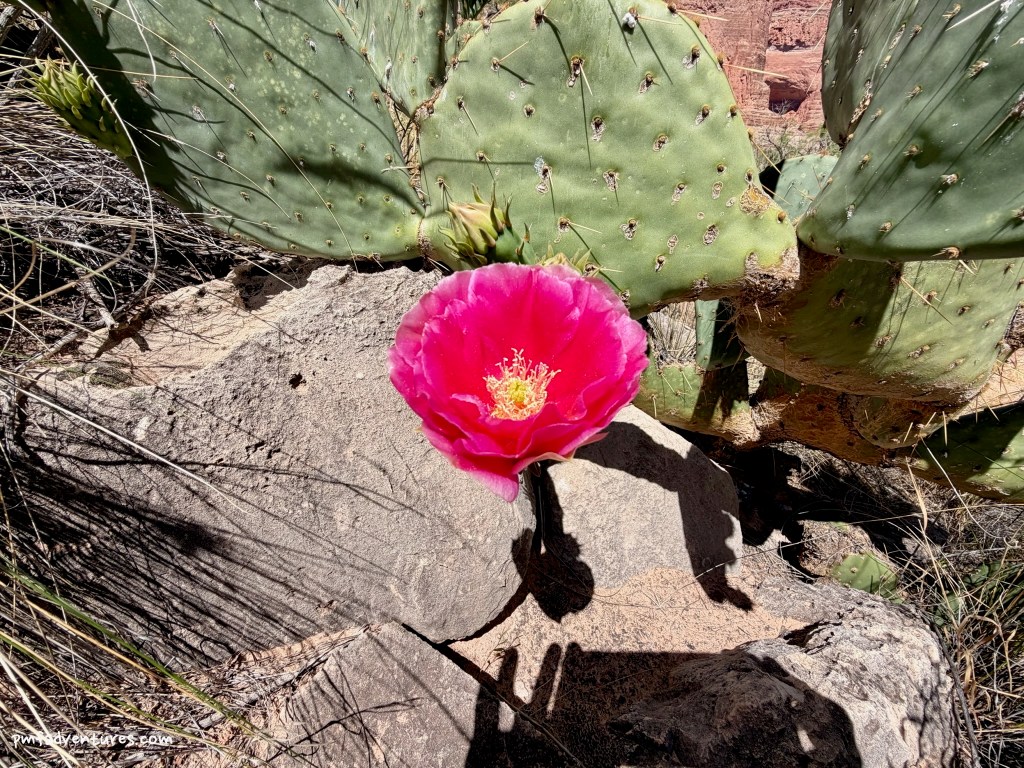
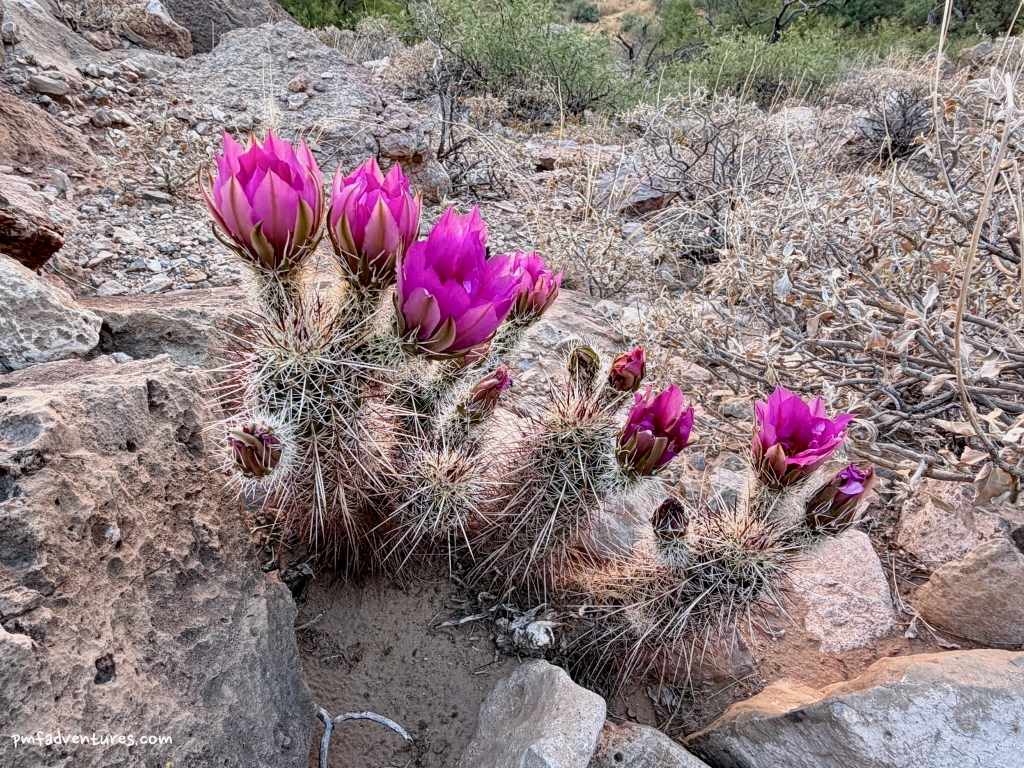
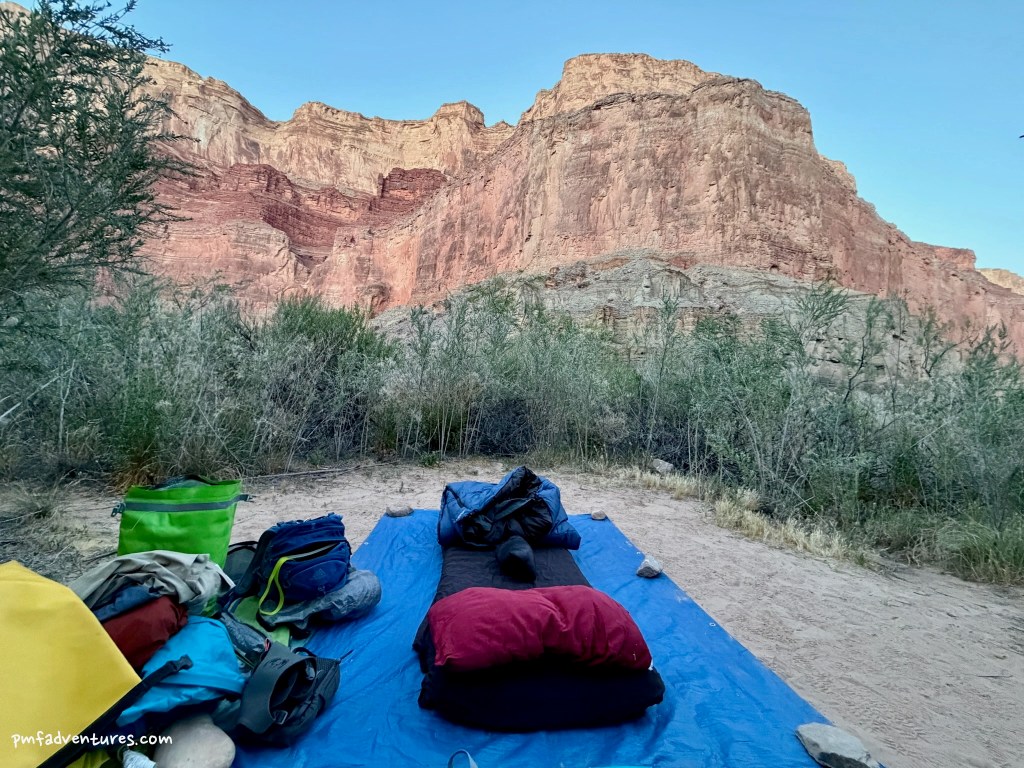
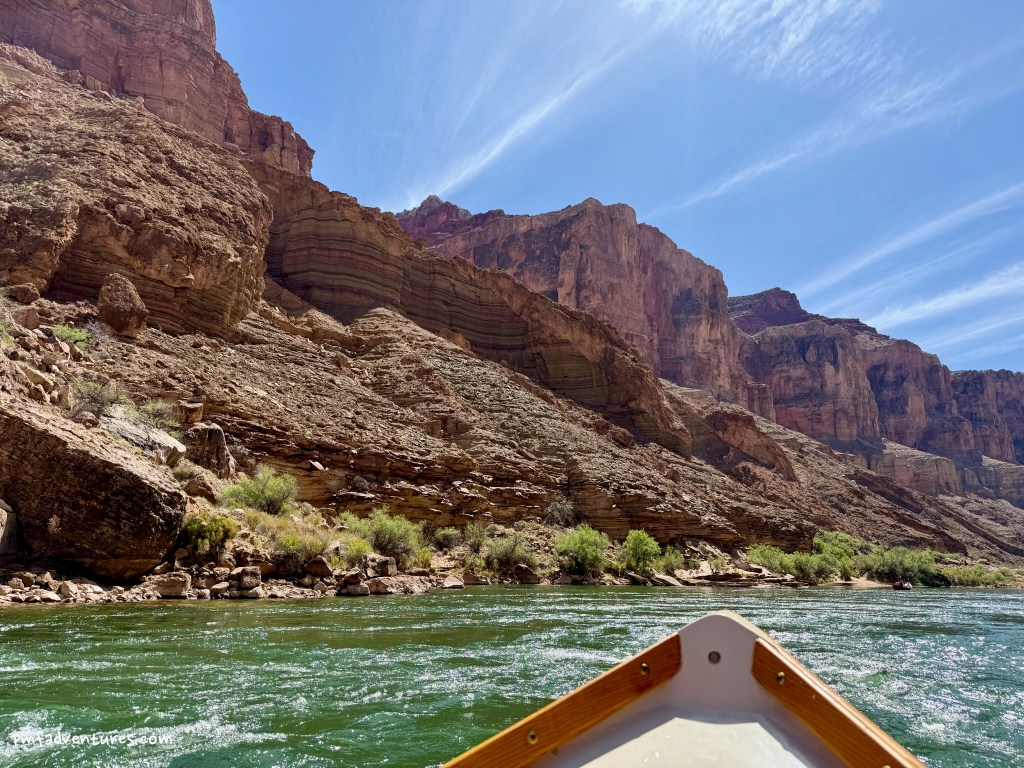
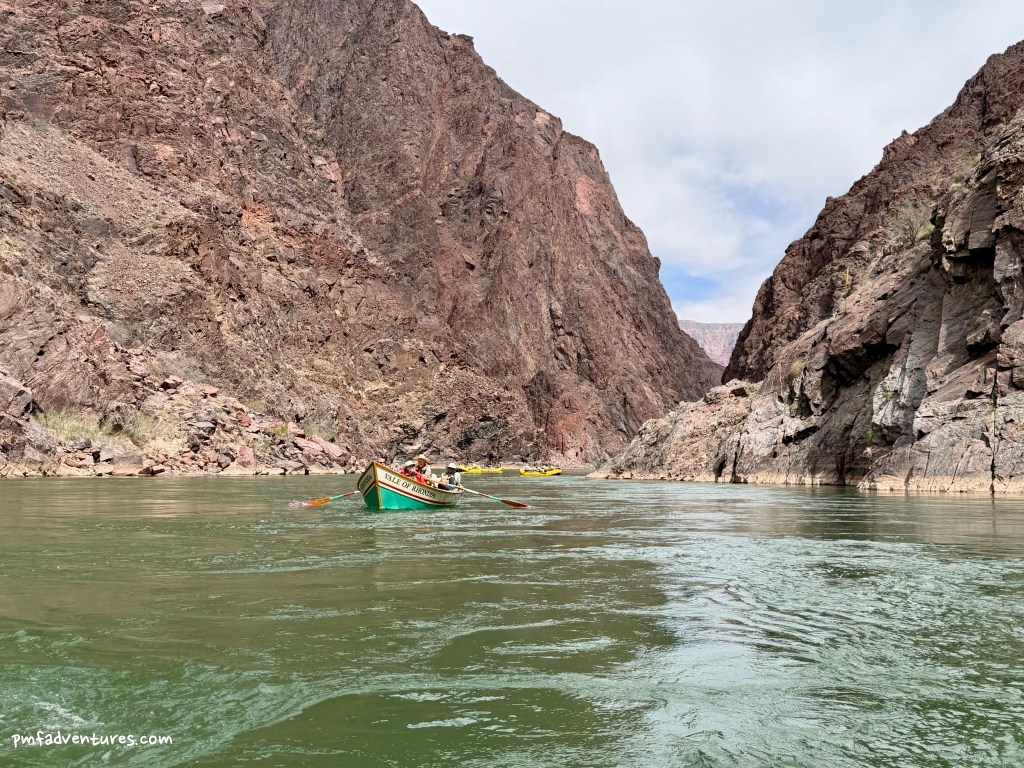
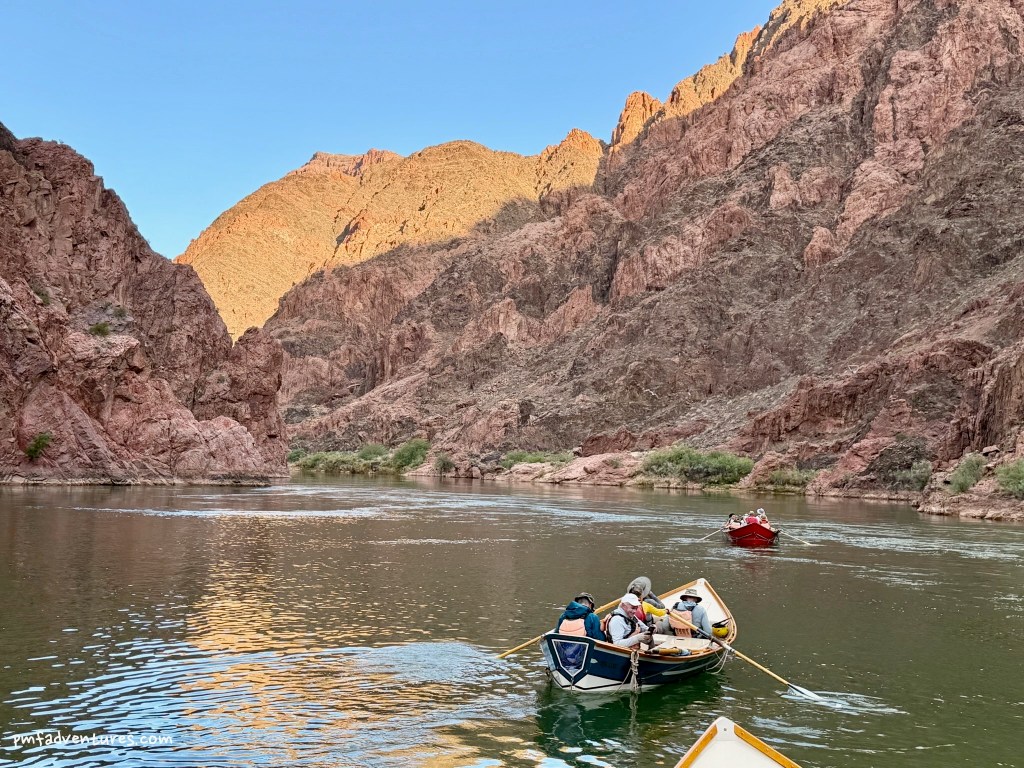
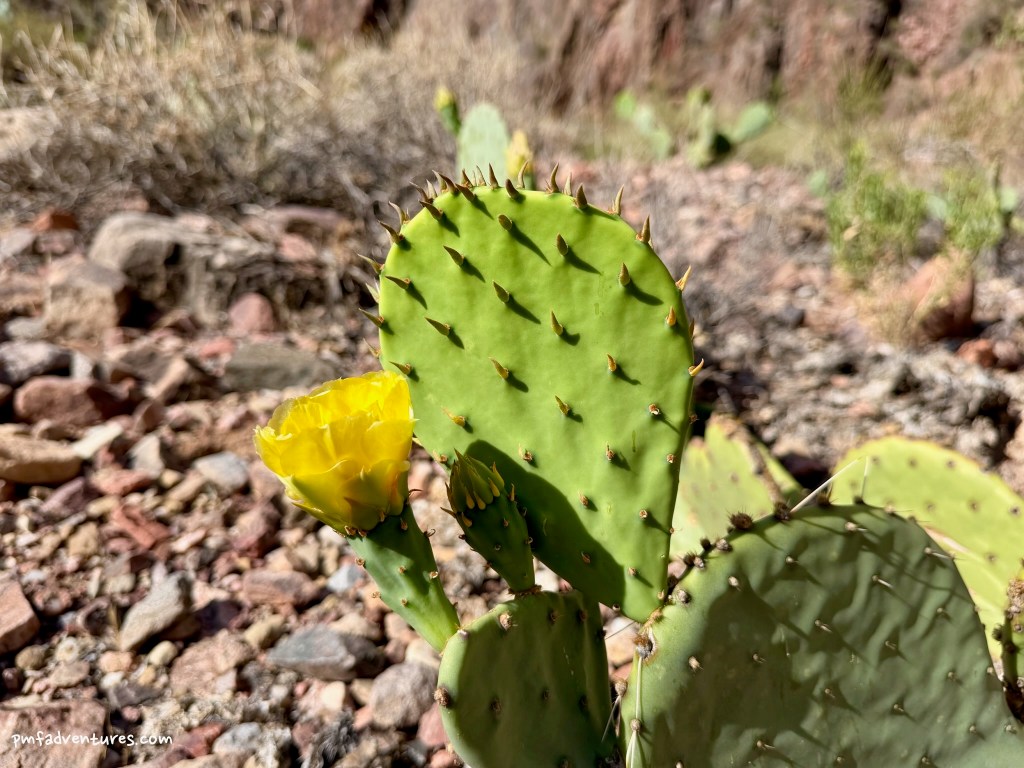
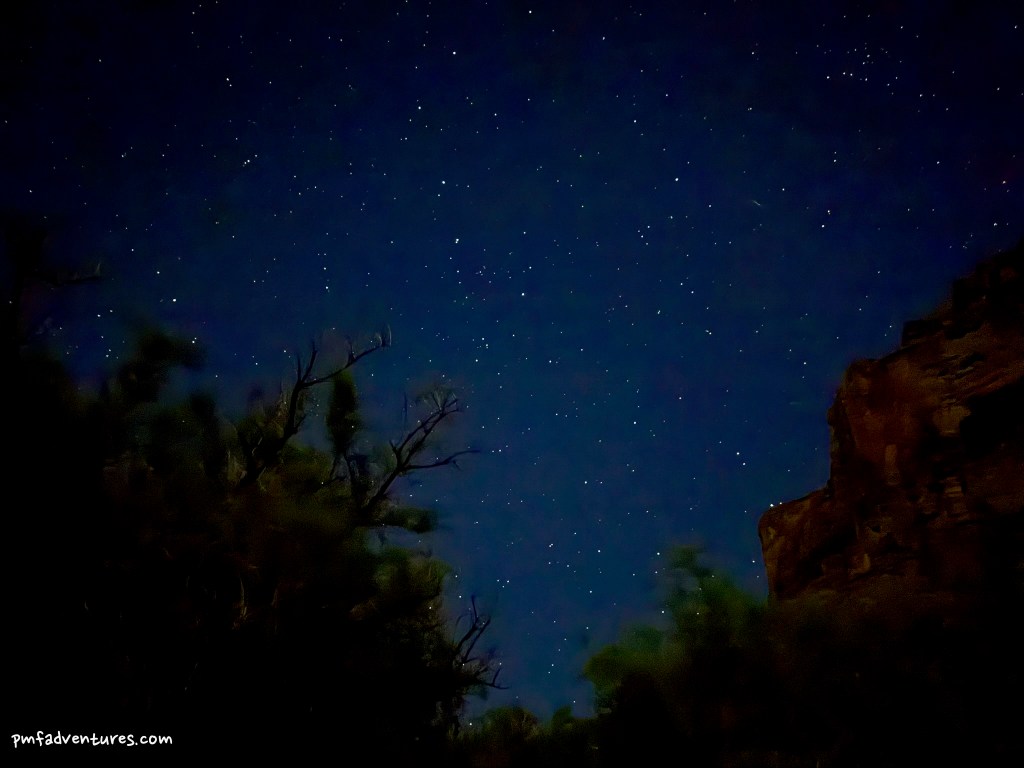
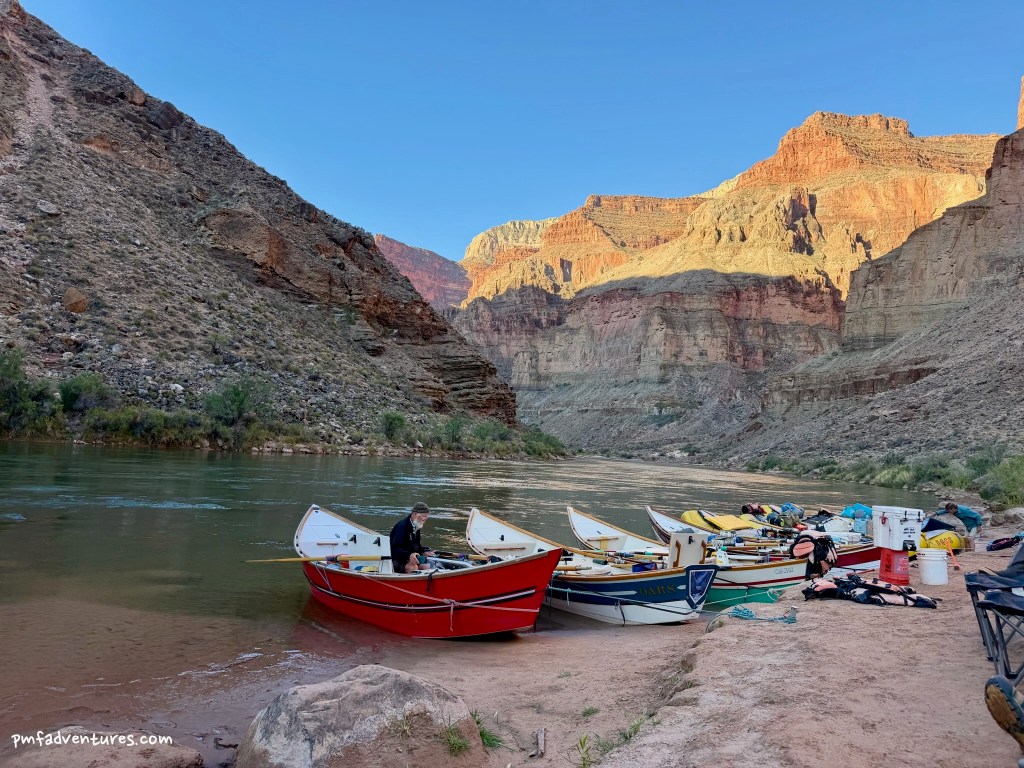
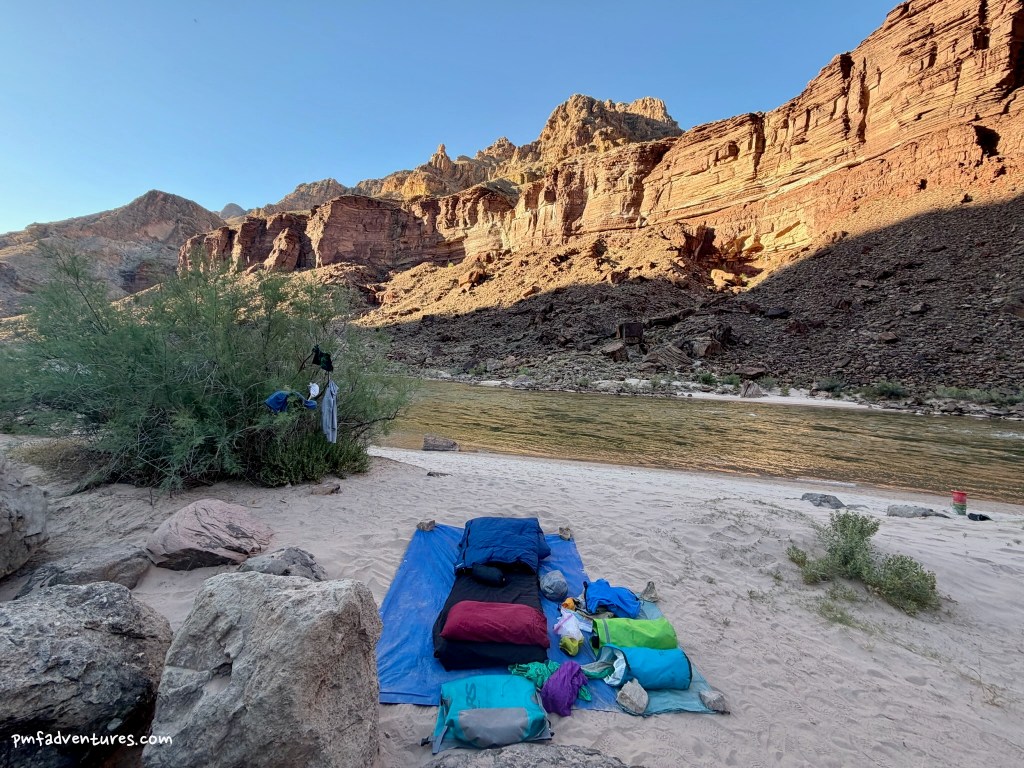
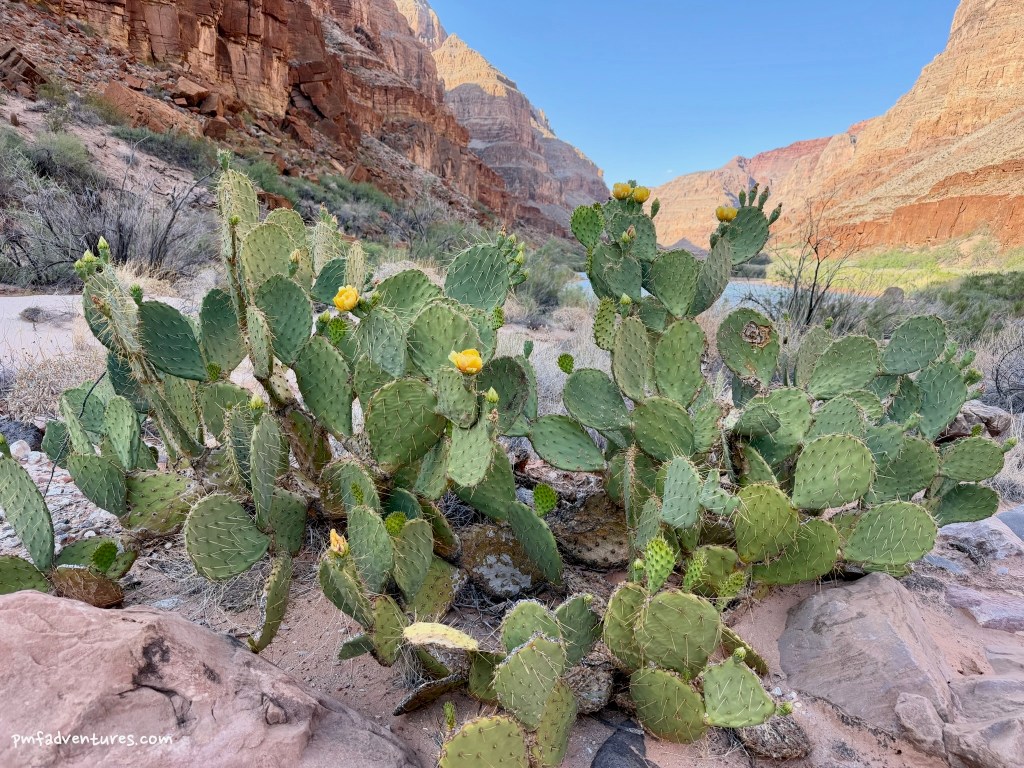
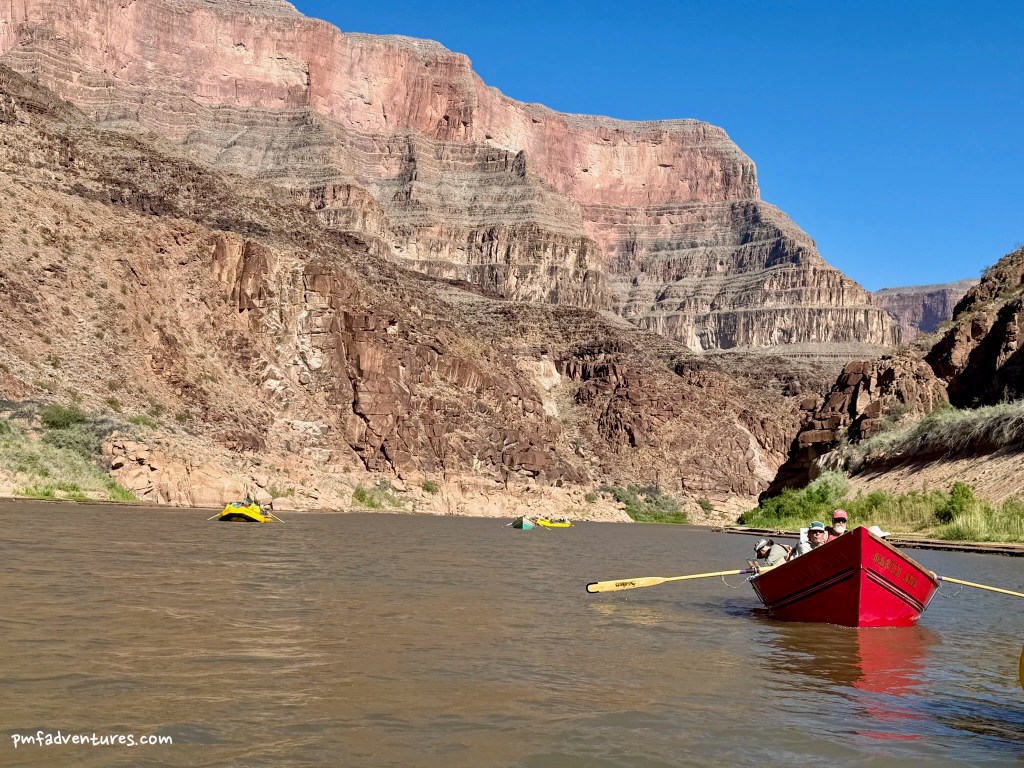
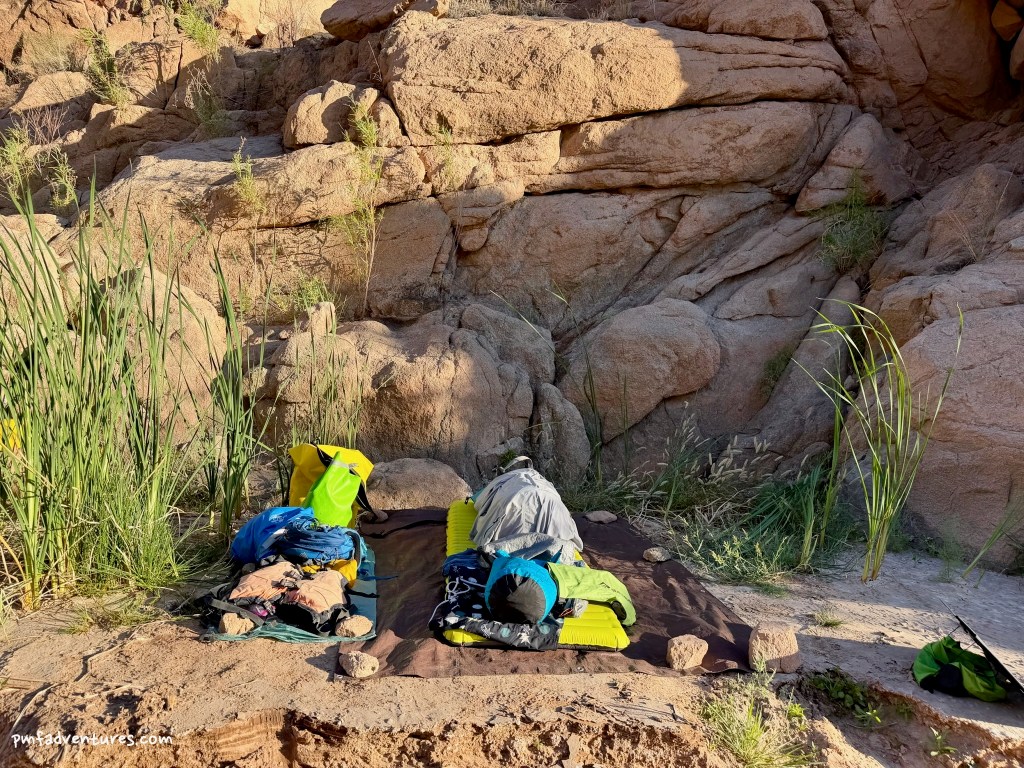
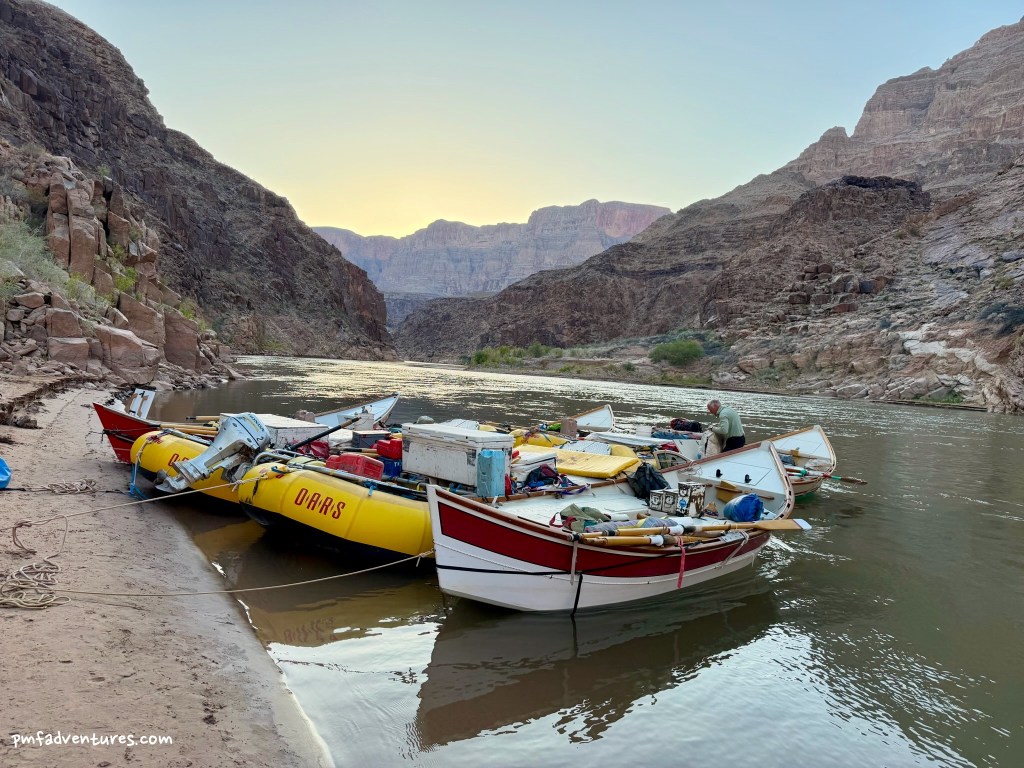
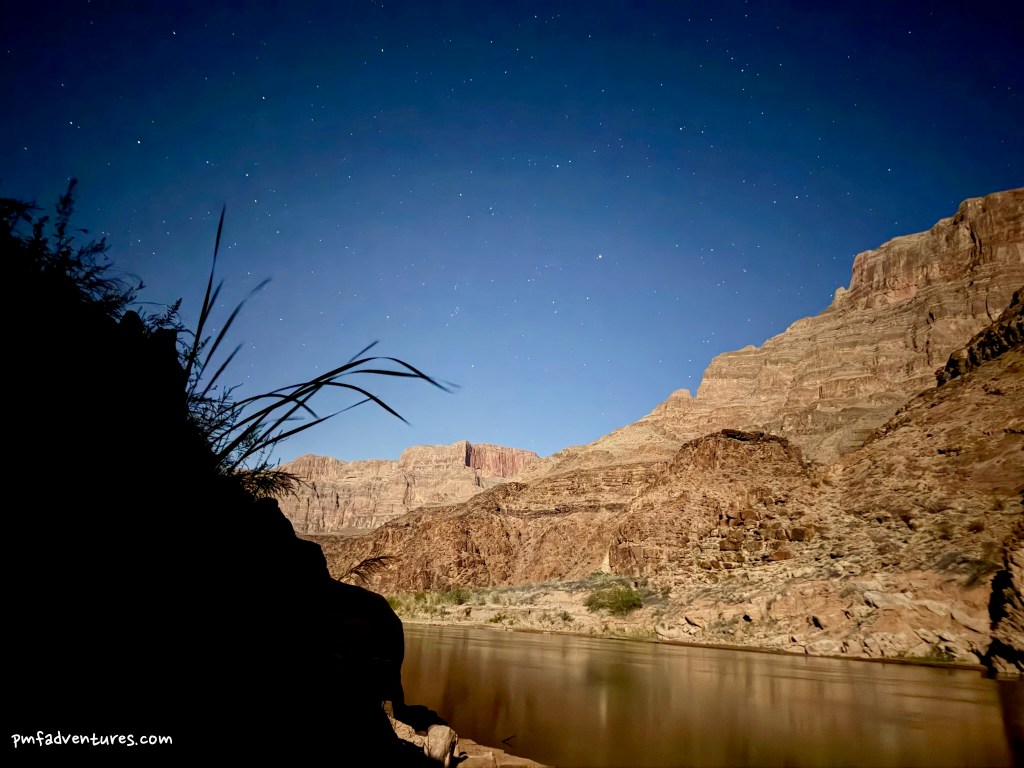
We pushed off from Lee’s Ferry just before 11 AM under lovely blue skies with just enough puffy white clouds to make for good photos. I was in the back of Monte’s dory, the Vale of Rhondda, with Tania, a kindred spirit who was on her seventh trip down the Grand Canyon. The first few miles of the trip are quite mellow and we cruised by rock formations at river level that make up the top layers of the Grand Canyon when you hike from the rim — Kaibab Limestone, Toroweap Limestone, Coconino Sandstone, and Hermit Shale. After a fun run of Badger Creek Rapid where we got good and wet, we stopped for lunch. As expected, the wind picked up after lunch and when we got to Soap Creek about 3, Roger decided we would set up our first camp there. I planned to sleep out as much as possible on the trip, but the clouds had been building all afternoon, so I decided to set up a tent next to my tarp, just in case I needed it. After setting up camp, I hiked up Soap Creek about three-quarters of a mile to stretch my legs before dinner and was rewarded with some beautiful prickly pears in bloom. And thankfully the clouds cleared out after dinner and I was able to enjoy a great night under the stars.
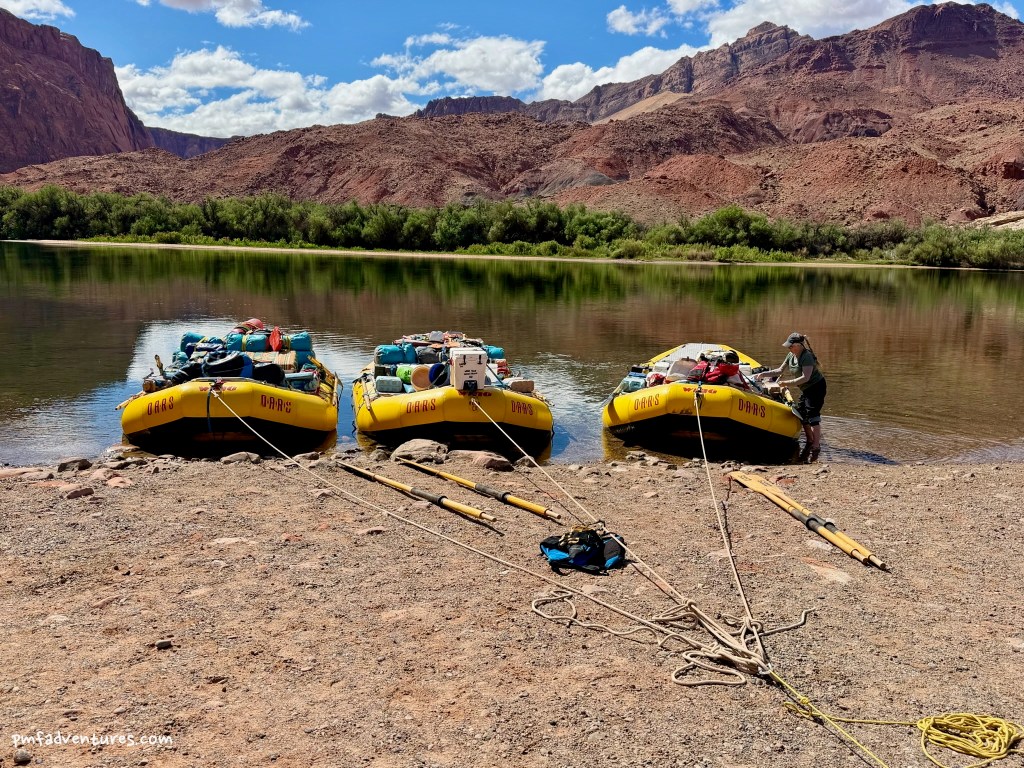
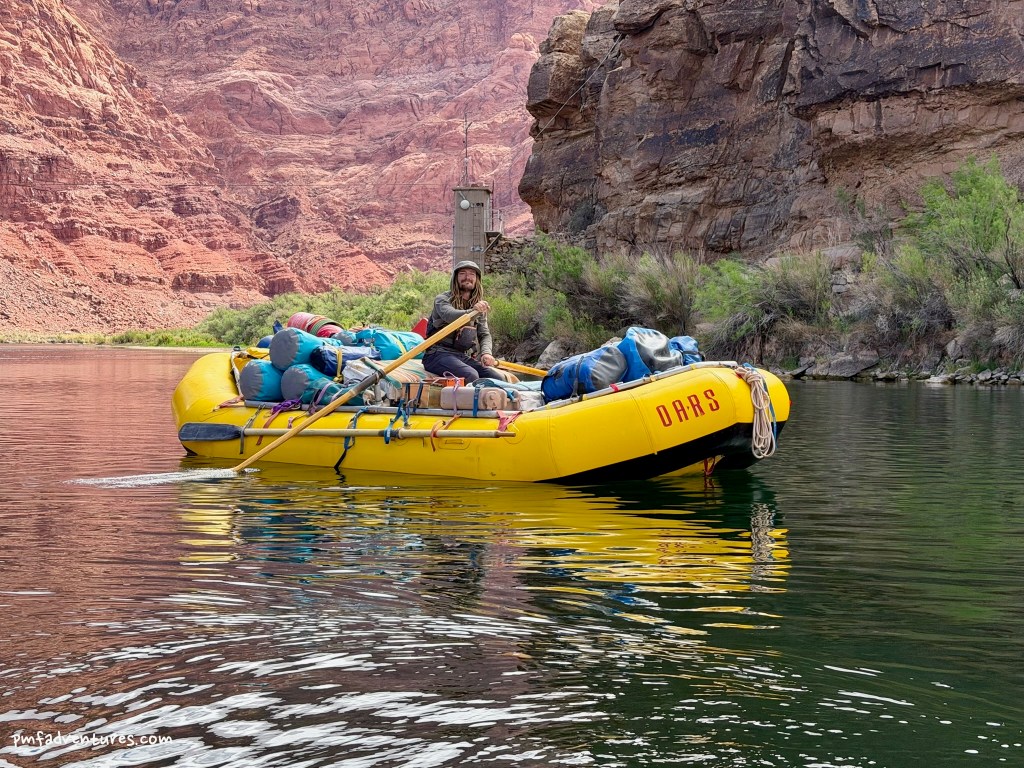
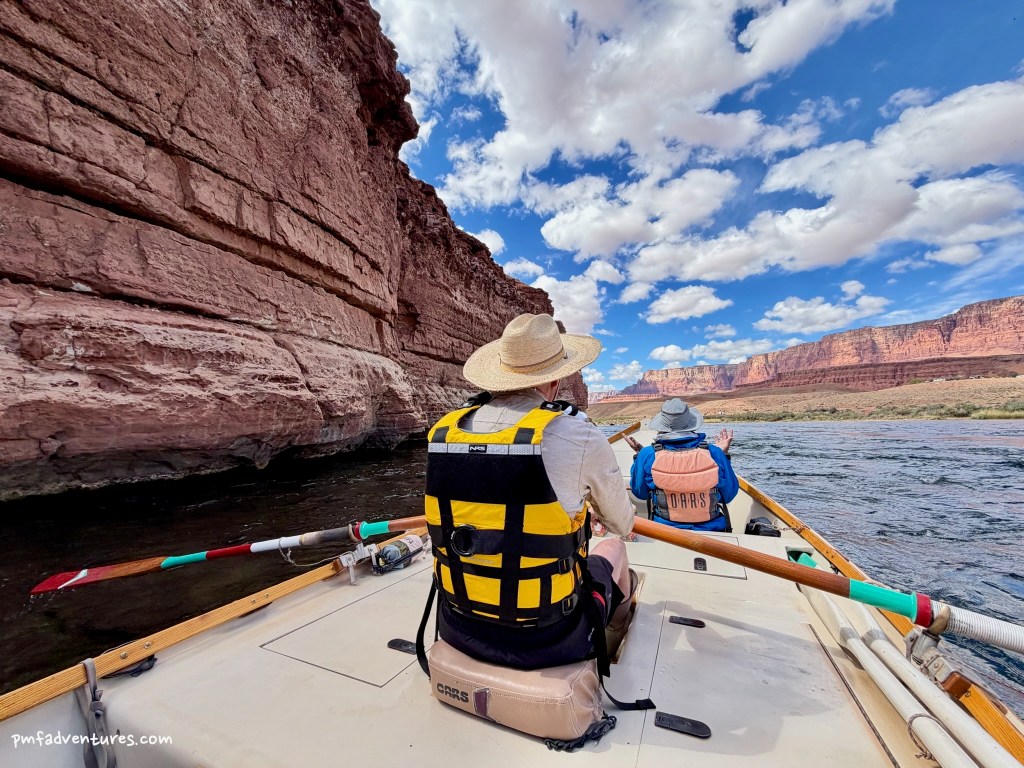
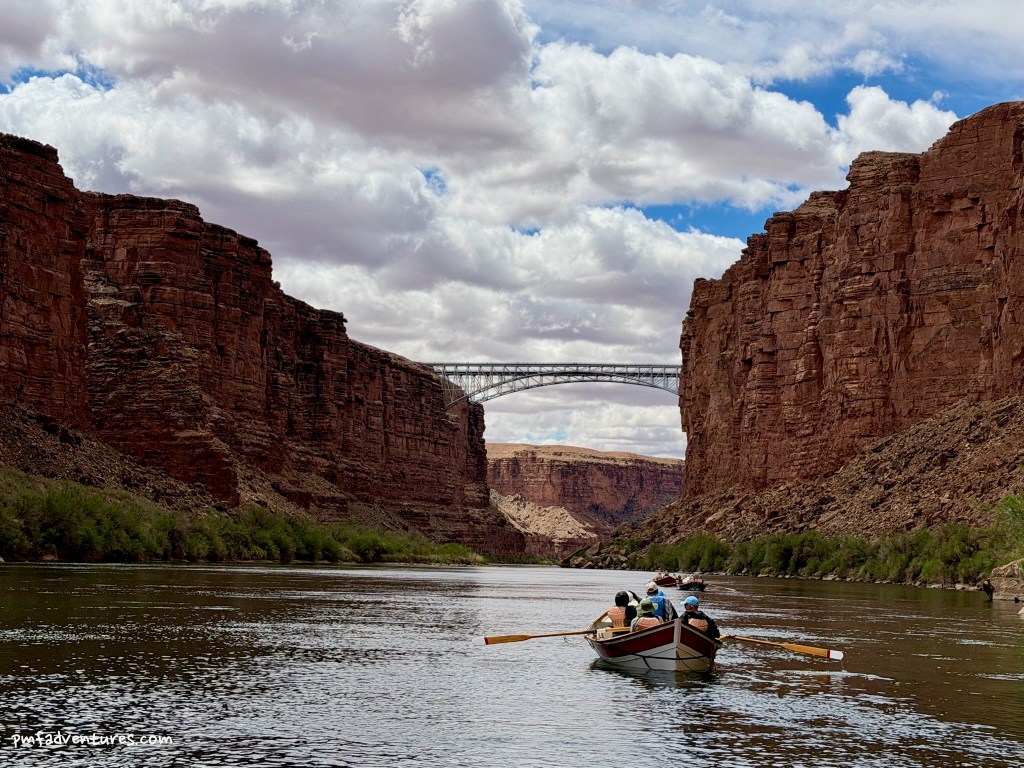
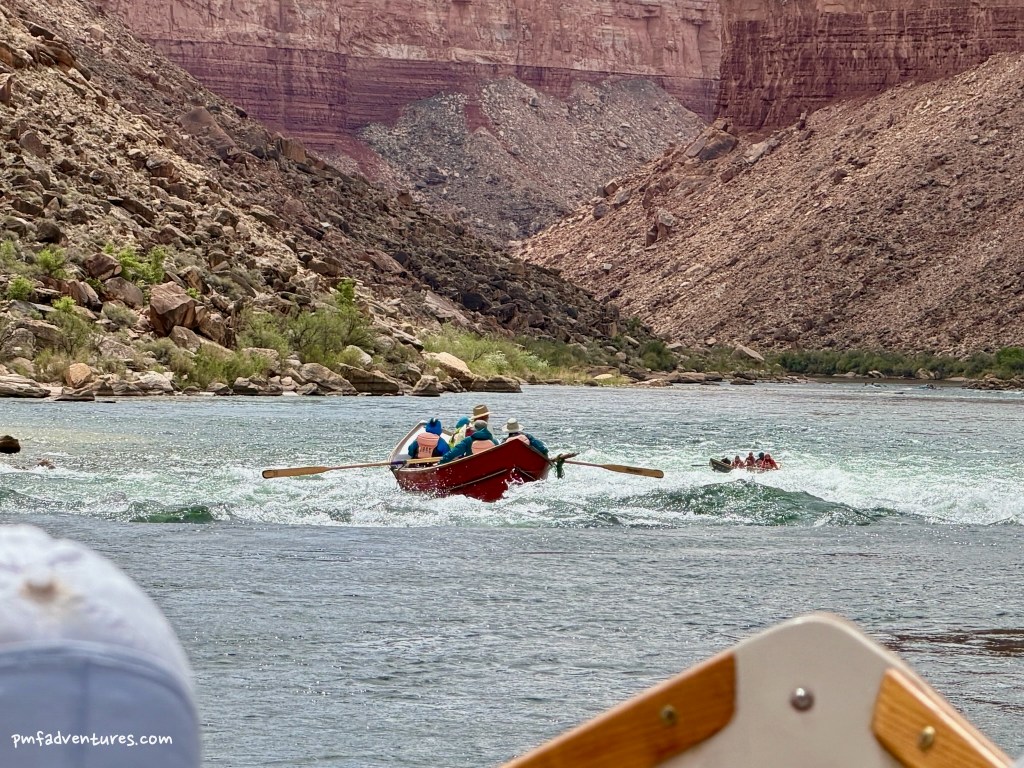
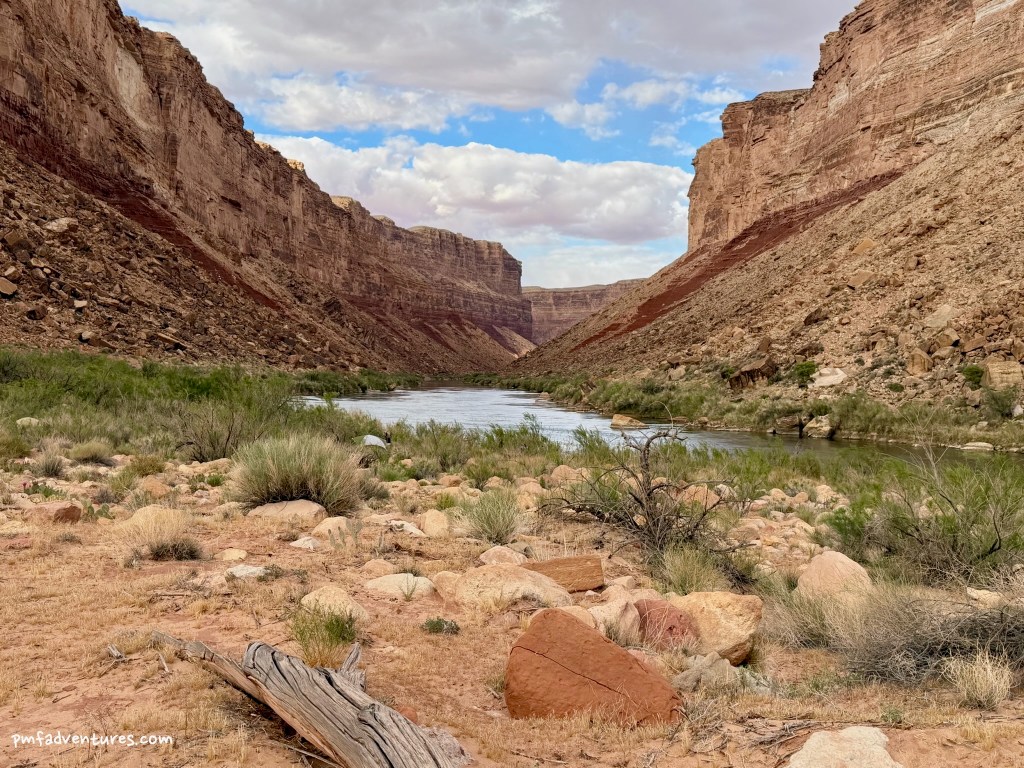
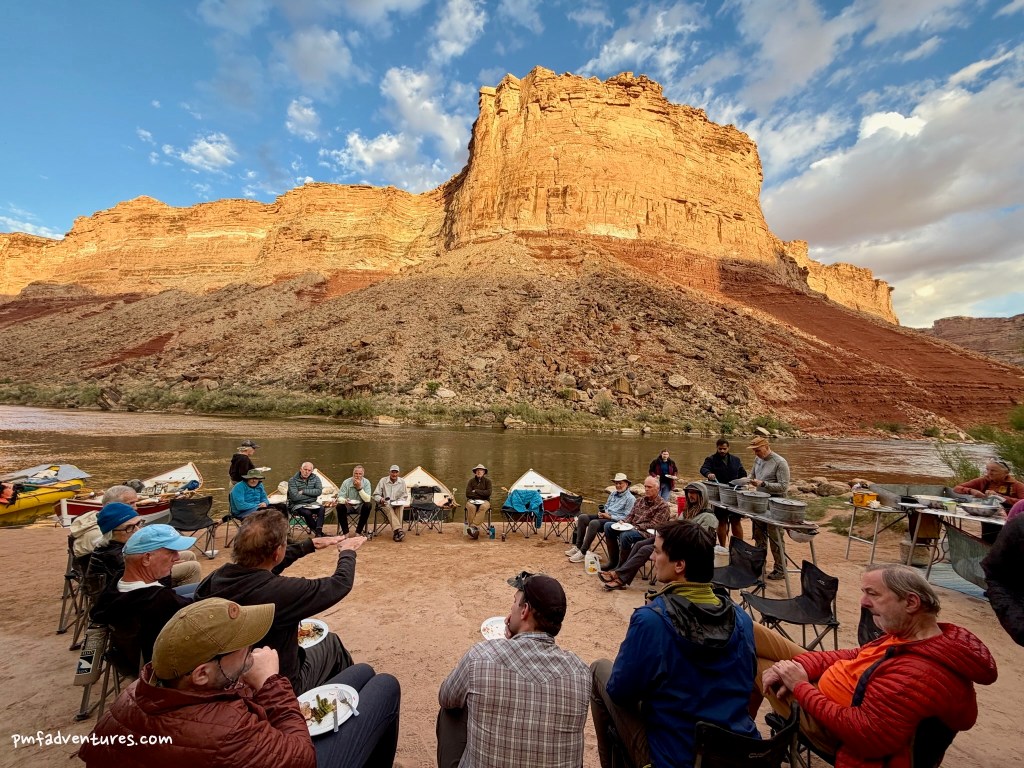
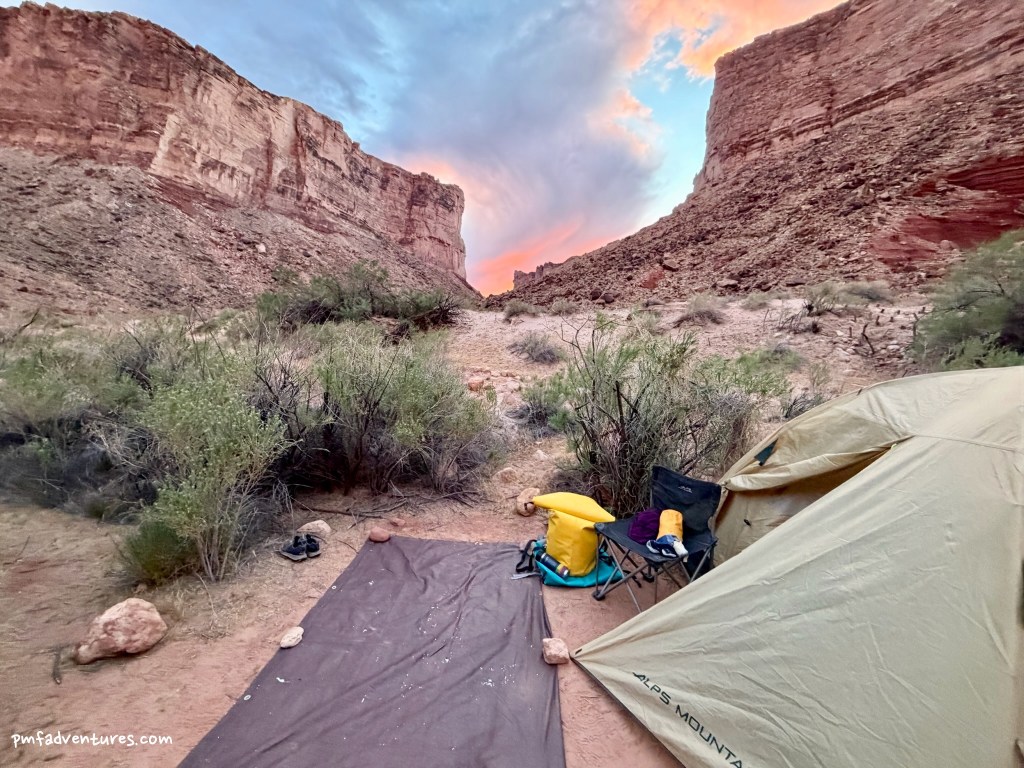
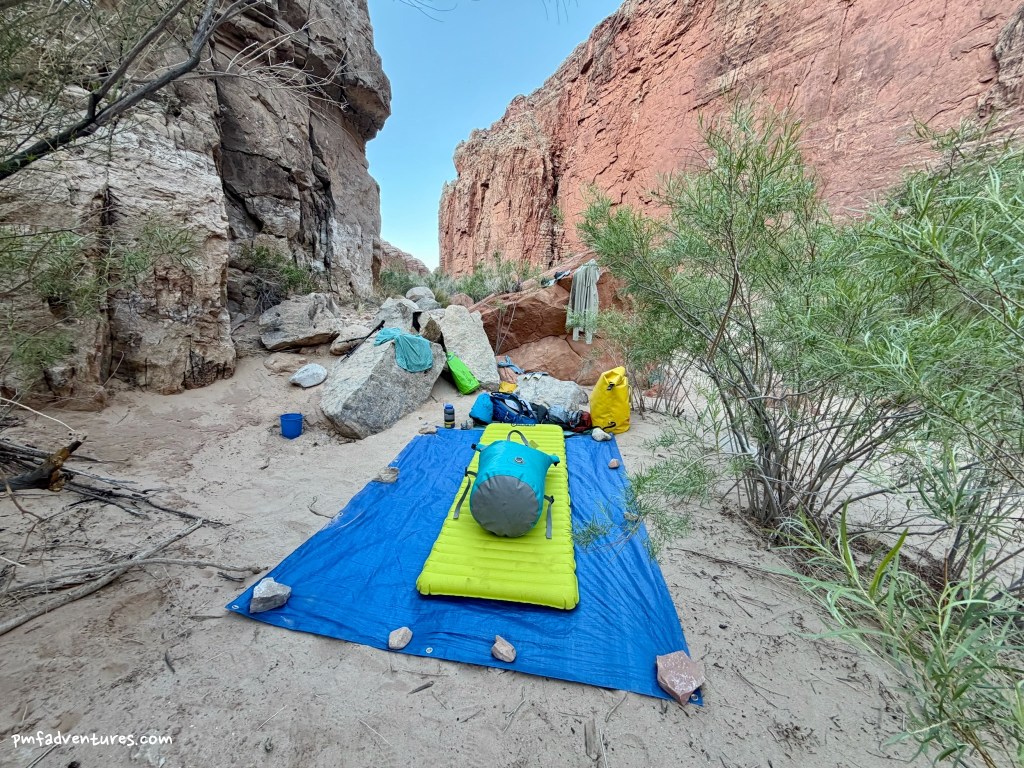
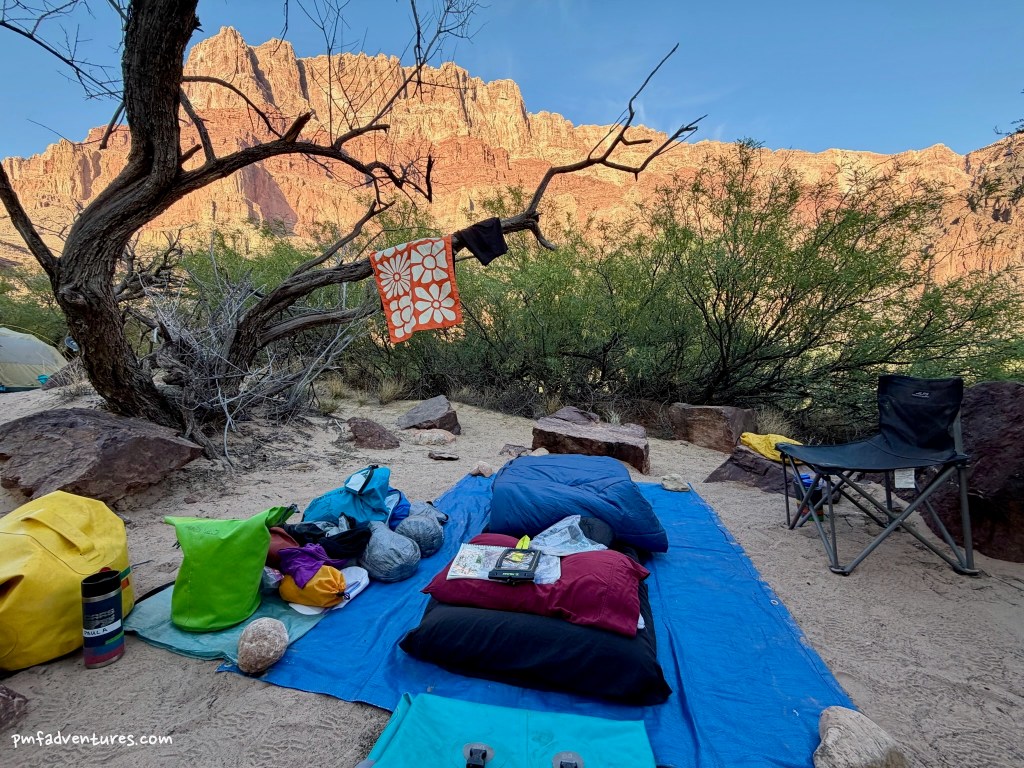
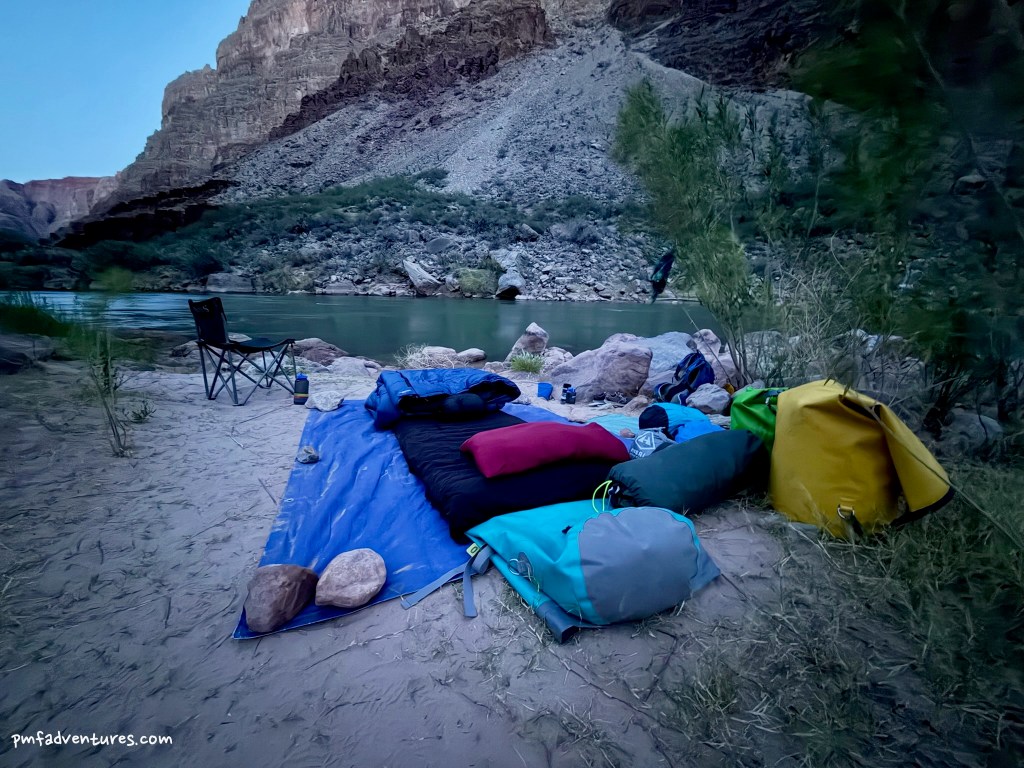
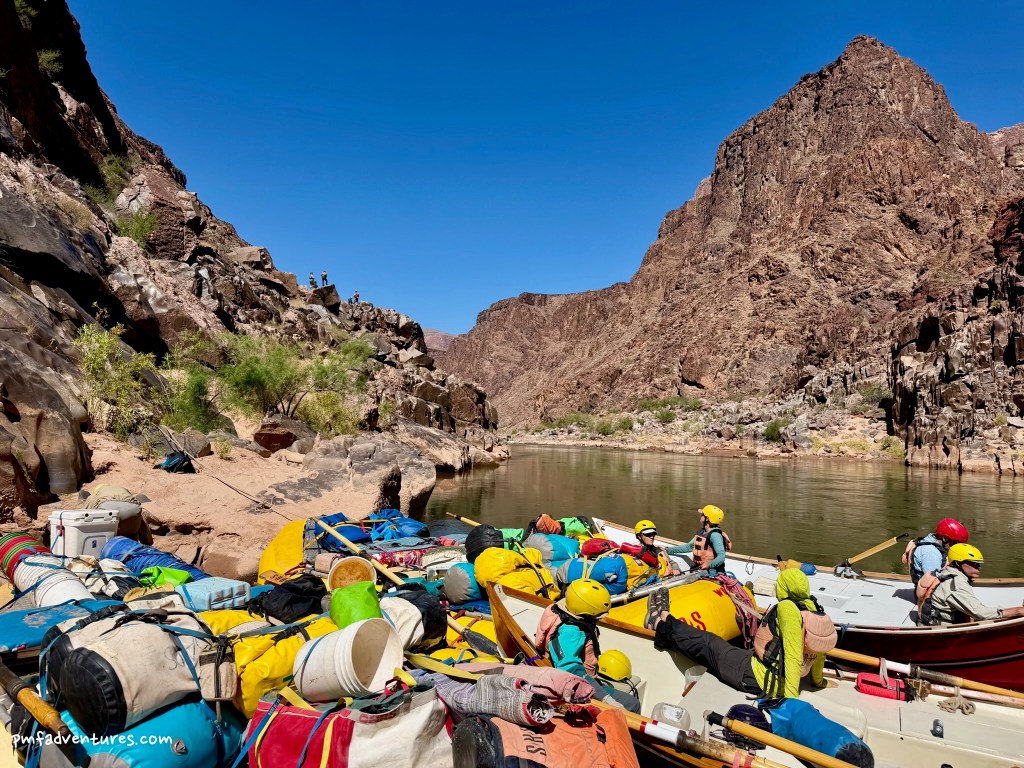
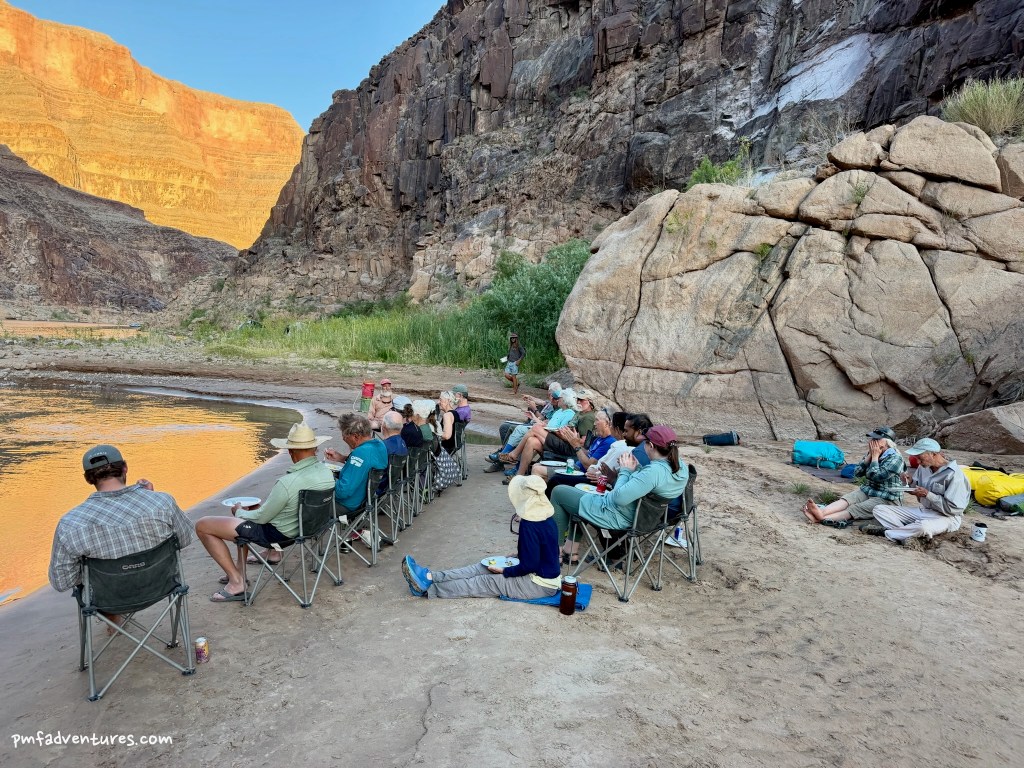
Day 2 (4/15/2026) – Soap Creek to South Canyon: This day was all about settling into the routine of being on the river. I was up at 5:45 AM, to start packing up my sleep kit before the guides blew the conch shell for coffee at 6. After filling my mug, I went back to my campsite to pack up the tent and organize my gear for the day. After being served a hearty breakfast of pancakes and bacon at 7, I headed back one more time to pack up my waterproof bags — the big yellow one with everything I wouldn’t need until camp and my small green one with what I would need for the day. Since we were going to be running lots of splashy rapids, I made sure I had my rain gear and extra dry layers. I was back at the chair circle by 8, so I was able to help pack up chairs and other group gear, while the crew broke down the kitchen and loaded up the baggage rafts.
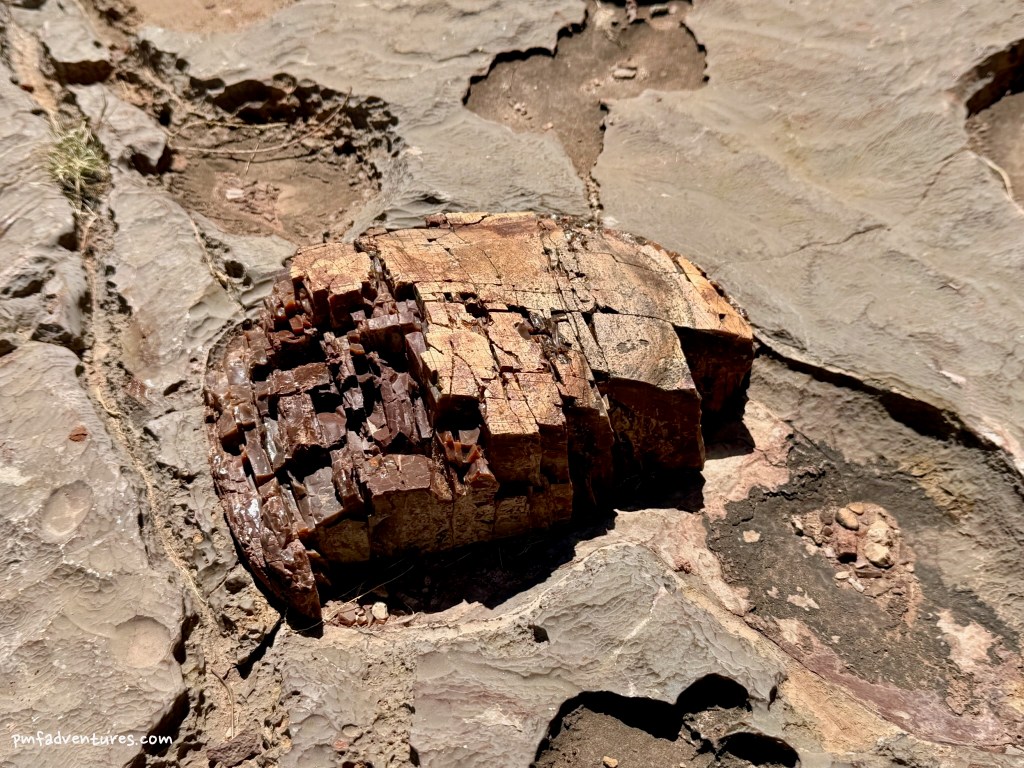
Everything was loaded and we were on the water at 8:30. I opted to ride in the Ticaboo with Dellie for the day, sitting up front with Keith, another of the full trip passengers. We immediately ran Soap Creek Rapid and got wet, then tried to warm up as we were mostly in the shade in the Supai Gorge for the next several miles. We stopped for the crew to scout House Rock Rapid and then had a fun run through it. Next up was the Roaring Twenties, with a number of rapids that are spaced a half-mile or so apart. We also welcomed the Redwall Limestone at river level; it would be with us for the rest of day. We stopped for lunch just above 25 Mile Rapid and checked out some cool fossils and mineral deposits while the crew made lunch. After lunch we got a good wash in Tiger Wash, then continued downstream to South Canyon, where we set up camp. Before dinner, we did a short hike up the South Canyon trail through the Redwall to a nice overlook where we could see back down to camp.
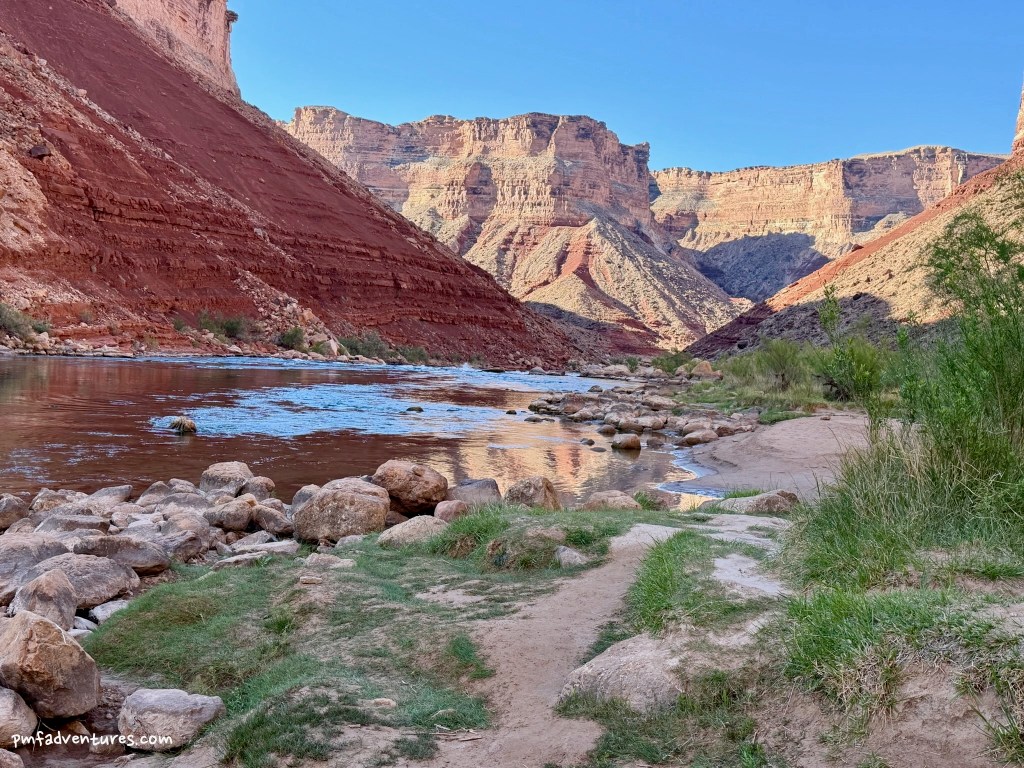
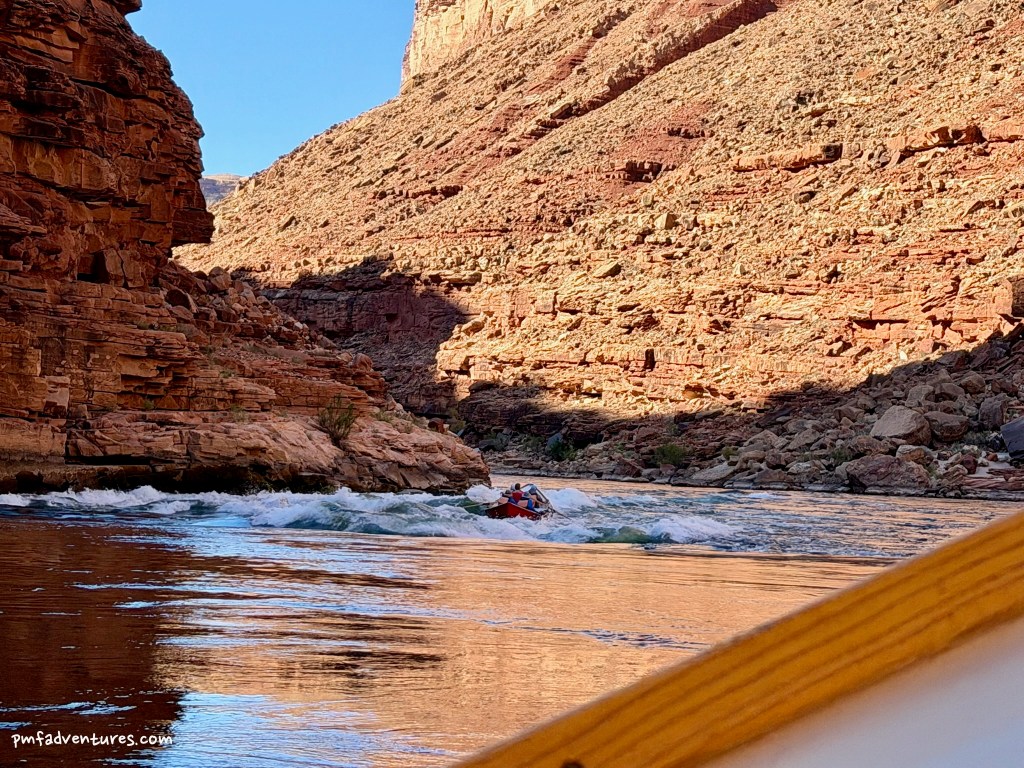
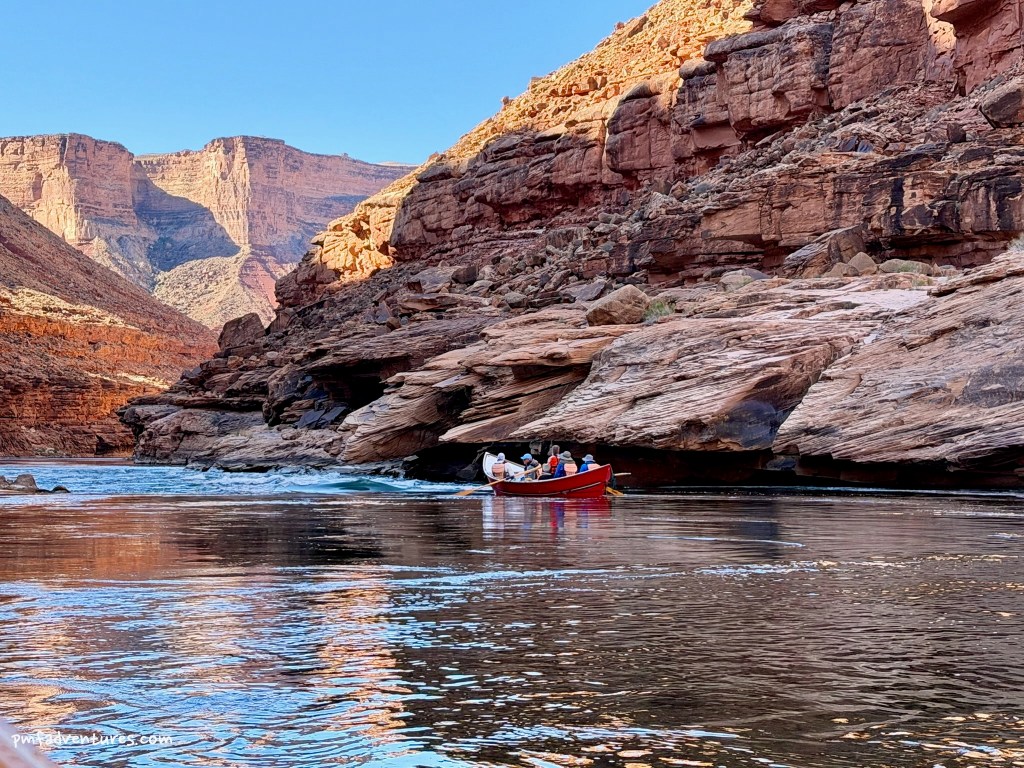
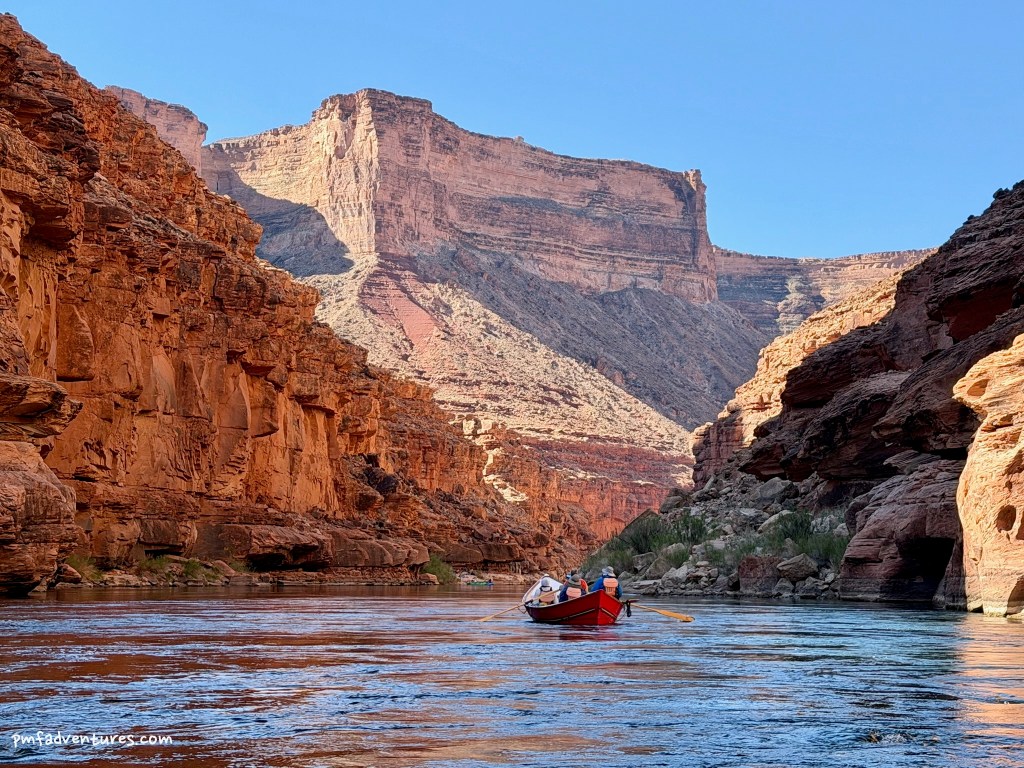
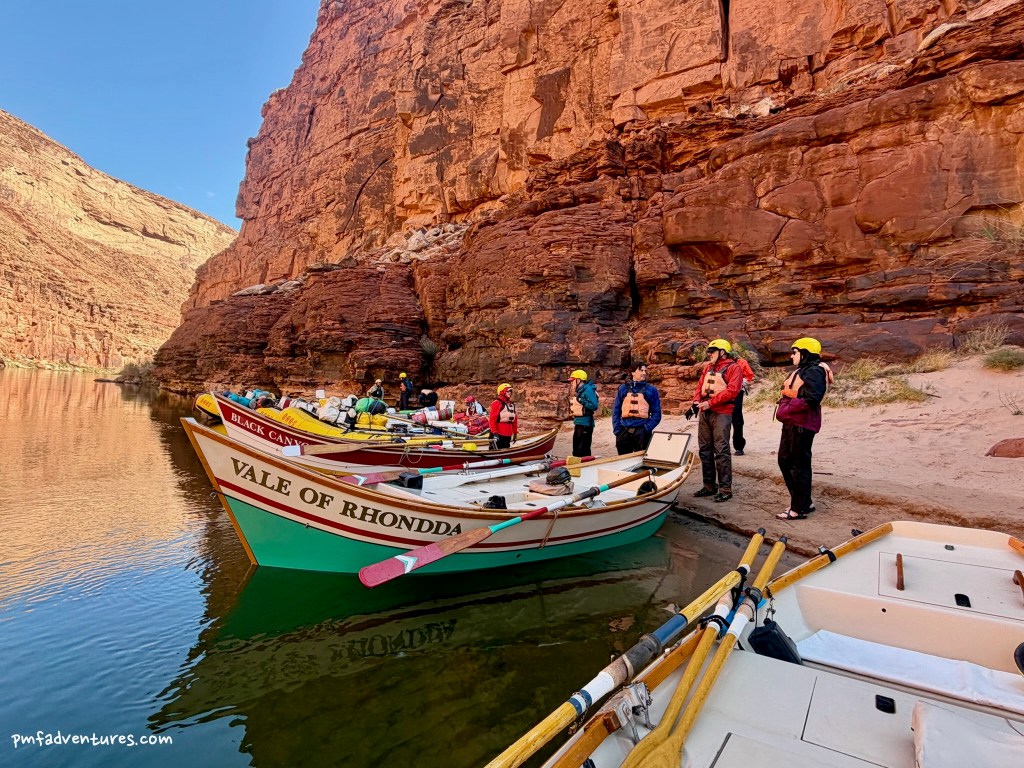
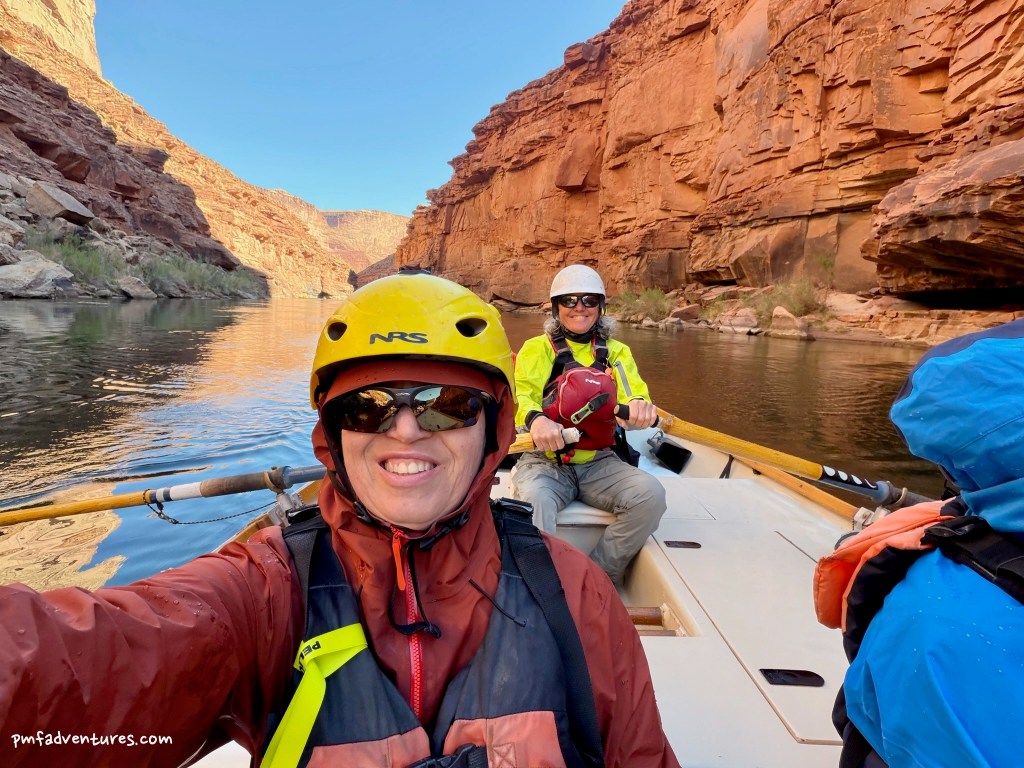
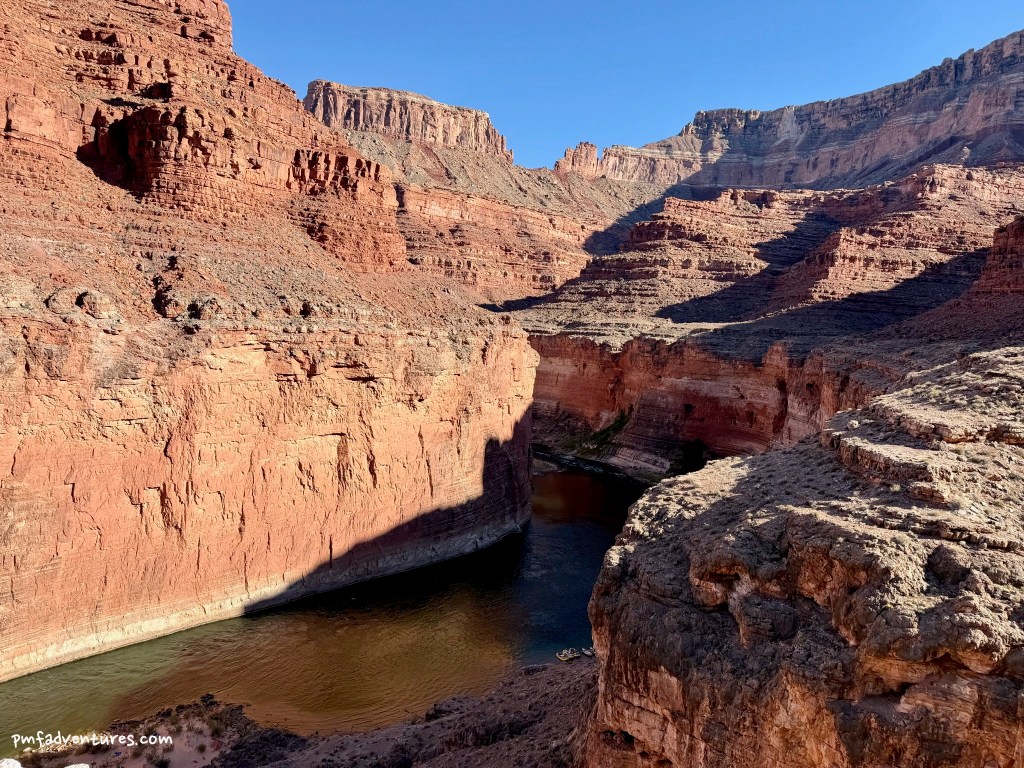
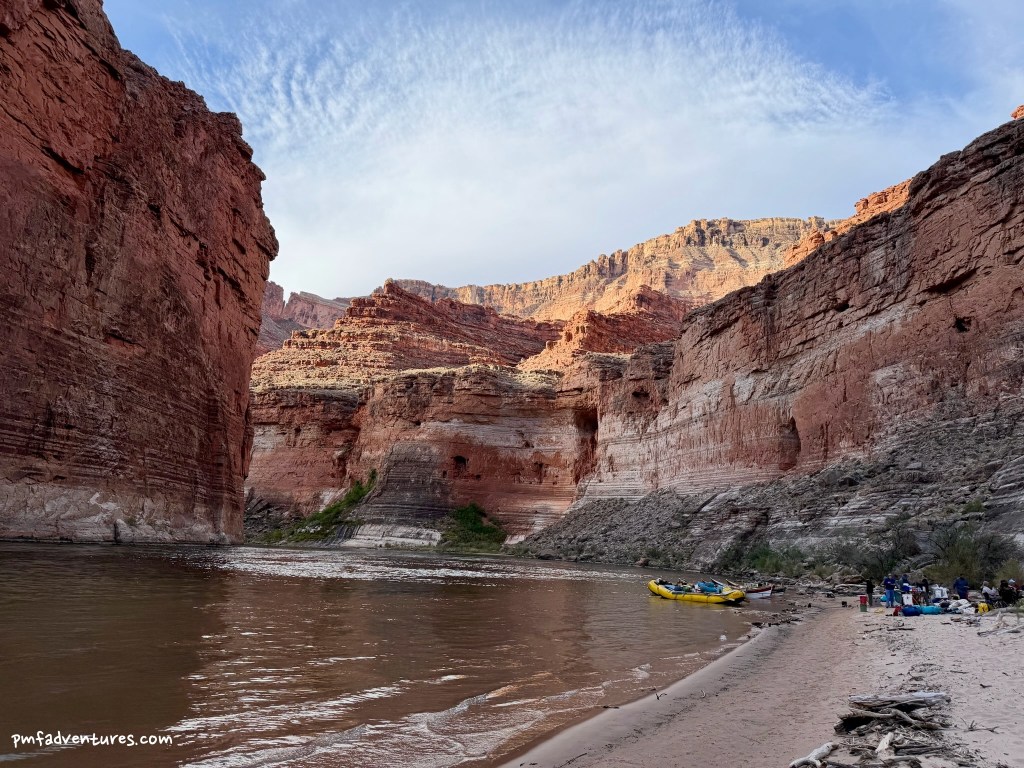
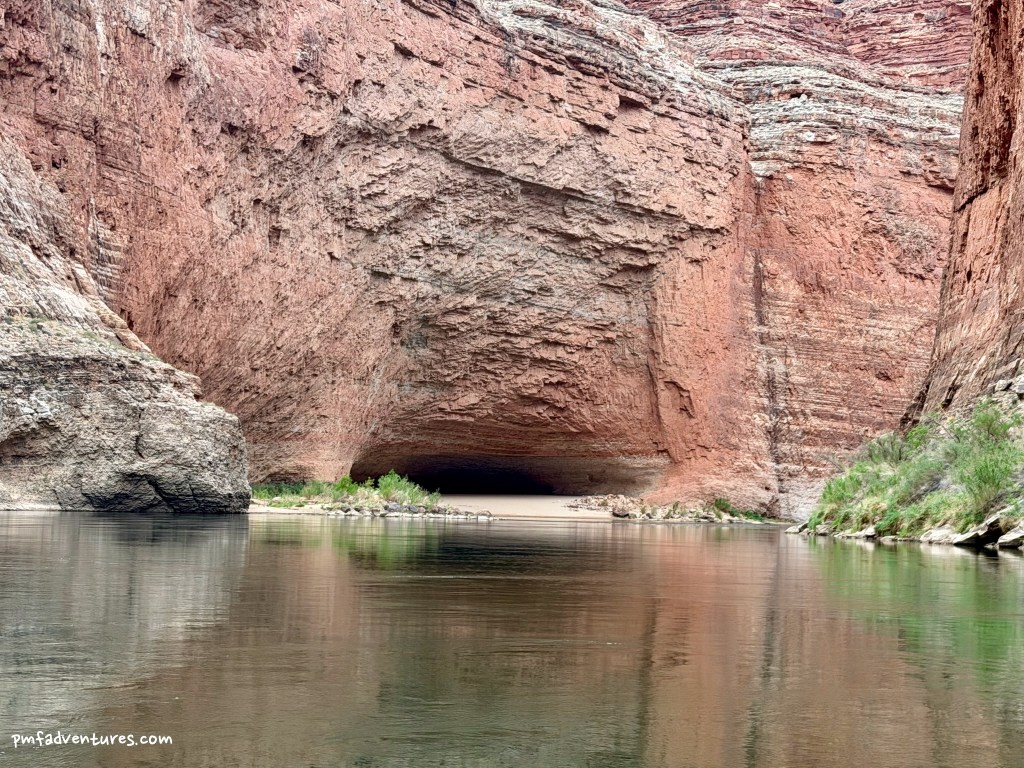
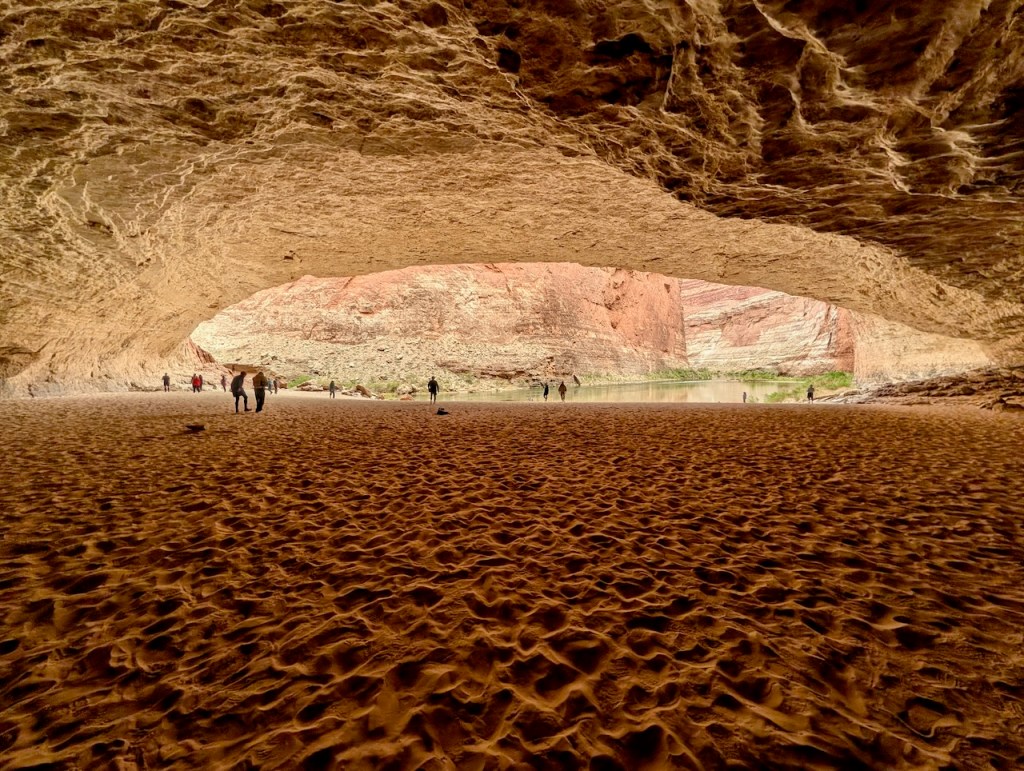
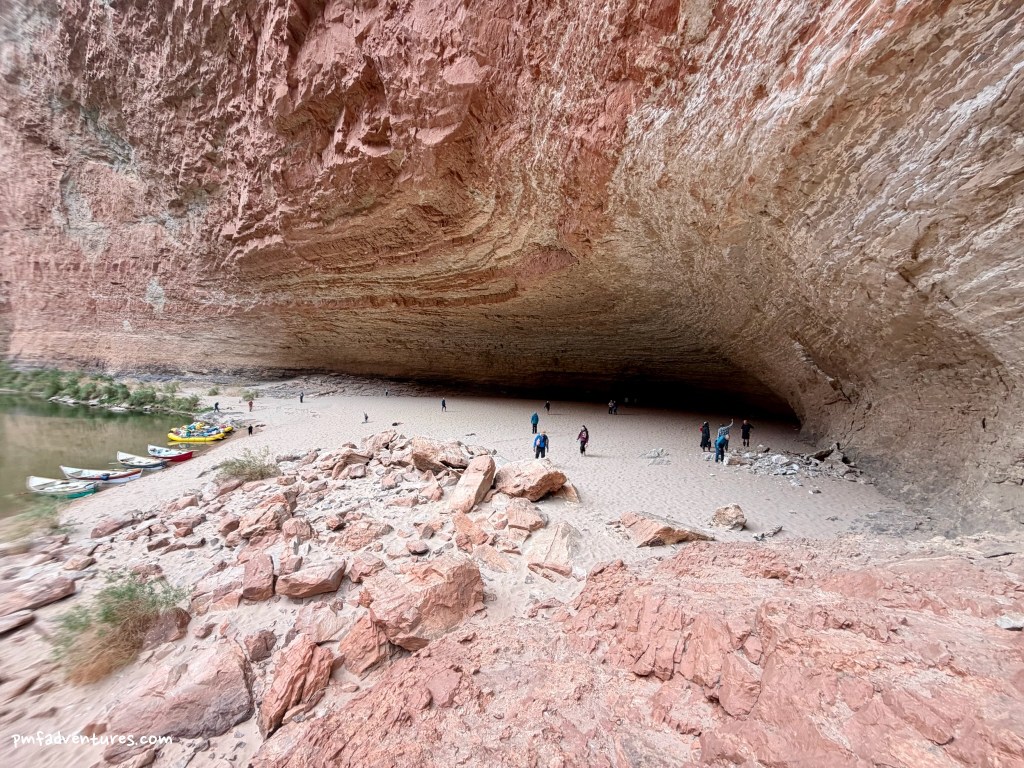
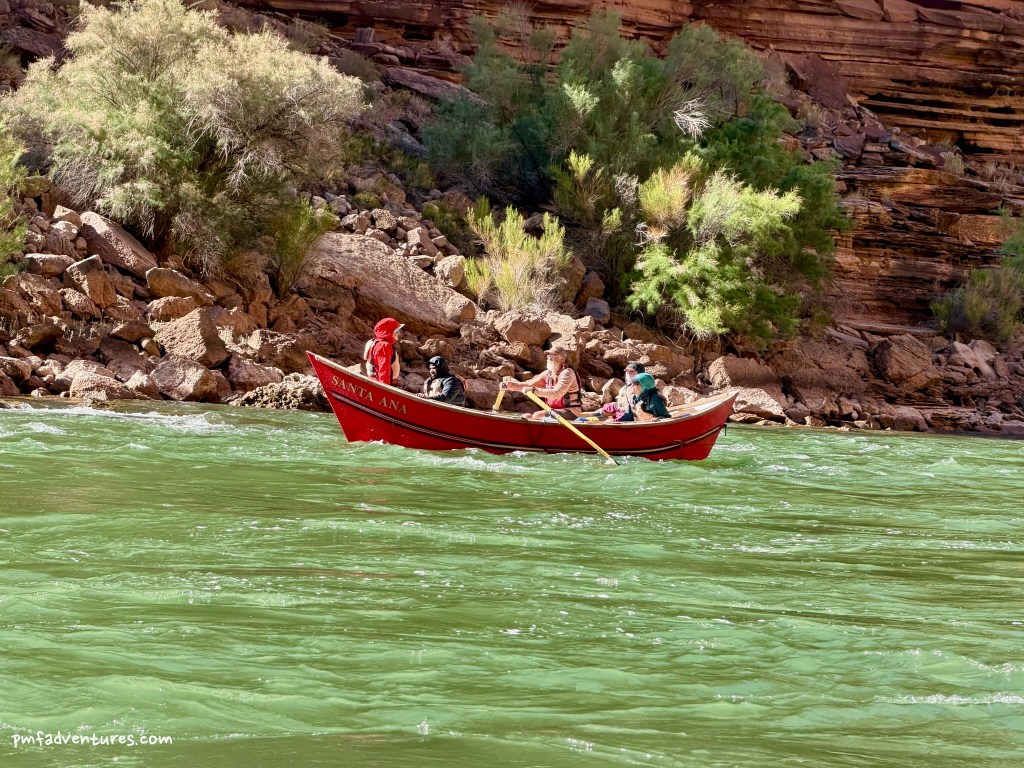
Day 3 (4/16/2026) – South Canyon to Saddle Canyon: I decided that 5:45 AM would be my standard wake up time, as it allowed me to enjoy a leisurely morning and still be packed up well before the crew was ready to load our gear. While that might seem early, I was going to bed around 8 PM, so I was in no danger of not getting enough sleep. Today I rode in the front of Roger’s dory, the Santa Ana, with Earl. Shortly after leaving camp, we made a lengthy stop at Redwall Cavern. It is really hard to believe just how big it is until you walk to the back and look out at the river. Some people played frisbee, while others checked out the new rockfall. When Sue and I rafted the Grand Canyon in 2018, it started pouring shortly after we left Redwall Cavern and we floated through Marble Canyon in the clouds and mist, so I was happy that we had sun and blue skies for this trip.
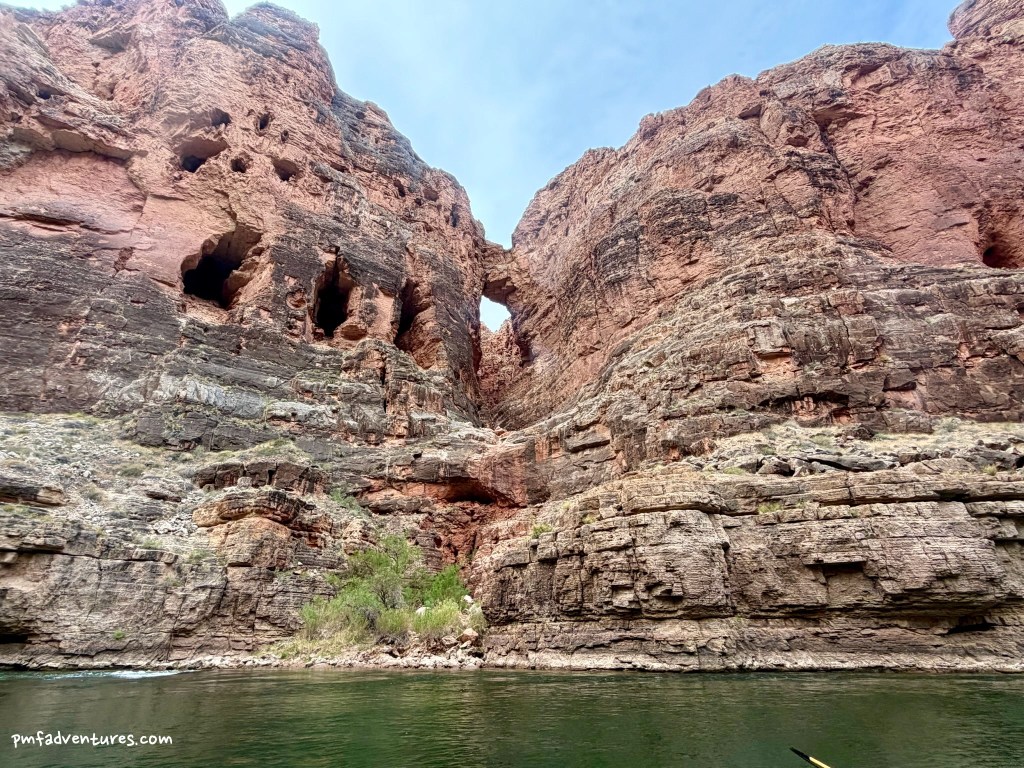
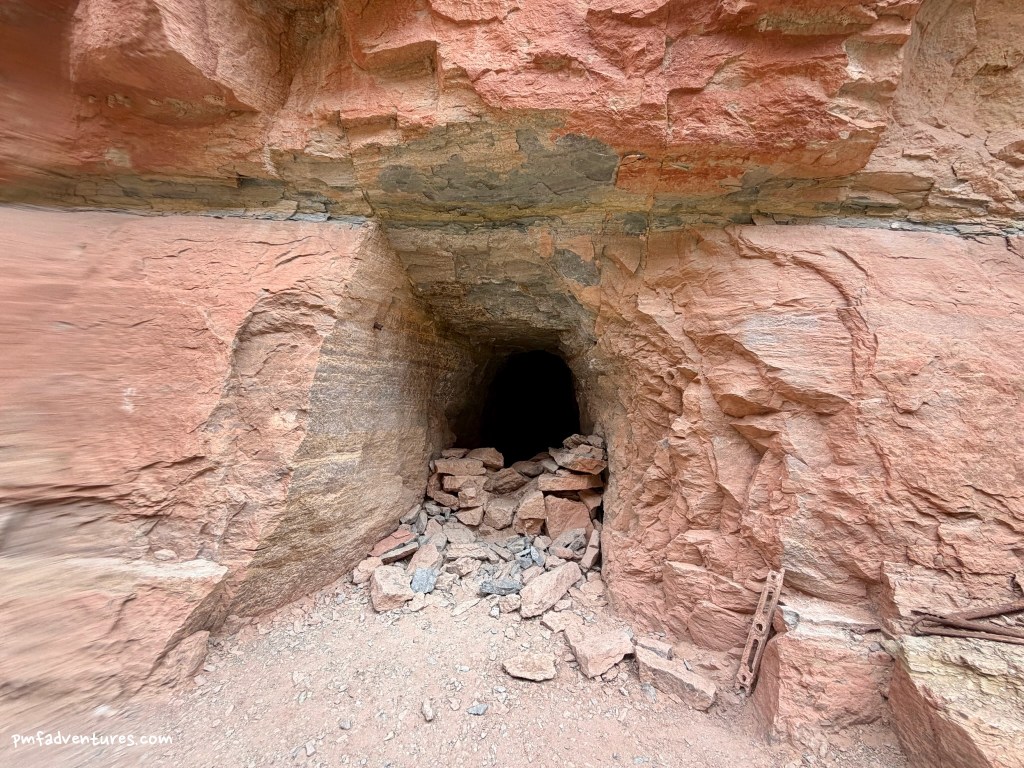
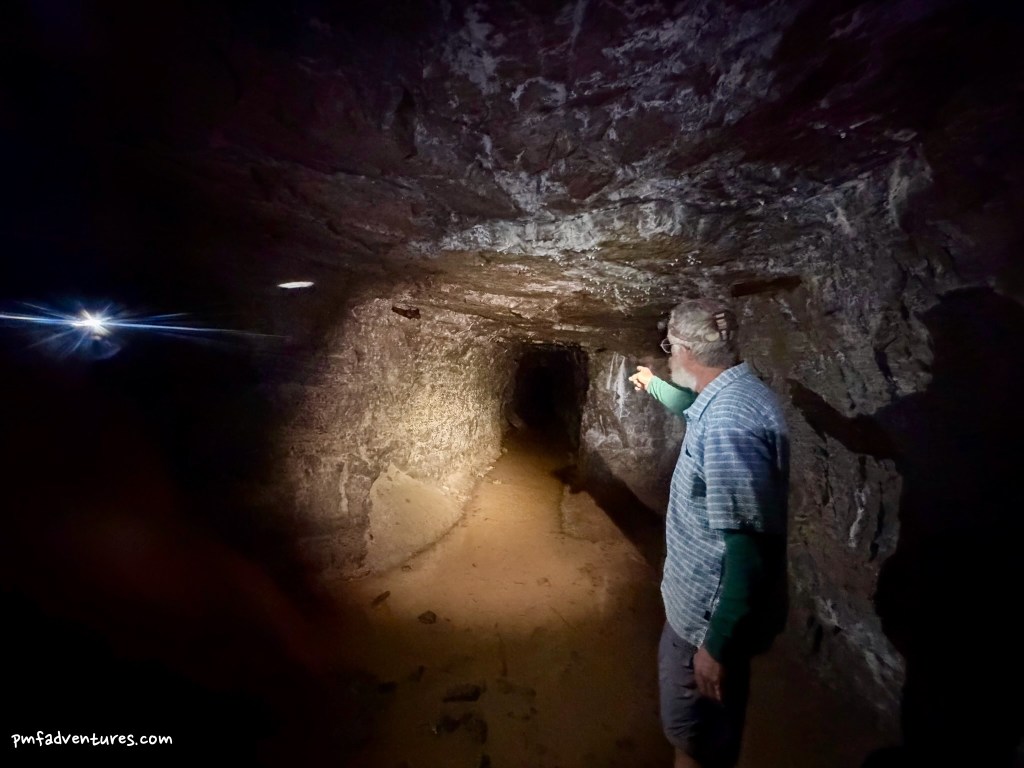
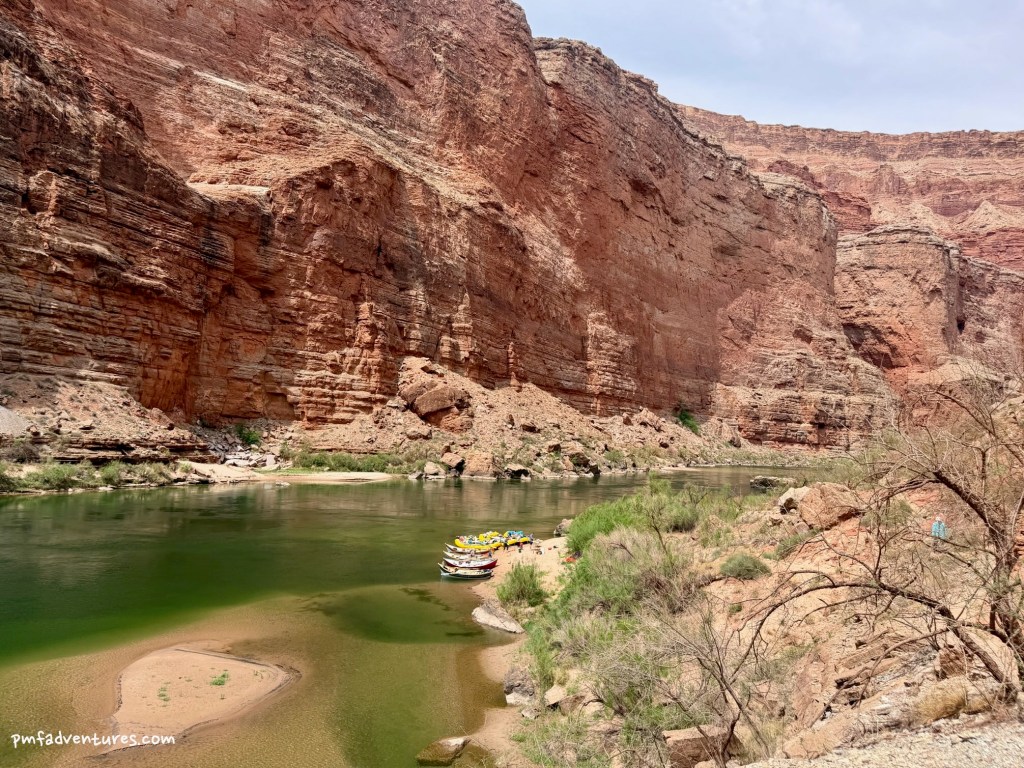
We stopped for lunch at the Marble Canyon Dam site and walked up to explore one of the tunnels that was built for testing. We had been concerned about the wind picking up in the afternoon, and true to form, it did start blowing, but surprisingly we had a tail wind for all but the last couple of miles to camp. We stopped at Saddle Canyon just after 3 PM and as we were setting up camp, the wind really started howling. I found what seemed like a nice sheltered spot where I could sleep out, but then the wind shifted and my tarp was covered with sand. Thankfully, the wind mostly died down before dinner and it only gusted a few times overnight, so I didn’t end up with sand in my teeth while I slept.
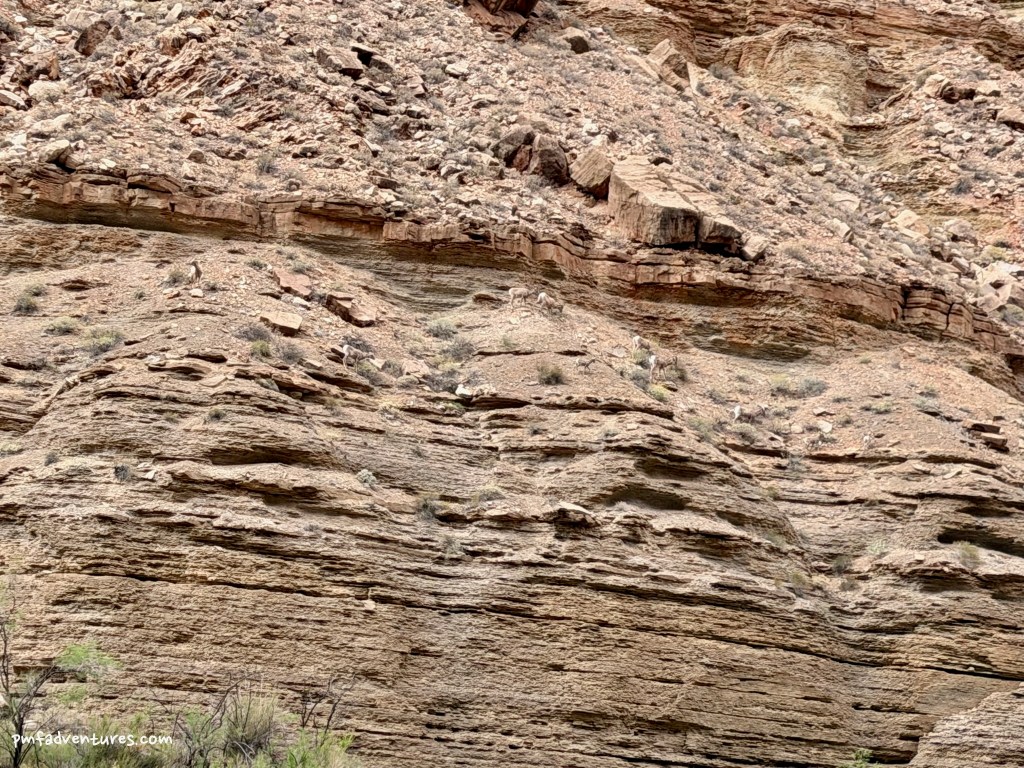
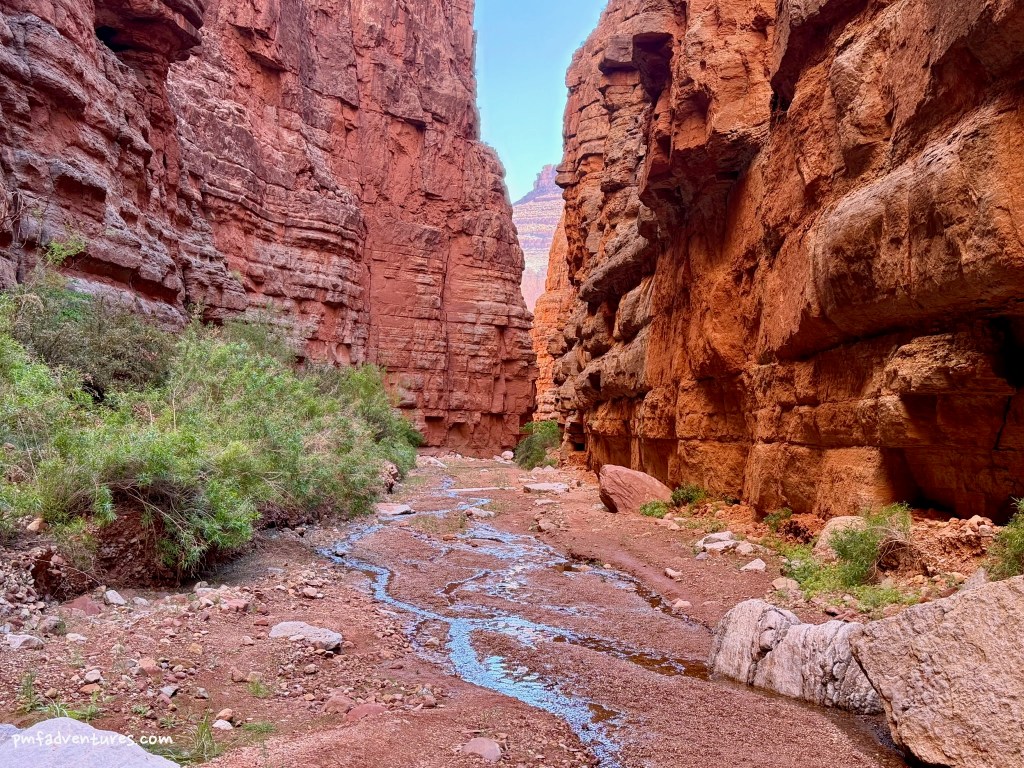
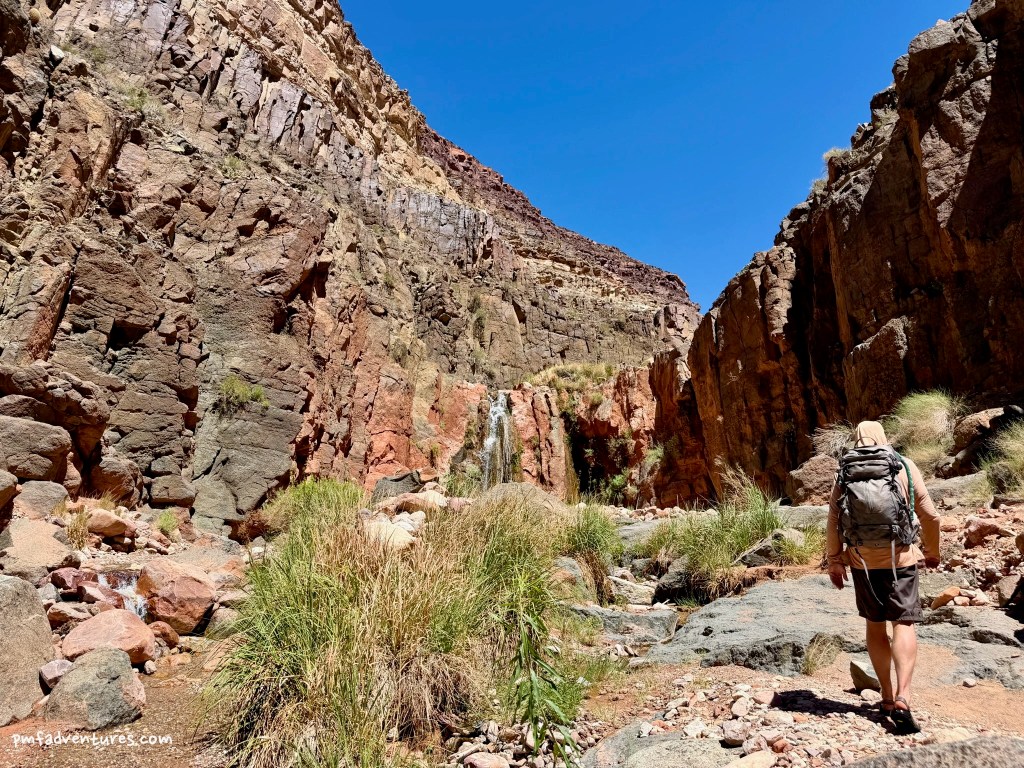
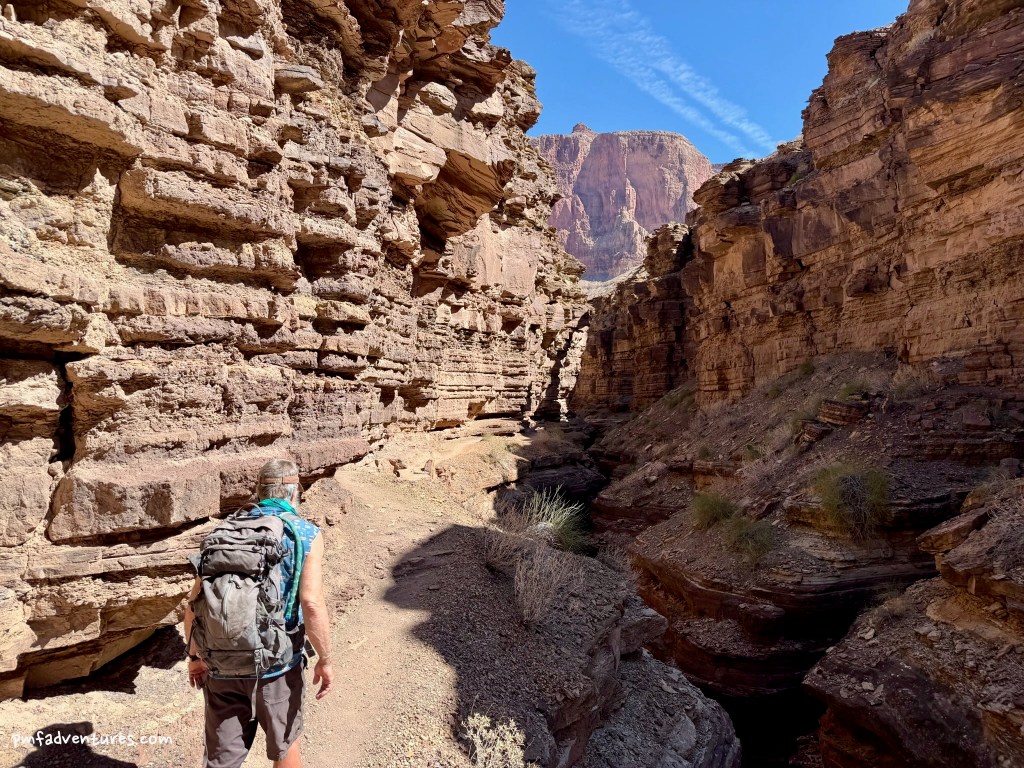
Day 4 (4/17/2026) – Saddle Canyon to Main Nankoweap Camp: Our last two days were long ones on the river (20 miles and 15 miles), which didn’t leave much time for hiking. But those days set us up for a short day today, so we got to do two hikes. After breakfast, we hiked up Saddle Canyon for a bit over a mile. The route climbs up the hillside behind camp and then contours around before dropping into the creek bed above a big pour over. The creek bed starts out dry, but as you walk up it the canyon narrows, water emerges, and then the walls pinch in to create a lovely grotto with a waterfall.
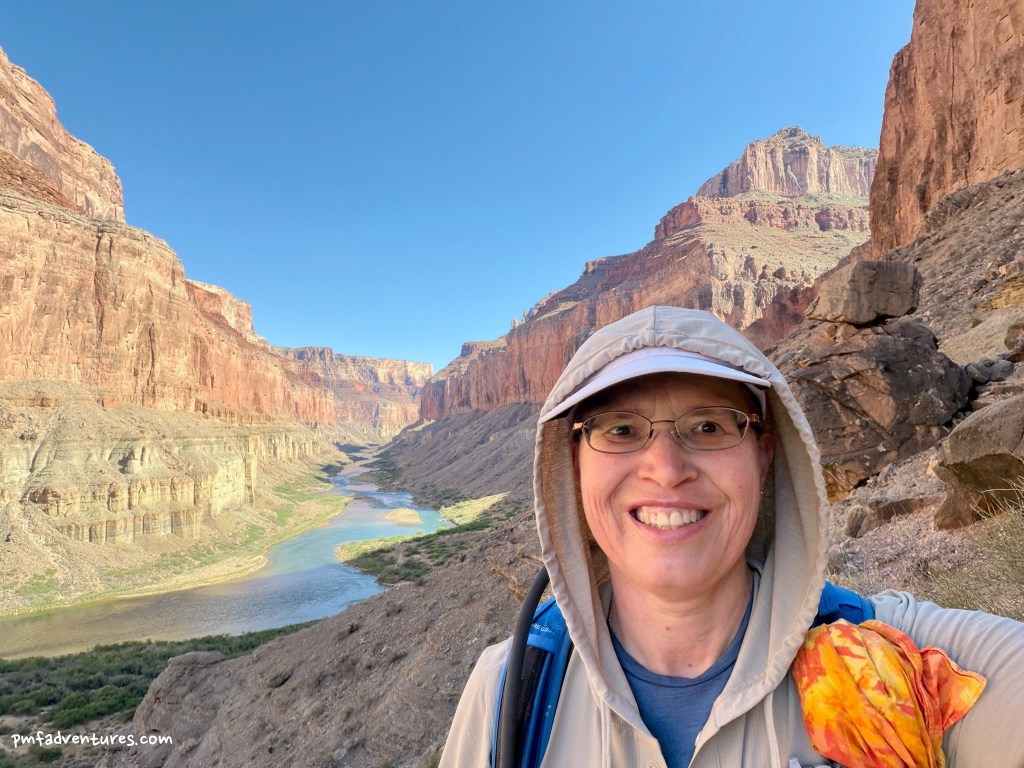
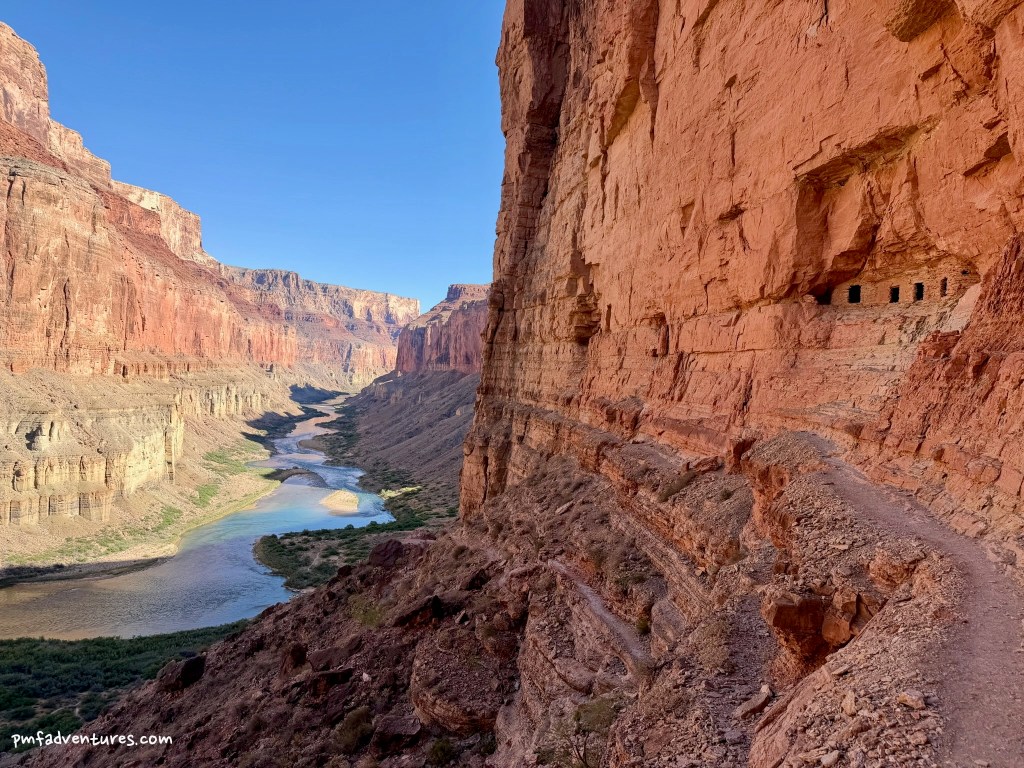
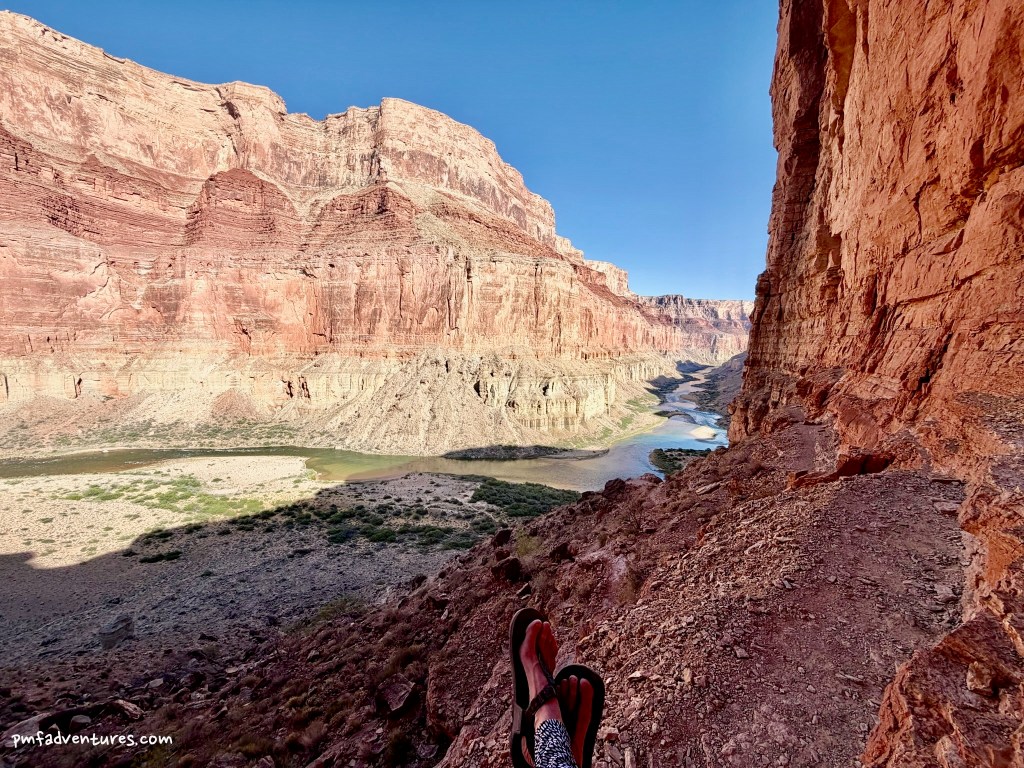
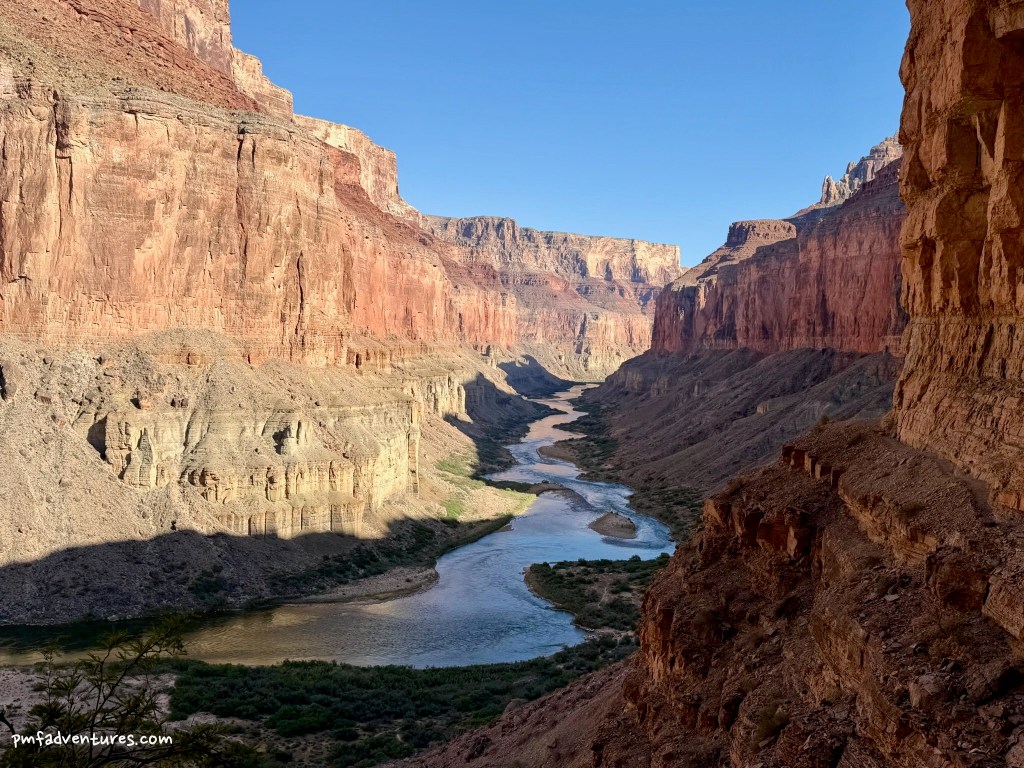
When we returned from the hike, we ate lunch and then got in the boats for a short five mile run down to the Main Nankoweap Camp. I rode in the Black Canyon with Andre, so I had now rotated through all of the dories. Main Nankoweap is an extremely popular camp, so we were surprised but happy to find it empty when we got there. Most of the group headed off on a hike to the Nankoweap granaries shortly after we arrived, but I opted to hang out, set up my camp, and do some laundry instead. After relaxing for a couple of hours, I headed off on my own to hike up to the granaries. One of the highlights of the whole trip was the thirty minutes I spent just sitting on a ledge, enjoying the view and the solitude.
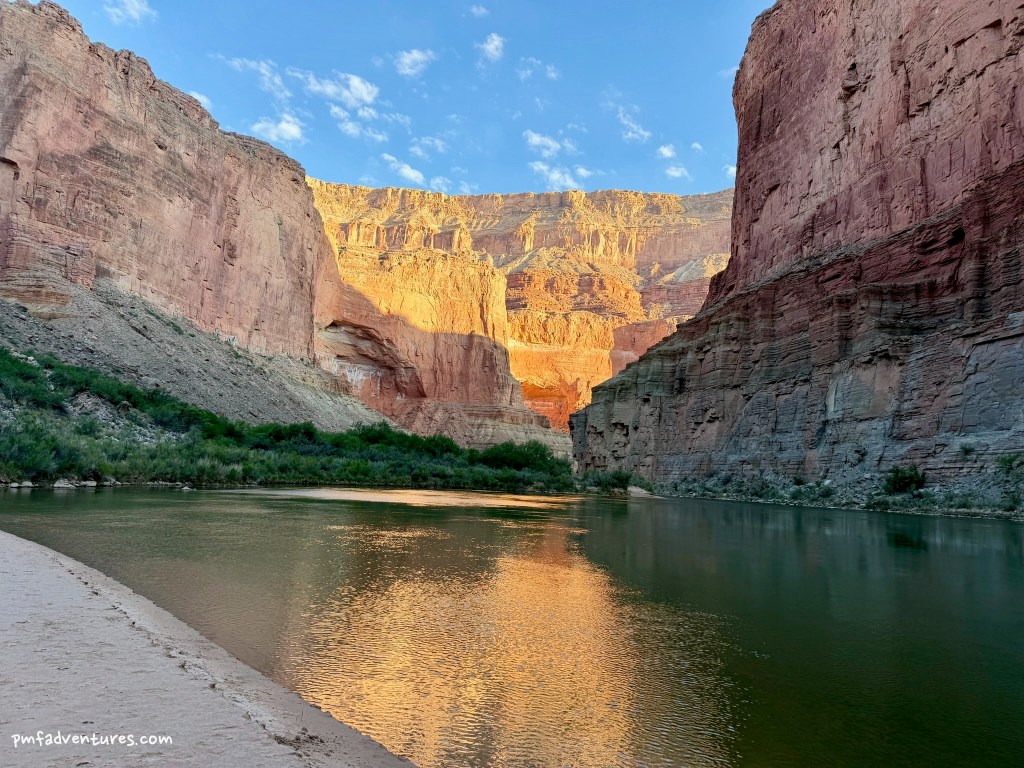
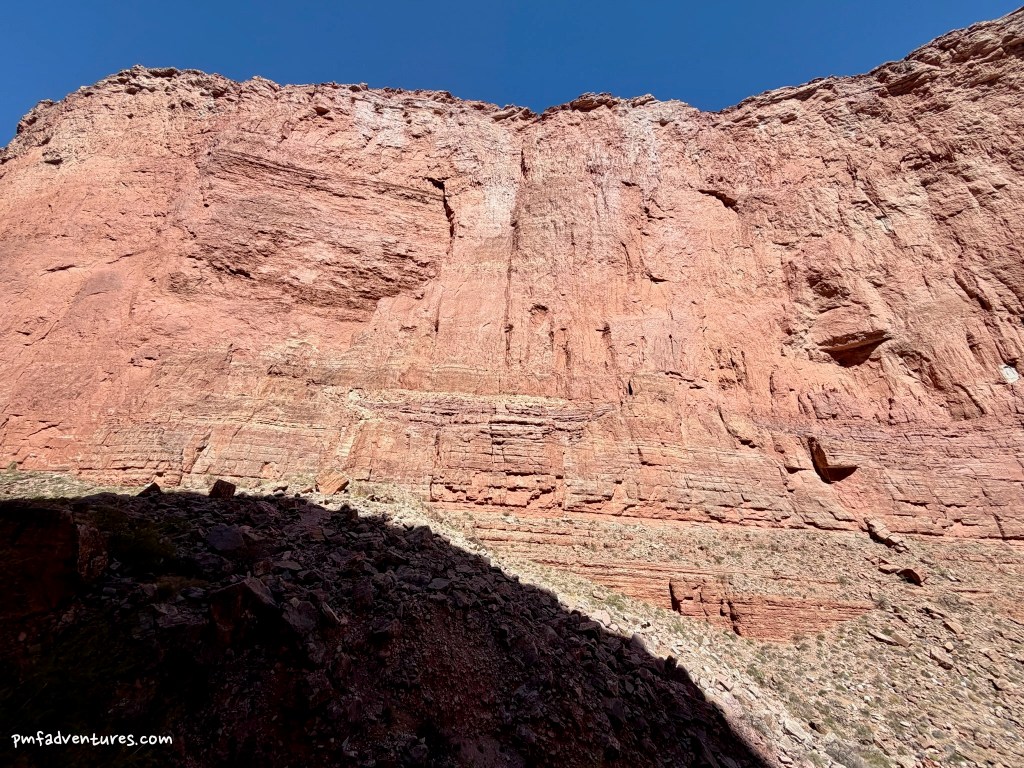
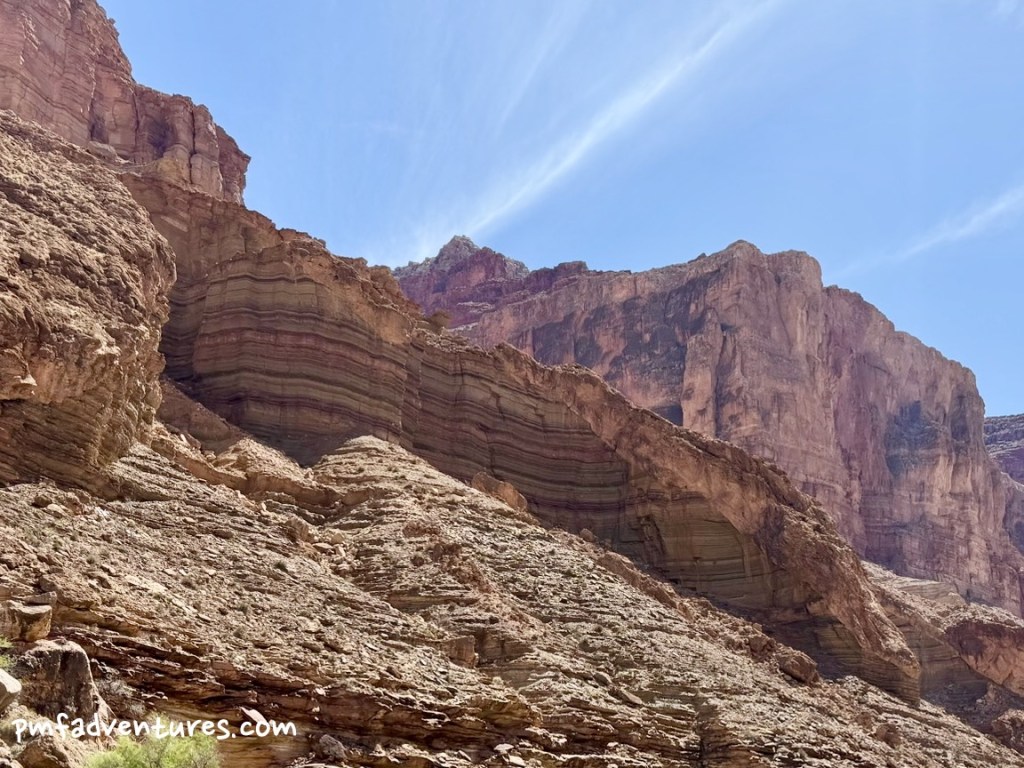
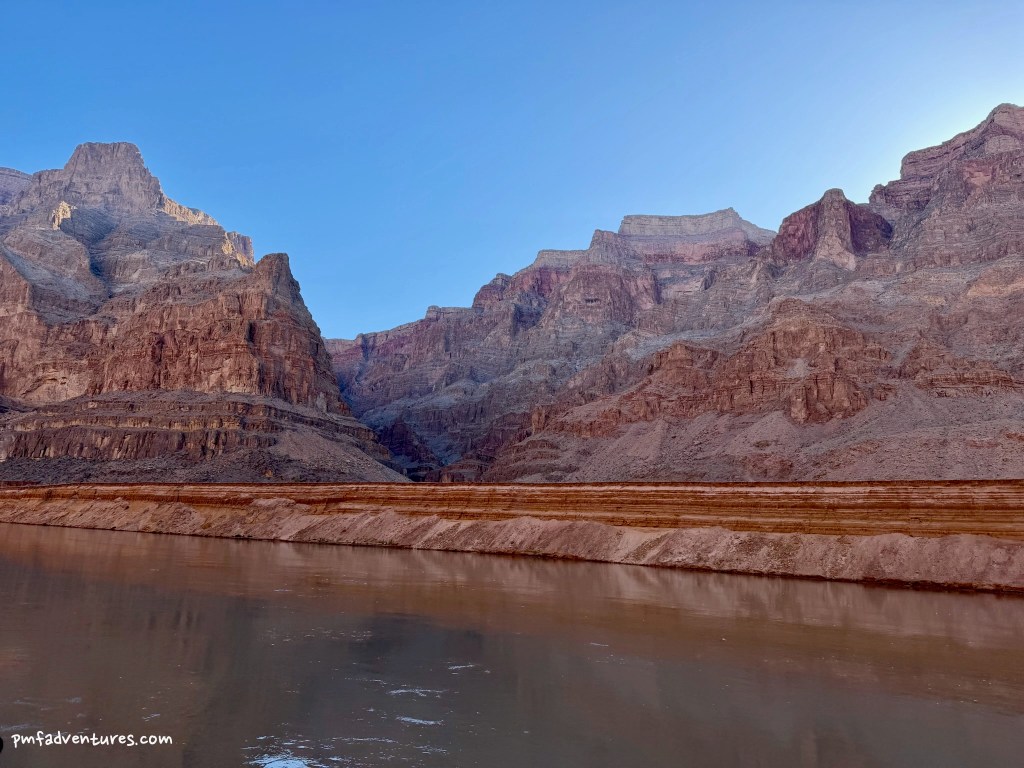
Day 5 (4/18/2026) – Main Nankoweap Camp to Lava Canyon: On every trip I make into the canyon, I try to expand my knowledge and understanding of its geology. Today gave me two opportunities to add to my repertoire. After we left Nankoweap, we passed by a great exposure of Bright Angel Shale that helped me learn to identify it. Bright Angel Shale normally forms slopes, not cliffs, so it can be difficult to spot, but this cliff really showed off its multicolored layer-cake appearance. My favorite rock formation, Tapeats Sandstone, also appeared in this stretch of river.
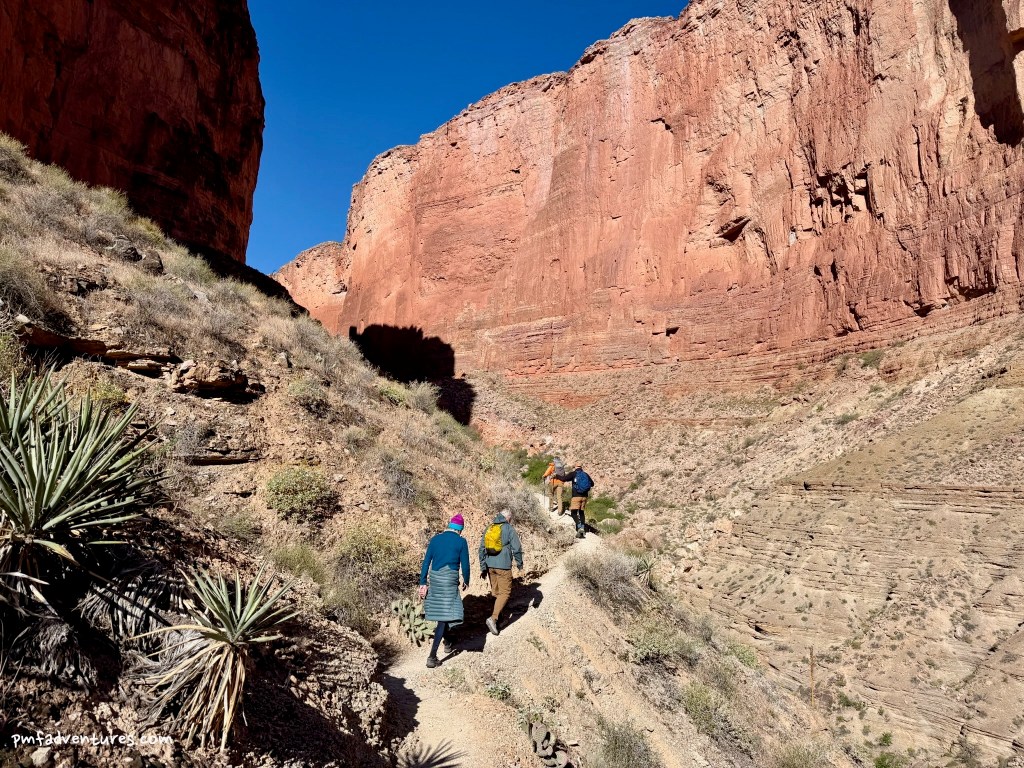
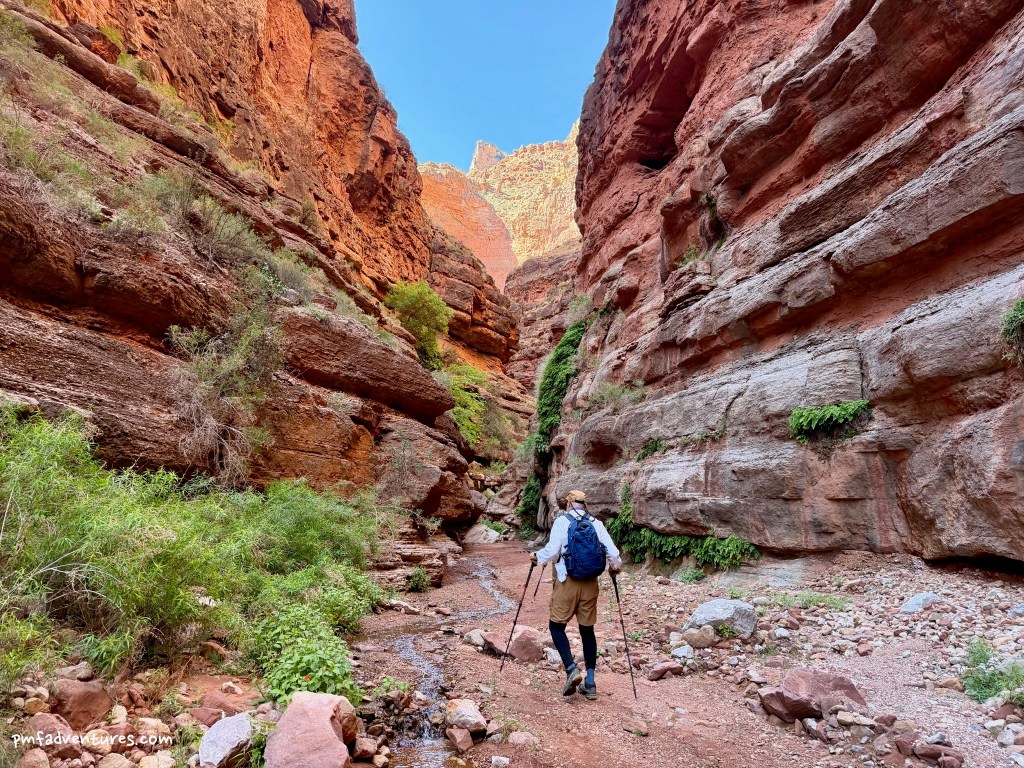
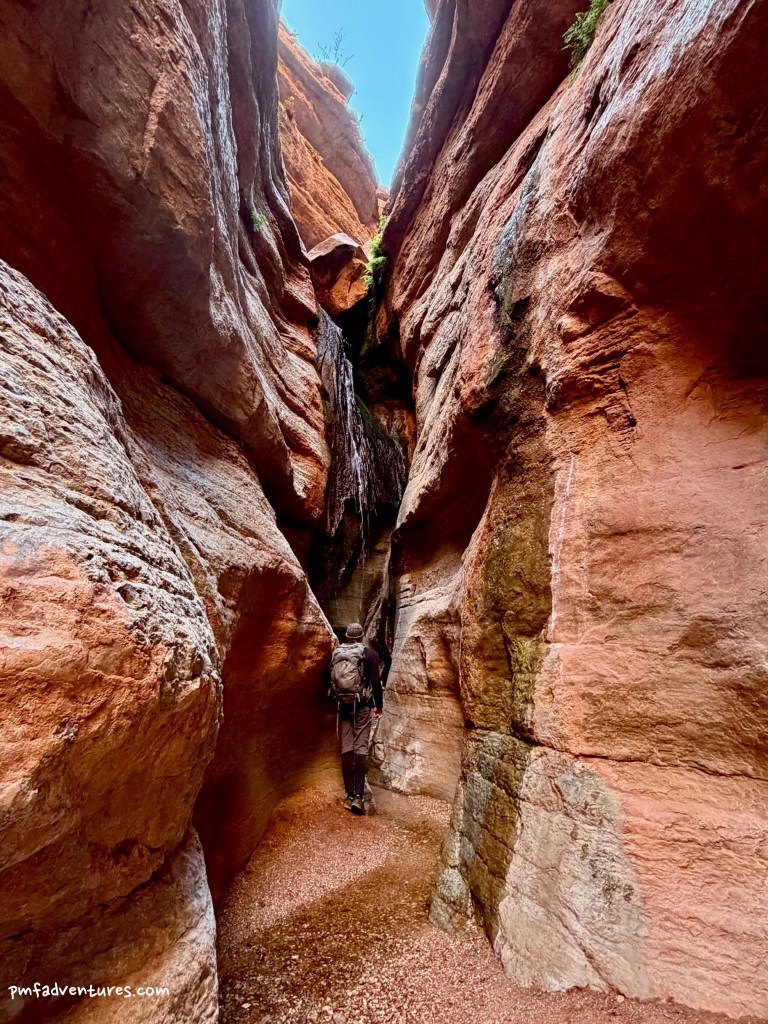
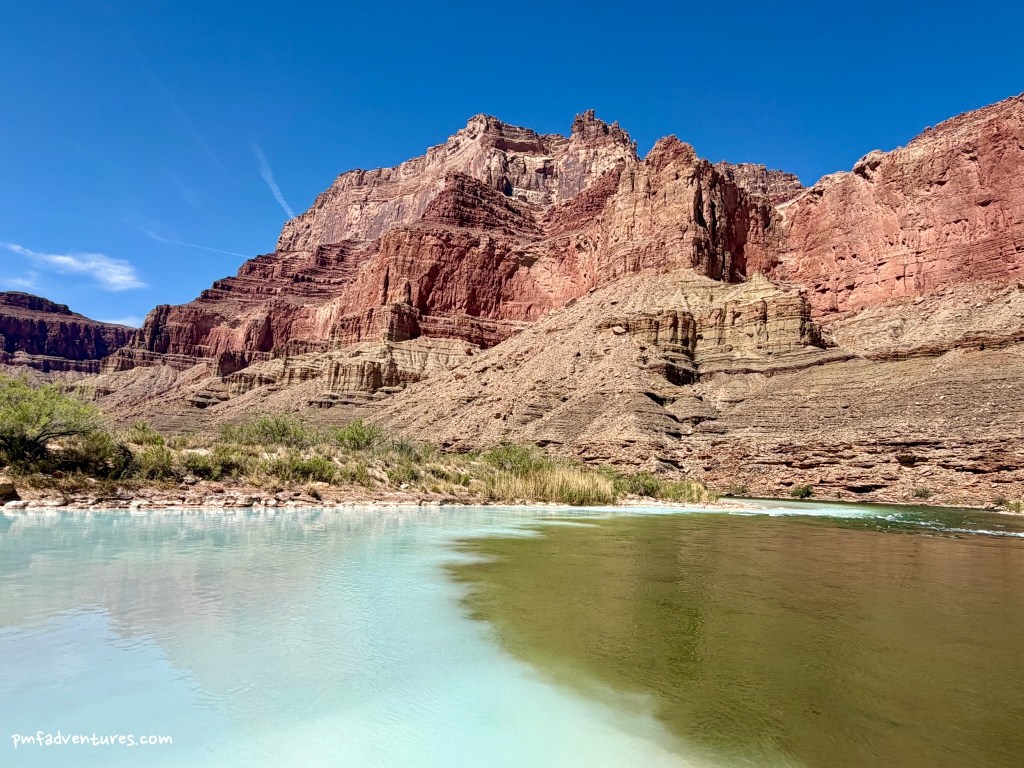
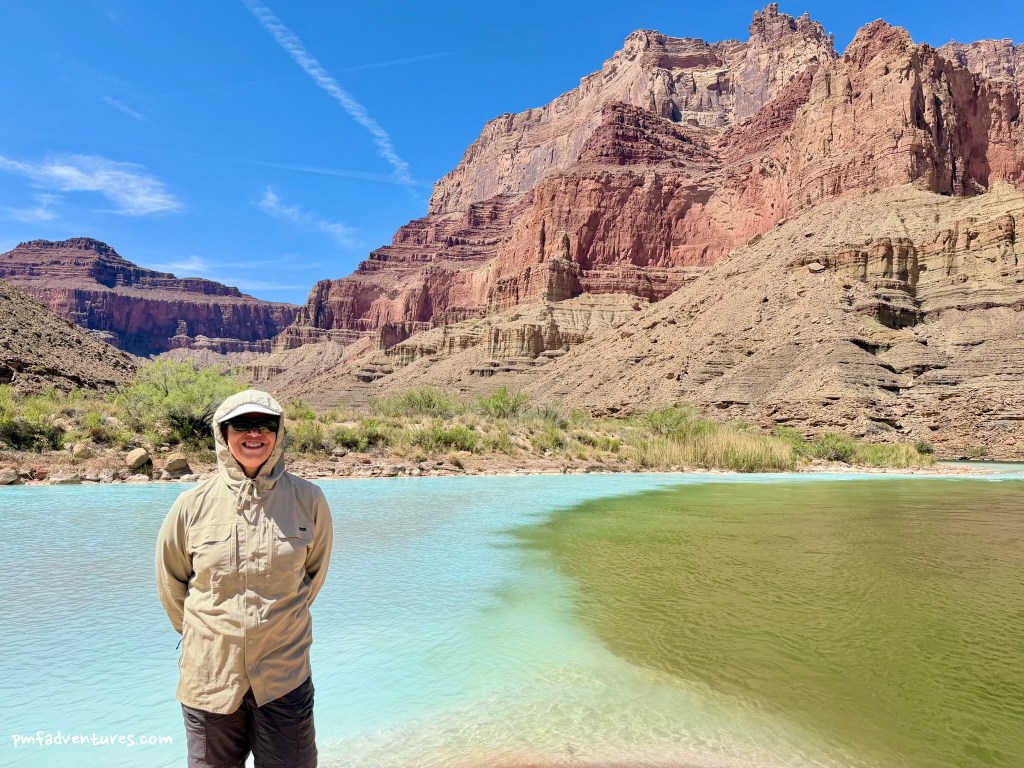
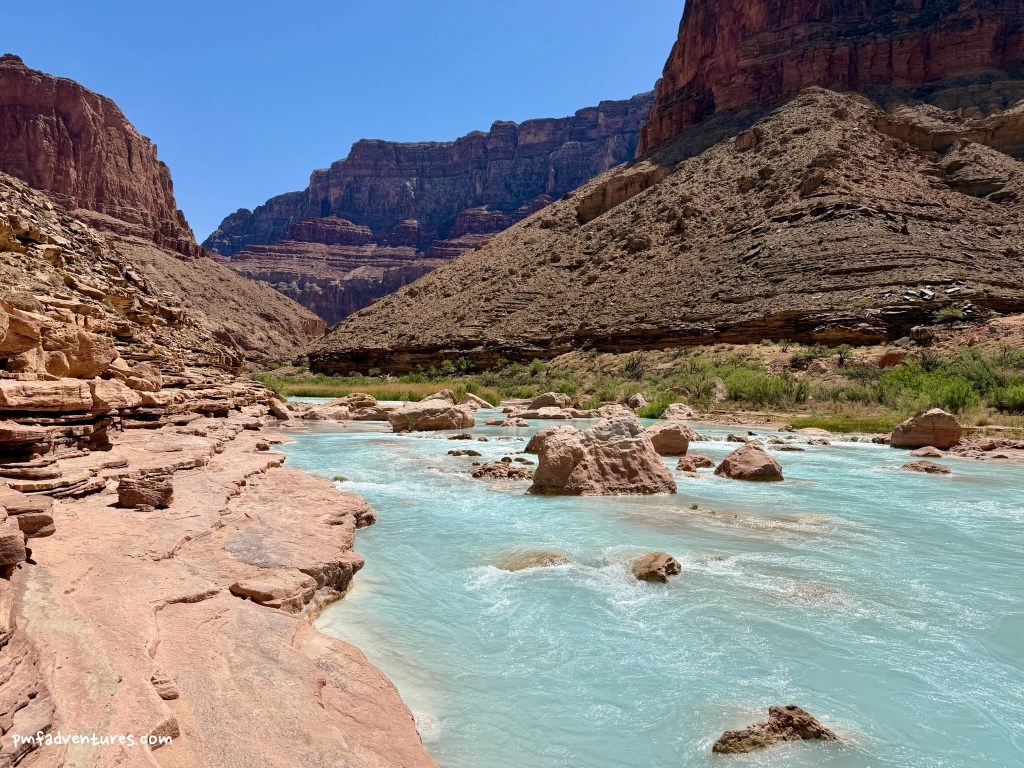
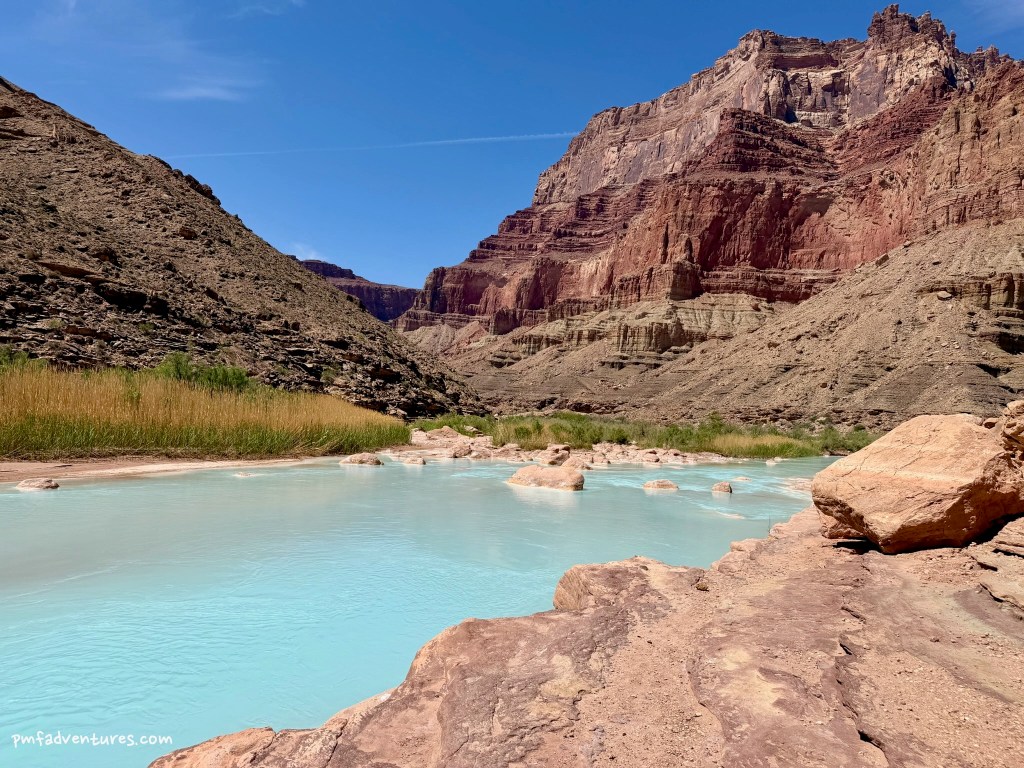
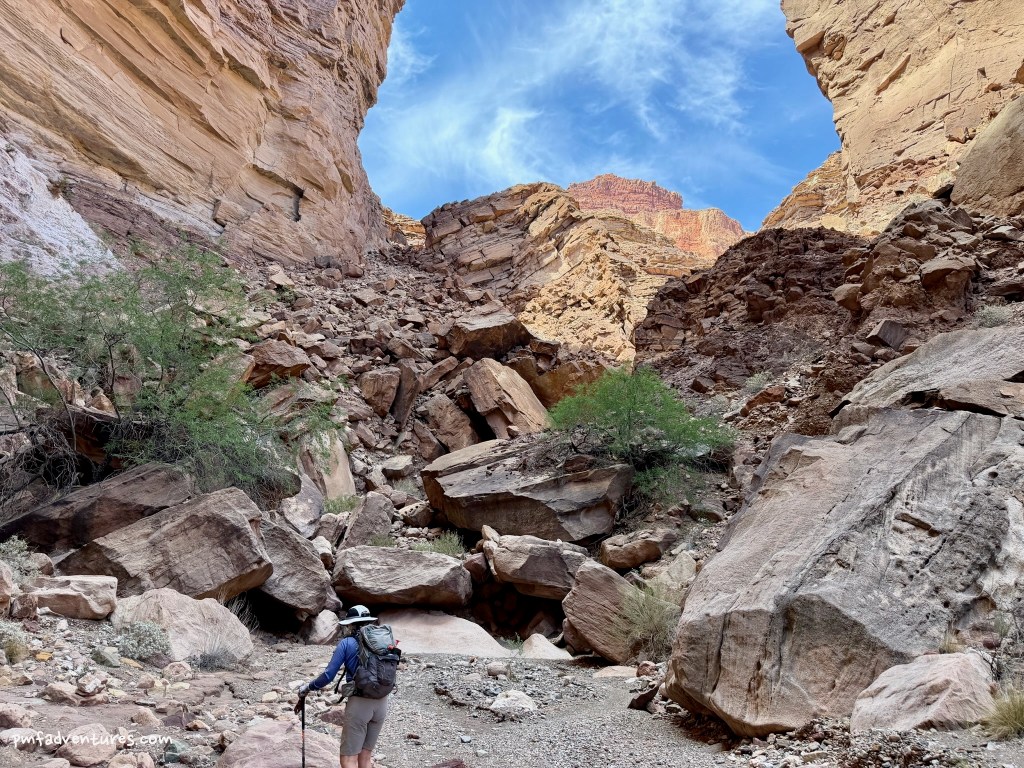
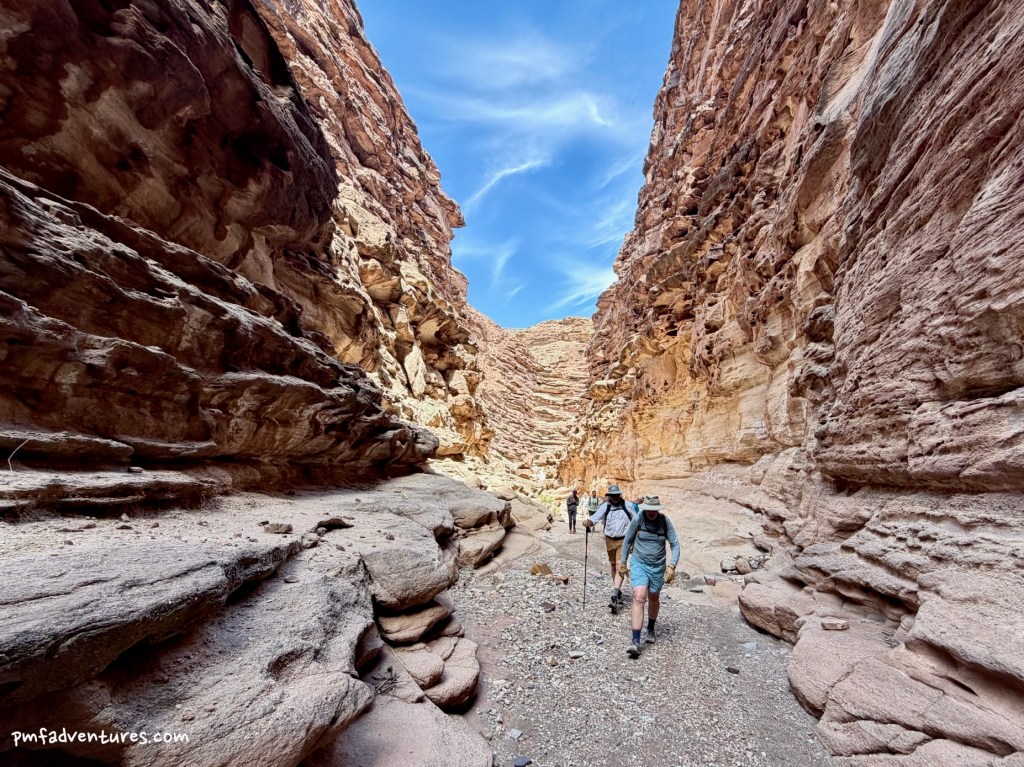
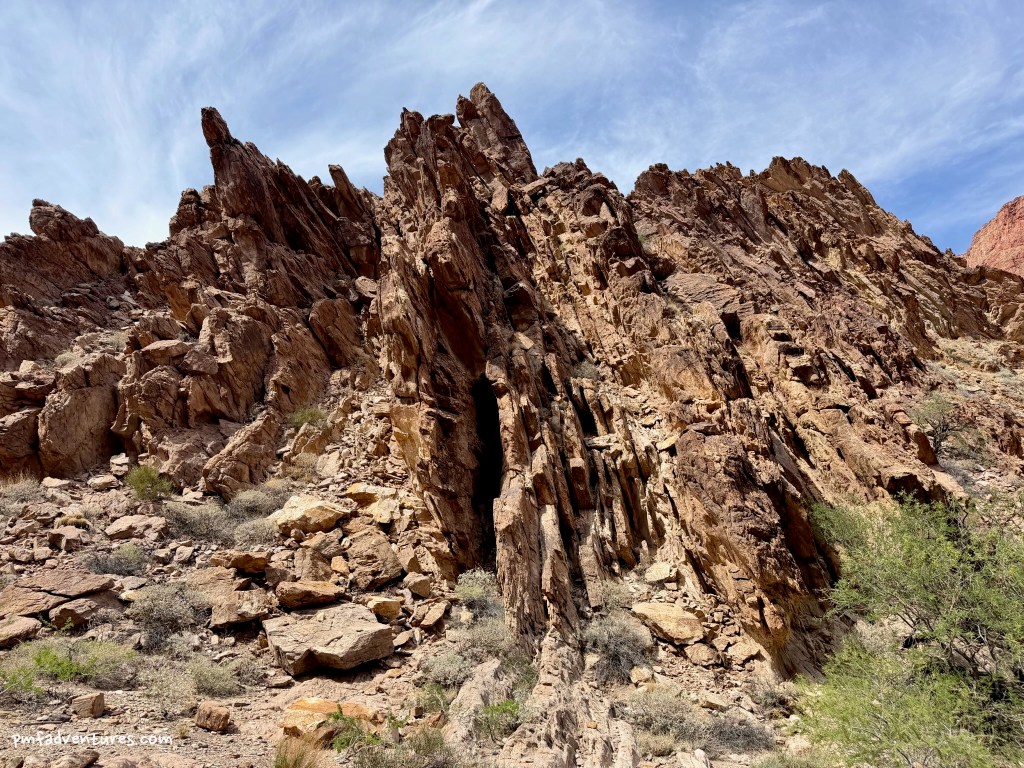
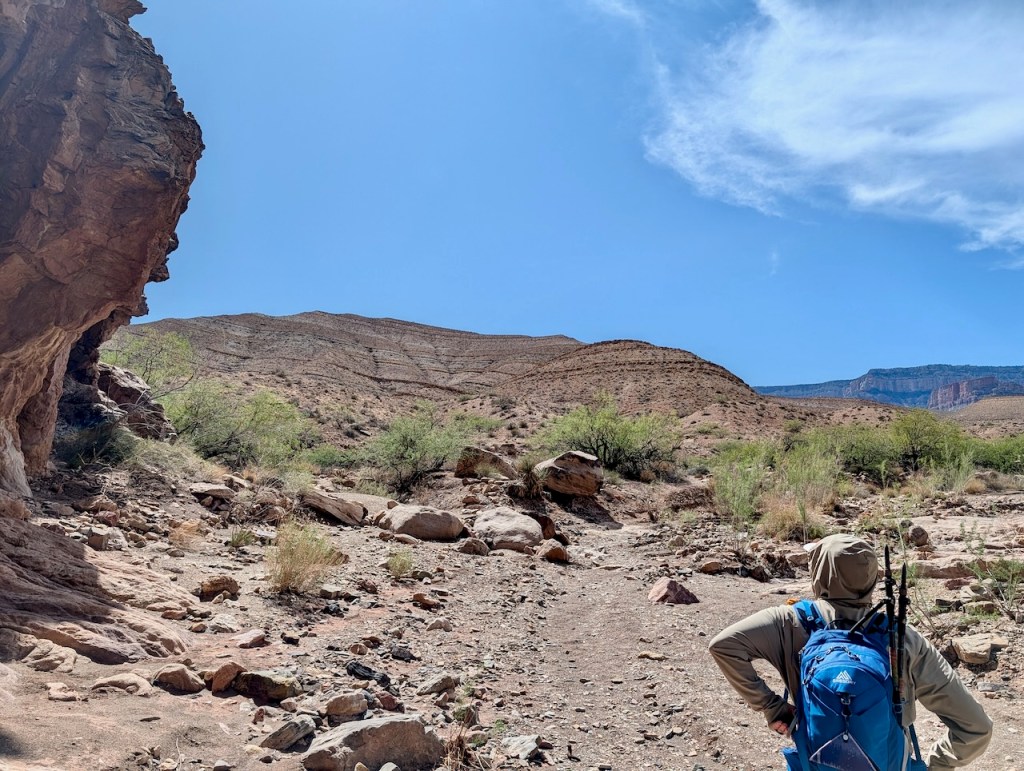
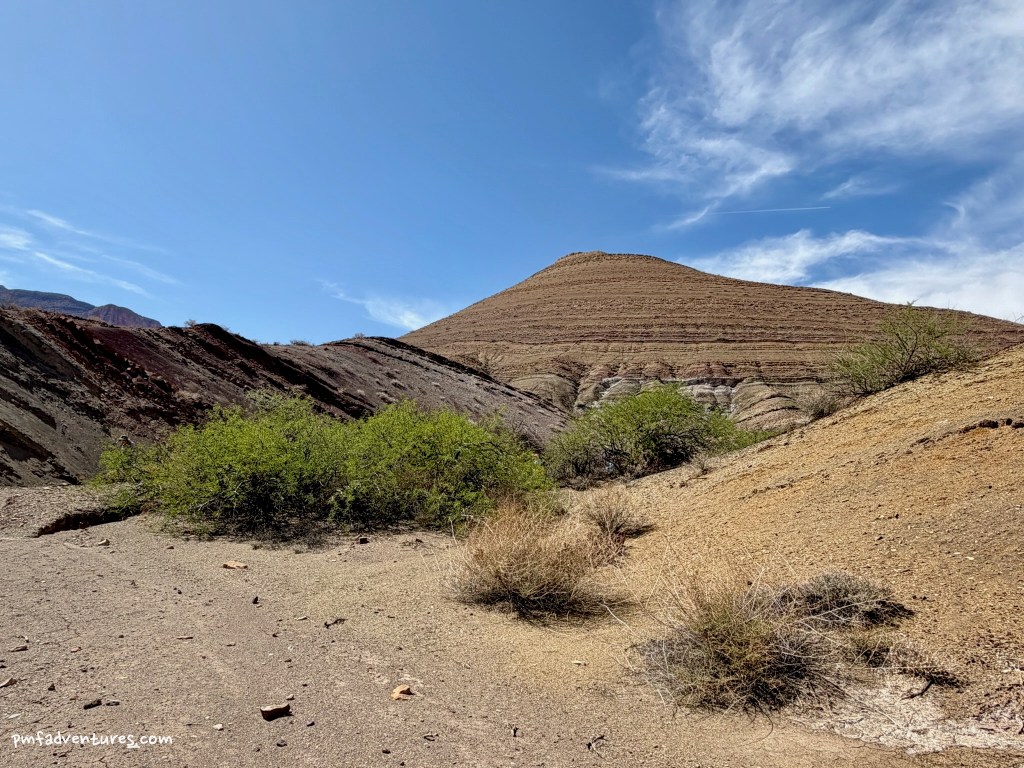
After about two hours on the water, we arrived at the confluence with the Little Colorado River and to our delight the LCR was showing off its lovely milky-blue water. Our guides said it was as blue as they’d ever seen it, and I was thrilled, since it had been muddy brown on our trip in 2018. We spent well over thirty minutes just absorbing the beauty of this special place, and then we headed downstream and stopped for lunch at Carbon Canyon. After lunch, most of us opted to do the Carbon Canyon / Lava Chuar loop hike, which involves hiking up Carbon Canyon for about a mile until it intersects the Butte Fault, traversing the Butte Fault south through the Chuar Valley for a mile, then dropping down into Lava Canyon and following it back to the river, where we would be camping for the night.
This hike provided my second opportunity to explore some new geology. The Butte Fault is the biggest fault in the eastern Grand Canyon and it is responsible for the wide open views in this section of the canyon. When you are hiking up Carbon Canyon, it is very easy to know when you’ve arrived at the fault, as the normally horizontal Tapeats Sandstone is suddenly titled vertical. And the Chuar Valley is one of the few places where you can see the Chuar Group rock layers, specifically the Kwagunt and Galegos Formations, that are part of the Grand Canyon Supergroup. As we walked through the tilted strata and rolling hills of this valley, I felt like we had been transported from the Grand Canyon to Death Valley.
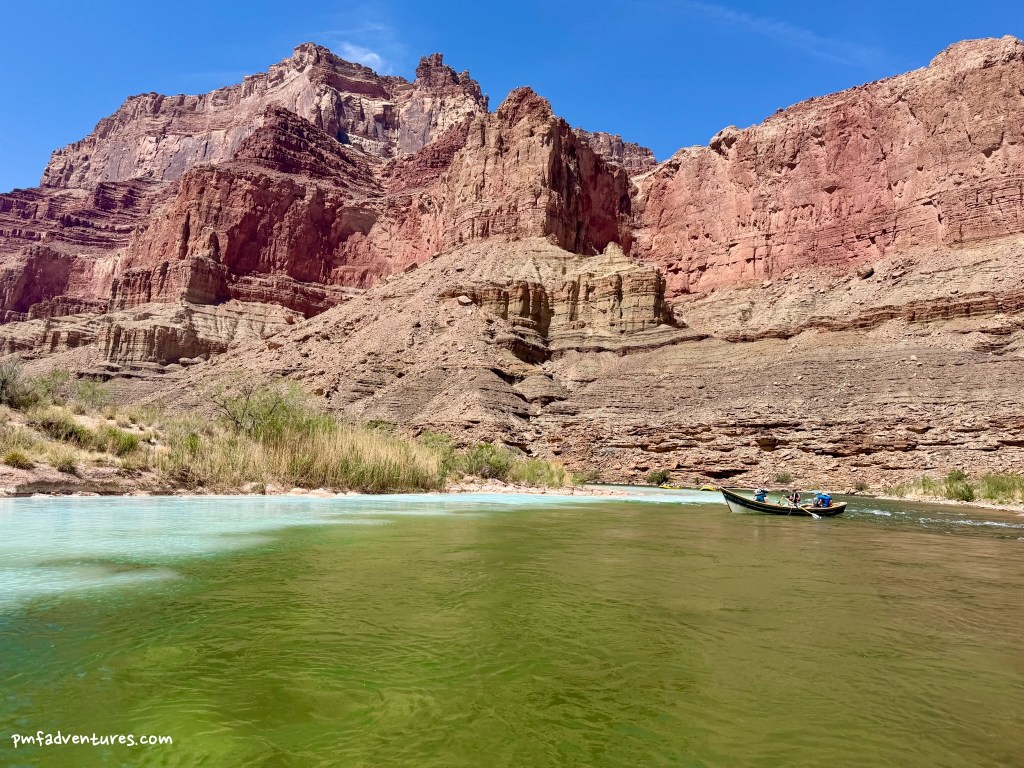
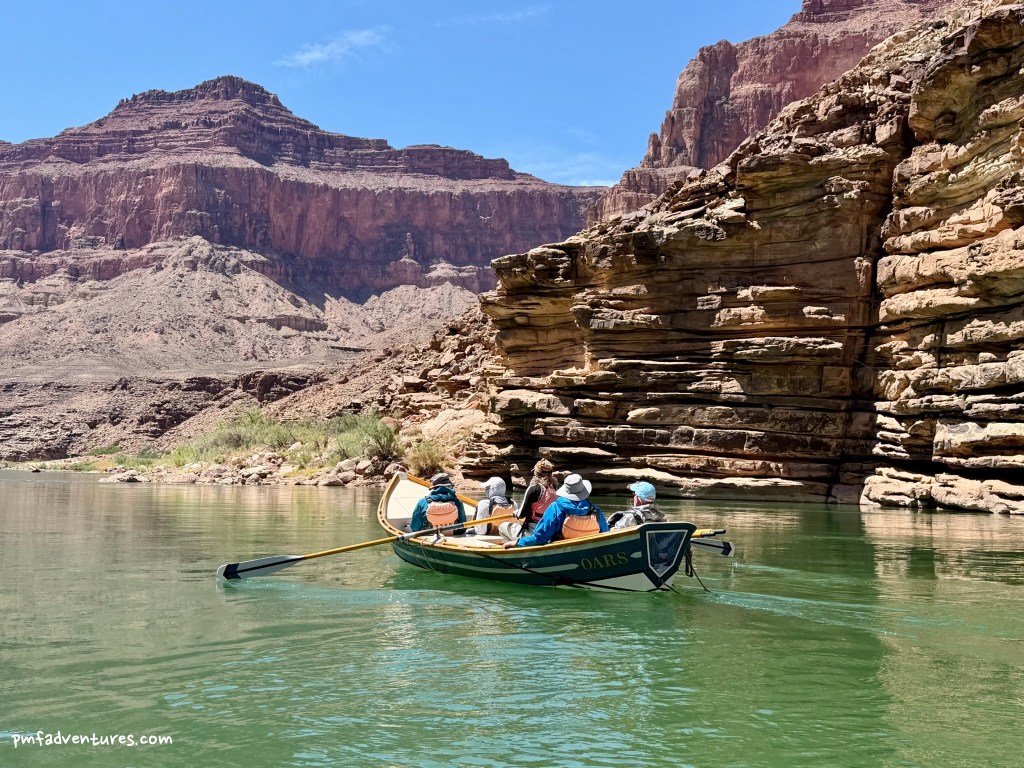
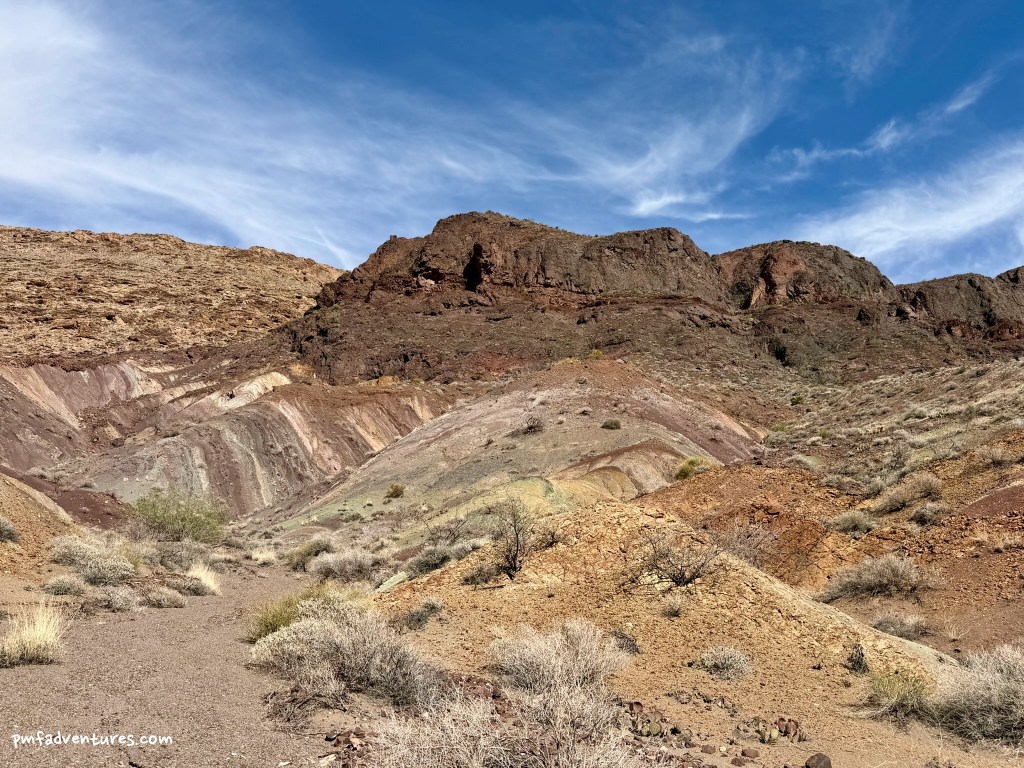
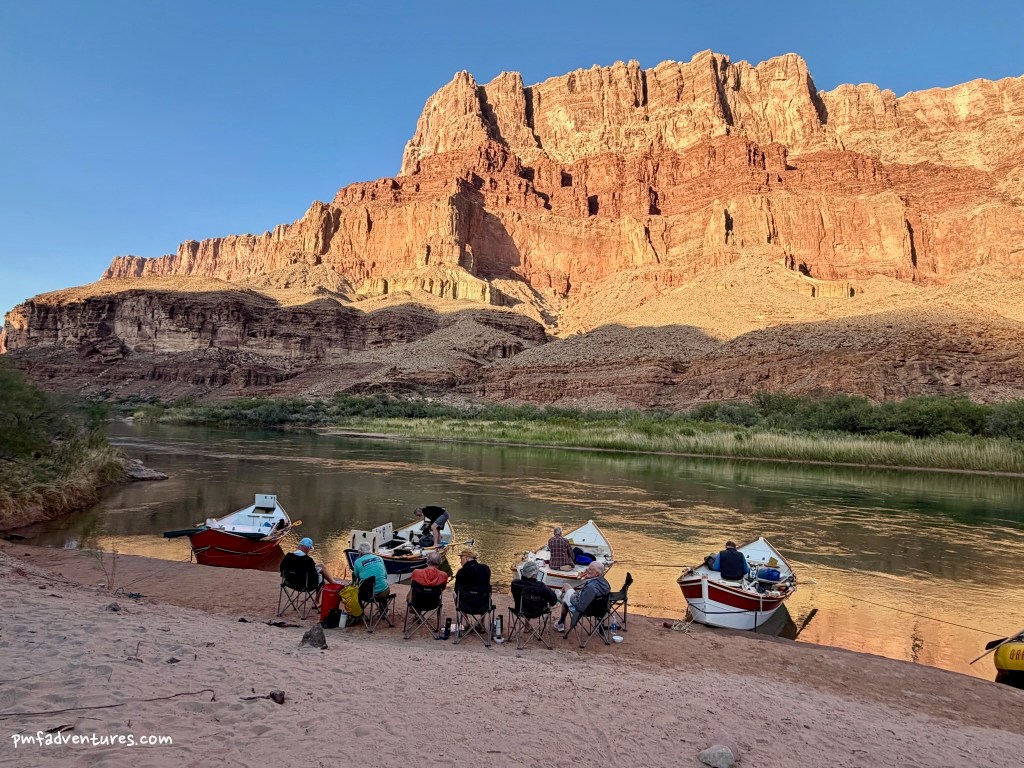
Day 6 (4/19/2026) – Lava Canyon to Lower Cremation Camp: Our rafting trip in 2018 was my first time in the Grand Canyon, so everything I saw was brand new. But since then, I have done ten backpacking trips into the canyon, and we were now in the portion of the canyon that I have visited on foot. It was very cool to float through where I have hiked and be able to contrast the different ways to experience the canyon.
After two shorter days on the river with lots of great hiking, we were in for a longer day, as we needed to cover over 21 miles to set us up for the passenger exchange we would be doing the next day. It was also a serious whitewater day, with several rapids at the upper end of the Grand Canyon’s 1-10 rating scale. And we were going to be covering a lot of ground geologically too, starting in a wide-open section of the canyon that cuts through soft Dox Sandstone and ending in the Upper Granite Gorge, where the walls of Zororaster Granite and Vishnu Schist tower over the narrow river channel.
I chose to ride in the Ticaboo with Dellie today, as I wanted to see her in action as we ran some big rapids. We had a great run of Tanner Rapid and then we made a short stop at the Unkar Delta to look at the archaeologic site. We stopped for lunch just before Hance Rapid, and then stopped again at Hance itself, as it was one of the rapids that the dories would be running empty. At 8,000 cfs and lower, there are lots of exposed rocks in Hance, so the dory guides have to do some crazy maneuvering to avoid them and it is just too difficult and risky if there are passengers on board. Thankfully, all the boats had good runs of Hance and we got back in the dories to continue downstream.
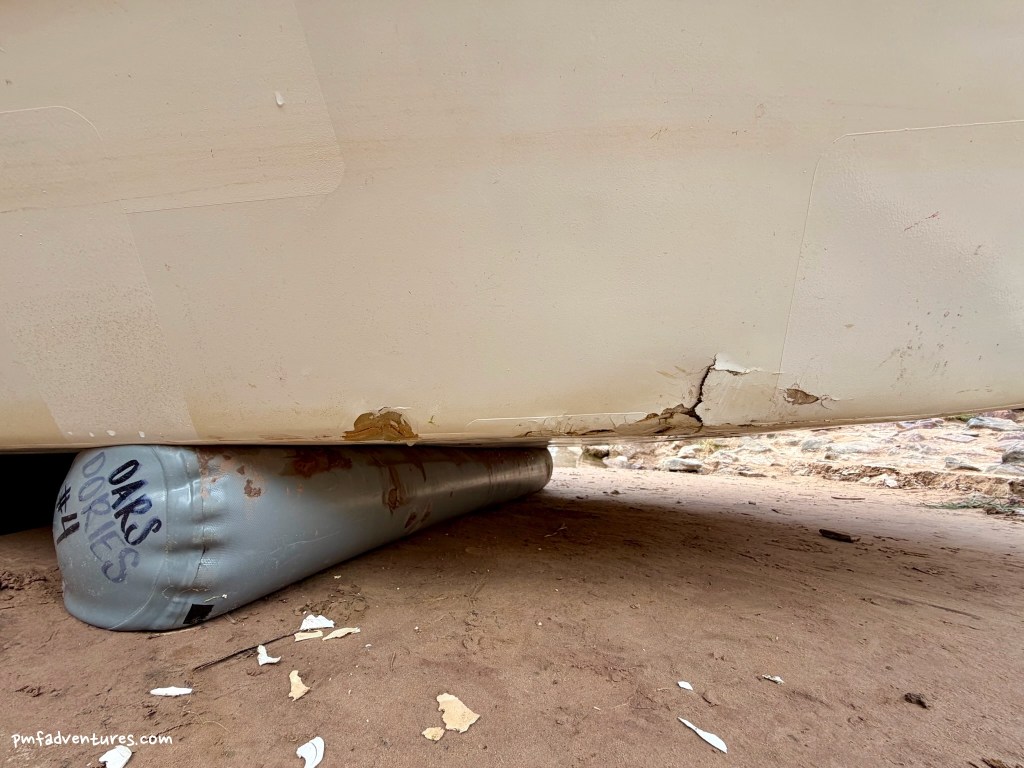
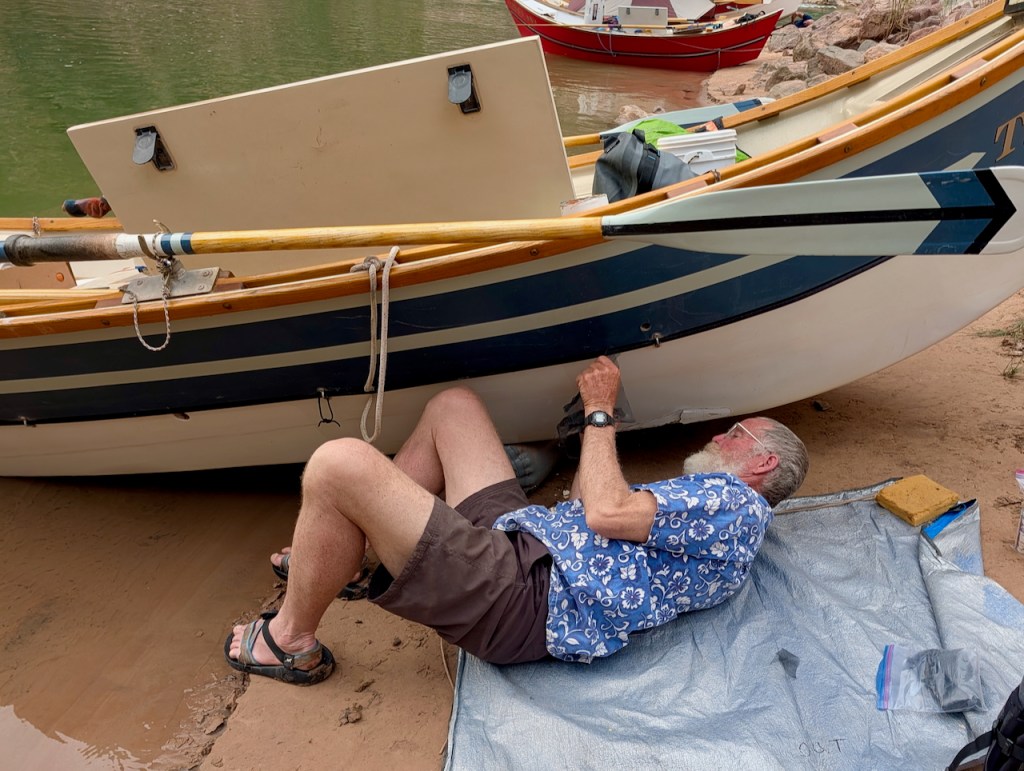
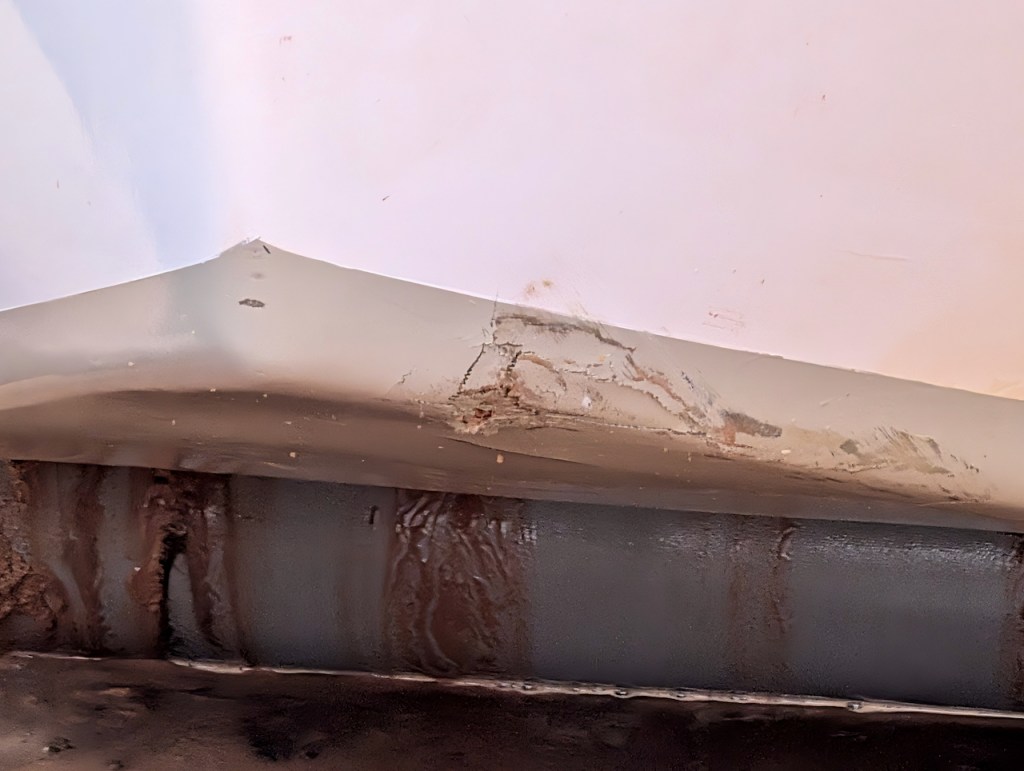
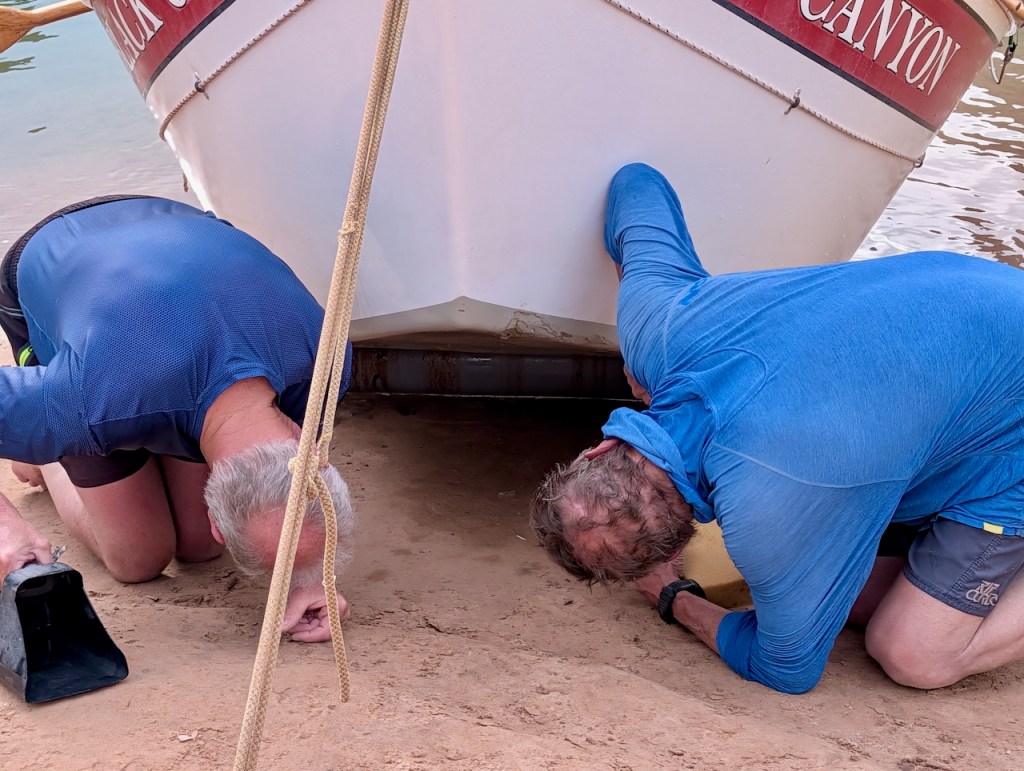
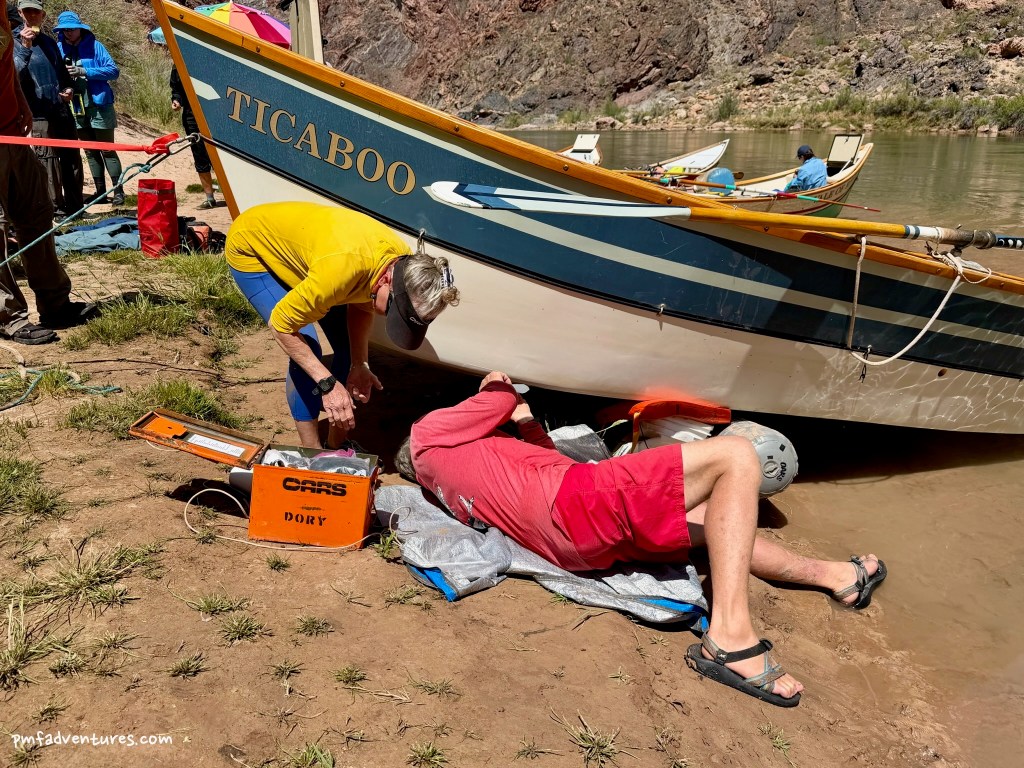
Two miles down the river we encountered our next big rapid, Sockdolager, and boy did we get socked! We hit a big wave sideways that completely filled the dory, at which point it became almost impossible to maneuver until we could bail out the water, but you can’t bail in the middle of a rapid as you have to hold on. Unfortunately, we hit a rock while we were sideways and it did a bit of damage to the boat. Andre also hit a rock in the Black Canyon, so there were two boats that needed some repair work after we got to camp. Thankfully, all the boats ran the rest of the rapids without any issues, and we pulled into Lower Cremation Camp at 4 PM. There were some threatening looking clouds, so I set up my tent as a precaution, but still hoped to sleep out. Since we had nine guests leaving the next morning, the crew fixed us a wonderful celebratory dinner of filet mignon, mashed potatoes, and salad, and then pulled out ice cream bars for dessert.
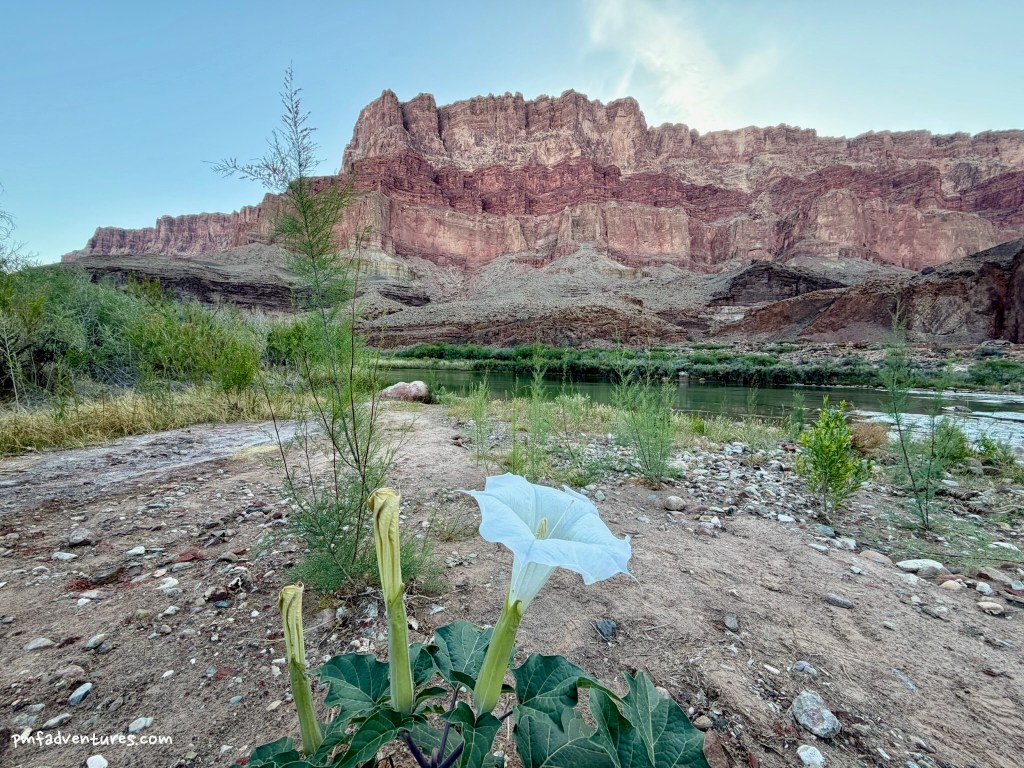
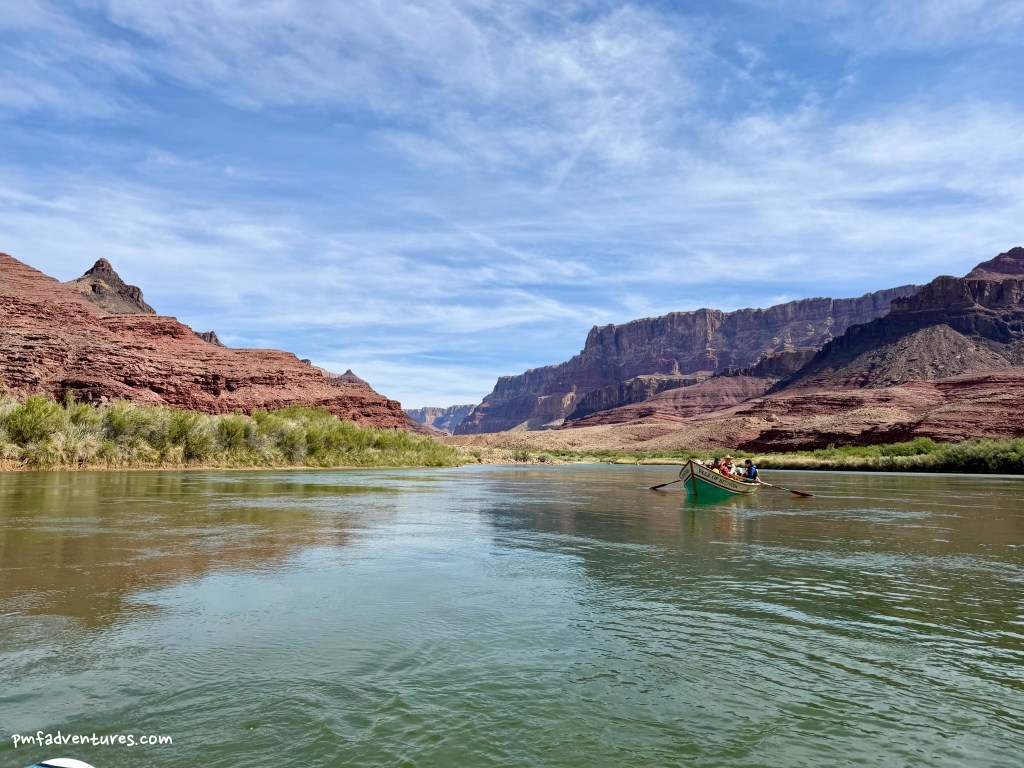
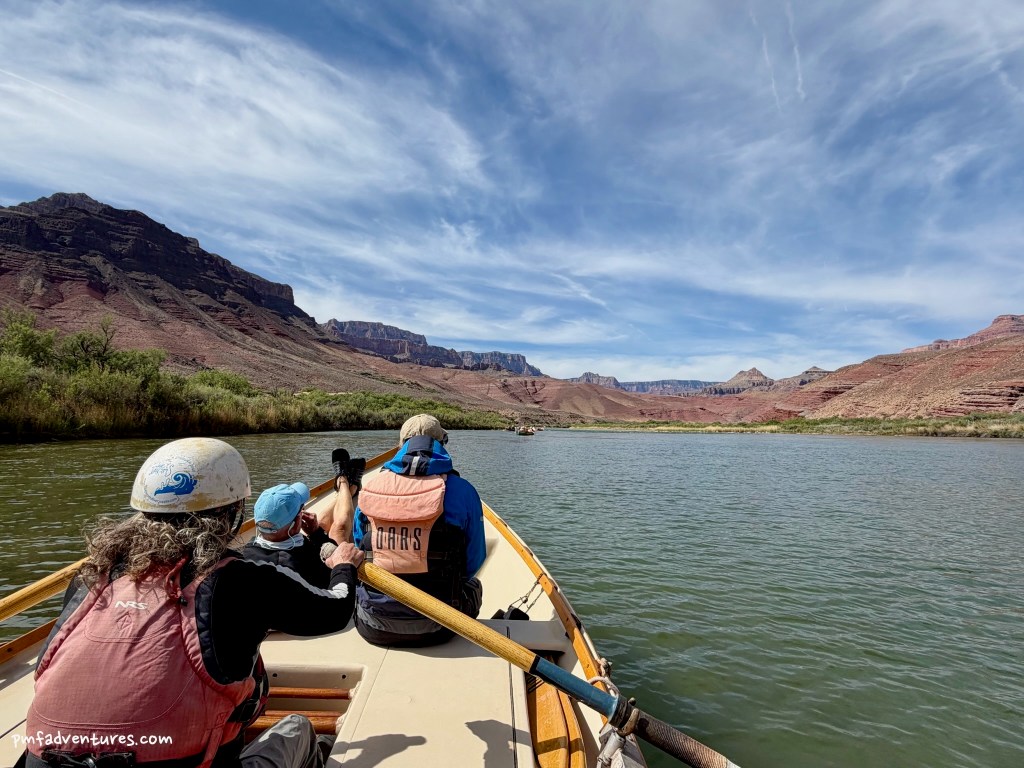
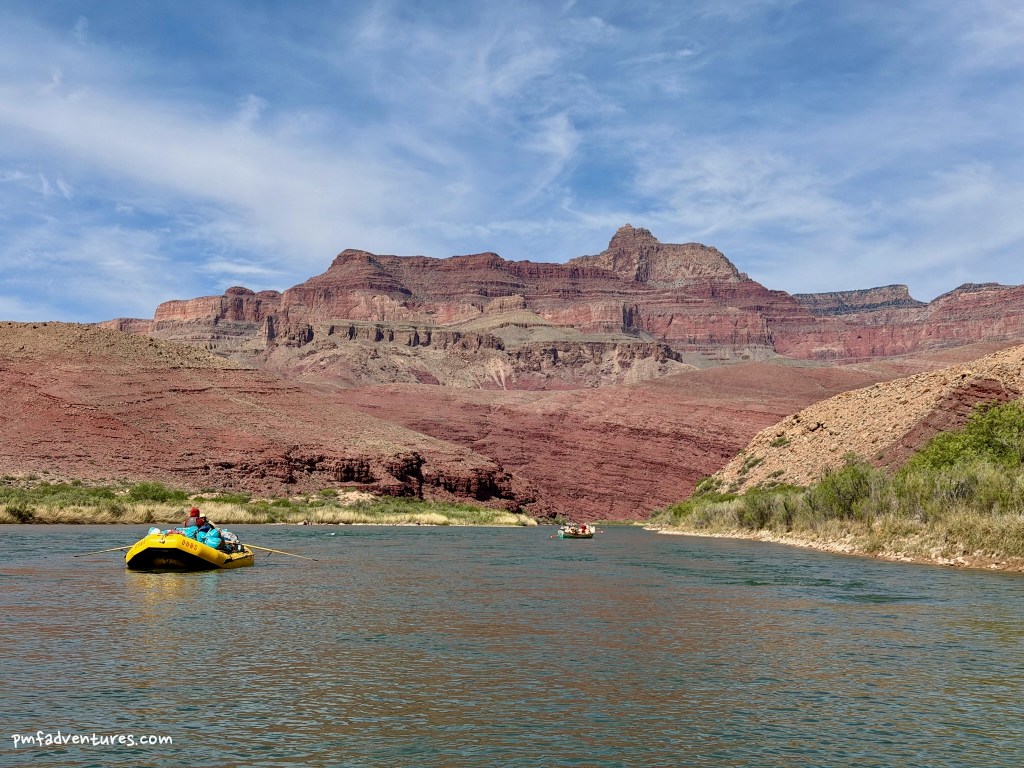
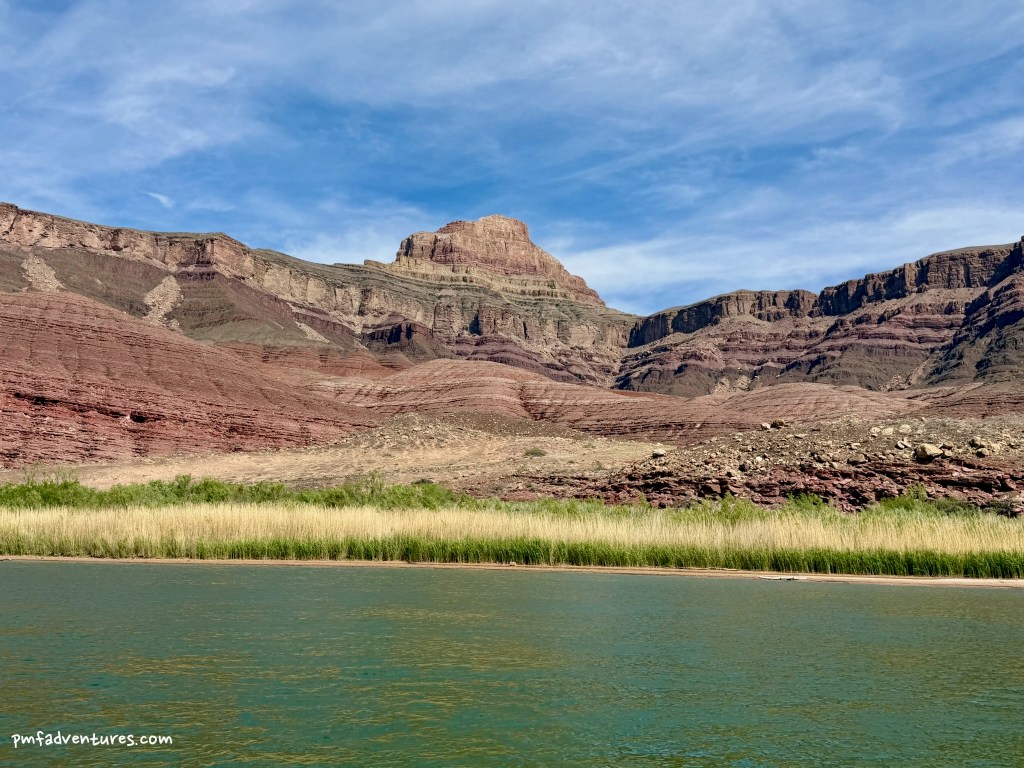
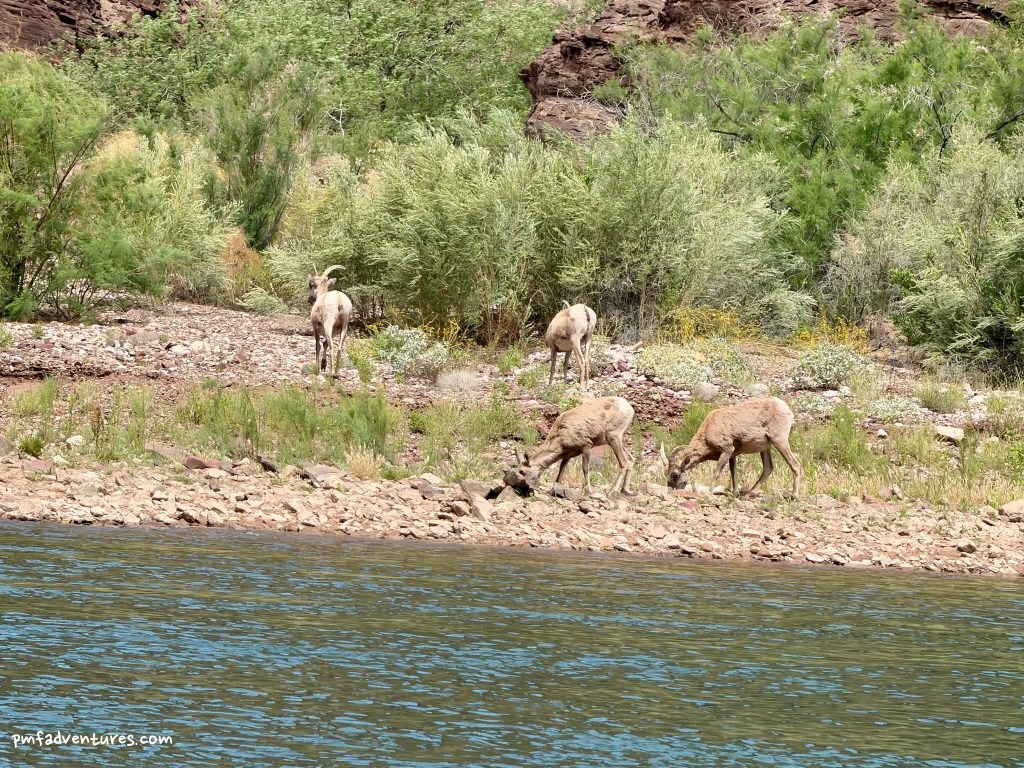
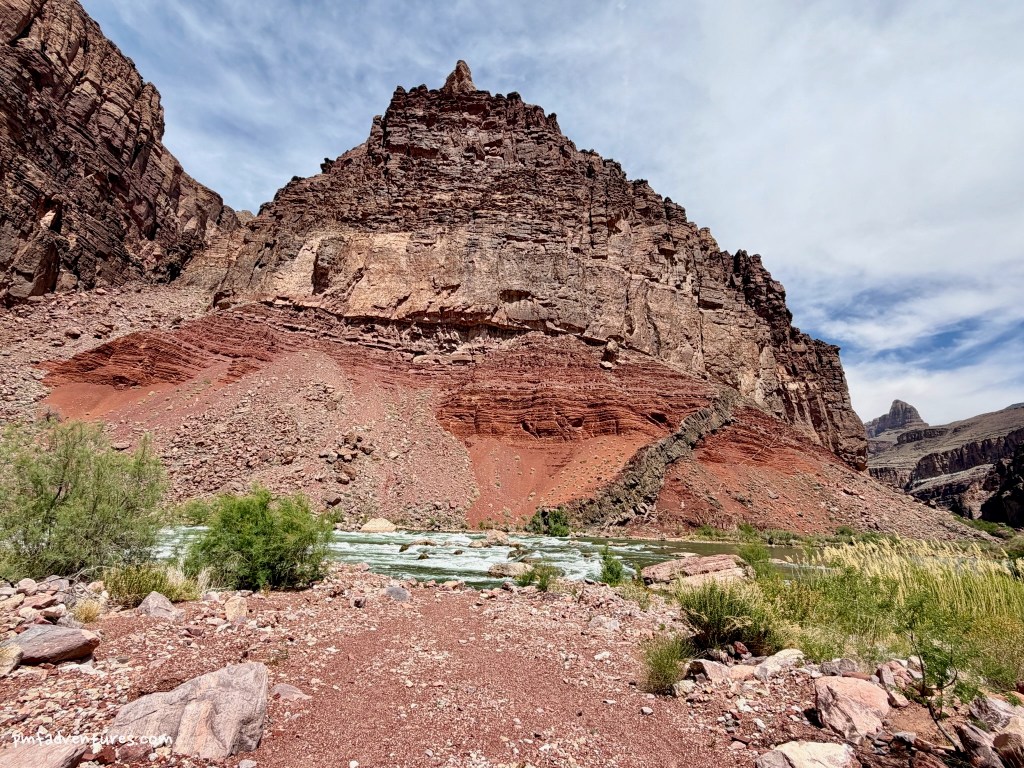
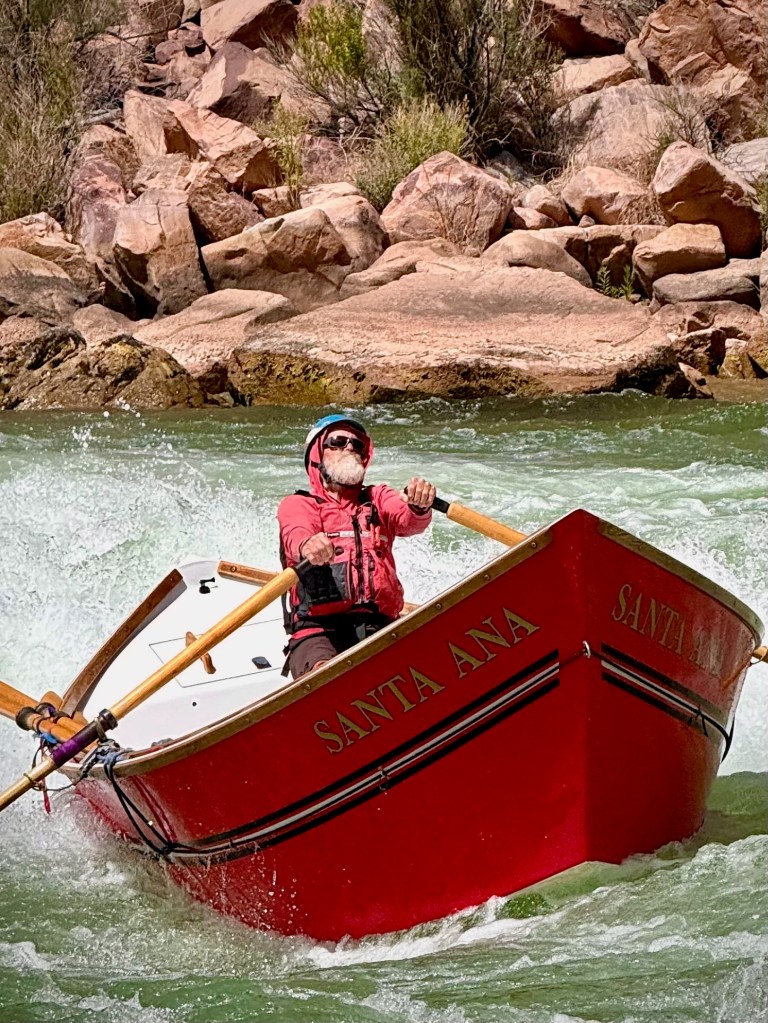
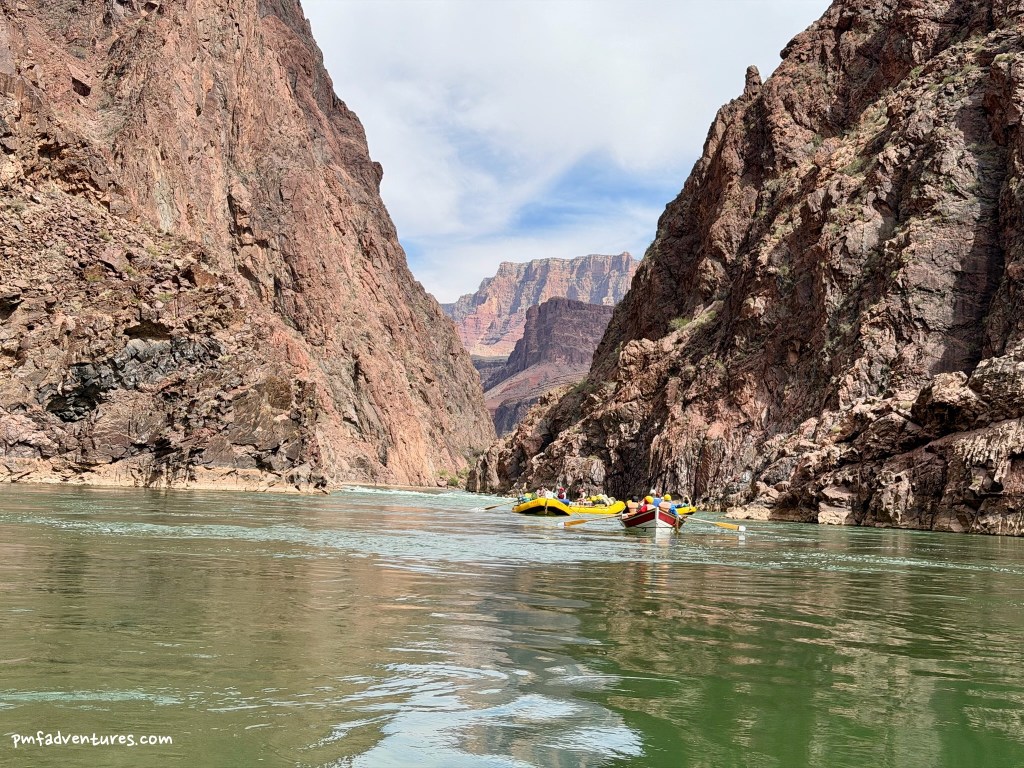
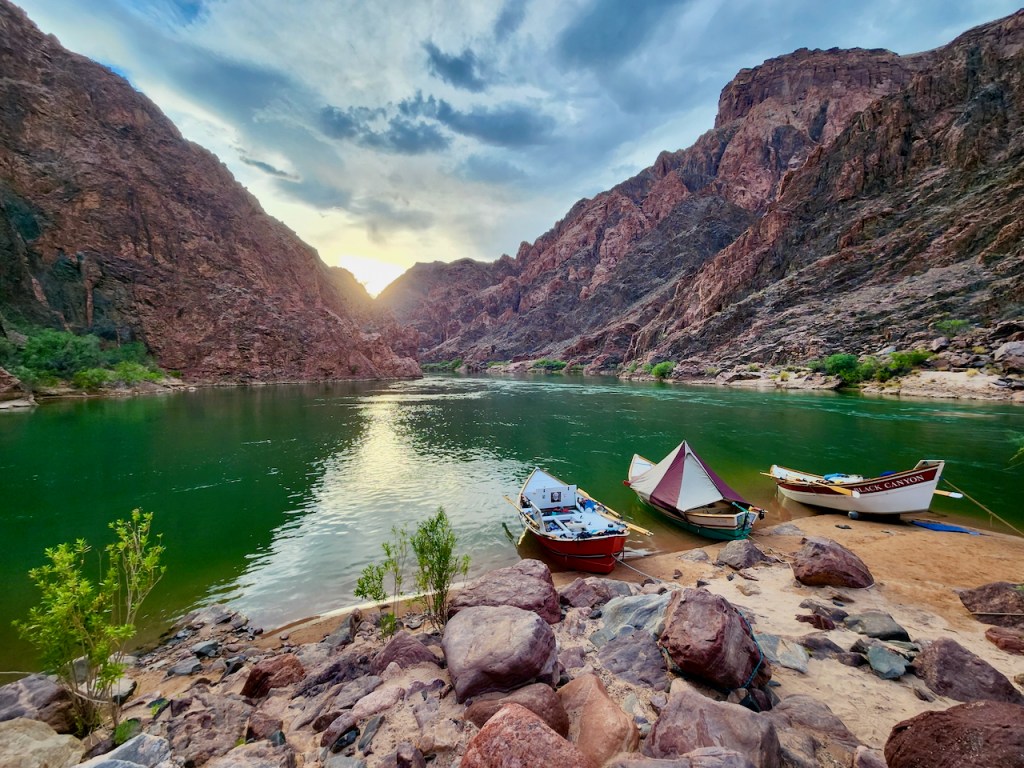
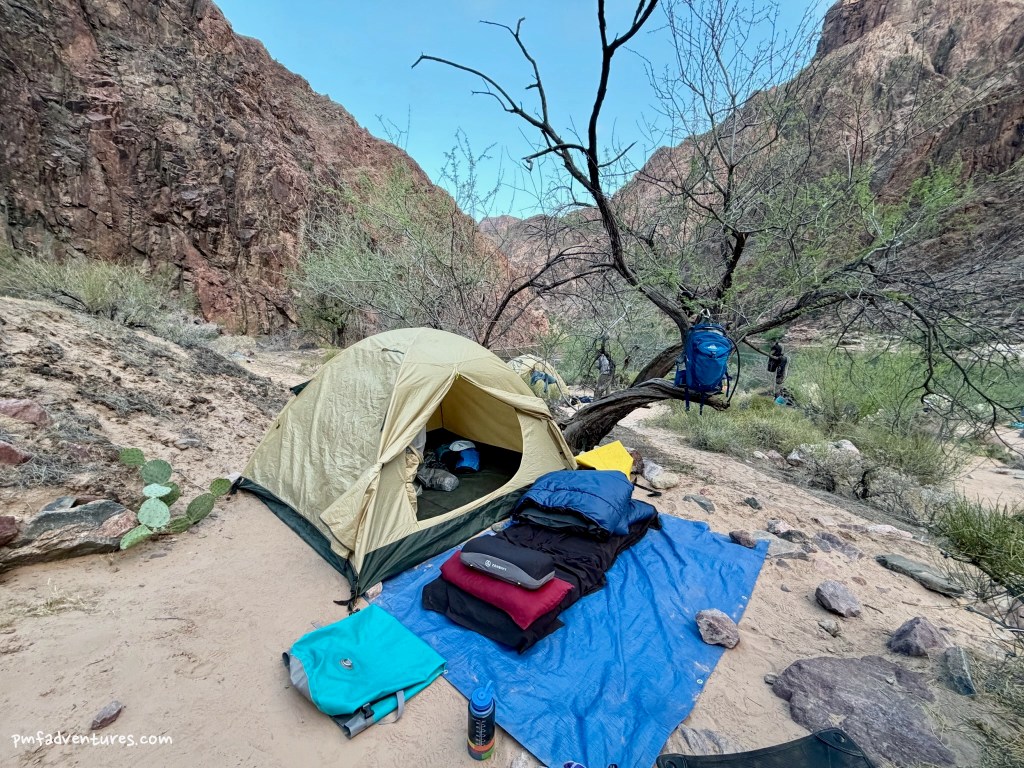
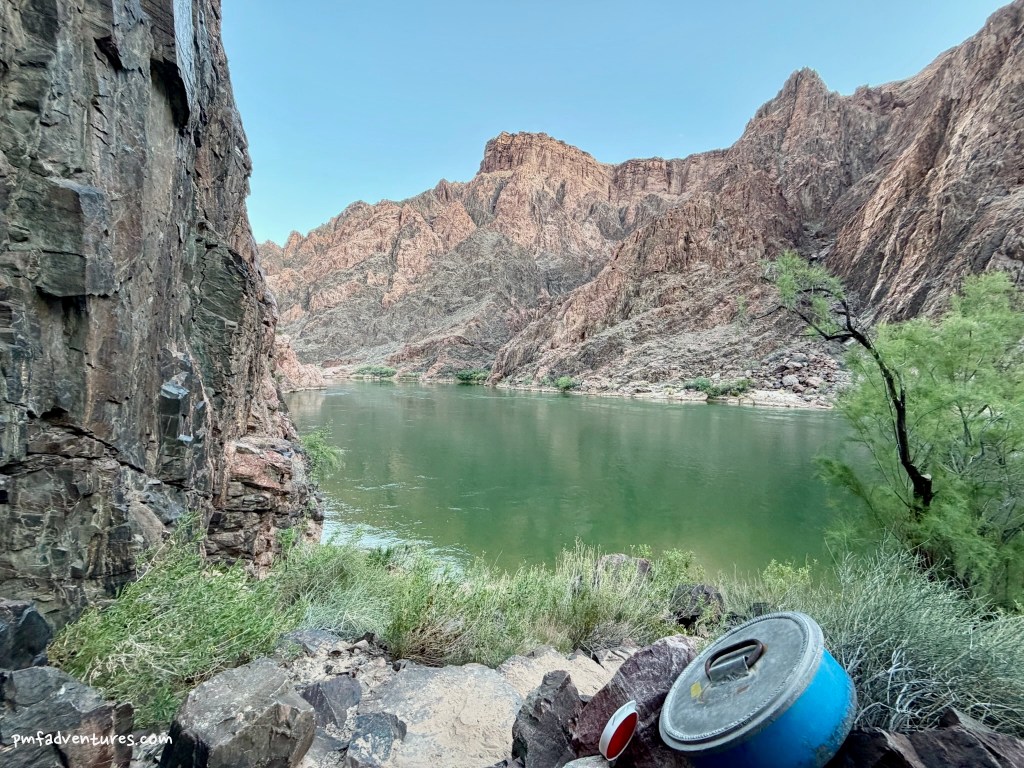
Day 7 (4/20/2026) – Lower Cremation Camp to 91 Mile Creek: For those of us who were doing the full trip down the canyon, today was mostly about doing a whole lot of nothing. The nine people who were hiking out the Bright Angel Trail had to be packed up and ready to leave at 7 AM, so that two dories could take them down to Pipe Creek Beach. The rest of us had a bit more time, but we were still ready to go shortly after 8, so that we could spend some time at Phantom Ranch before going down to Pipe Creek and waiting for the nine new guests to arrive on their hike down from the rim. After stopping at Phantom Ranch to pick up a t-shirt that I’d been wanting, I hiked up the North Kaibab Trail to the junction with the Clear Creek Trail to get a bit of exercise. When we got to Pipe Creek Beach shortly after 10, I found a shady spot and amused myself by watching the interesting assortment of rim-to-river day hikers who came down to the beach. The first of our new guests arrived around 11:30, everyone was at the beach by 1, and we were on the water by 1:30. We only ran one major rapid today, but it was a big one. I was in the front of Roger’s boat and we got soaked by a huge wave in Horn Creek Rapid — looking back, I think this was my favorite rapid on this trip. We stopped just after that at 91 Mile Creek, and I snagged a great campsite right down on the river. We only covered 4 miles on the river, but our new people needed to learn how to set up camp and recover from their long day.
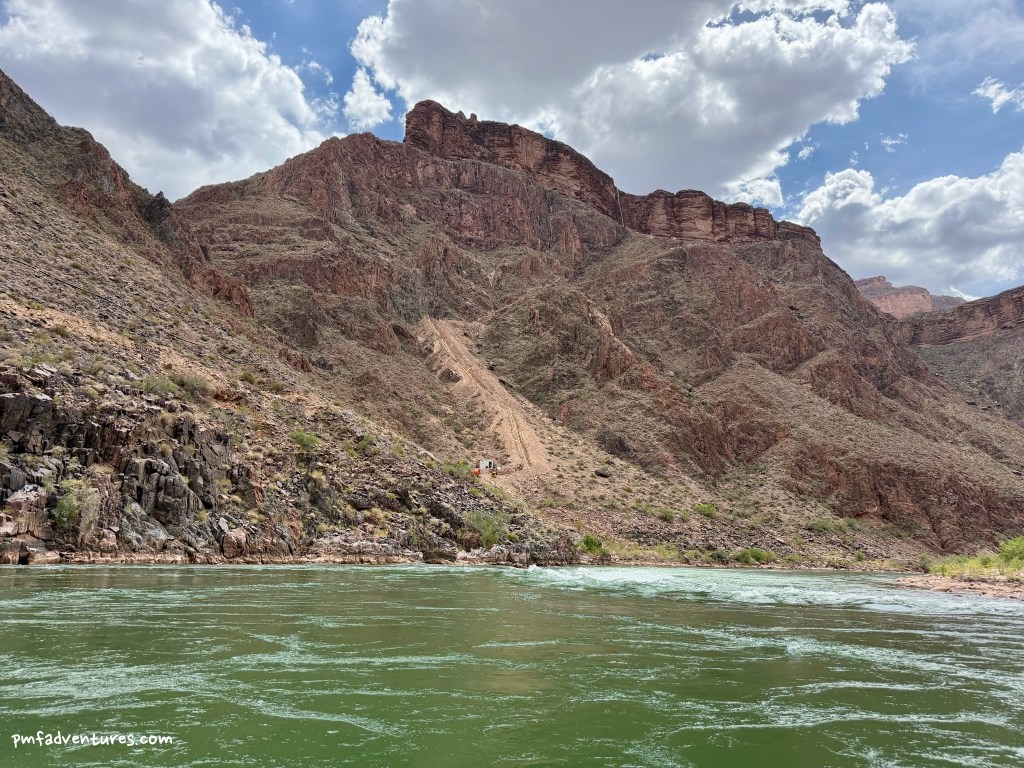
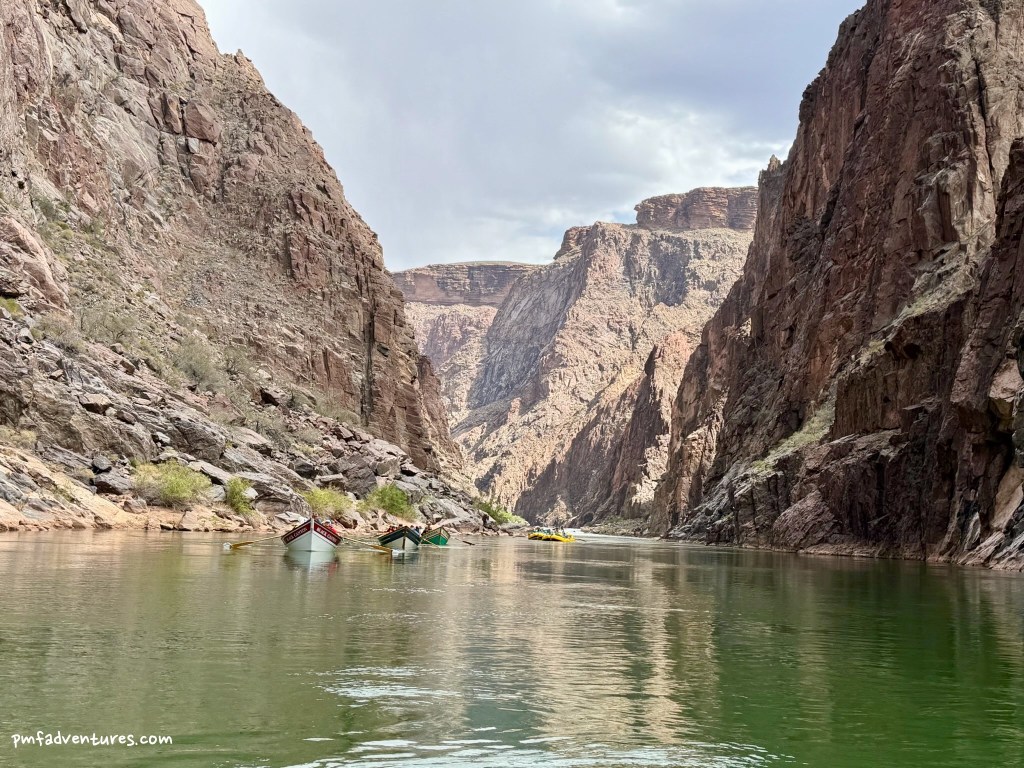
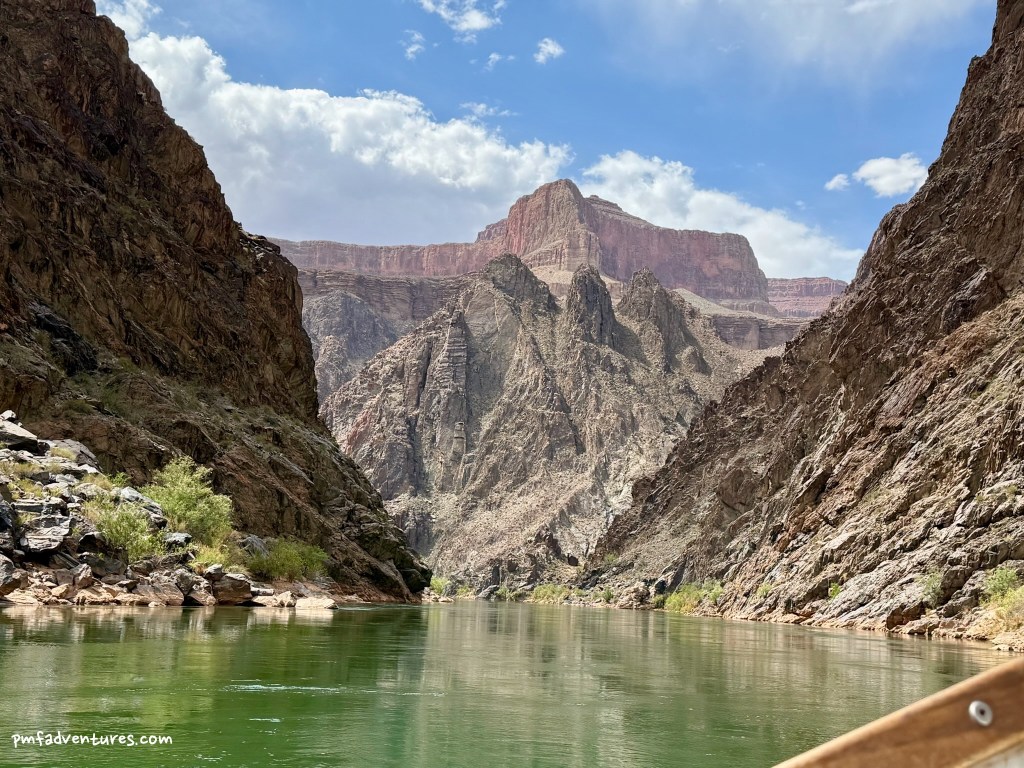
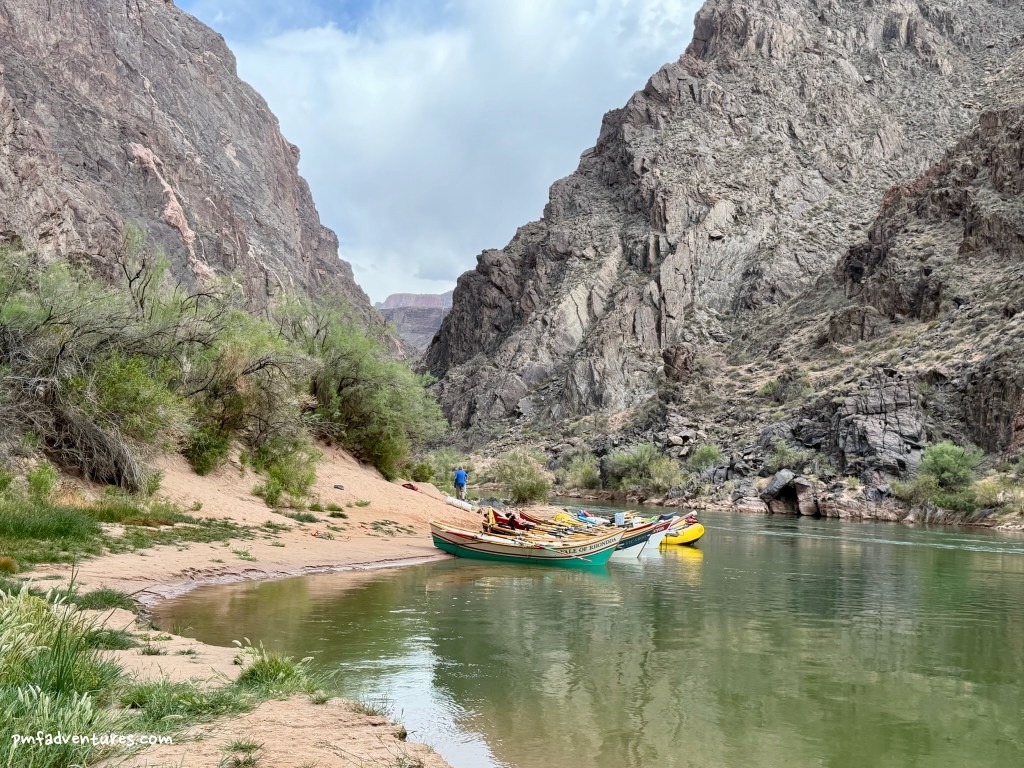
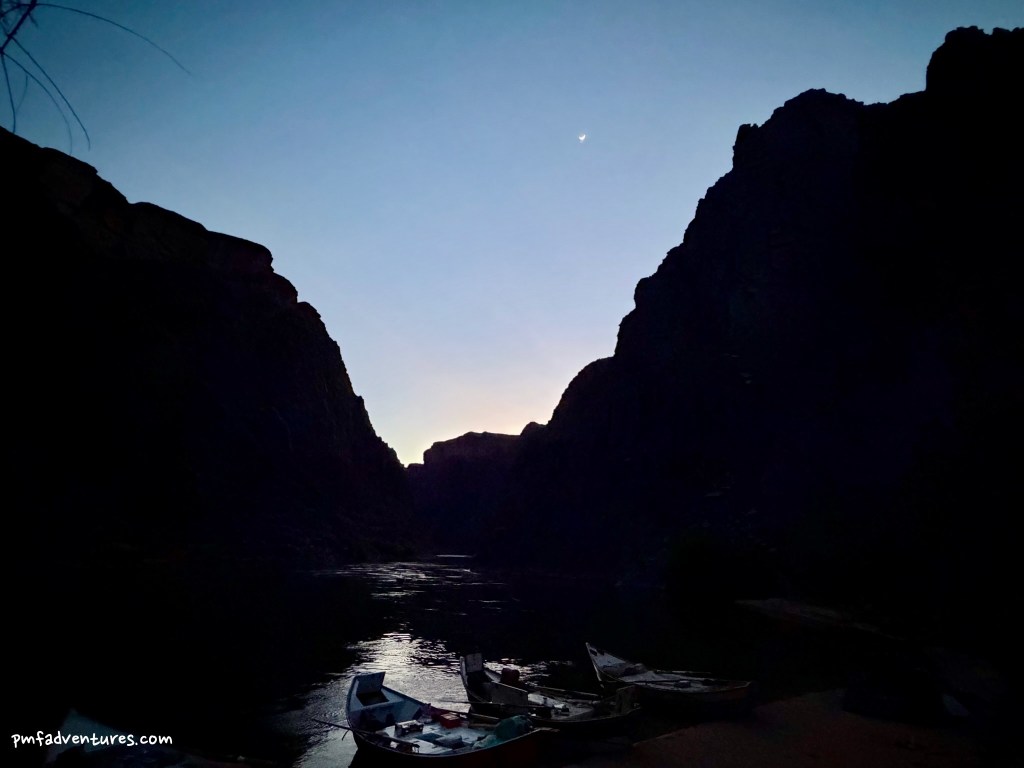
Day 8 (4/21/2026) – 91 Mile Creek to 110 Mile Camp: Today was another big whitewater day, as we would be running Crystal Rapid, one of the two rapids in the Grand Canyon with a 10 rating, plus a bunch of other big ones, like Granite, Hermit, and the rest of the Gems. On most trips, the dory guide you chose to ride with on a day like today could make a big difference. On this trip, however, our dory guides had over 800 trips down the canyon between them, so I would have been very happy riding with any one of them. But as a few of us experienced passengers realized, the other thing that can make a huge difference when running big rapids is having four passengers who know what they are doing. That means being able to anticipate how the boat is going to move, keeping the boat as level as possible so that the rower can use their oars effectively, and high siding when the water tries to tip the boat.
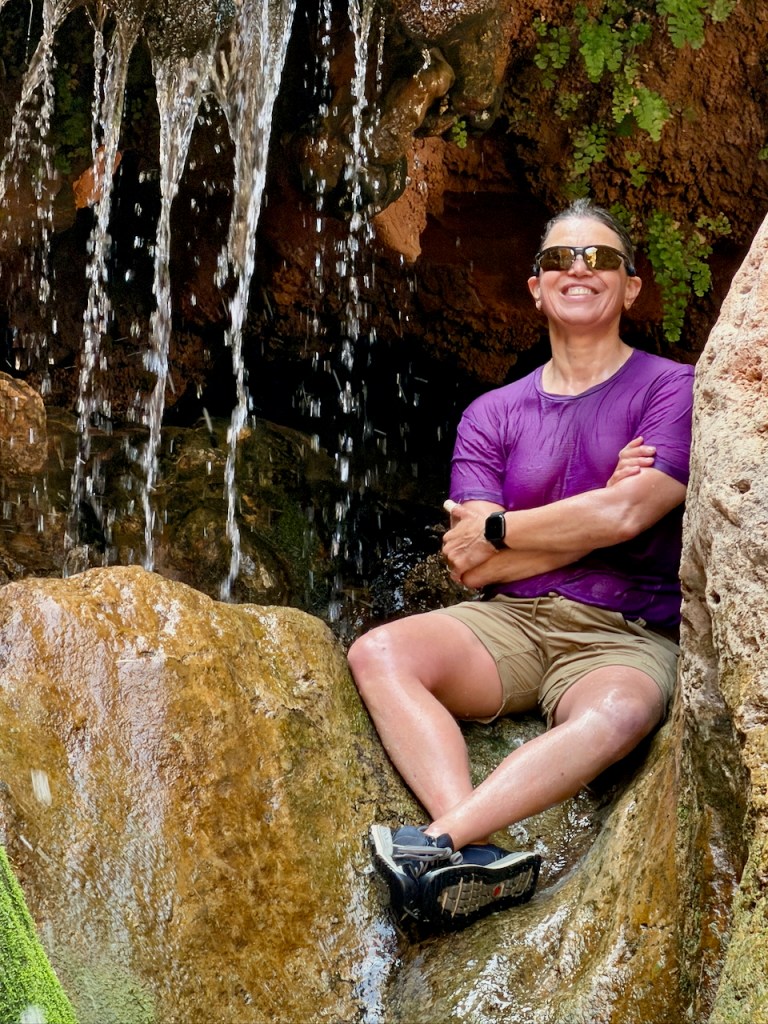
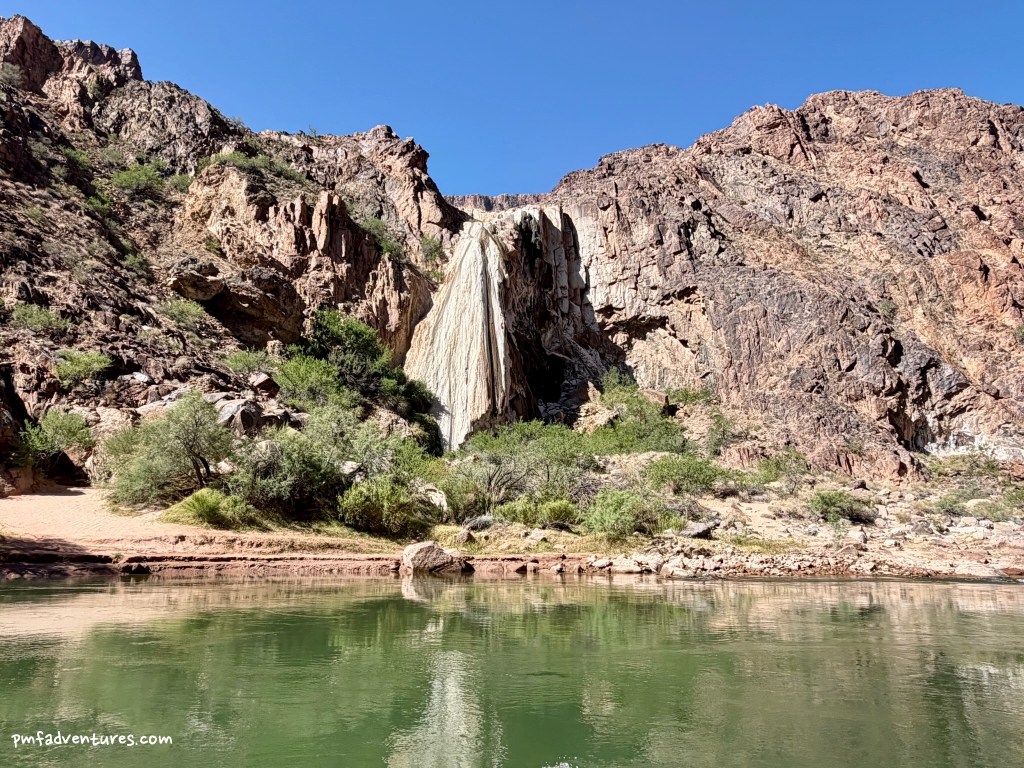
After discussing our experiences from the day we ran Sockdolager, four of us decided that we wanted to be together for the big rapids, Crystal and Lava Falls. So we arranged to ride with Roger for today; I was up front with Earl, while Keith and Tania were in back. Our morning started with fun runs of Granite and Hermit; running the Hermit wave train in a dory was an absolute blast! We also had a great run in Crystal. Roger hit his marker, the crew did our job, and the whole run felt pretty tame by comparison with some of the other rapids. But Dellie wasn’t so fortunate in the Ticaboo and hit a rock, so we stopped for repairs and lunch just above Tuna Rapid. After lunch, we had great runs through the rest of the Gems, with Serpentine being a particularly fun ride. And then we got to do something unusual for an April trip — we stopped at Shinumo Creek to walk up through the water in the creek and swim under a cool waterfall. In a normal snow year, there would so much runoff in April that the creek would be too high for this excursion. After playing in the surprisingly warm water for thirty minutes, we got back on the boats and headed downstream for another mile to set up camp at 110 Mile Camp.
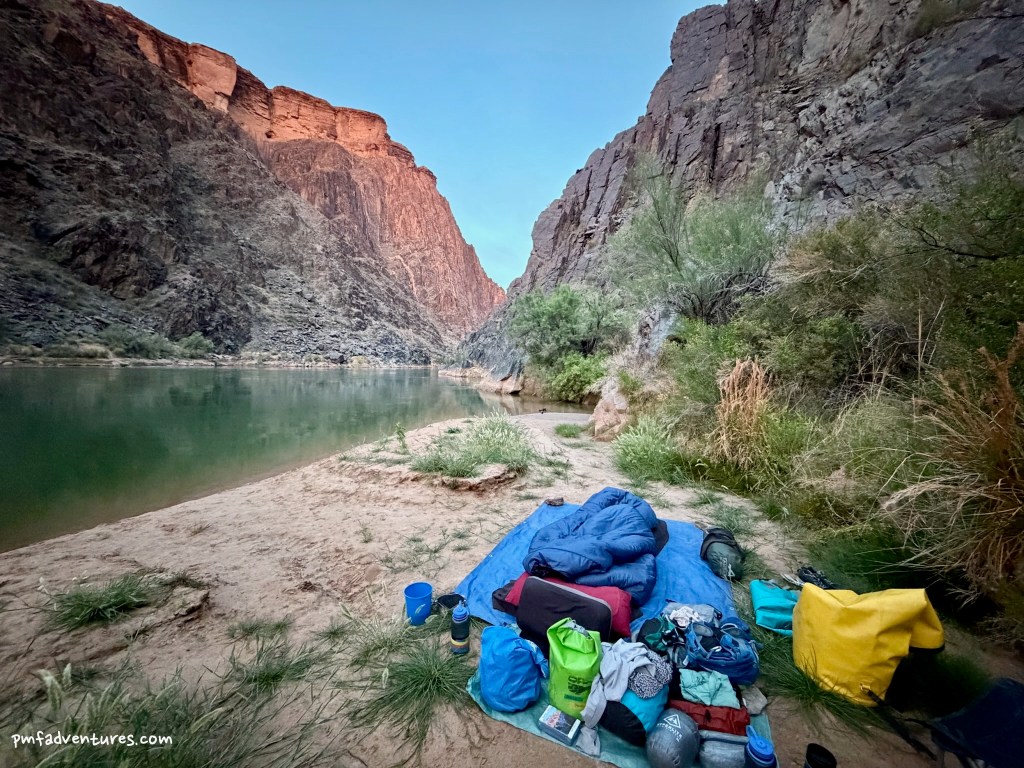
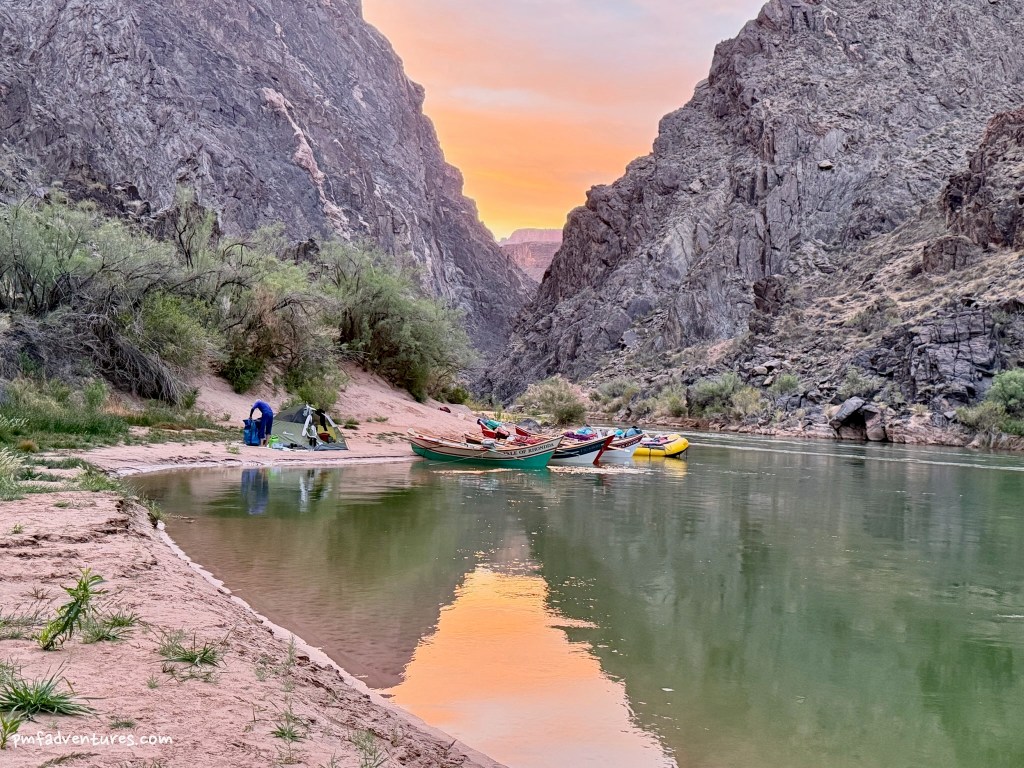
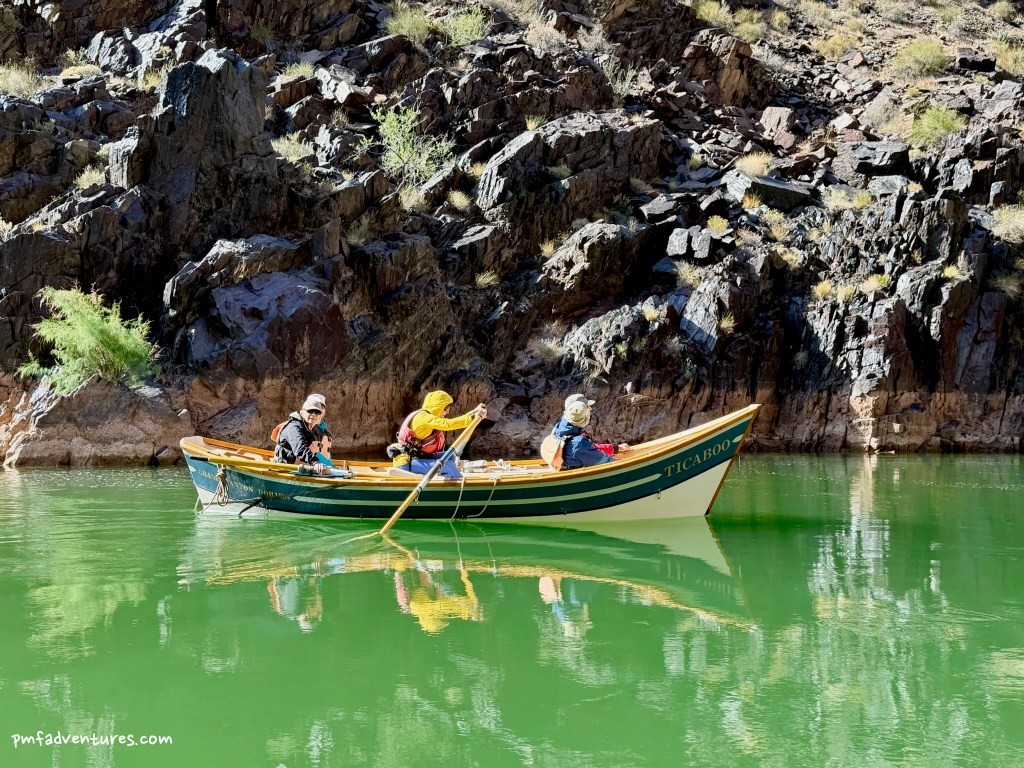
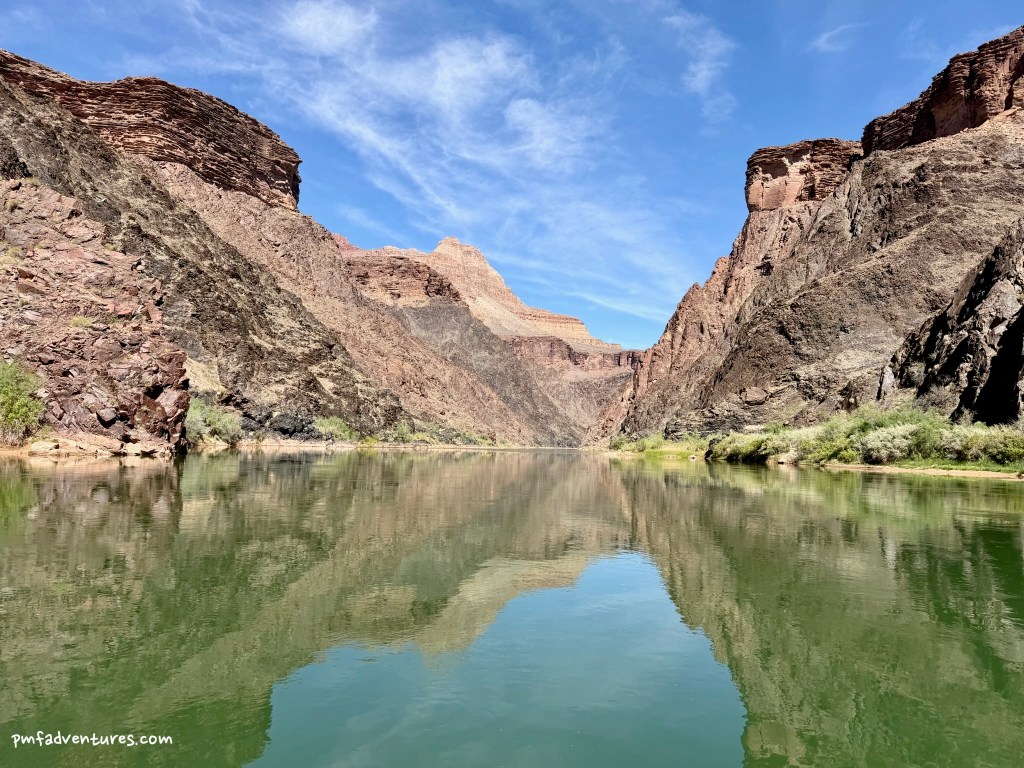
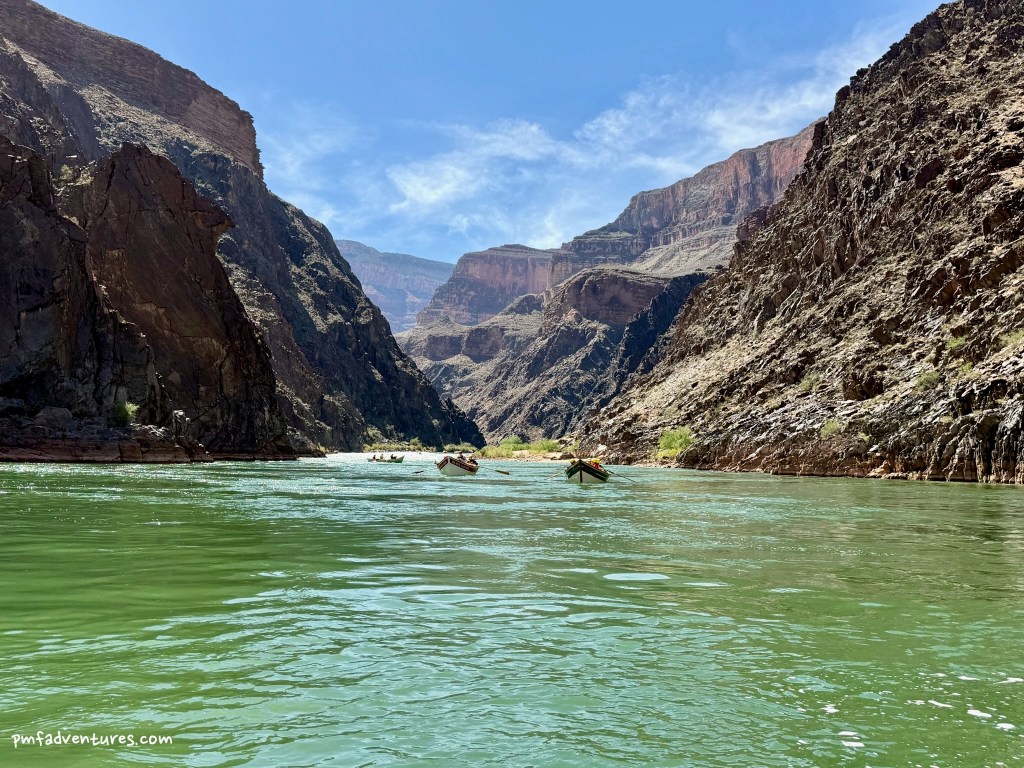
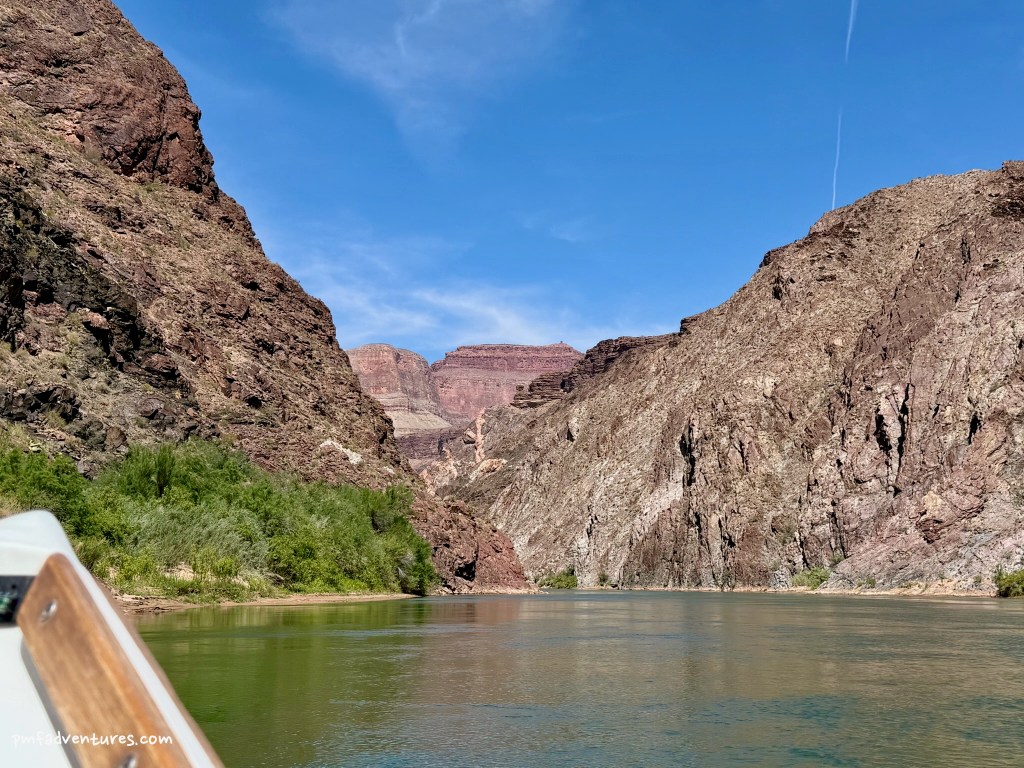
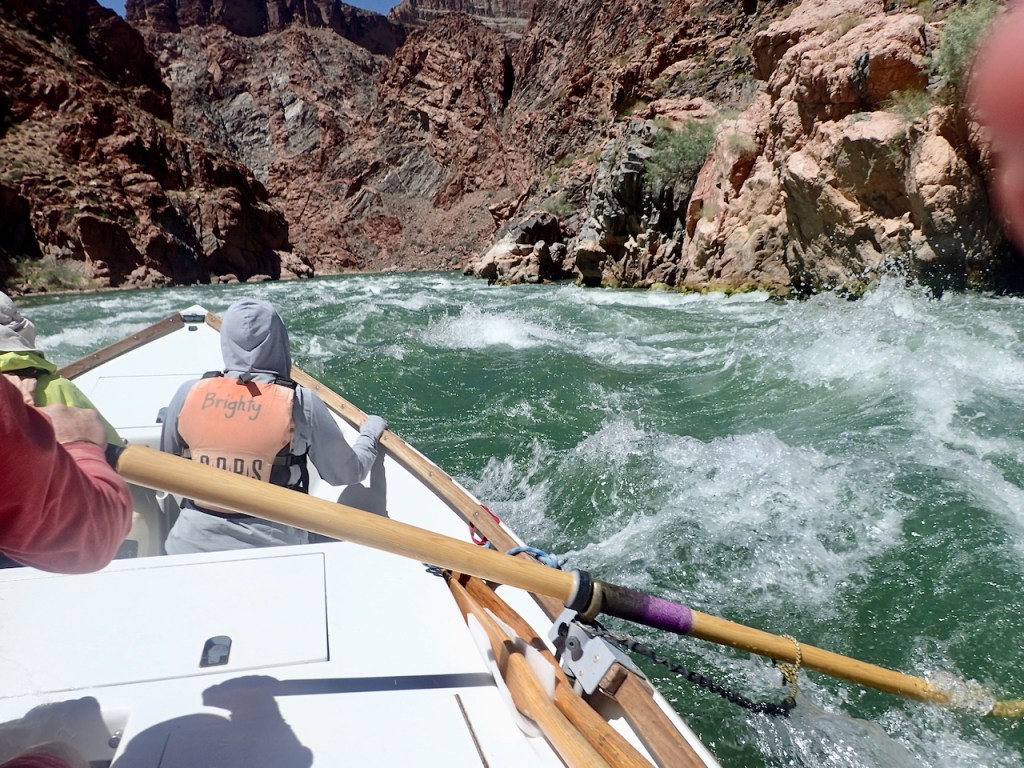
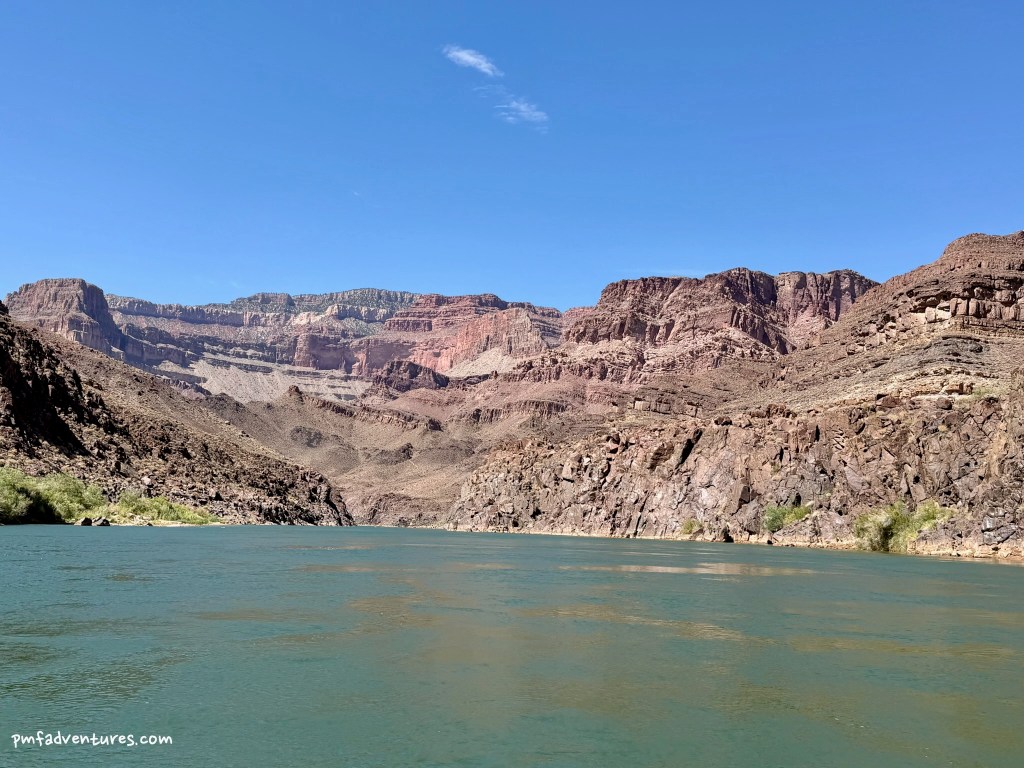
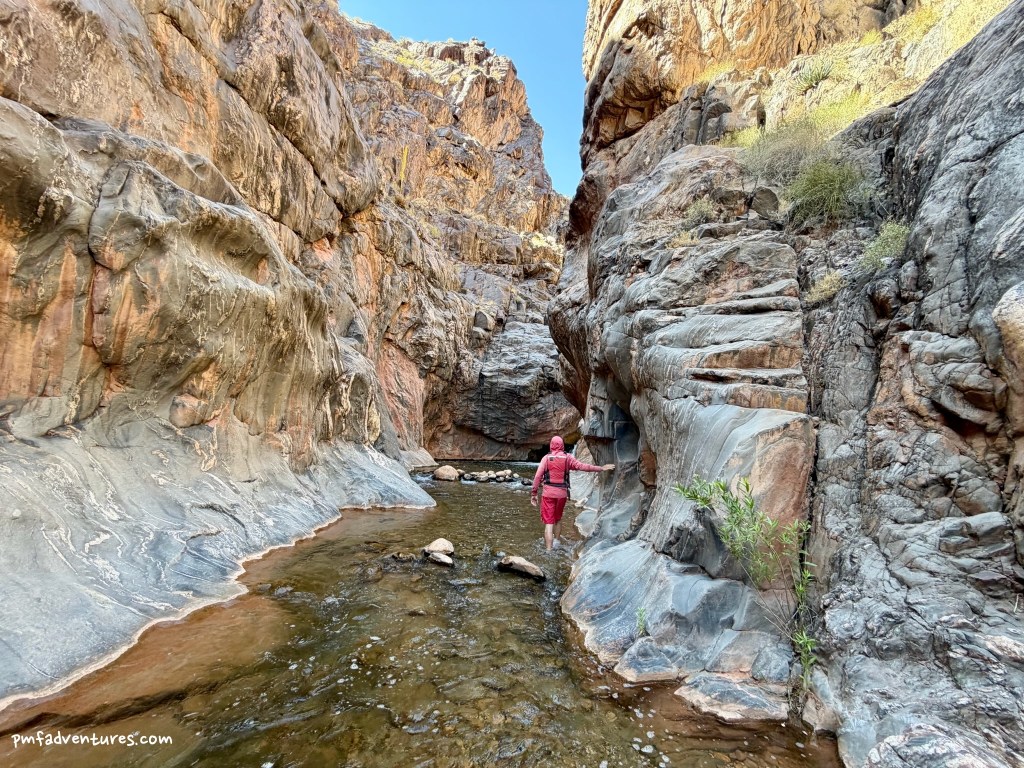
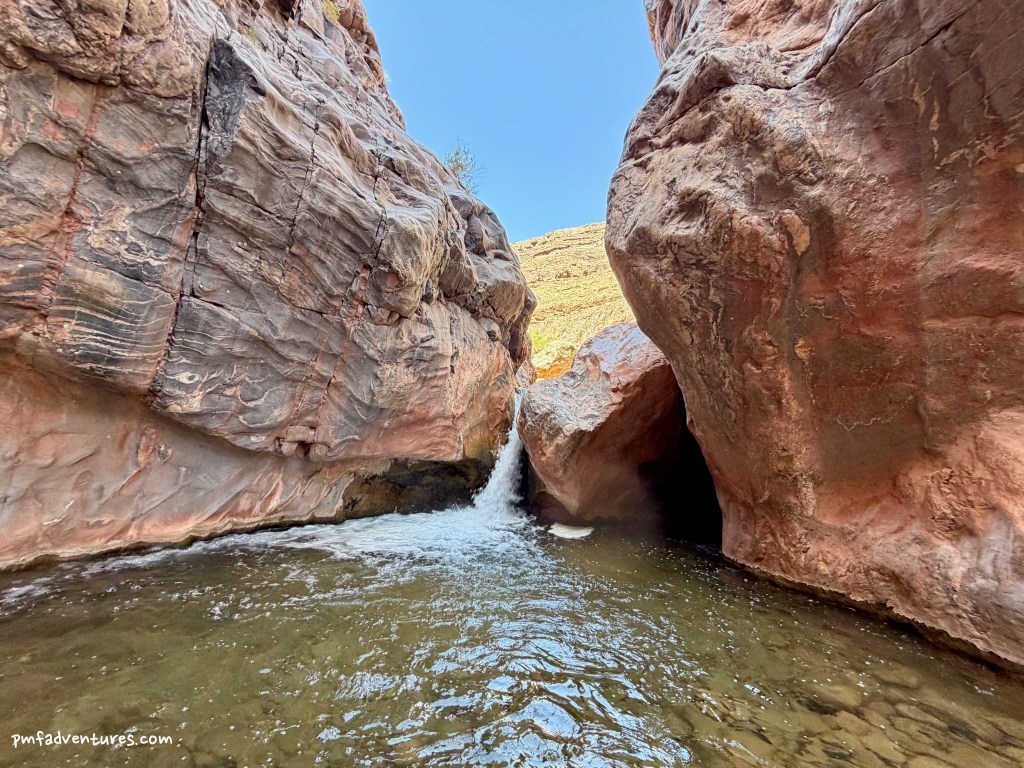
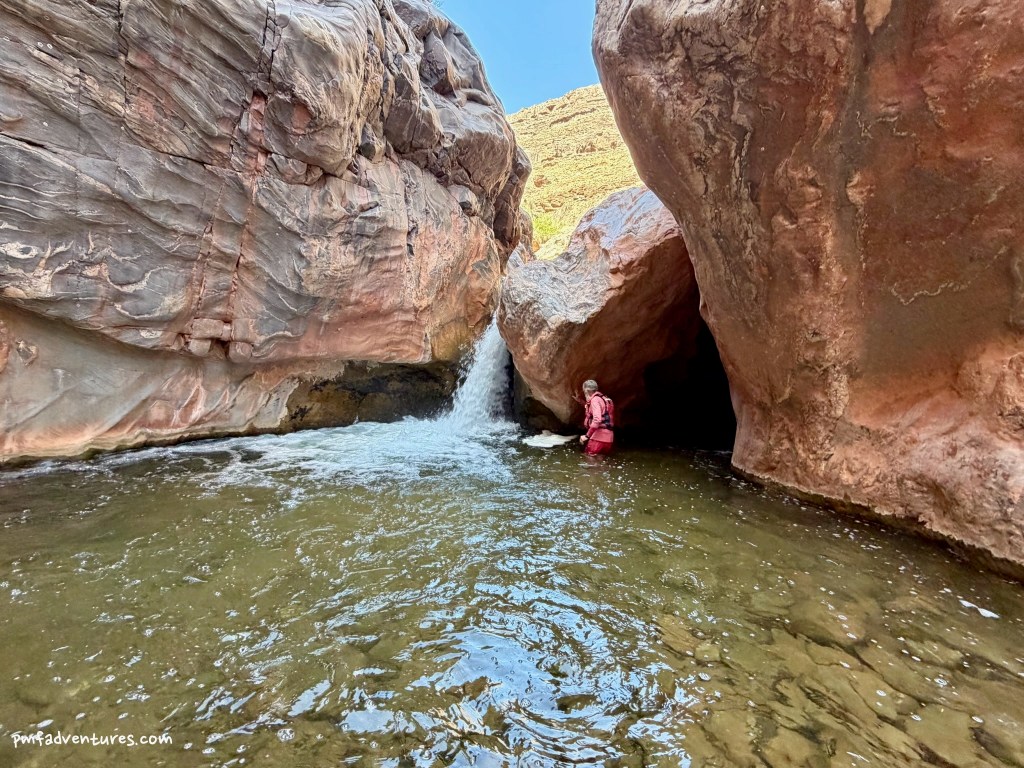
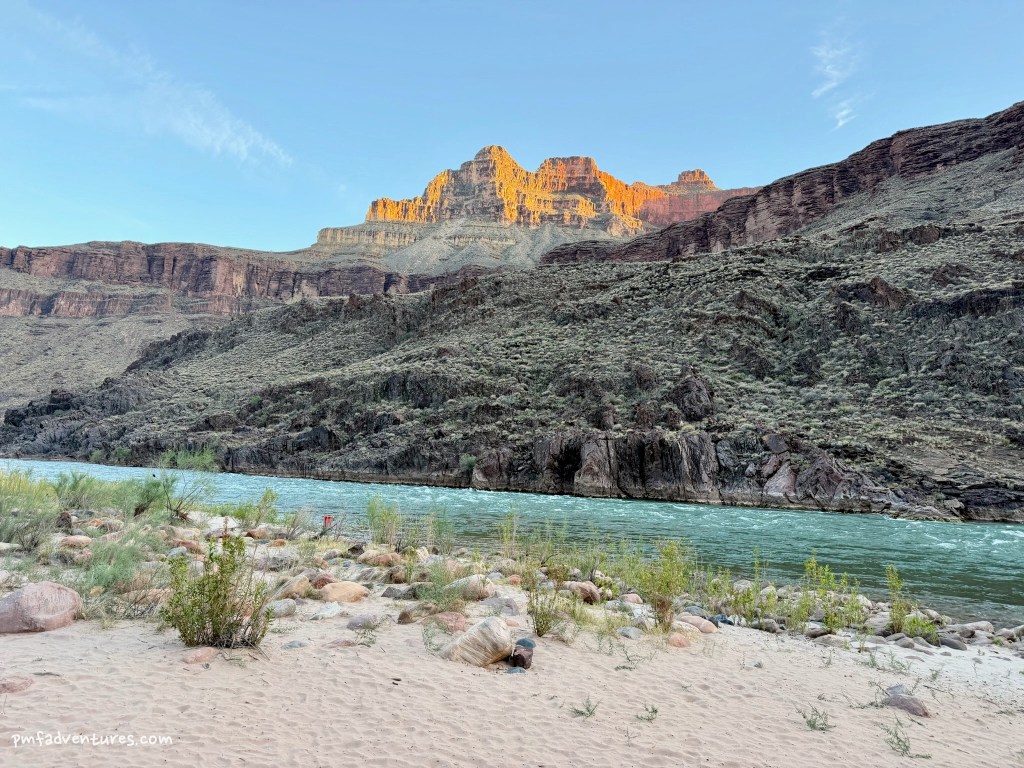
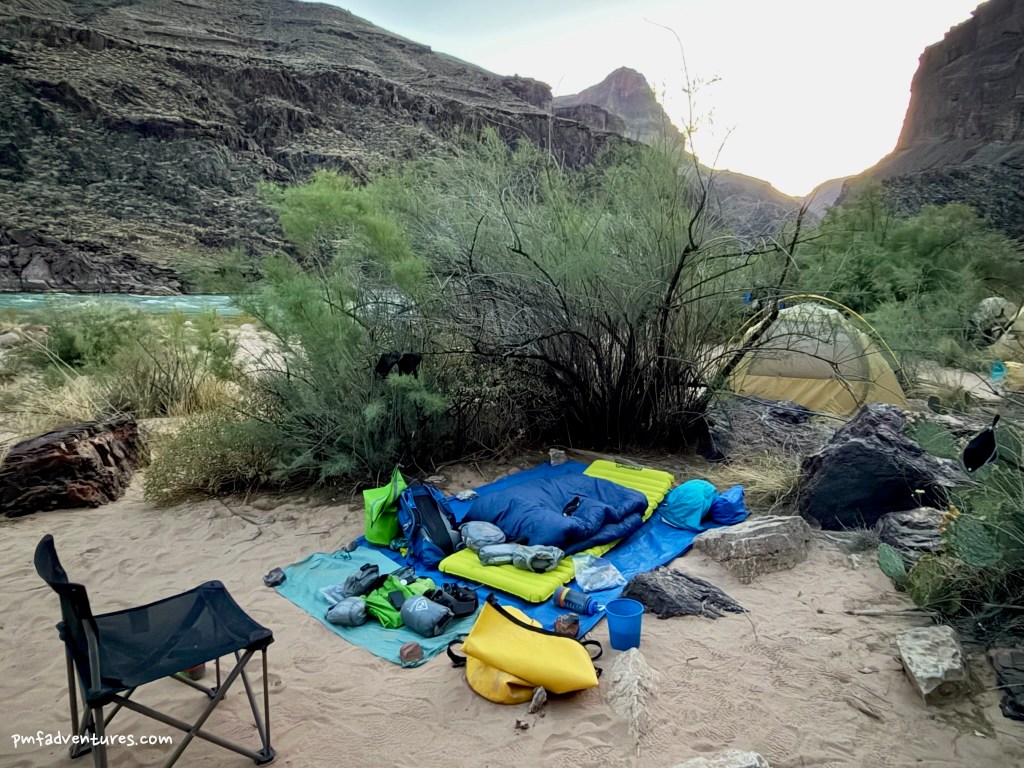
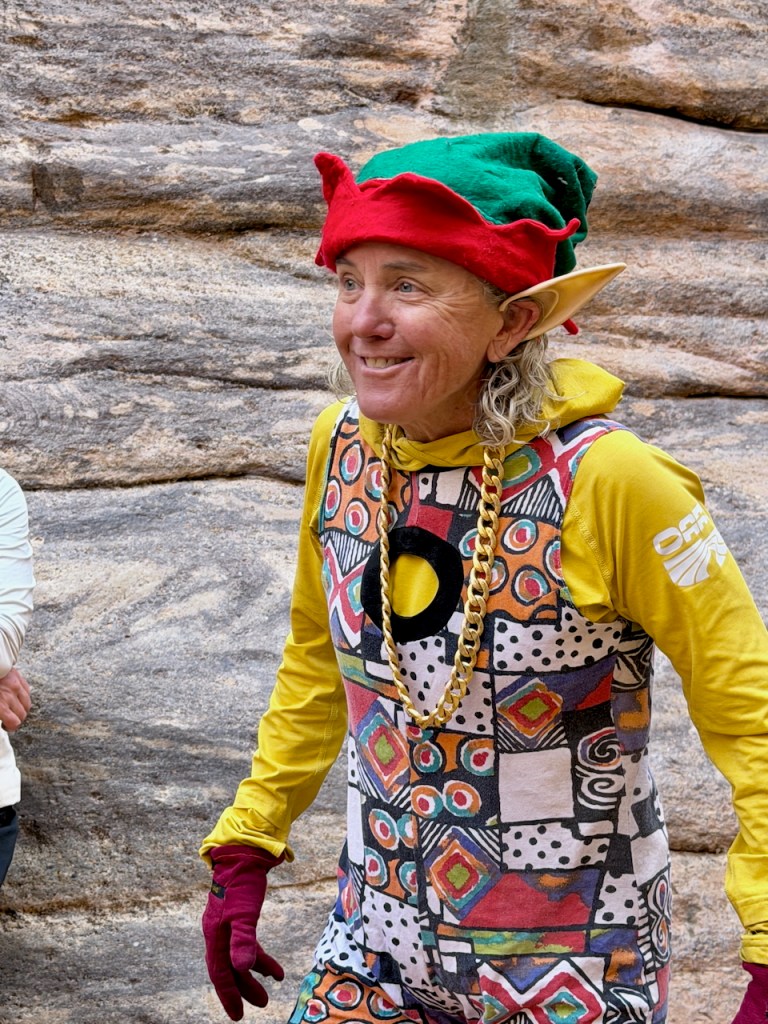
Day 9 (4/22/2026) – 110 Mile Camp to Fossil Canyon: Hakatai was the first major rapid we would be running today and that gave me a chance to redeem myself. On our trip in 2018, I went for an unplanned swim during a bow ride in Hakatai, when a huge wave broke right as we crested it. I was planning to ride with Monte today, so I asked if he would let me bow ride Hakatai and he said yes. There’s more to hold on to when bow riding in a dory and I was very happy to have a successful ride. Shortly after that we ran Walthenberg — it was huge and we even caught some air. Then we stopped to visit Elves Chasm and I was excited to go swimming over to the grotto, since I was too cold to do that in 2018. And to make our experience complete, we even had a visit from the resident elf.
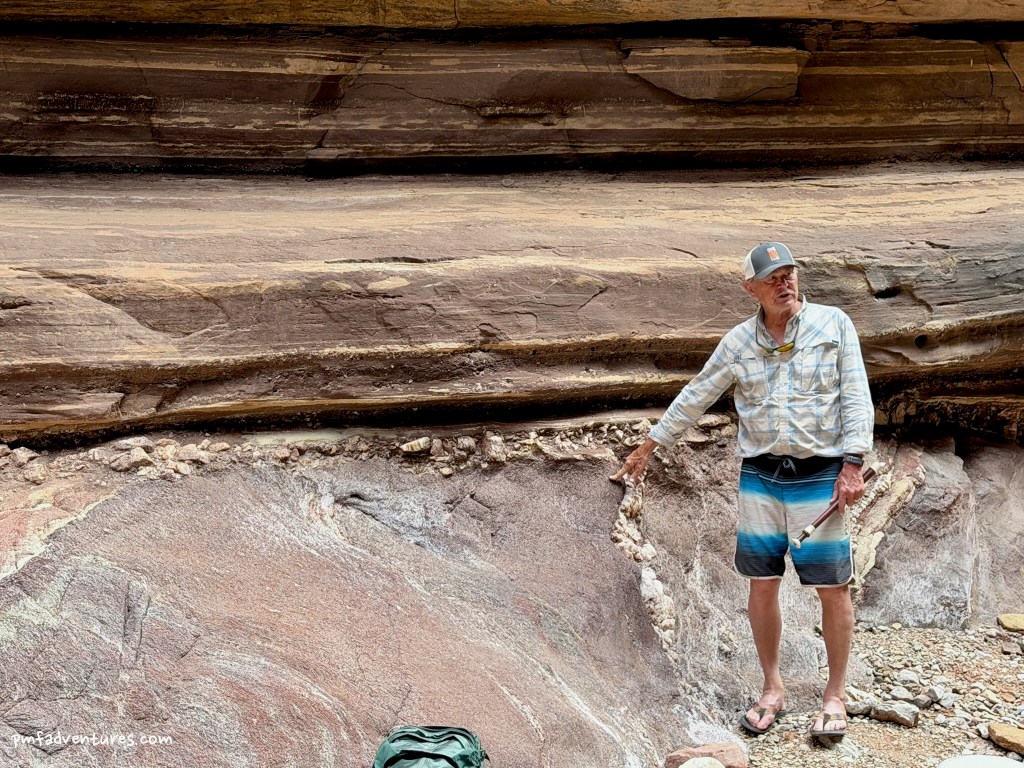
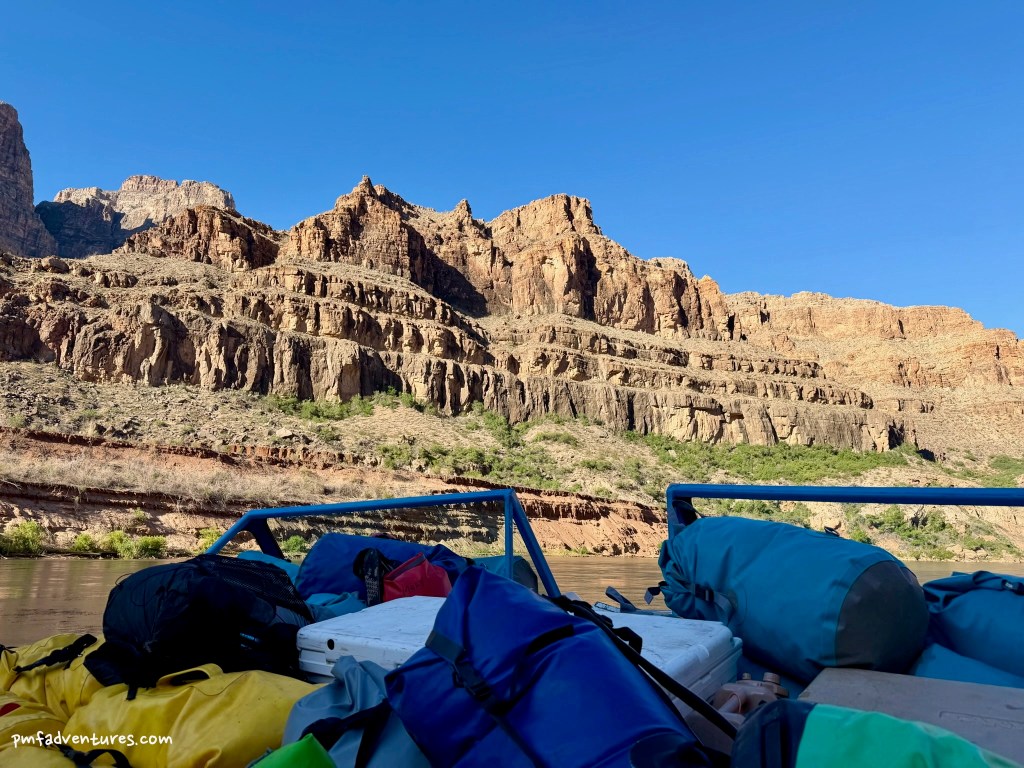
After lunch, we continued downstream and stopped at Blacktail Canyon, where Andre gave us a geology lesson on the Great Unconformity and we got a chance to walk up into the narrows. The wind really picked up in the afternoon and the rowers had to work hard to get us to our camp at Fossil Canyon. As we got close, I was excited to notice some cliffs of what I thought was Bright Angel Shale appear just above river level. When I confirmed my observation with Monte, he suggested that I walk up Fossil Canyon after getting to camp, as the canyon cuts right through the Bright Angel Shale. And what a great suggestion — it was very cool to walk through terraces of the shale.
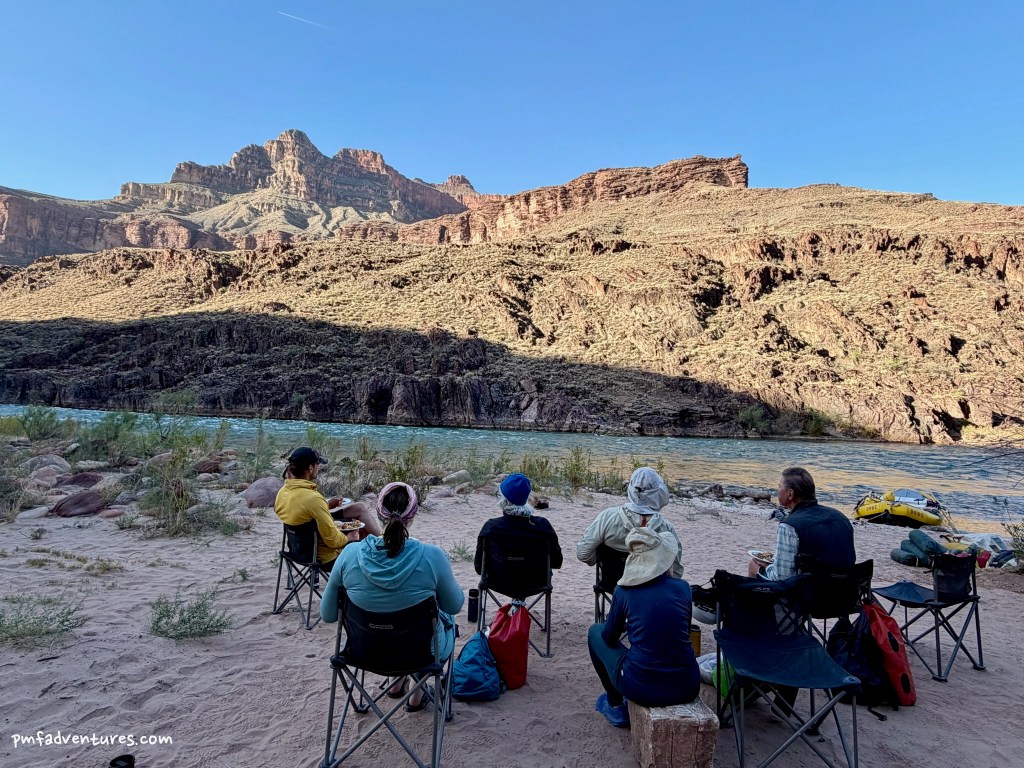
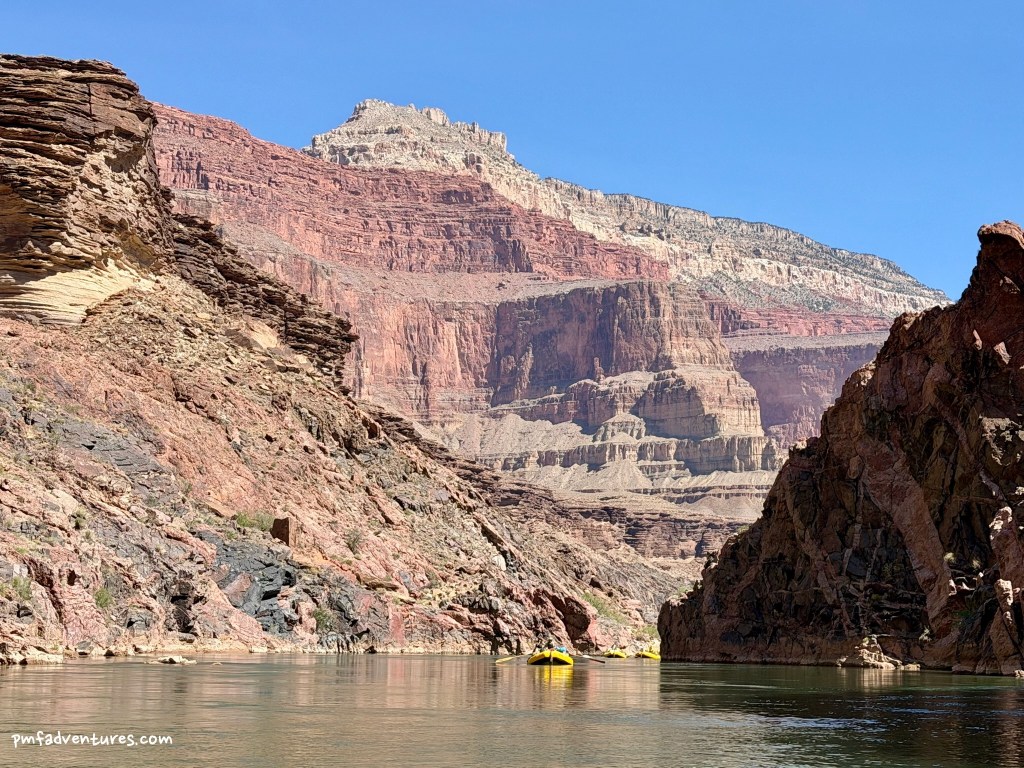
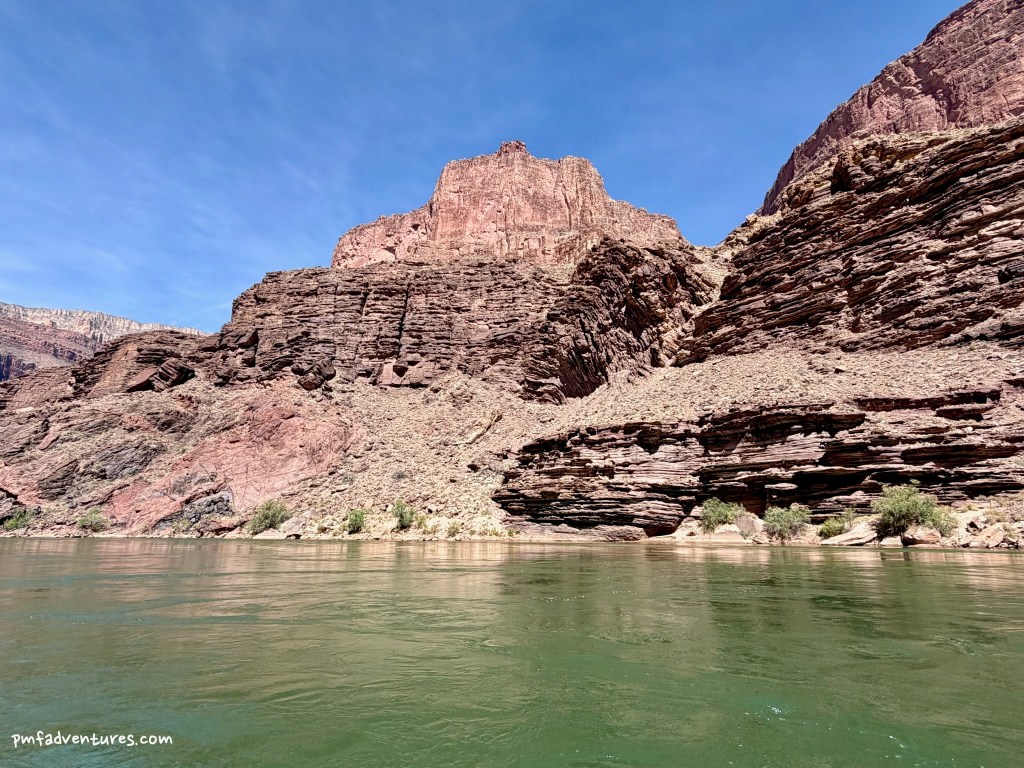
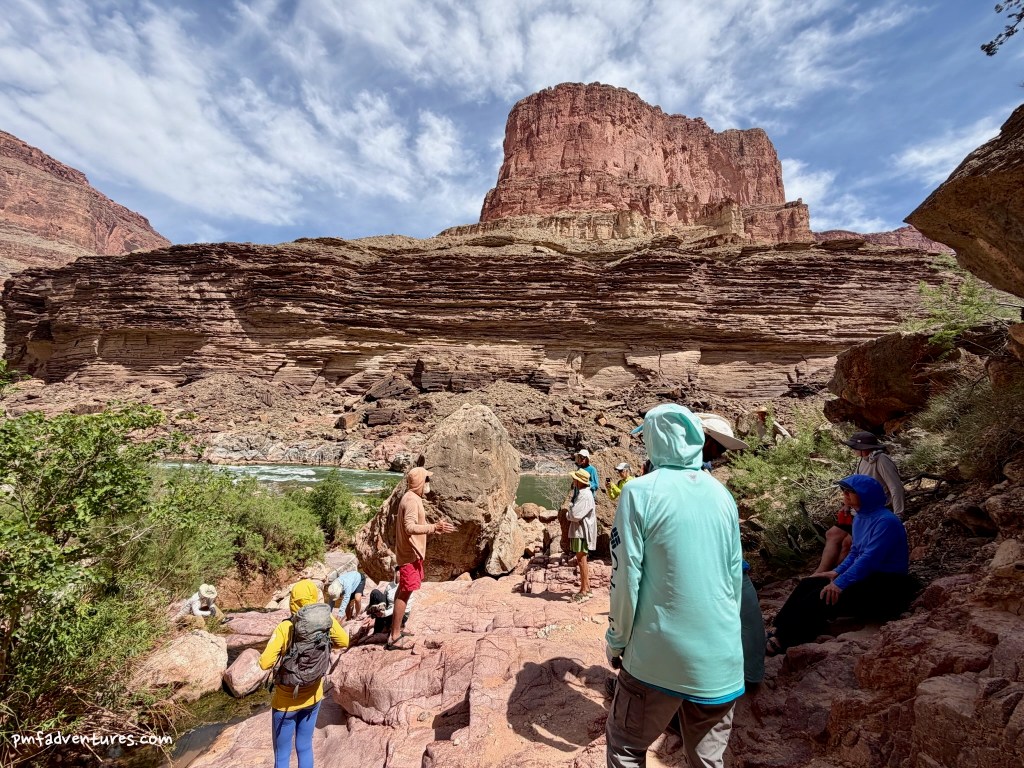
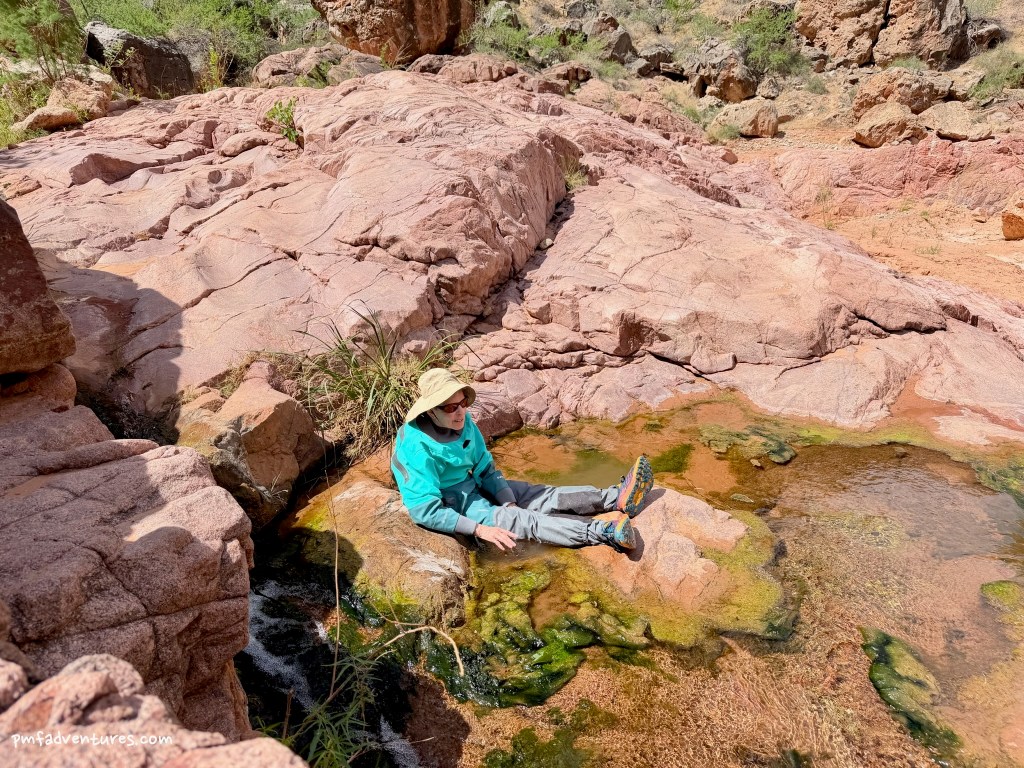
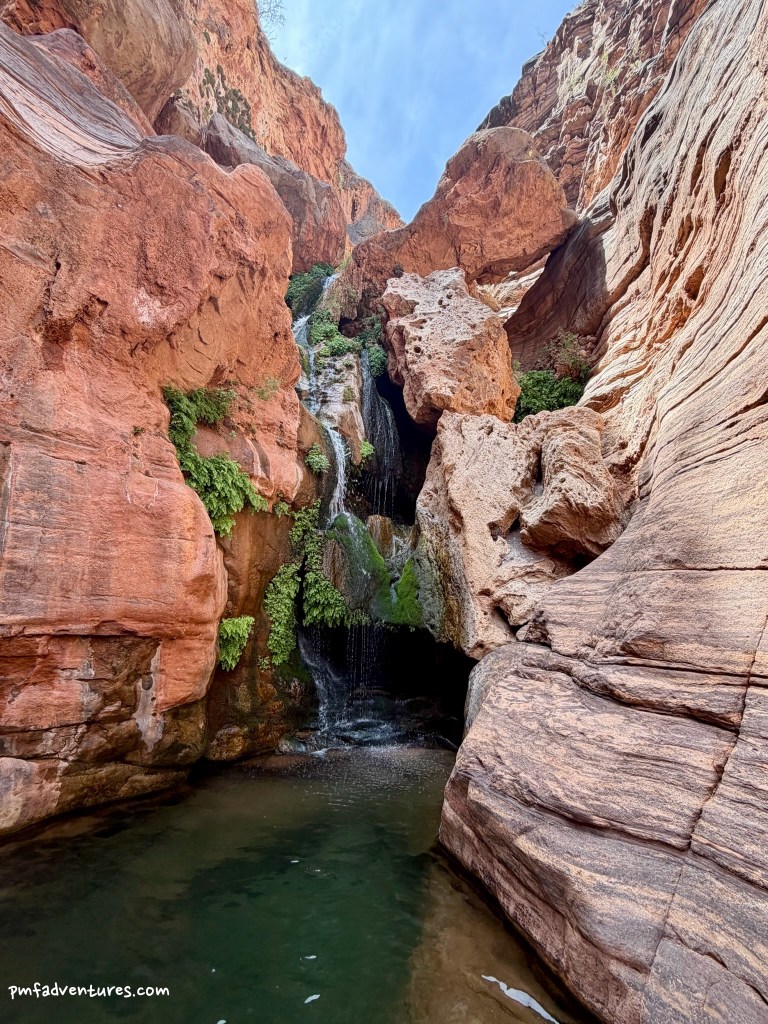
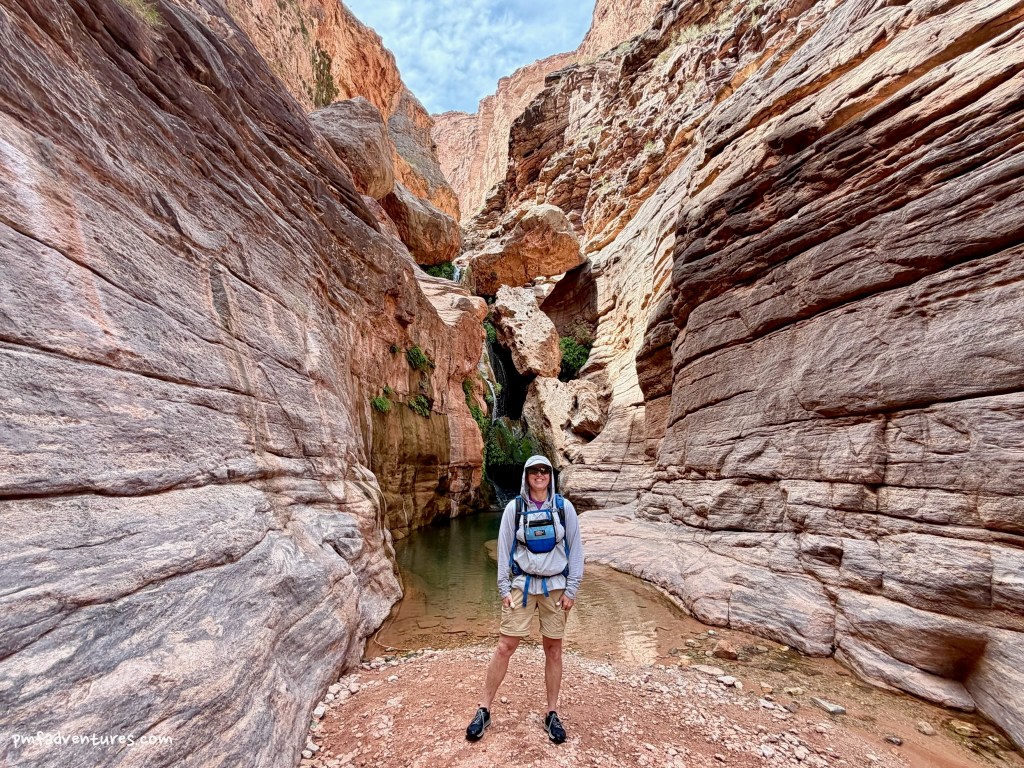
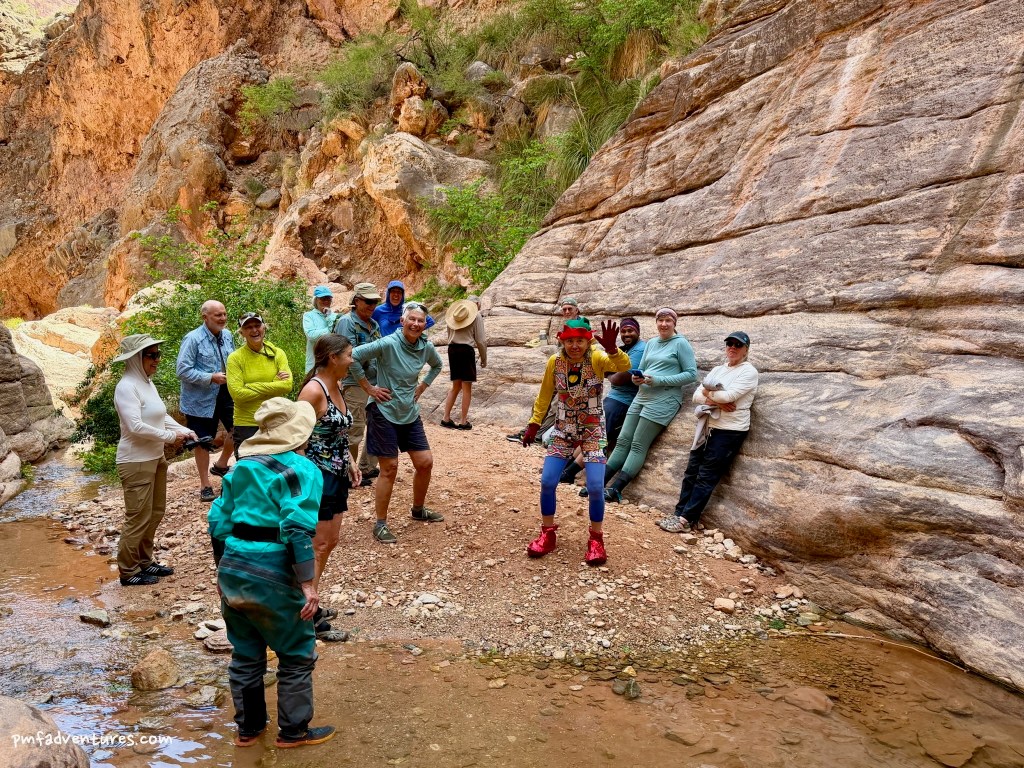
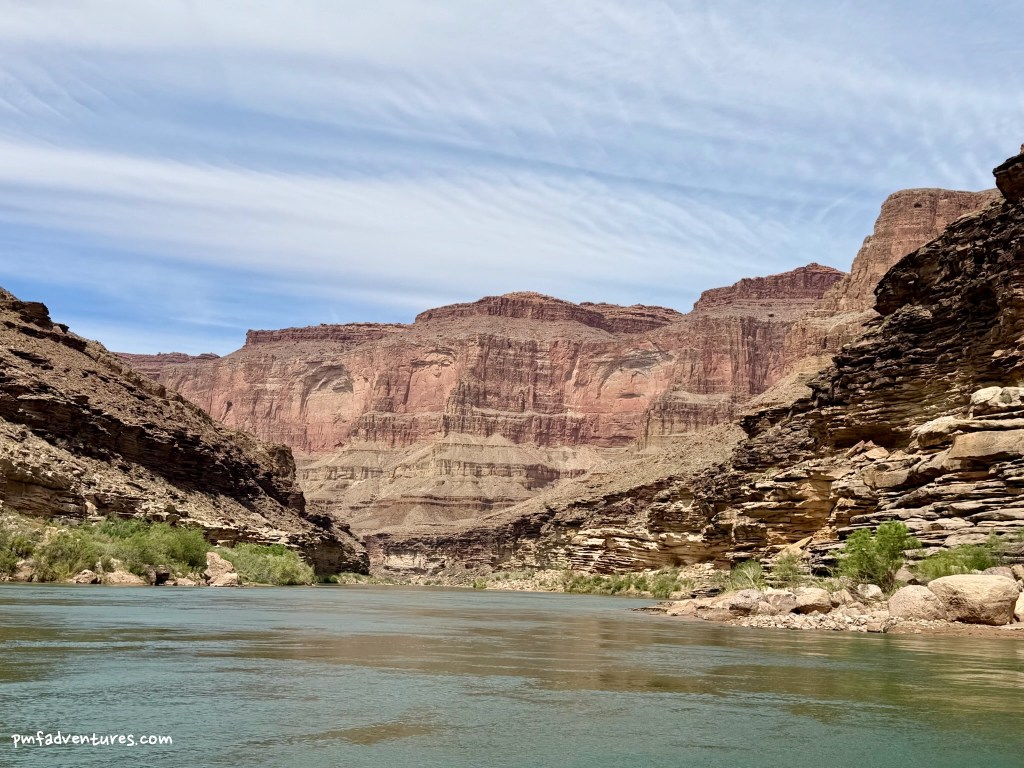
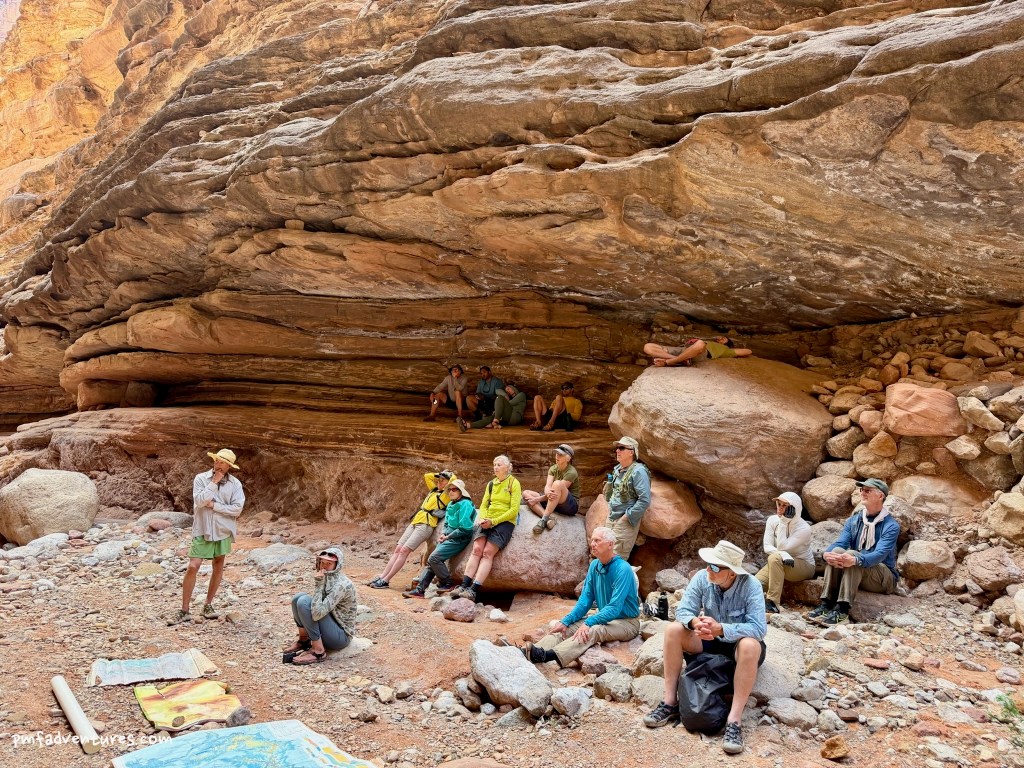
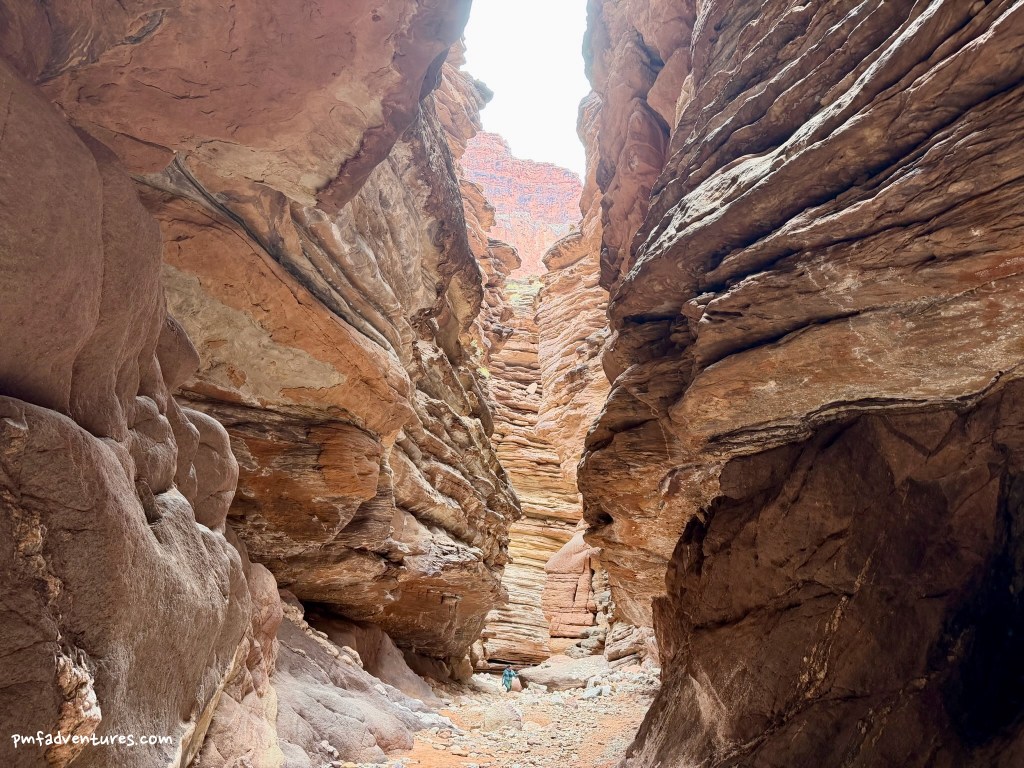
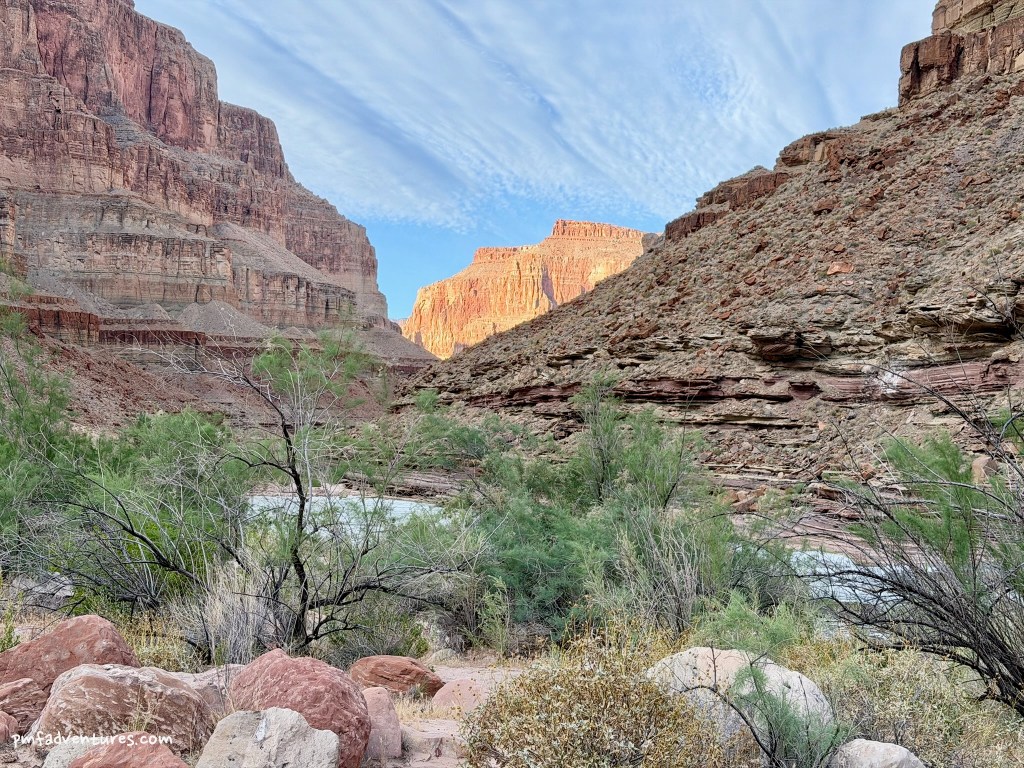
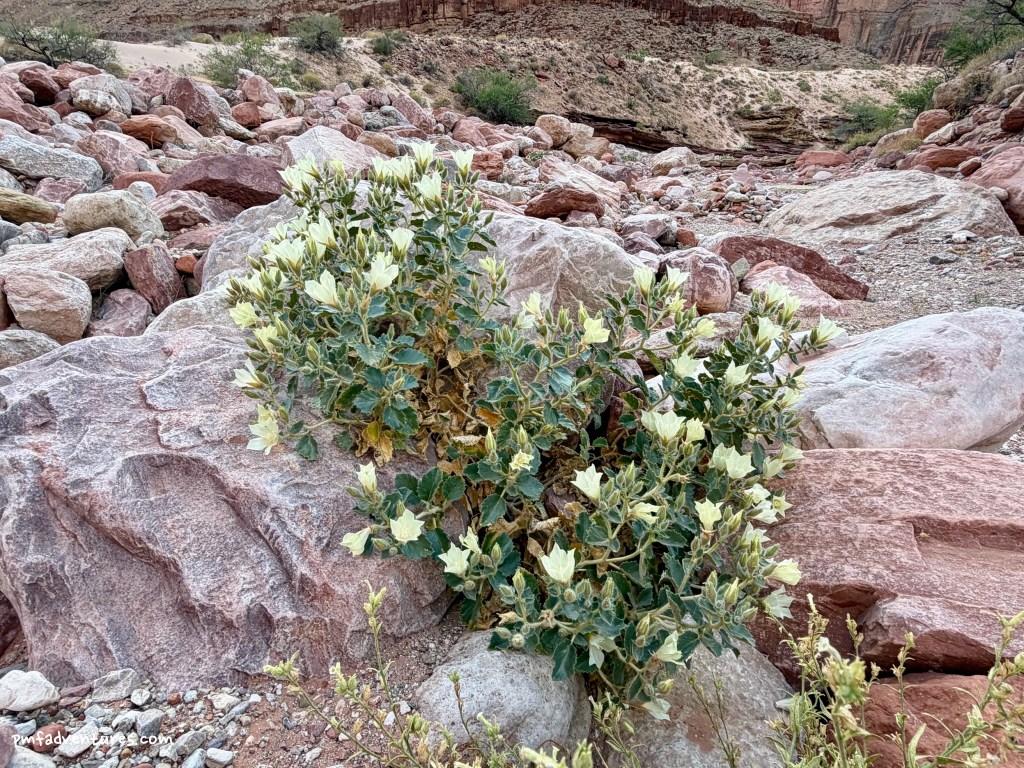
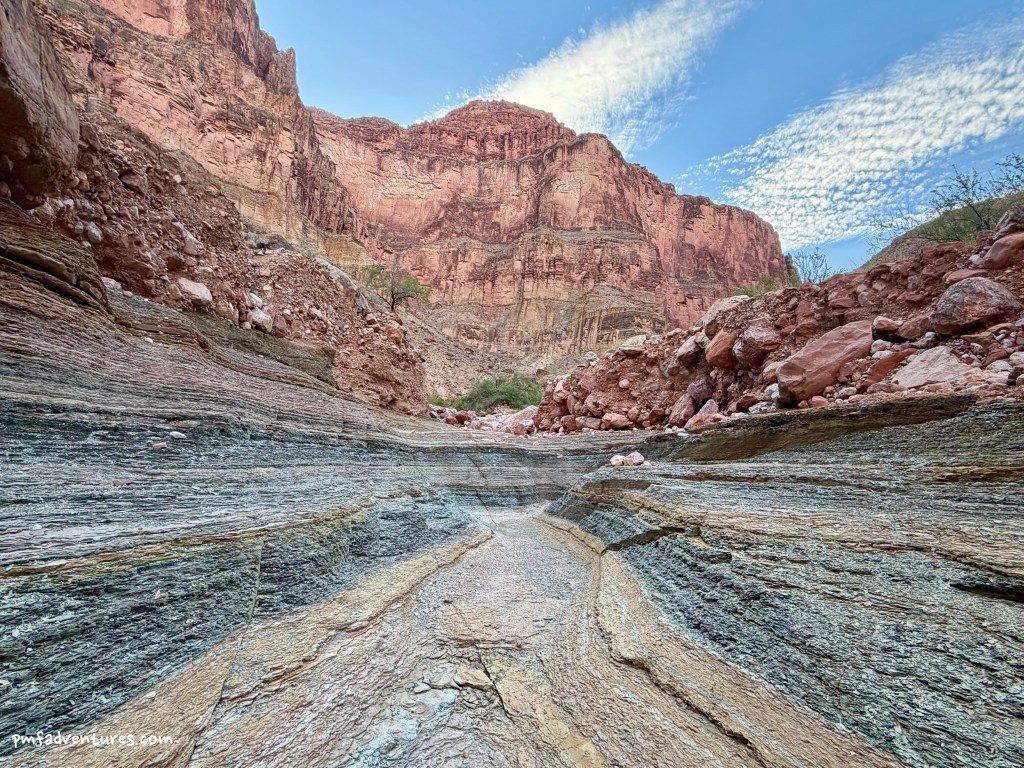
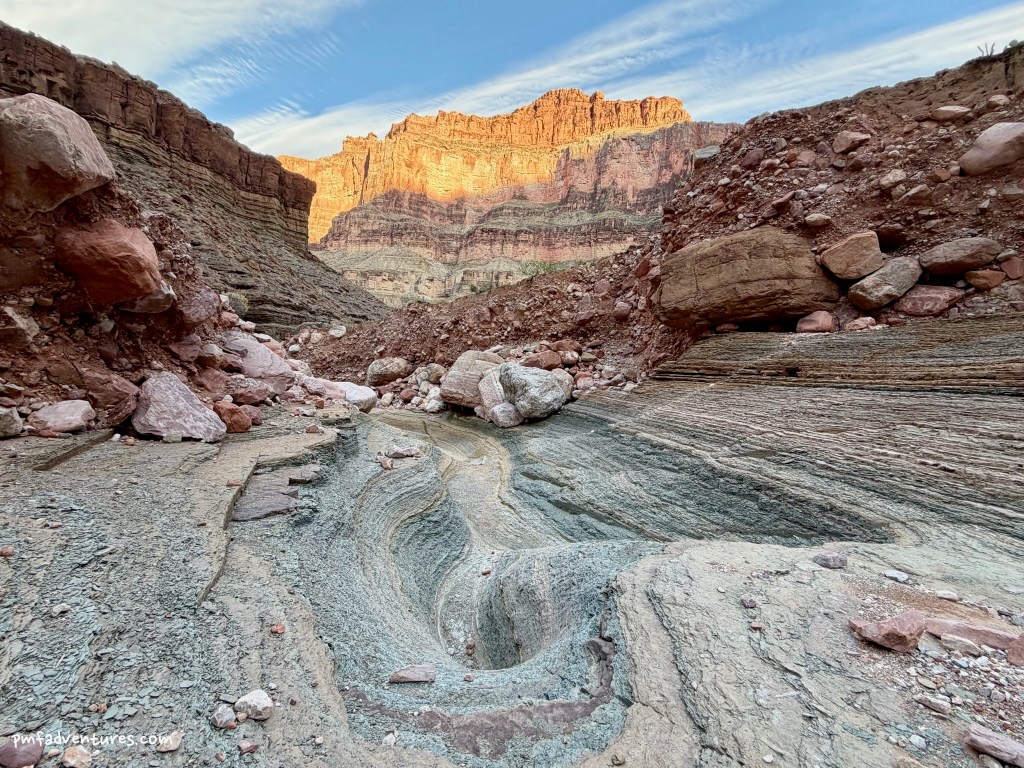
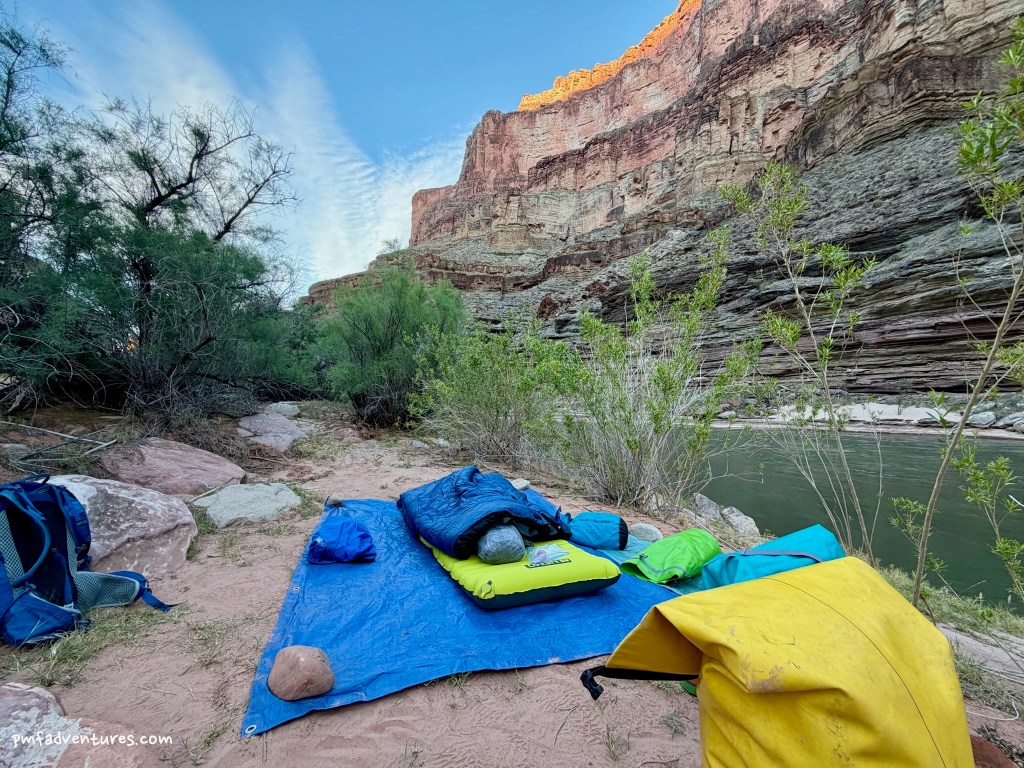
Day 10 (4/23/2026) – Fossil Canyon to Owl Eyes Camp: Today was the day we would be walking around two more rapids. After splashy runs in Fossil and Specter, we stopped above Bedrock so that the guides could walk us to the eddy where they would be picking us up. From our vantage point, we couldn’t see the boats actually run the rapid, but we could see that they made the move to the right of the island (and thankfully they all did!) And no sooner were we back in the boats than we had to get out again to walk around Deubendorff. In August 2024, a massive flash flood came down Galloway Canyon and completely changed Deubendorff Rapid, so the guides are still learning how best to run it, especially at low water. We got to watch all the boats run Deubendorff from a great vantage point above Stone Creek. After lunch, we did a quick walk up Stone Creek to the first waterfall so that everyone could cool off, then continued downstream to Owl Eyes Camp. After setting up camp, we did a short hike up the creek bed and into a cool slot canyon to a chockstone that marked our turn around point.
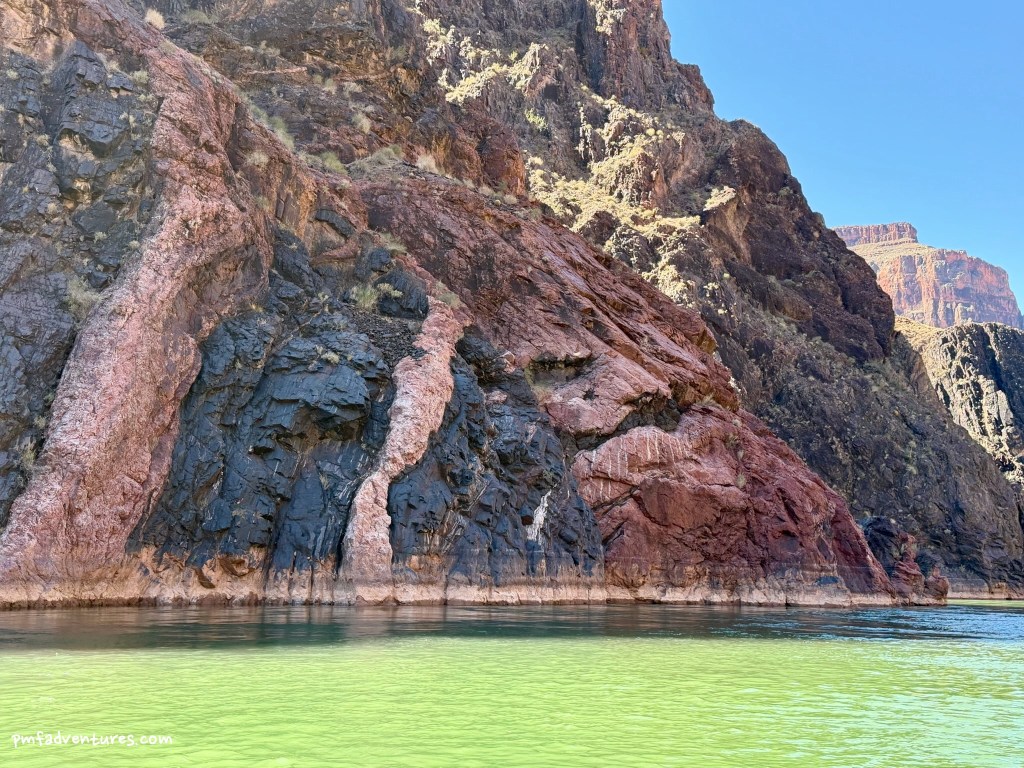
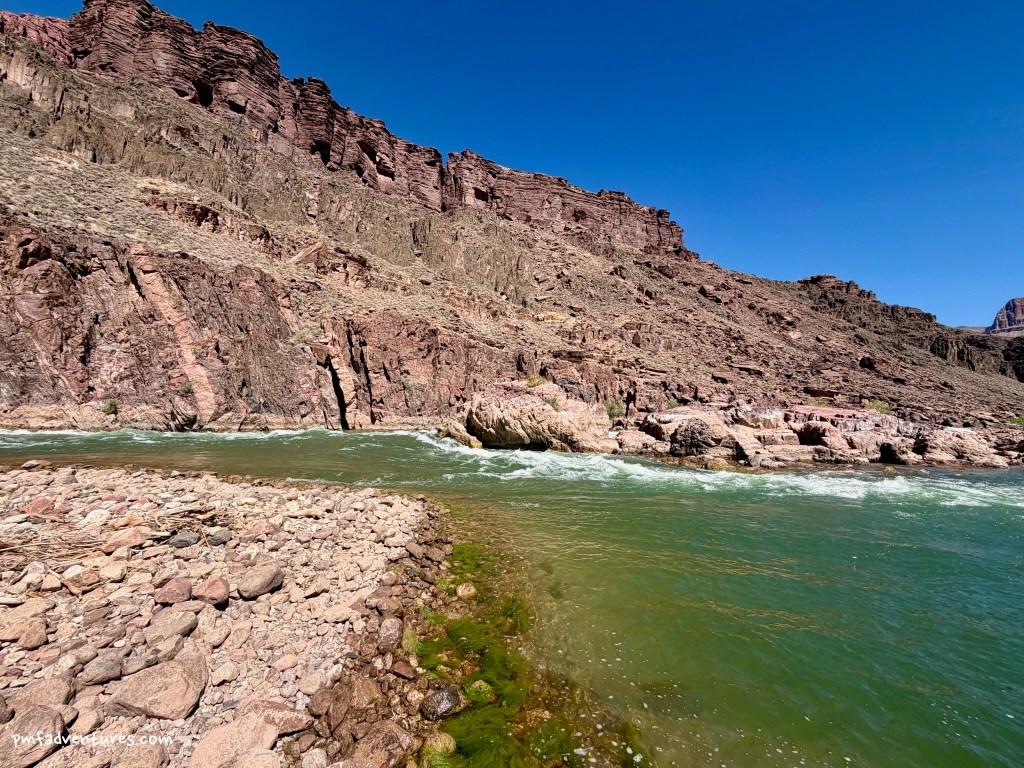
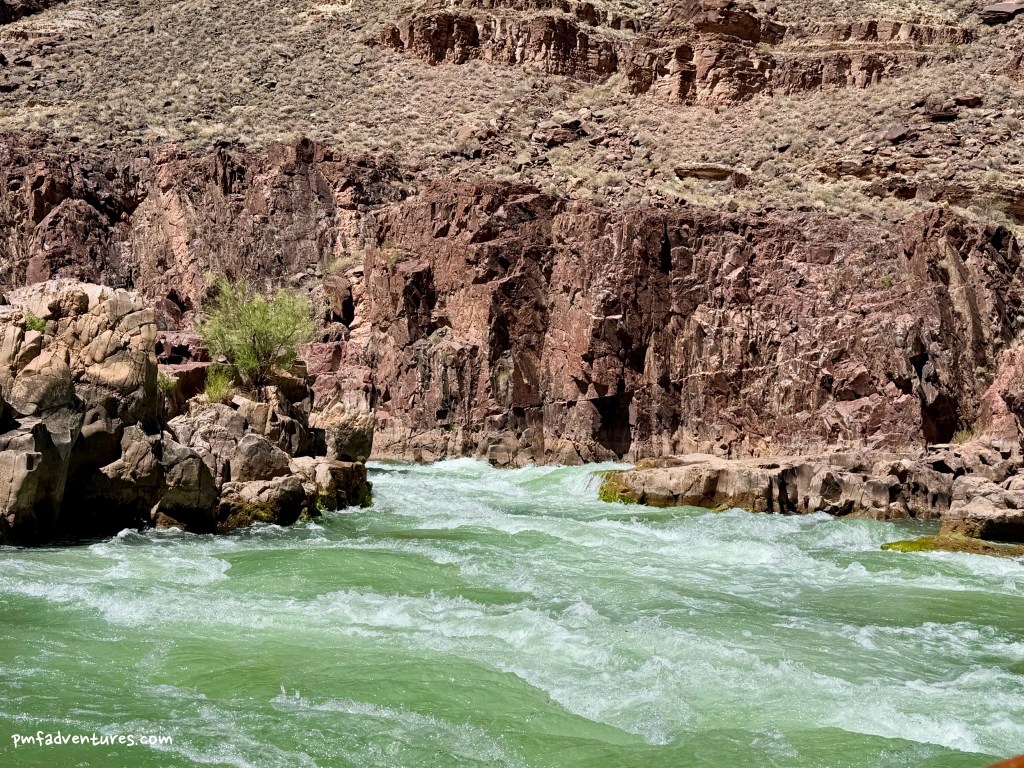
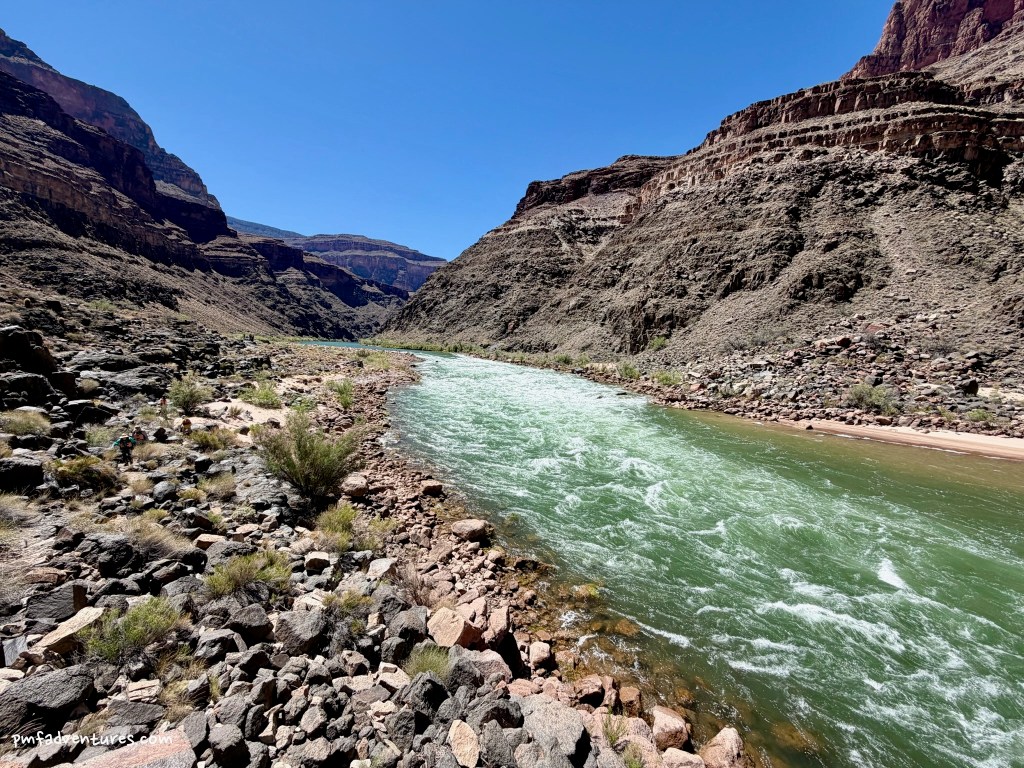
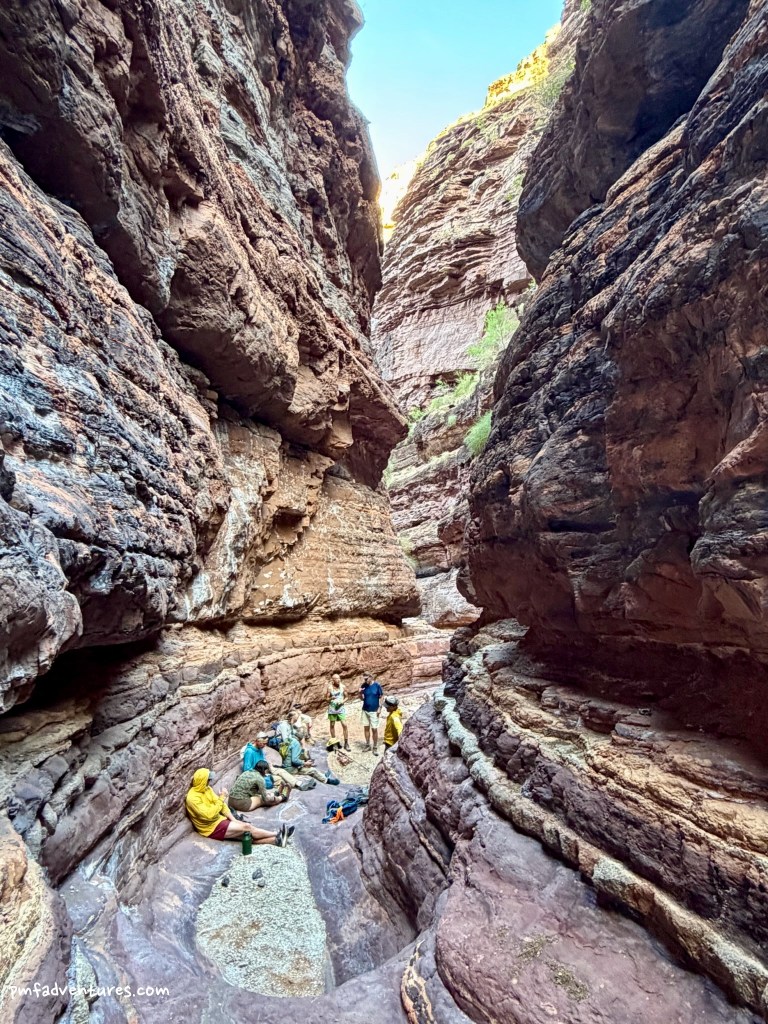
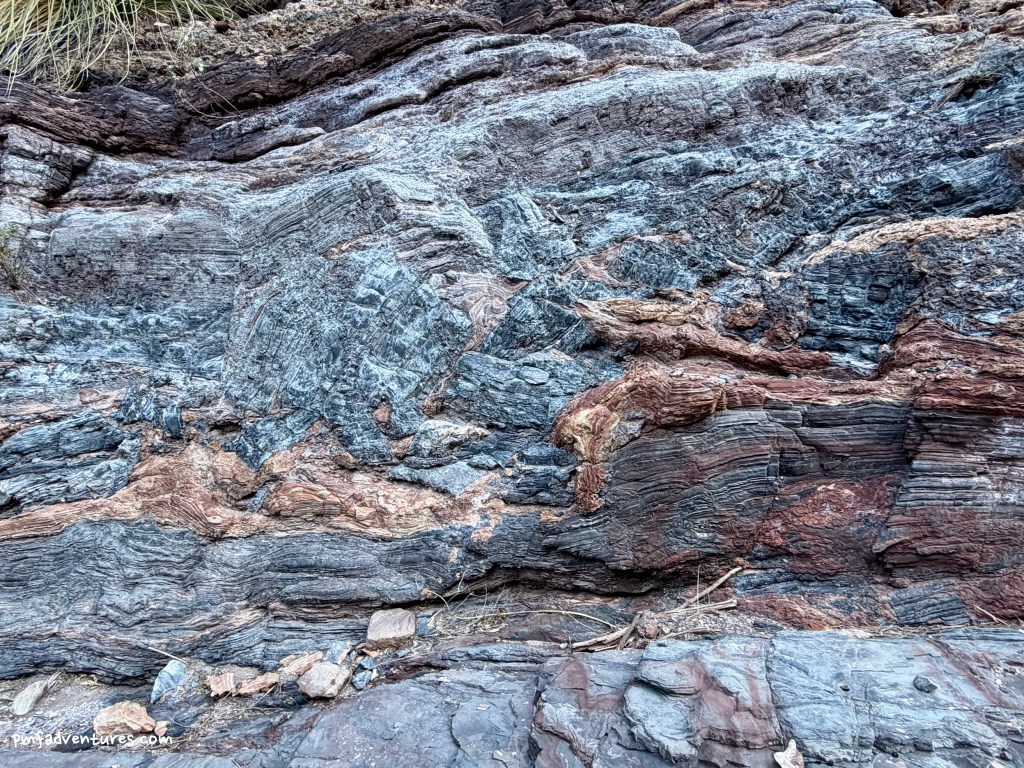
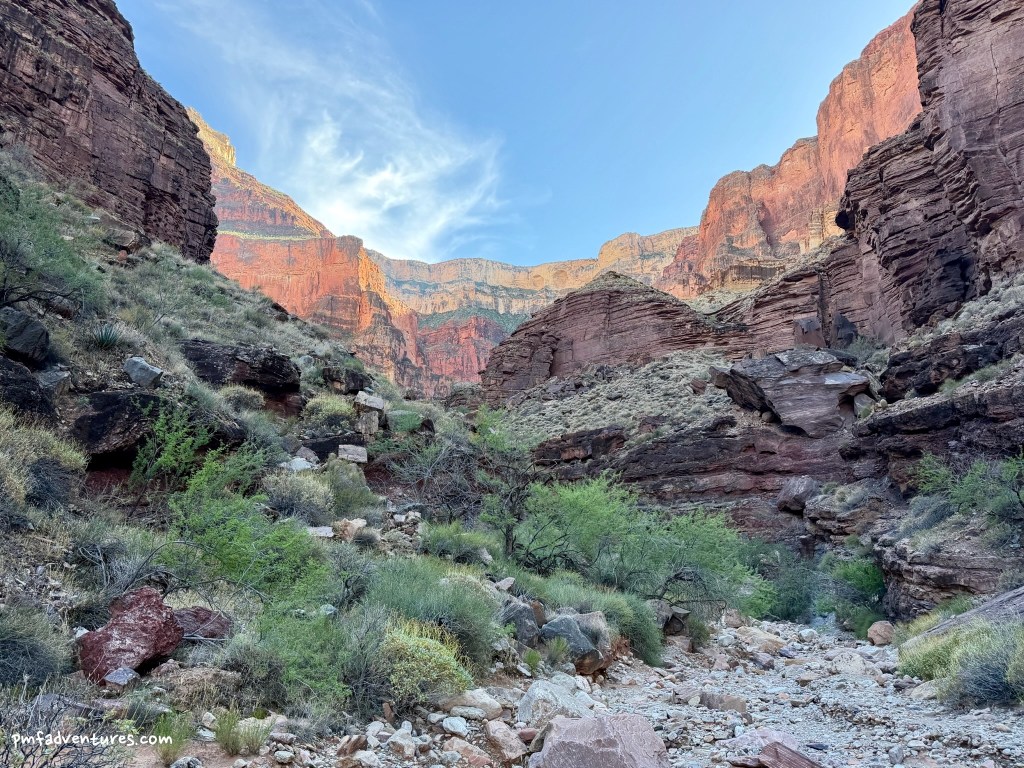
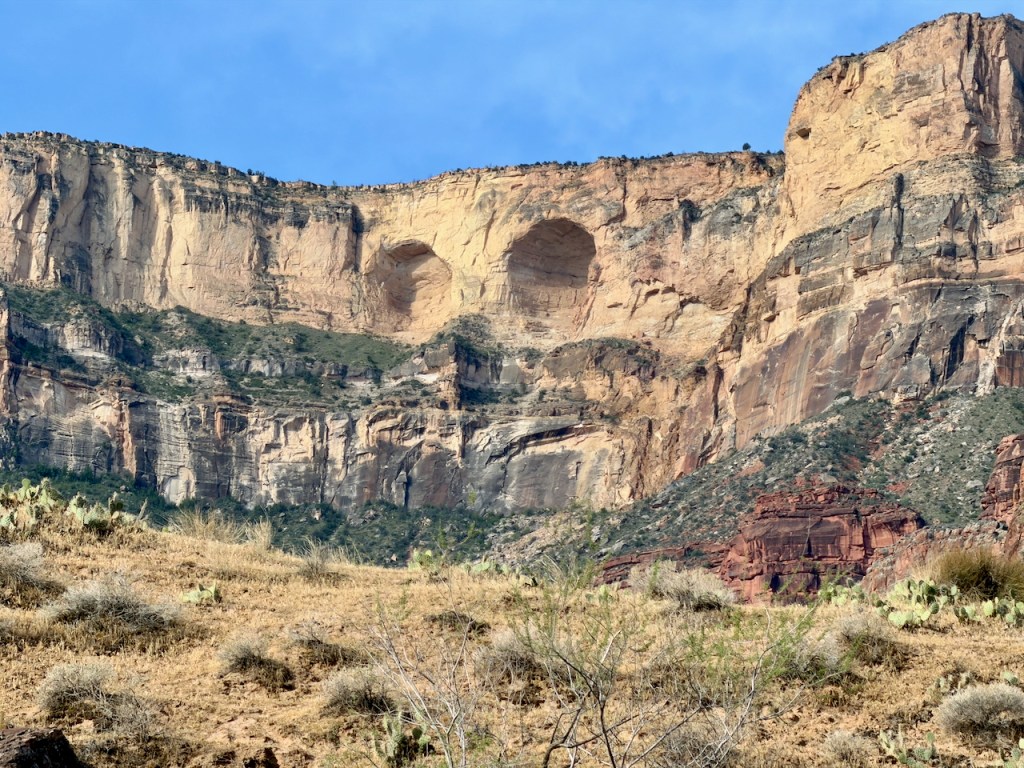
Day 11 (4/24/2026) – Owl Eyes Camp to Ledges Camp: While we were at Owl Eyes, Roger learned that the Bureau of Reclamation (or as he calls it, “wreck the nation”) was going to be reducing flows through the Glen Canyon Dam, to fluctuate between 6,000 and 8,000 cfs, with an immediate reduction to 6,000 at 8 AM on 4/23. So that meant we had two objectives for the day — spending the morning at the Patio along Deer Creek and then heading downstream to run Upset Rapid while the river was still running at 8,000 cfs.
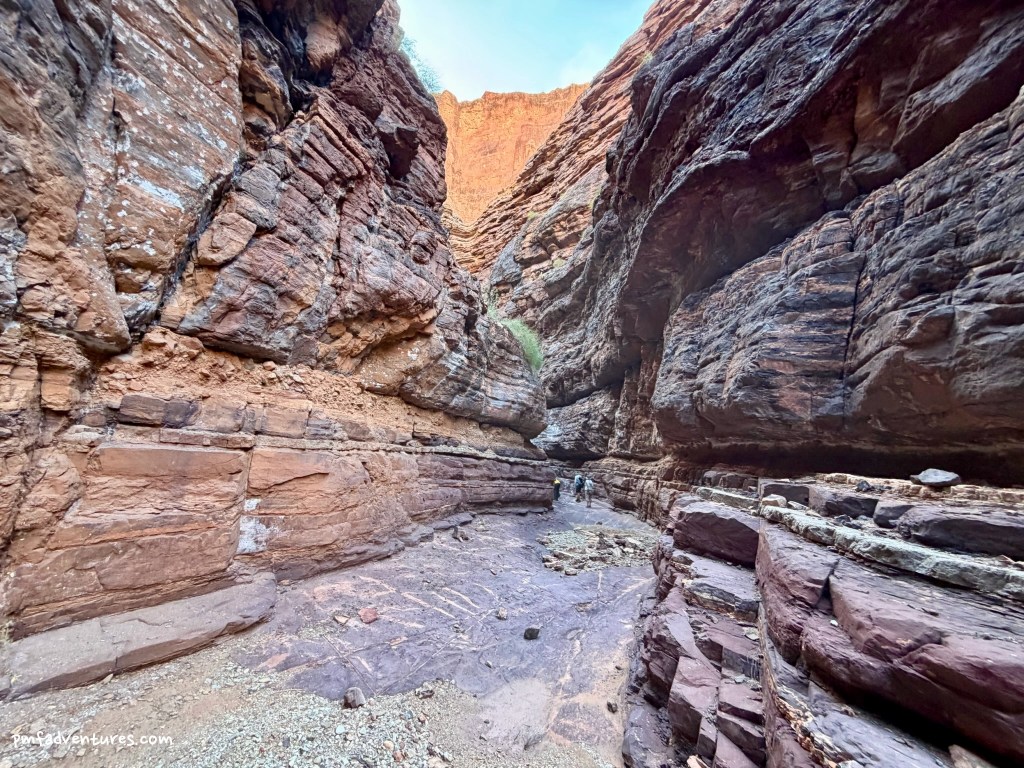
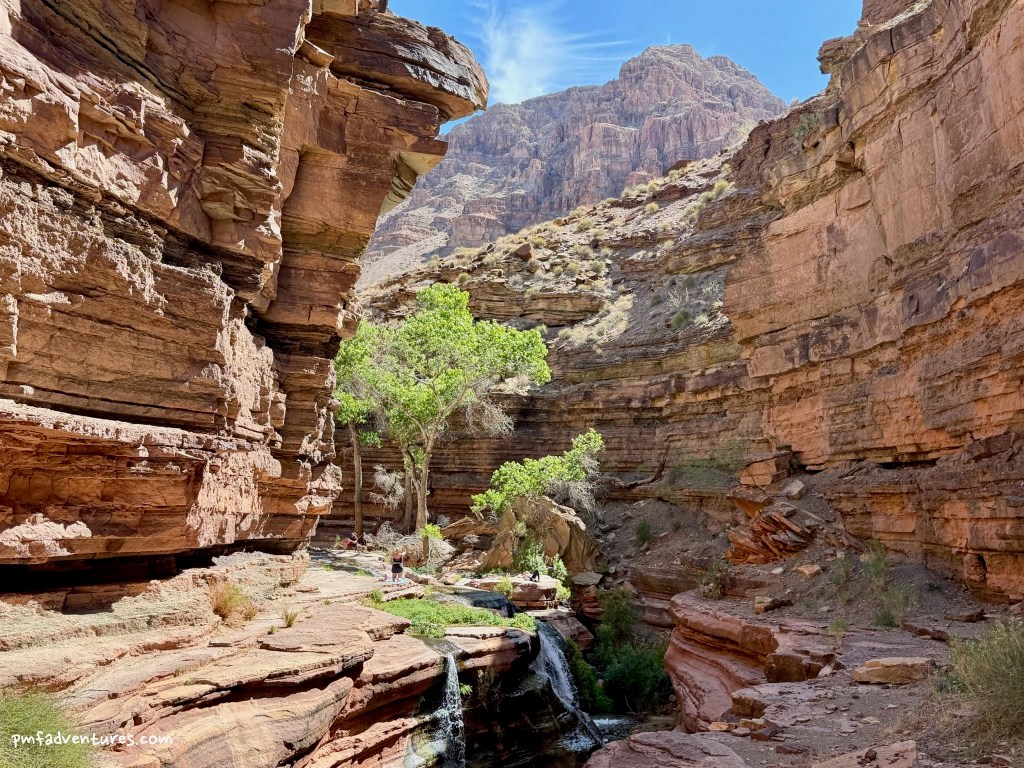
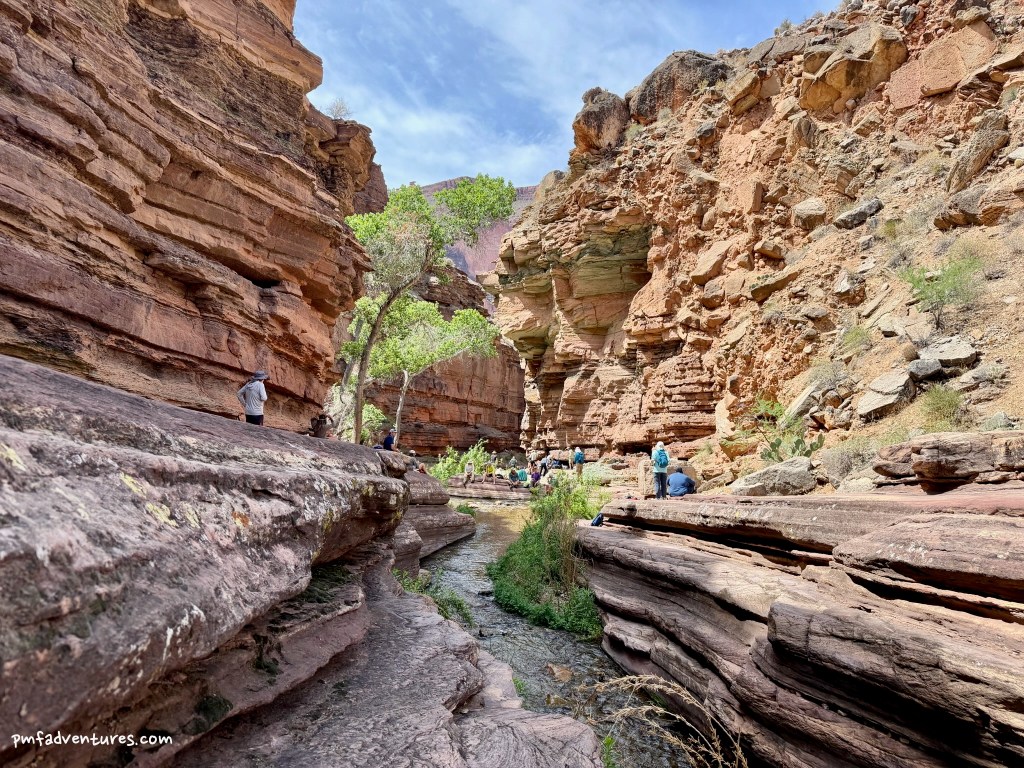
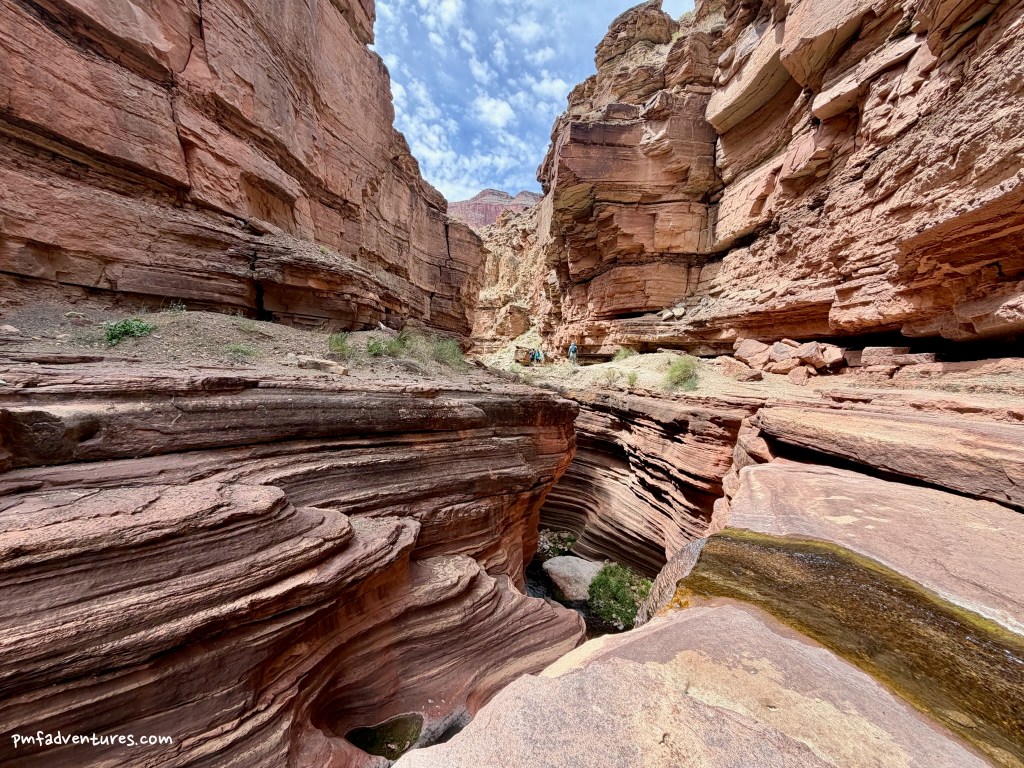
On our trip in 2018, I opted to do the hike up Tapeats Creek to Thunder River and then over to Deer Creek, which meant I got to see the Patio, but didn’t get to spend any time there. So I was excited to get to spend a few hours in that magical place. After traversing through the narrows at the front of the group, I choose to keep wandering for a bit, so hiked up past the Patio and explored for about an hour. Then I came back and found a nice spot where I could relax and have lunch. I hung back with the last guides to leave, so I could play around with getting some artsy photos of the narrows. And on the way down, I made a quick detour over to see Deer Creek Falls.
Once we got back in the boats, the guides were on a mission to get downstream, but Dellie still managed to entertain us by singing the Chicken Train song. And we had a great run of Upset Rapid before stopping for the day at Ledges Camp. I was quick to climb up to the penthouse ledge and claim it for me and Tania, as Sue and I camped there in 2018 and I knew how nice it was. And I was thankful that we didn’t have a repeat of the rainstorm that rolled in about 12:30 AM on that trip, so I was able to sleep out the whole night.
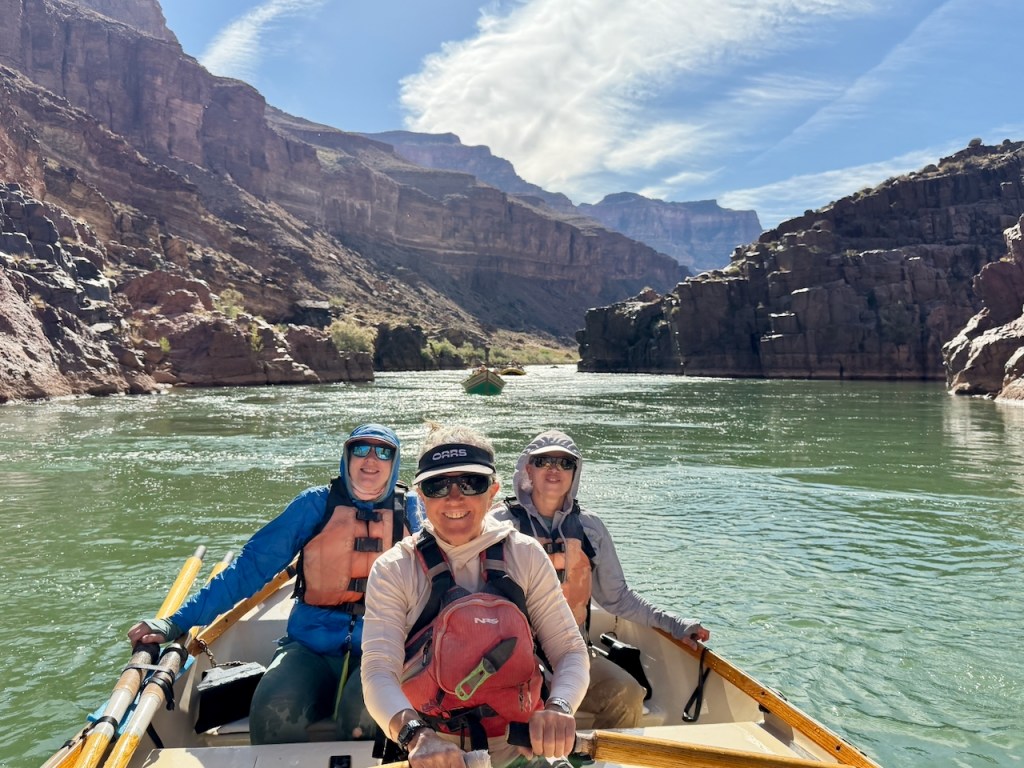
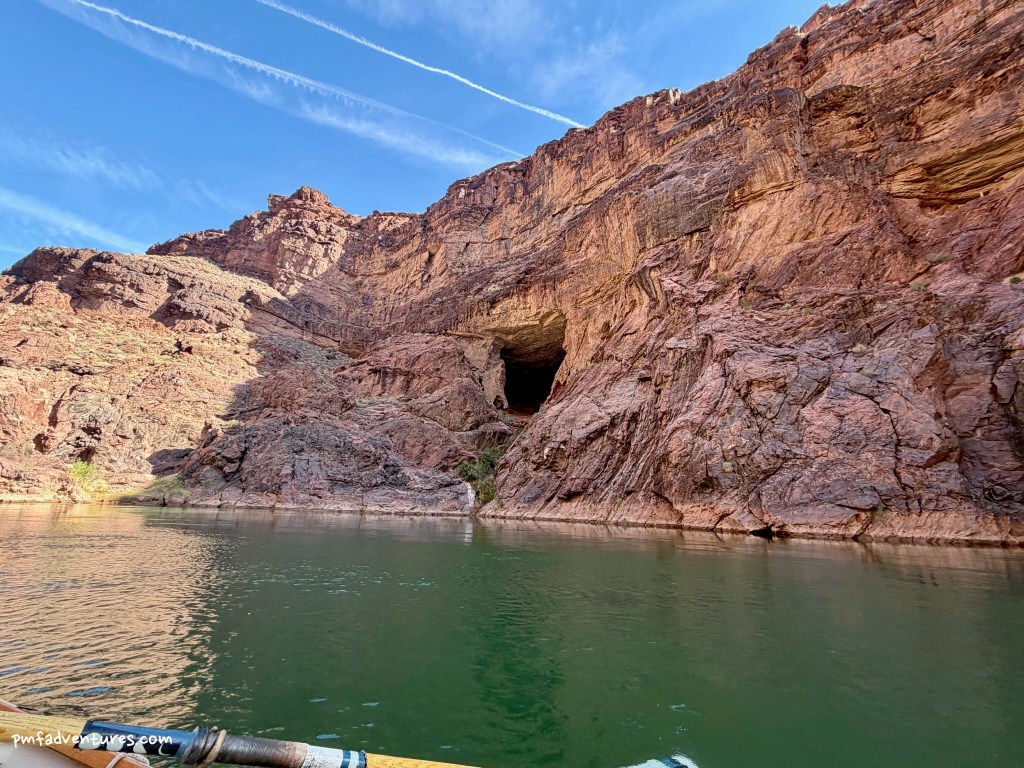
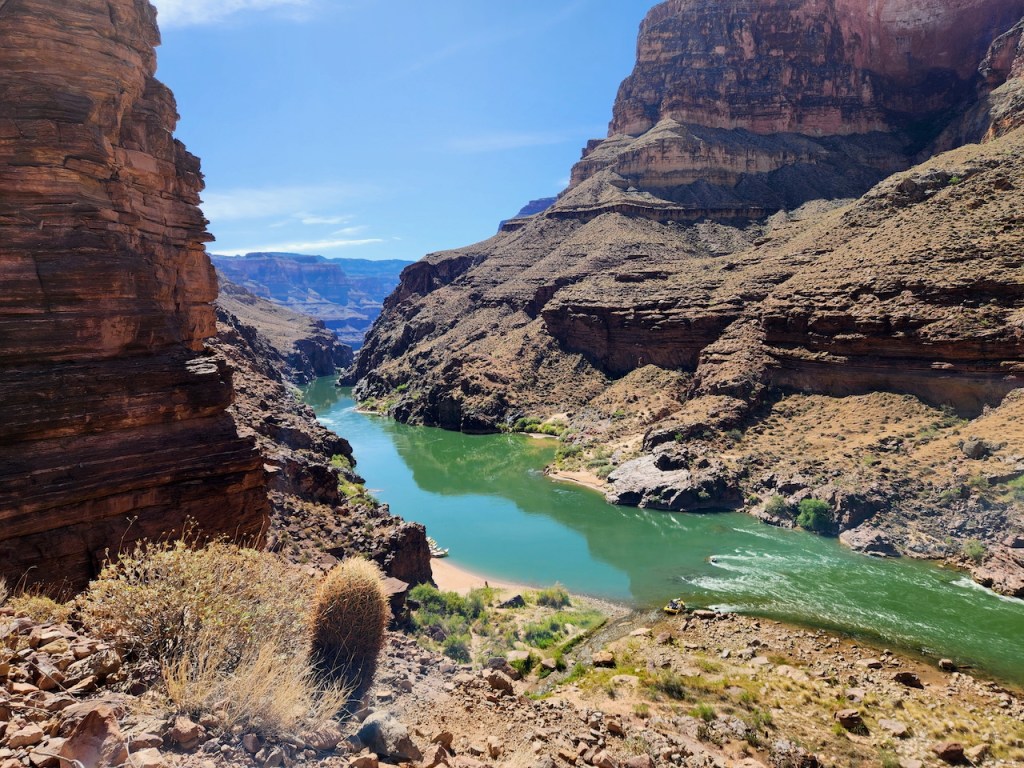
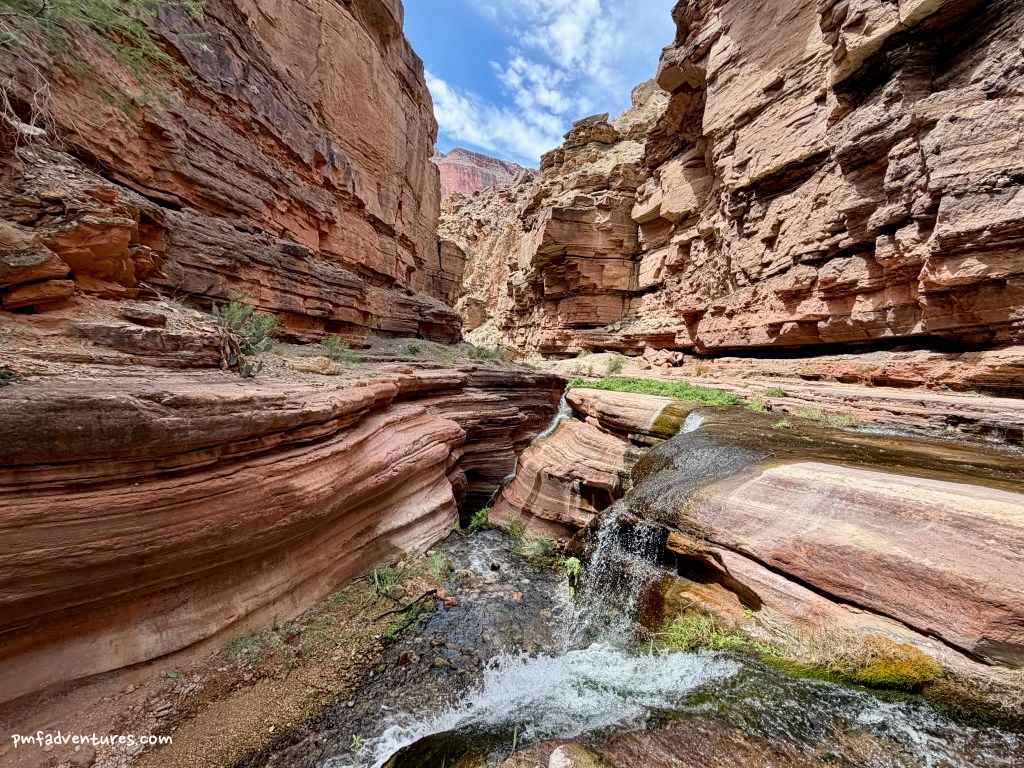
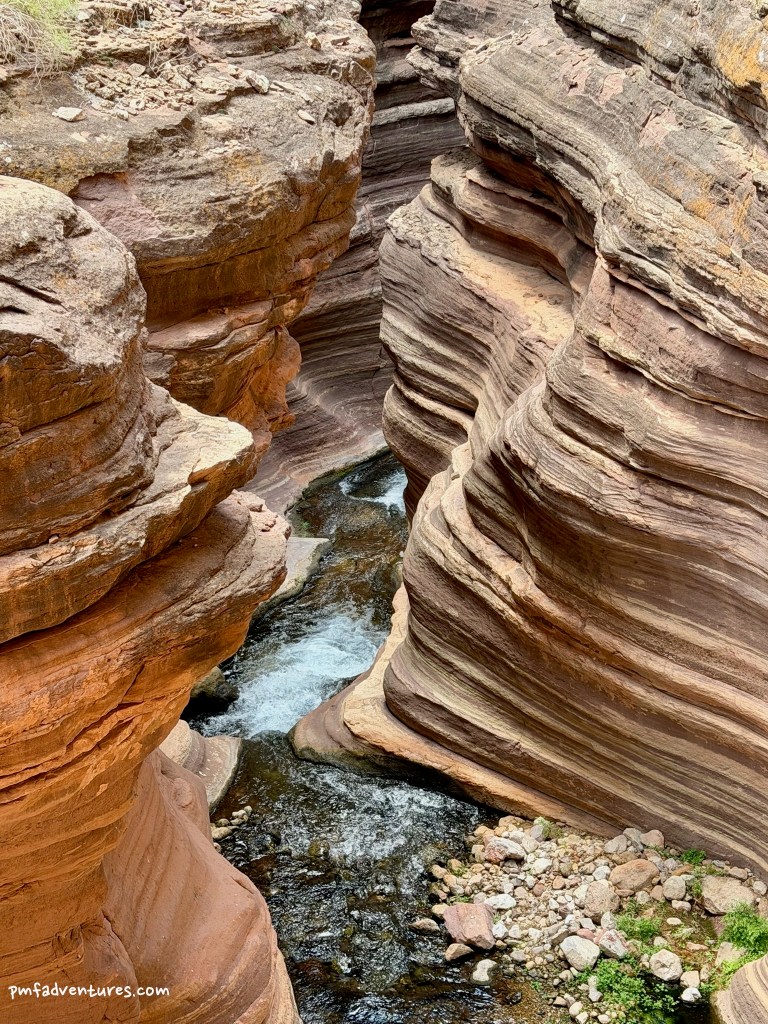
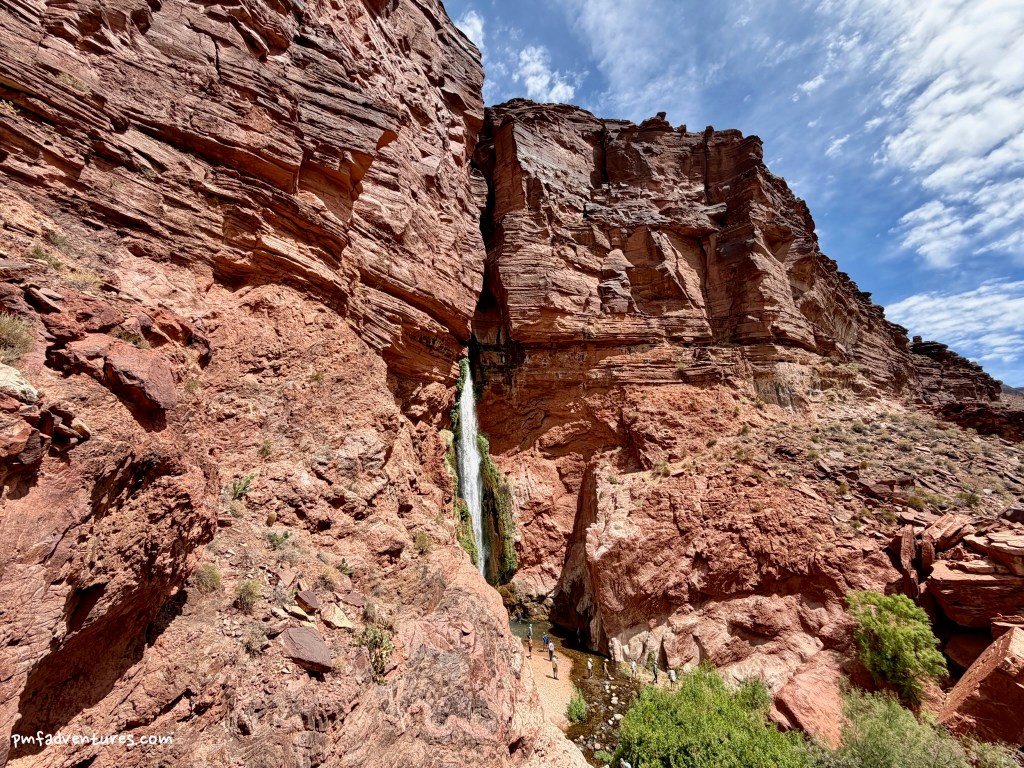
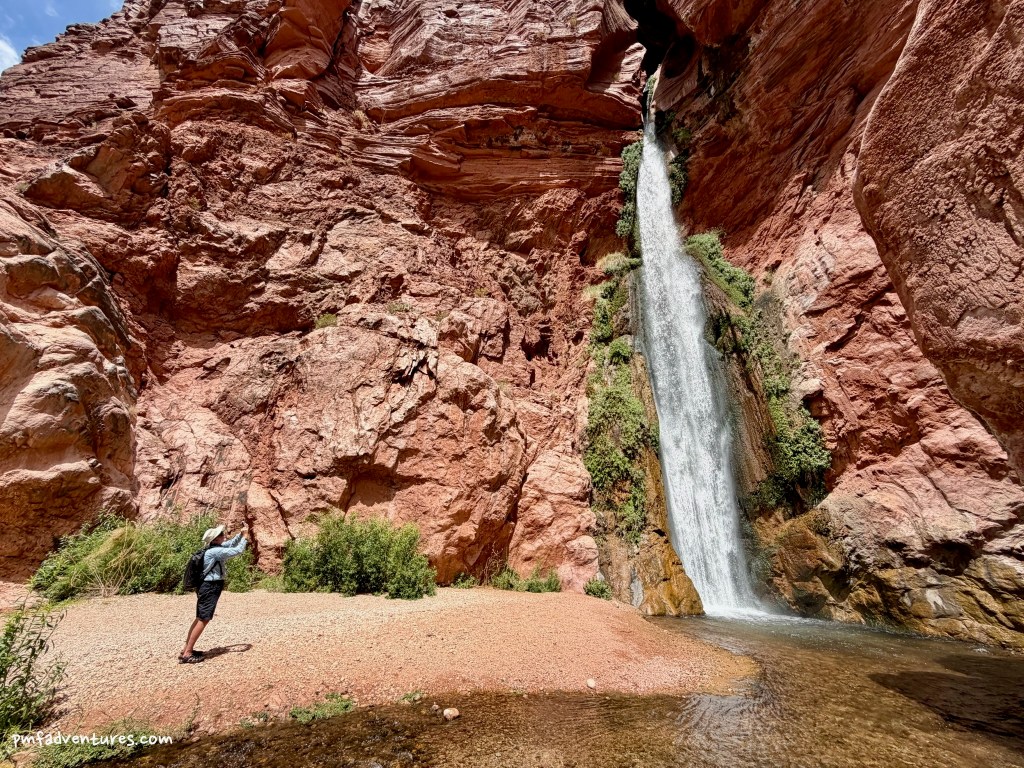
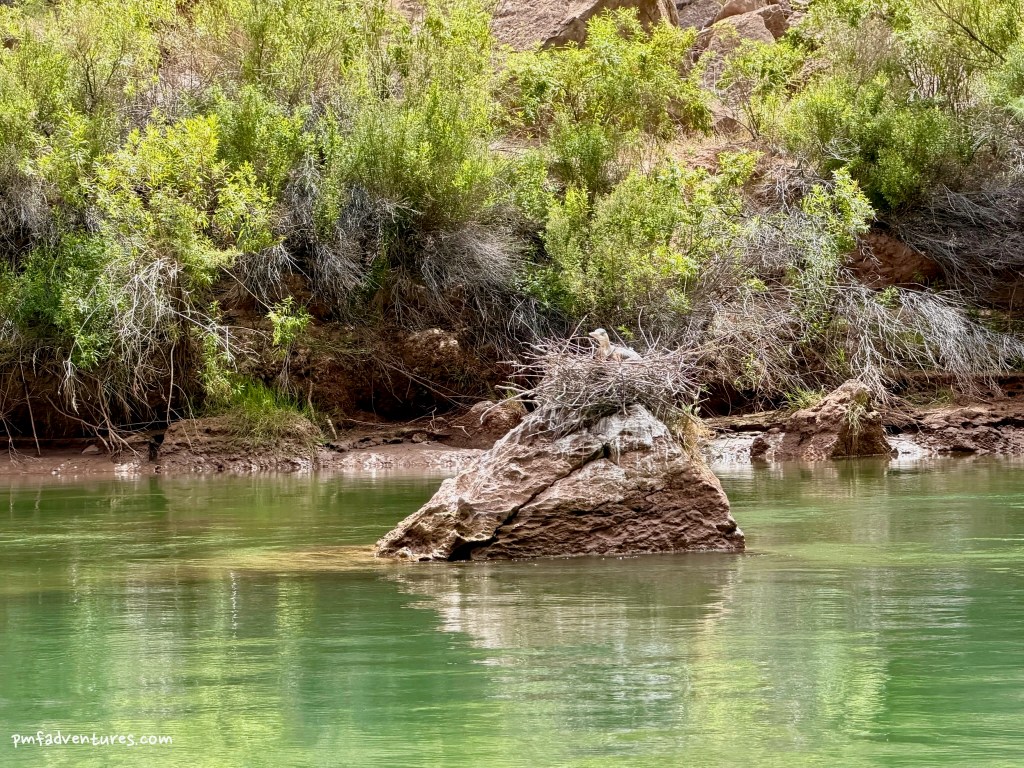
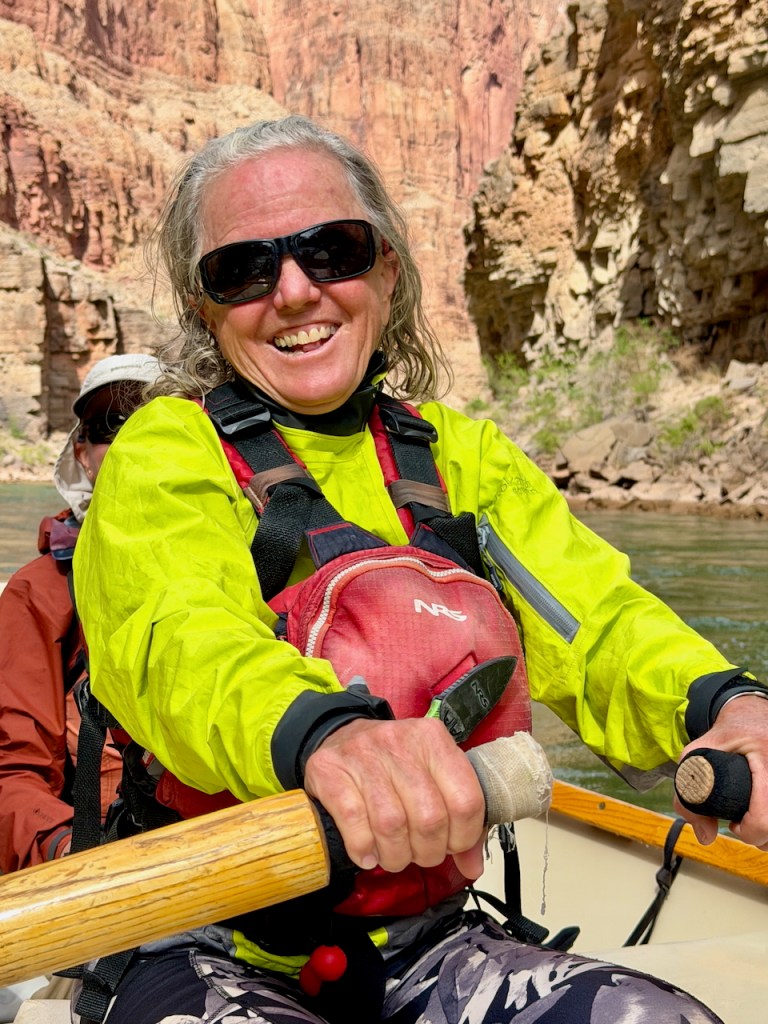
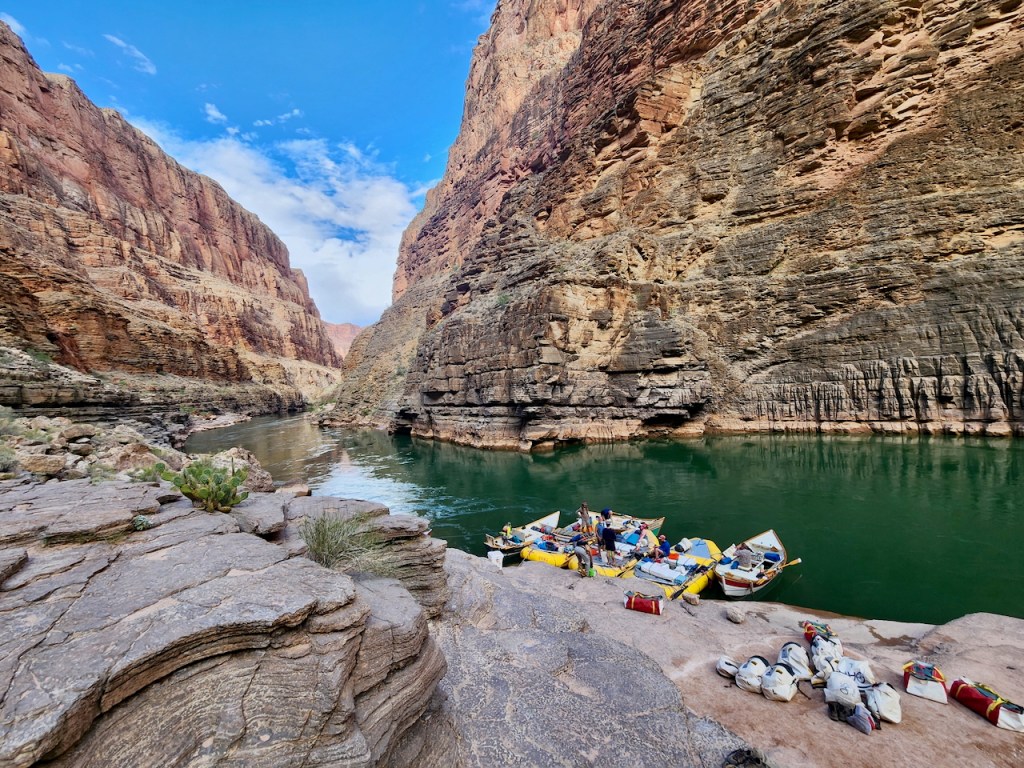
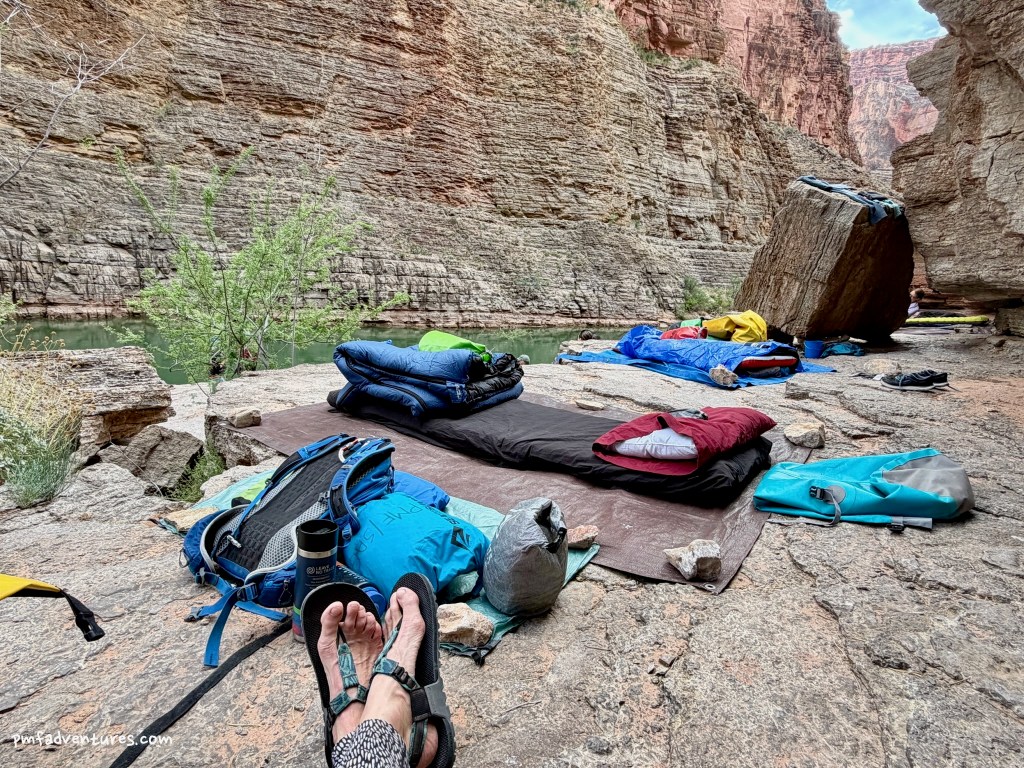
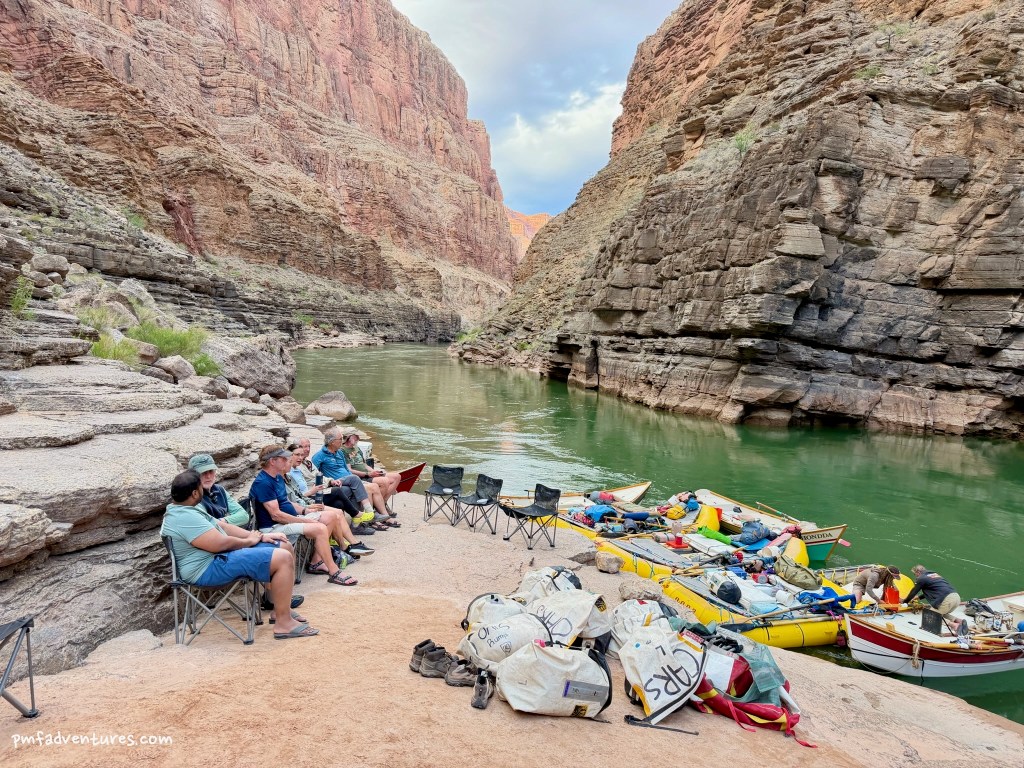
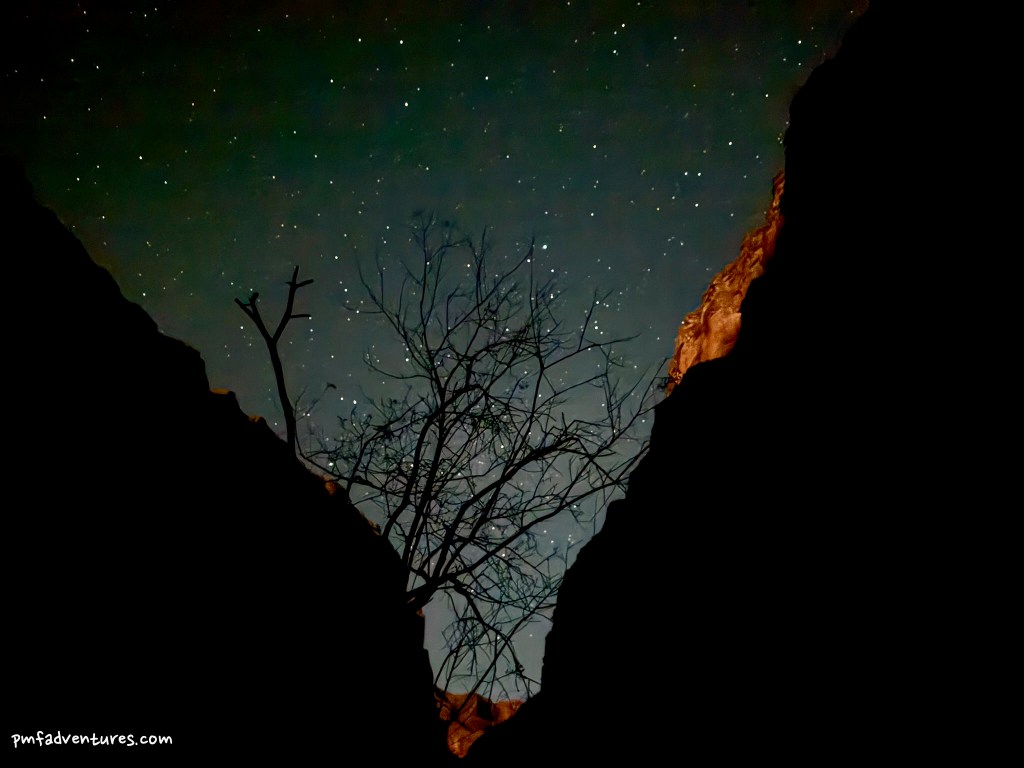
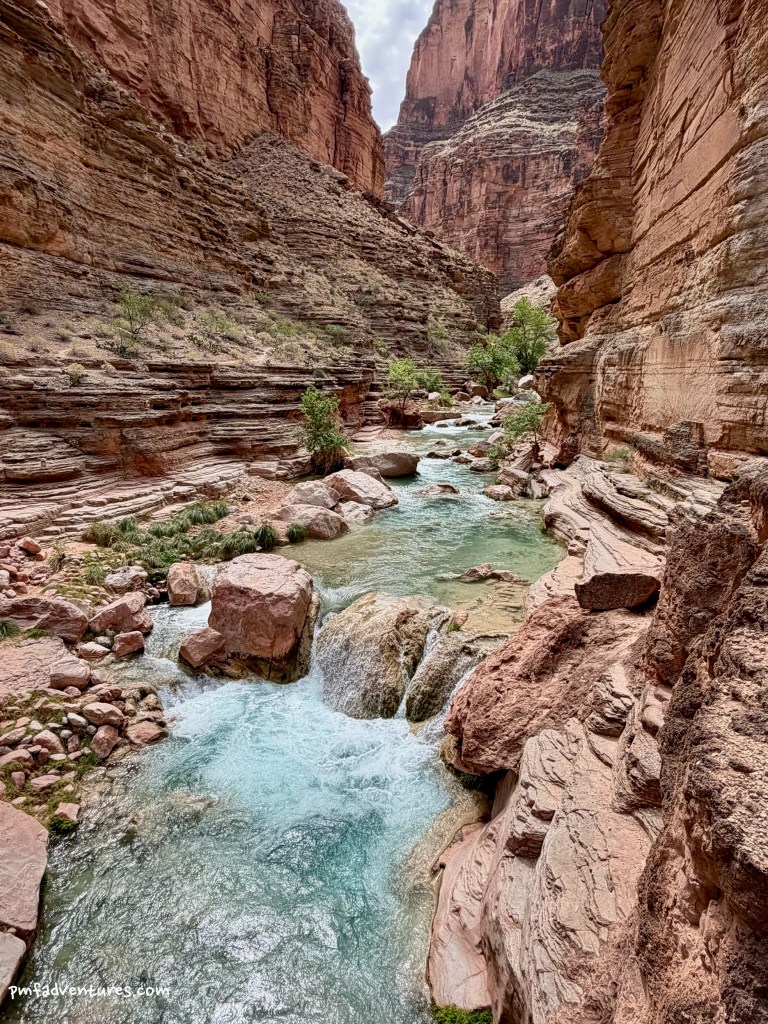
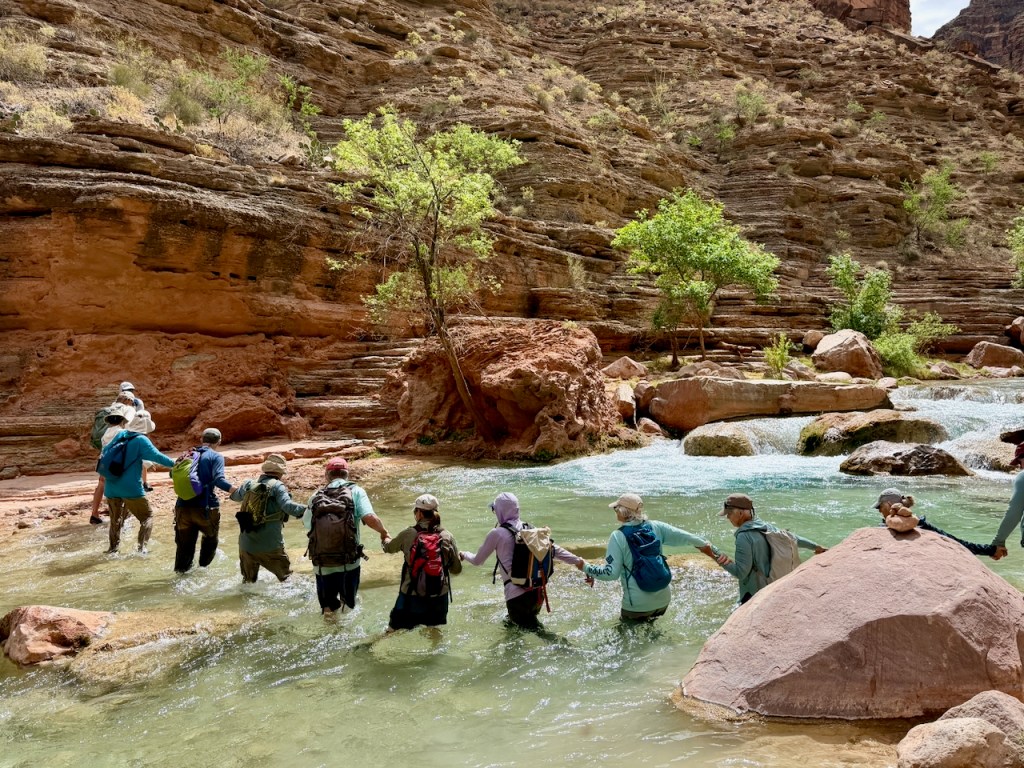
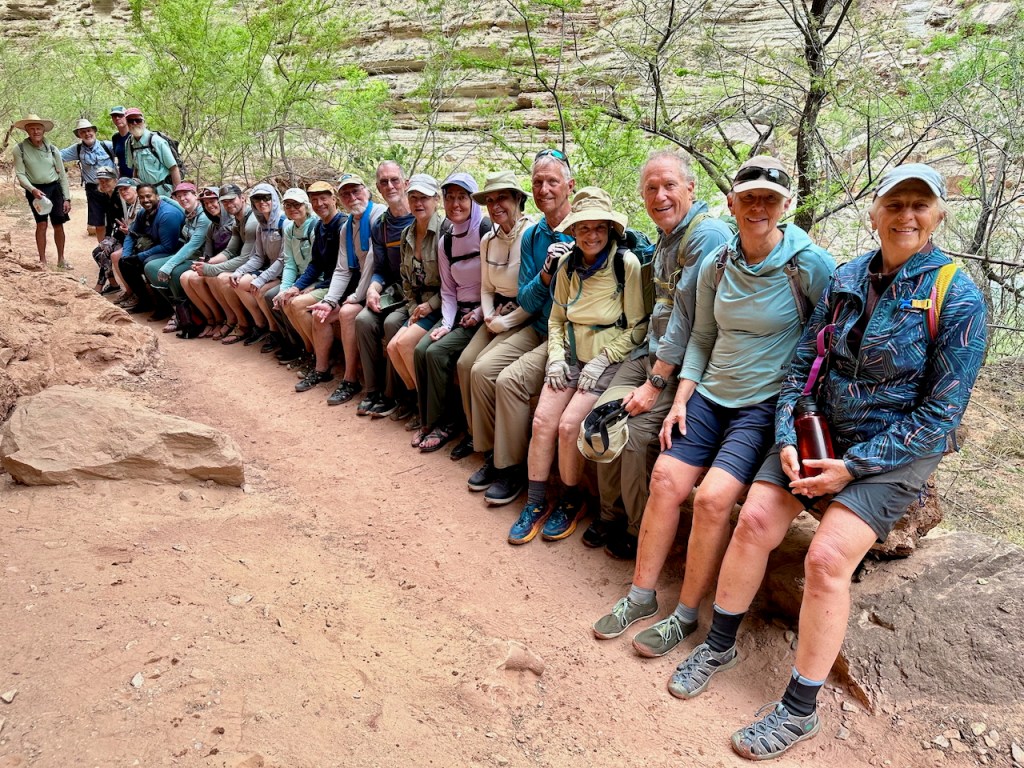
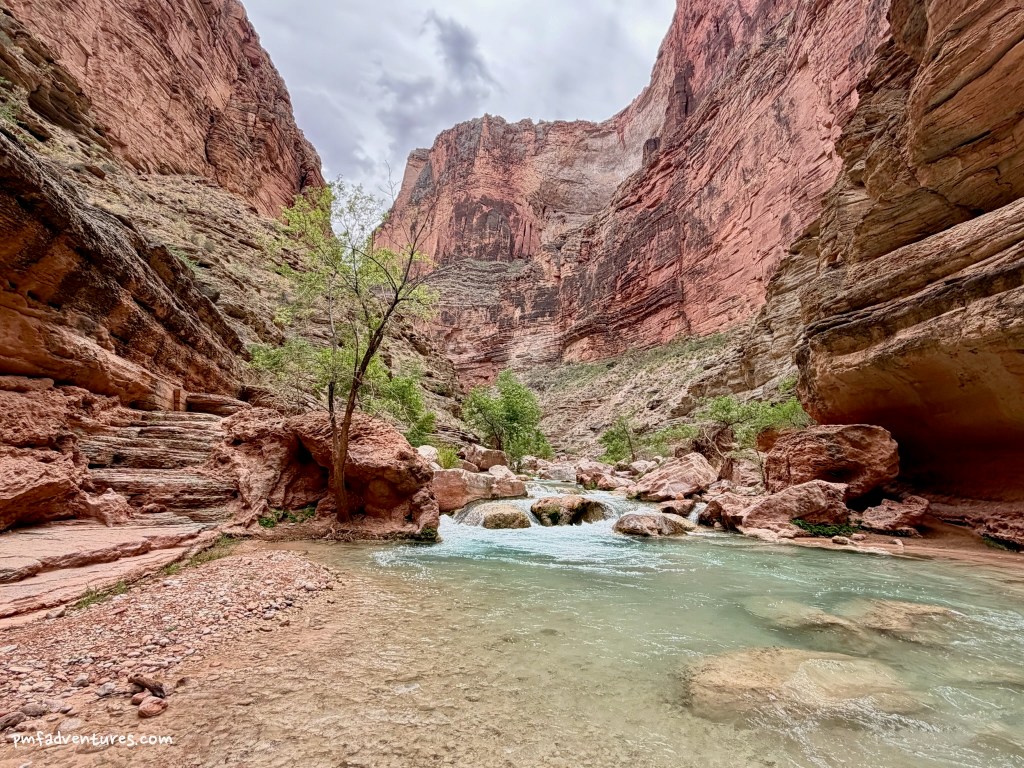
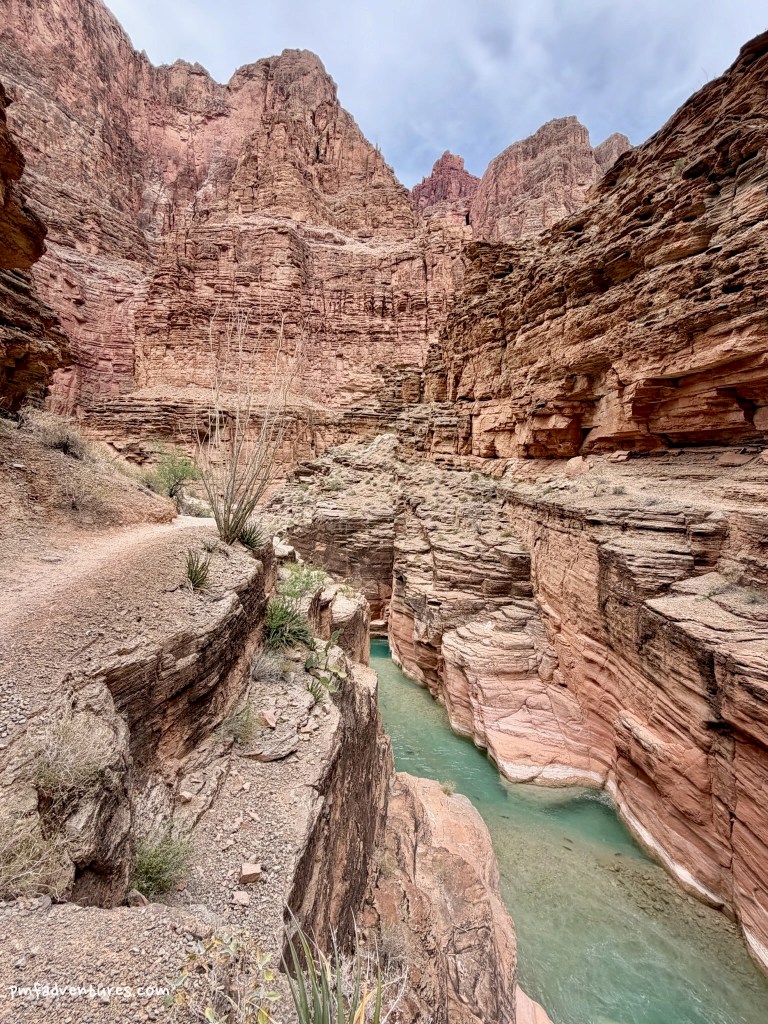
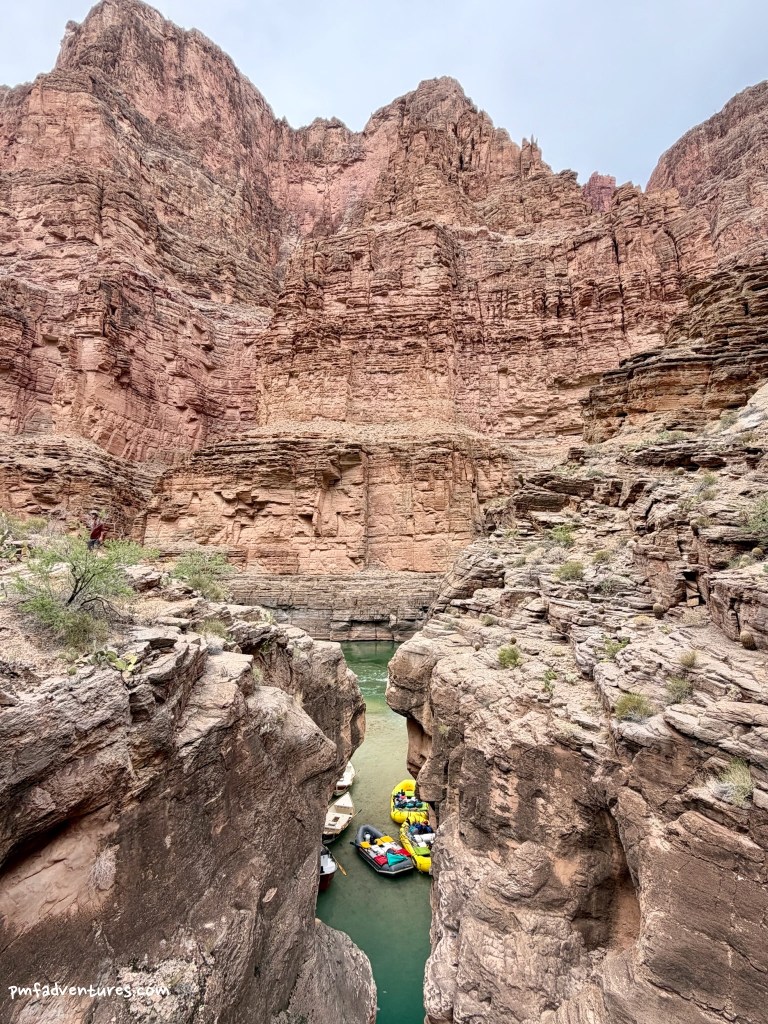
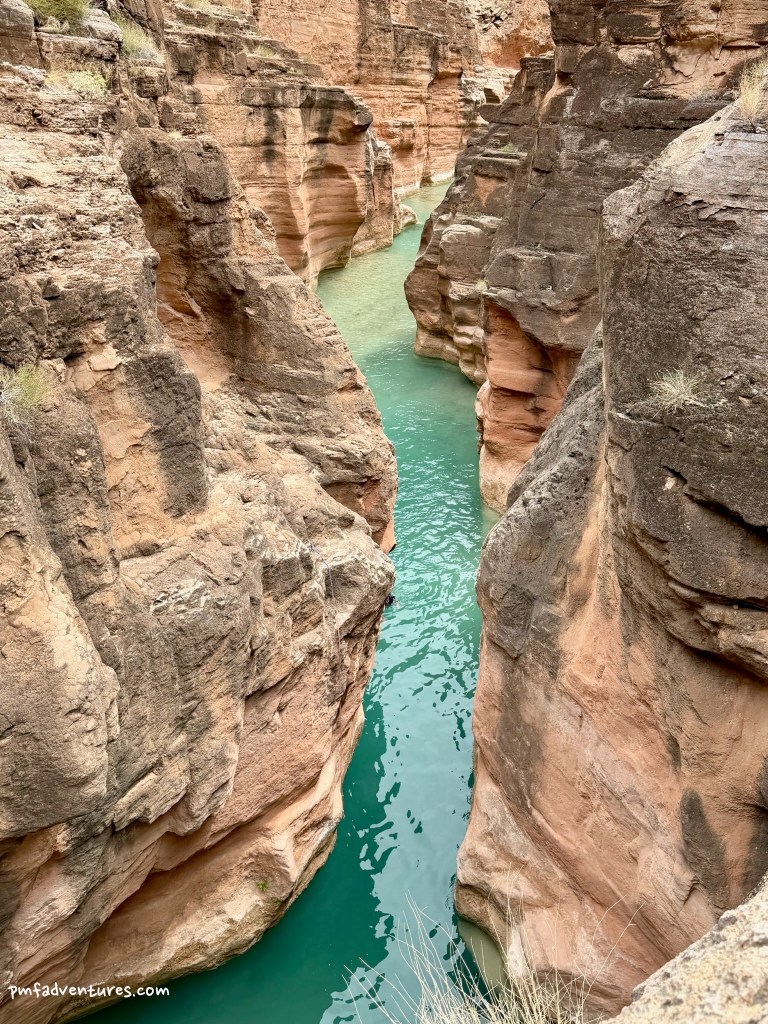
Day 12 (4/25/2026) – Ledges Camp to Below Fern Glen: Staying at Ledges put us in a good position for today’s adventure, a visit to Havasu Canyon. It was a quick five miles from Ledges to Havasu, and we got a brief glimpse of Mount Sinyella along the way. We were happy to be the first trip to get to Havasu that morning, as boat parking can get challenging when there are multiple trips there. We hiked up about half a mile to the “big pool” as a group and then I headed off on my own to find a spot to hang out and enjoy some alone time. We were back on the boats about 1 PM and headed into a strong headwind that turned really nasty before we got to camp. We had hoped to camp at Fern Glen Canyon, but there was another trip there, so we ended up pulling in at a small beach just below Fern Glen. The clouds were looking threatening when we arrived and we even had a few spits of rain, so I set up a tent and planned to sleep inside for the first time.
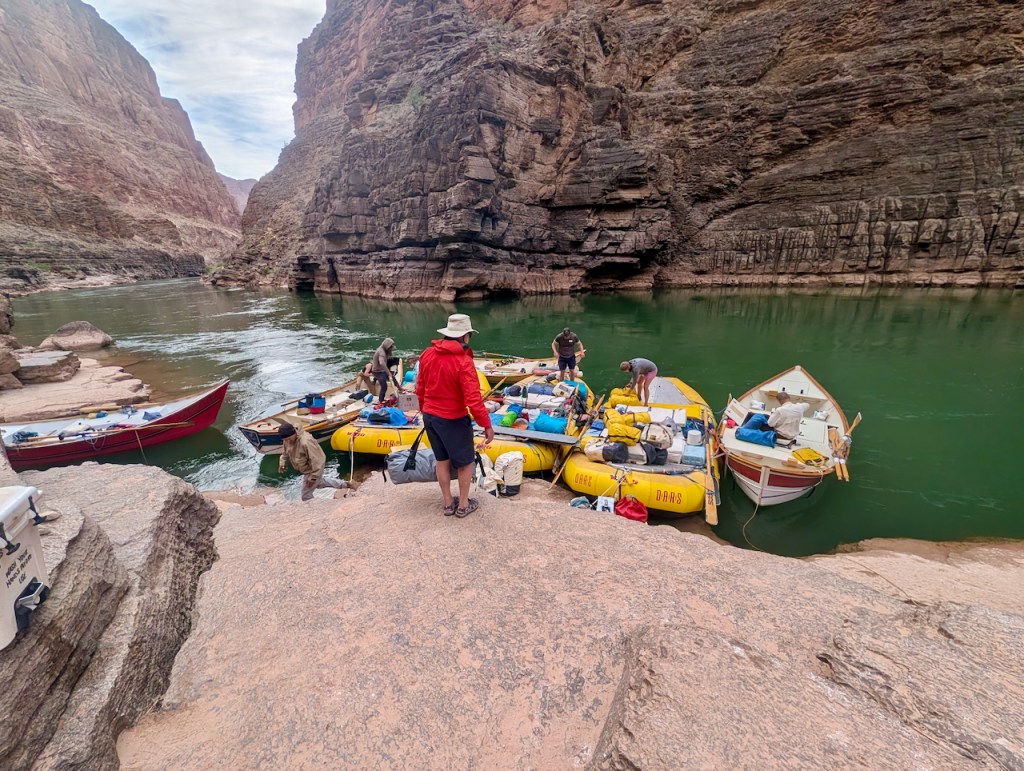
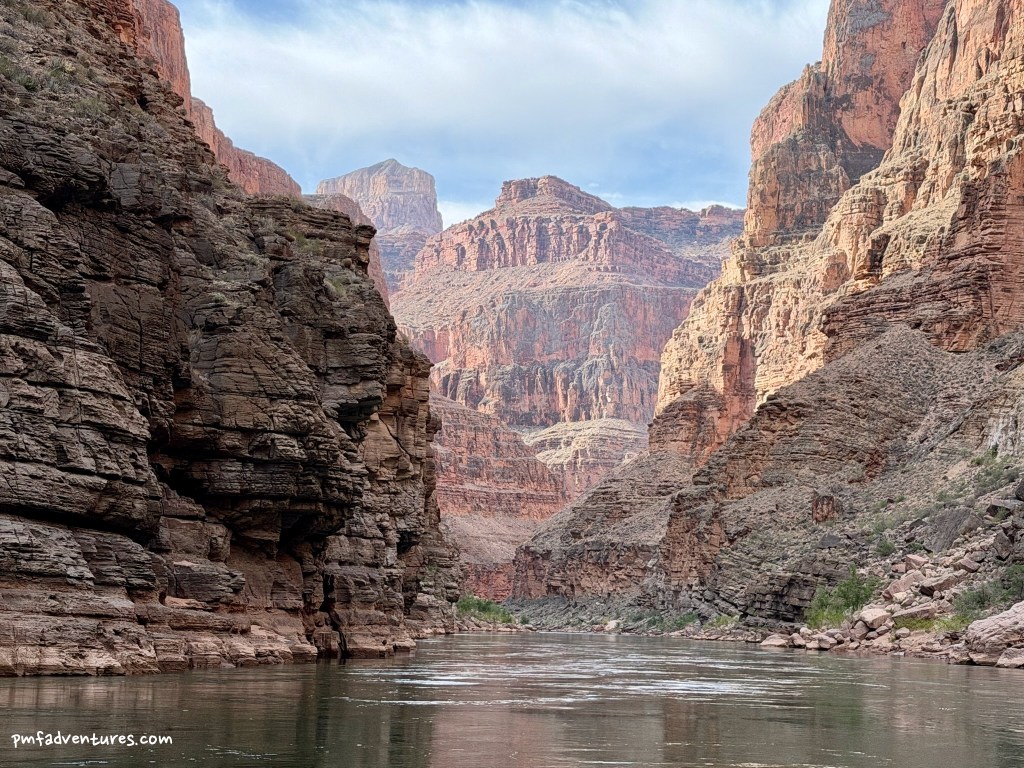
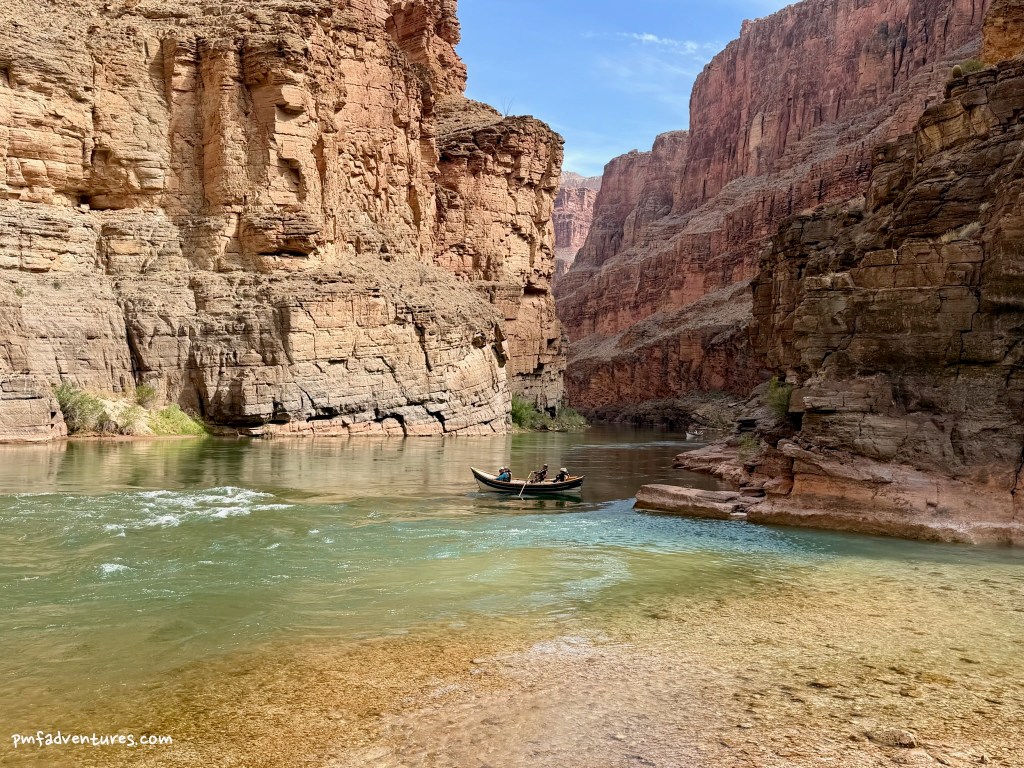
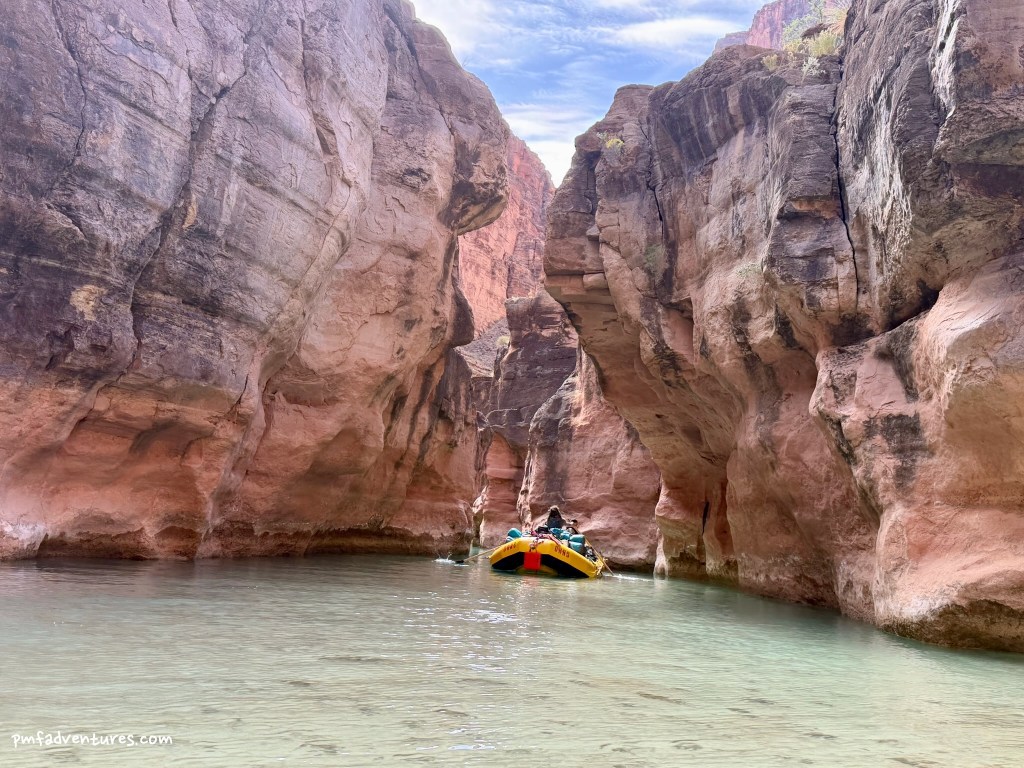
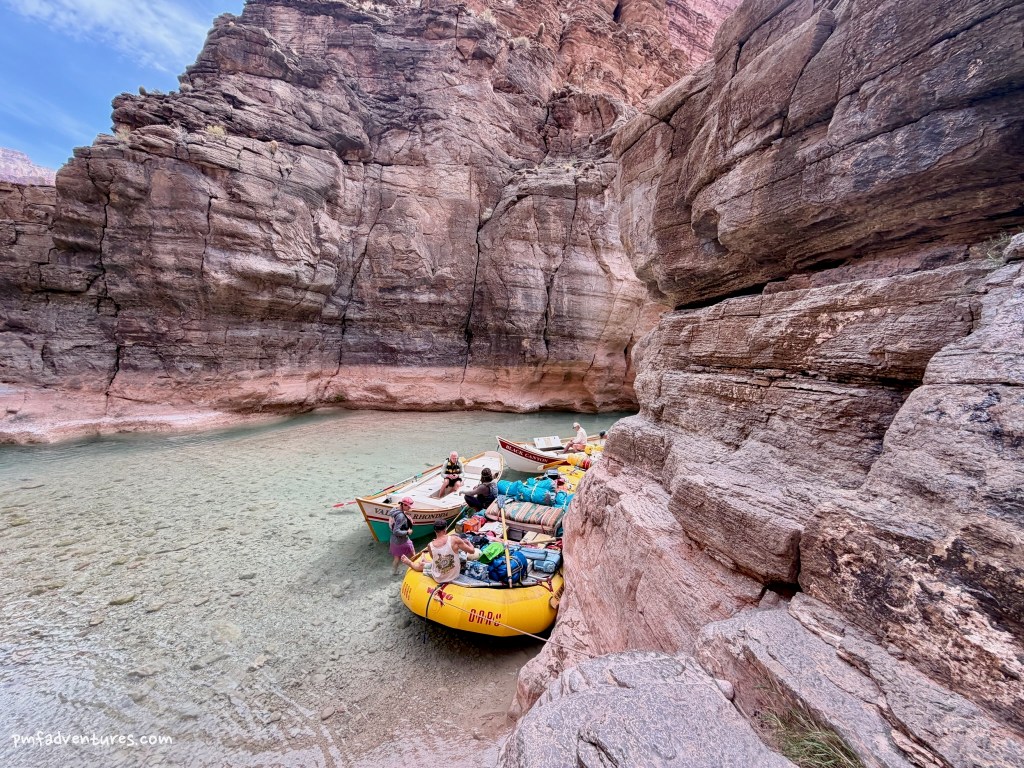
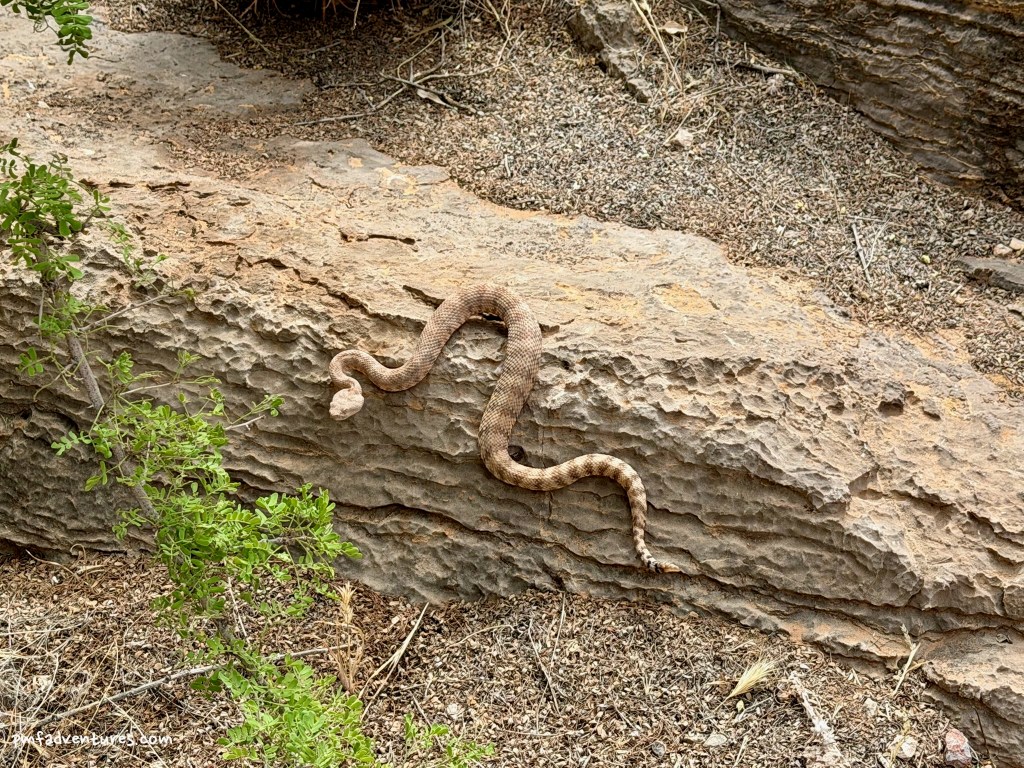
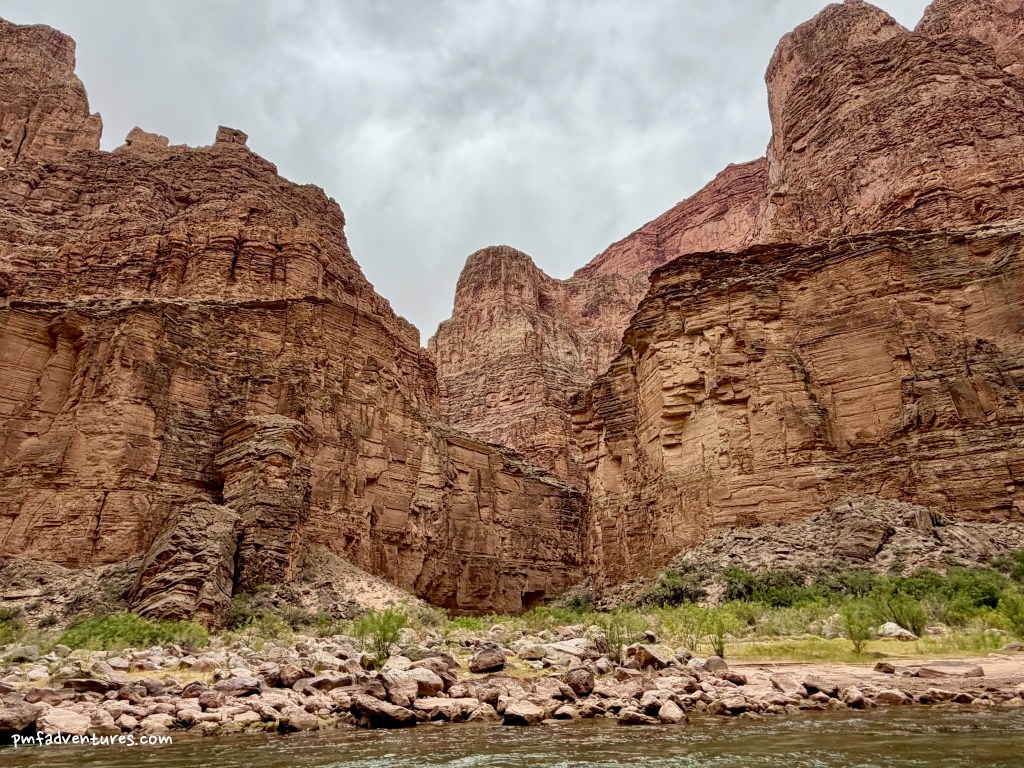
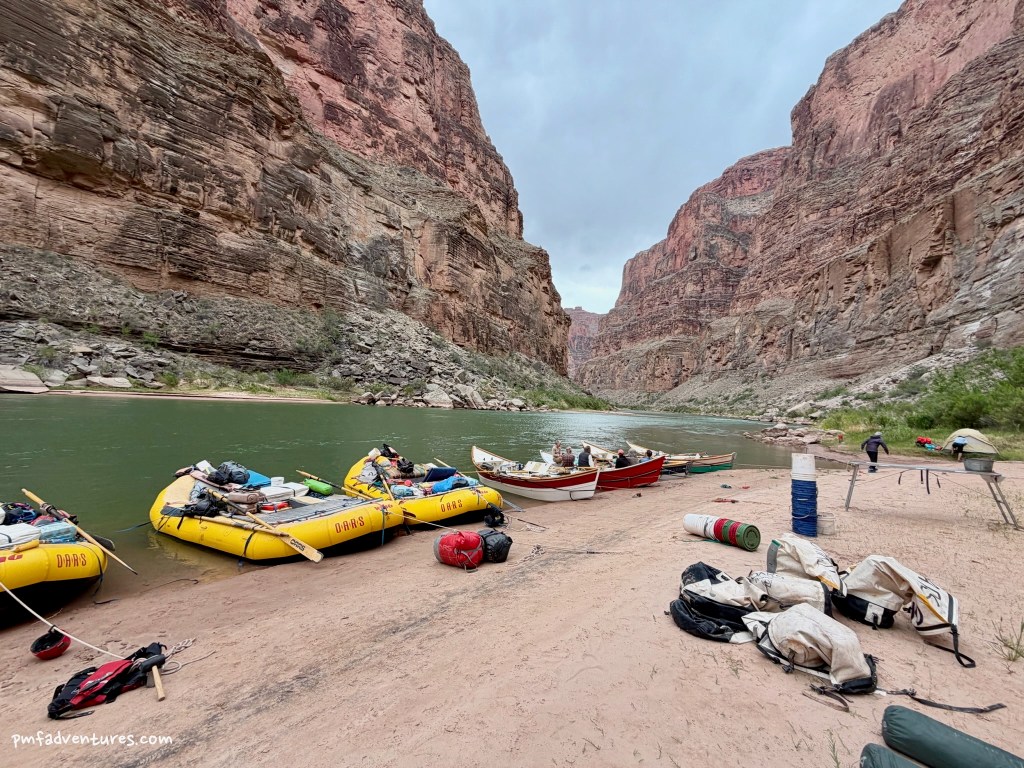
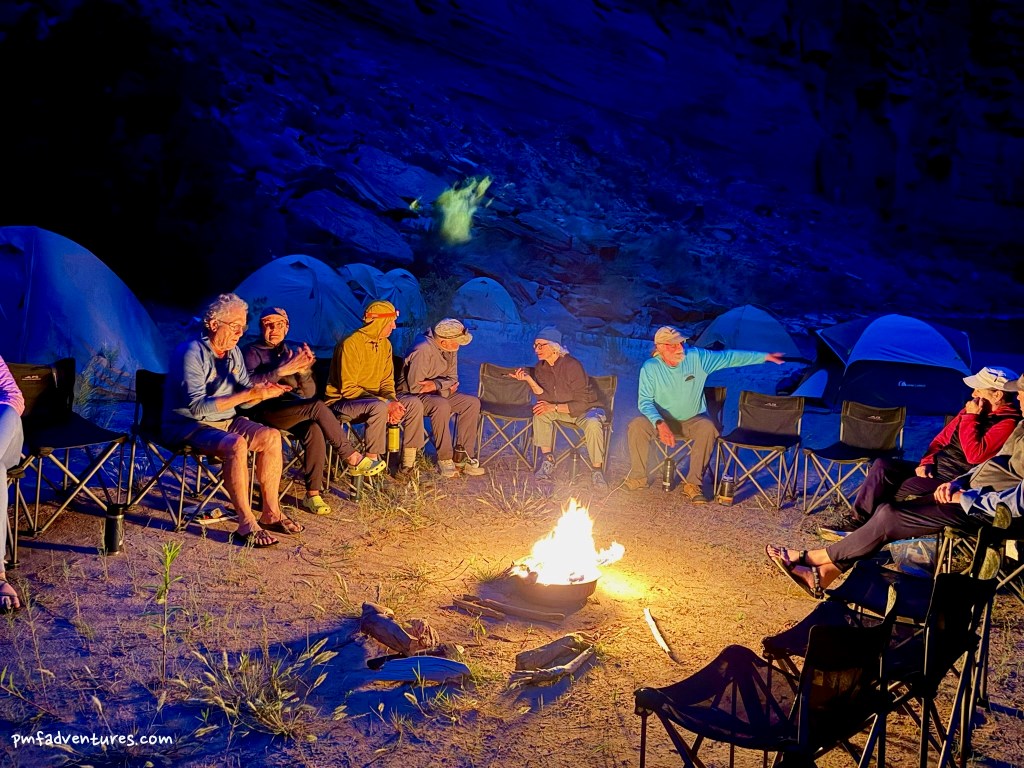
Day 13 (4/26/2026) – Below Fern Glen to 186.4 Mile Camp: It rained three or four times overnight, so I was glad that I had chosen to set up a tent and sleep inside. The plan for the morning was to do a short hike up Fern Glen Canyon to a waterfall before heading downstream, which would require rowing upstream through a large eddy to get to the main Fern Glen camp. Normally the headwinds pick up on the river in the afternoon, but today the winds were already blowing strongly as we left camp. As soon as Roger realized that we were almost sailing through the eddy, he nixed the hiking plan and all the boats turned and headed downstream into the wind.
Today was the day we would be running Lava Falls, so our gang of four arranged to ride with Dellie. After her issues when running Crystal, we wanted her to have a solid crew so that she could have a good run in Lava. The rowers had a really tough morning battling the nasty headwind, so we made a pit stop at Cove Creek for everyone to get a break. When we stopped to scout Lava, Dellie pointed out her line to me and Keith. And then she nailed it and we had a great run — a huge wave filled the boat near the end and we came close to the cheese grater, but the Ticaboo finished the run unscathed. Normally groups stop just below Lava Falls at a camp on river right, either to have lunch and change into dry clothes or to set up camp. But with the super low water, there was no beach and just lots of rocks, so we continued down to a small area of beach and some nice ledges on river left. After lunch the rowers had to continue fighting the wind and it didn’t help that Chevron Camp was occupied, so we had to keep going to 186.4 Mile Camp (aka Indiana Jones Camp, as the groover is set up in the Temple of Doom).
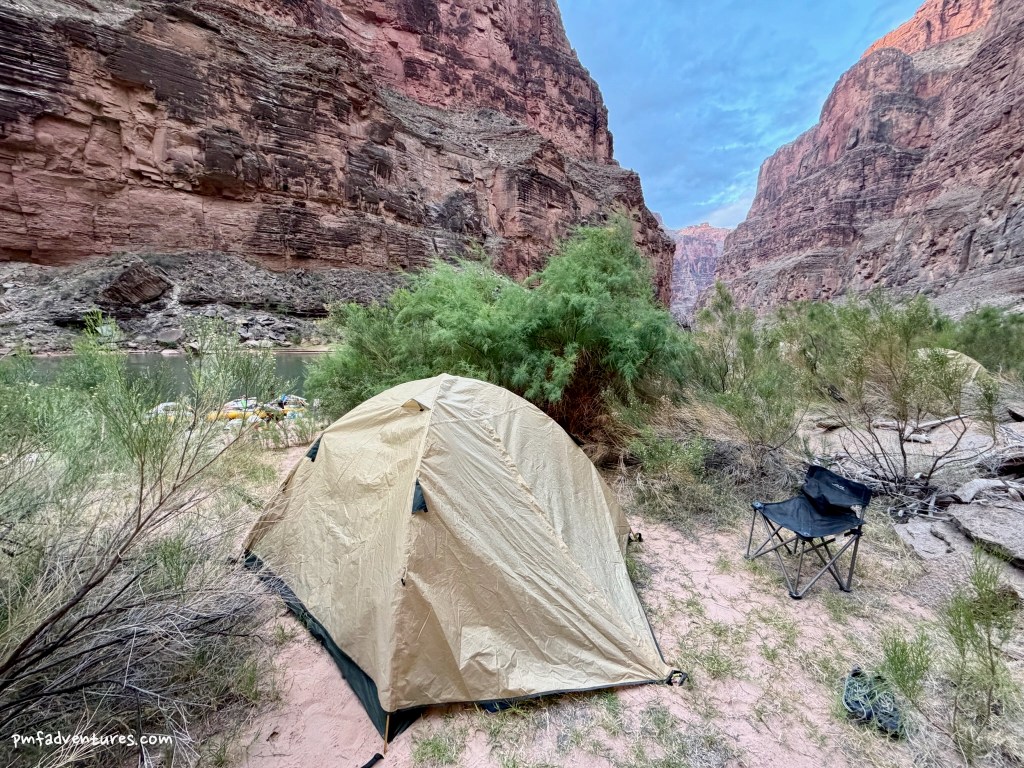
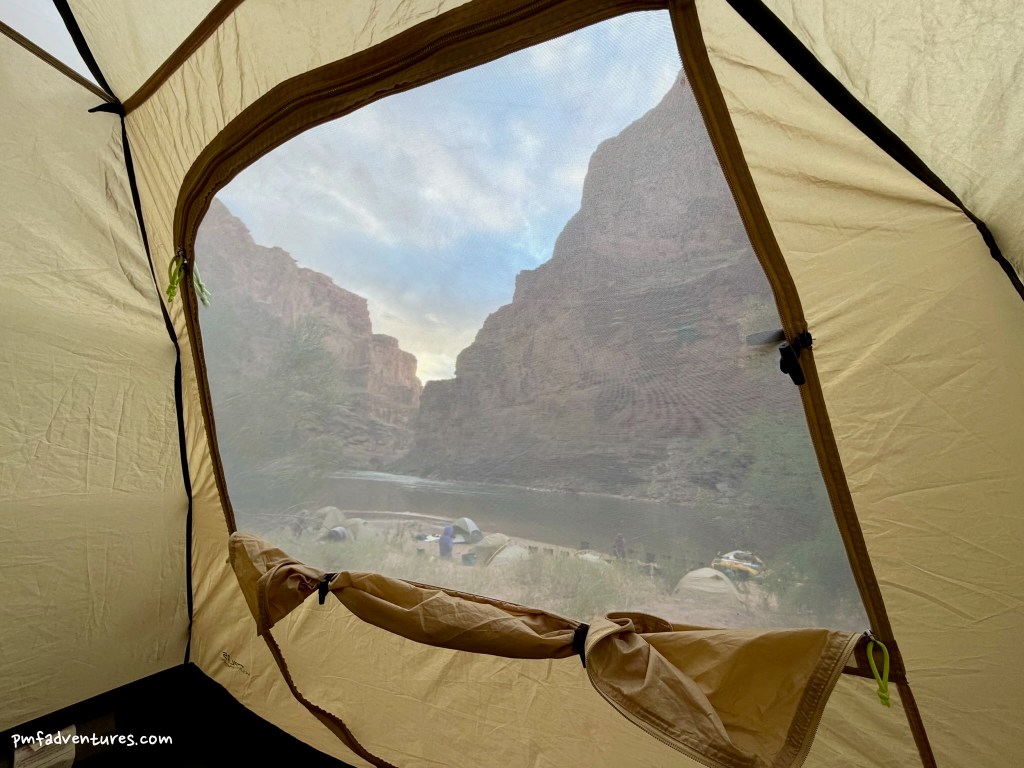
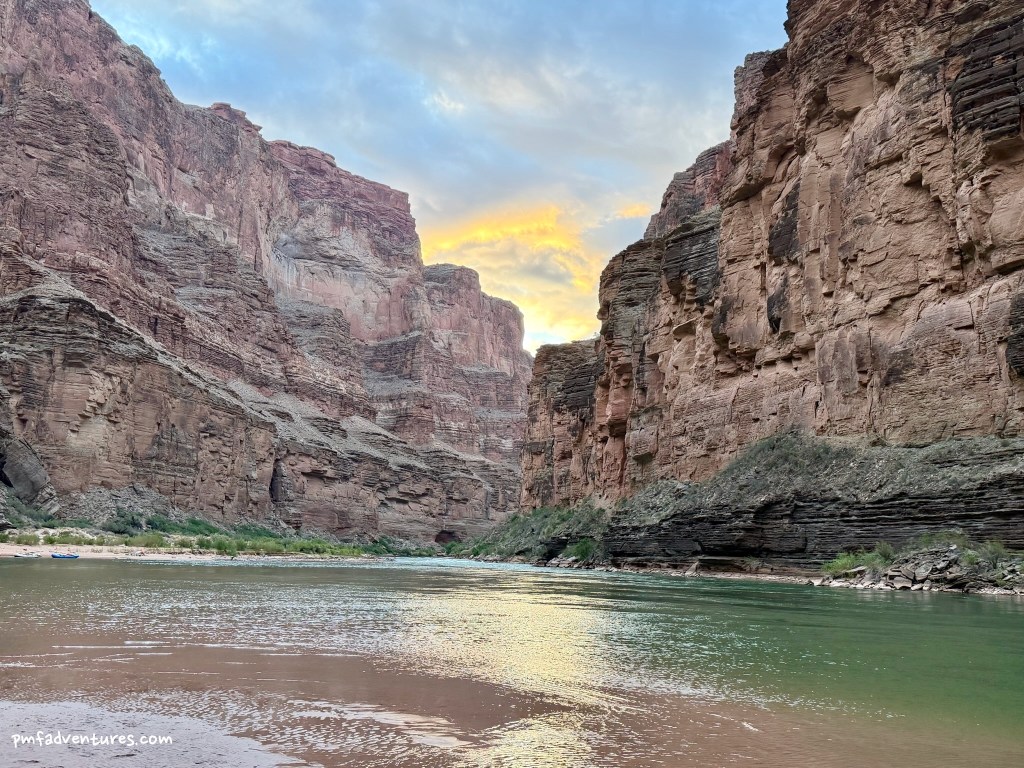
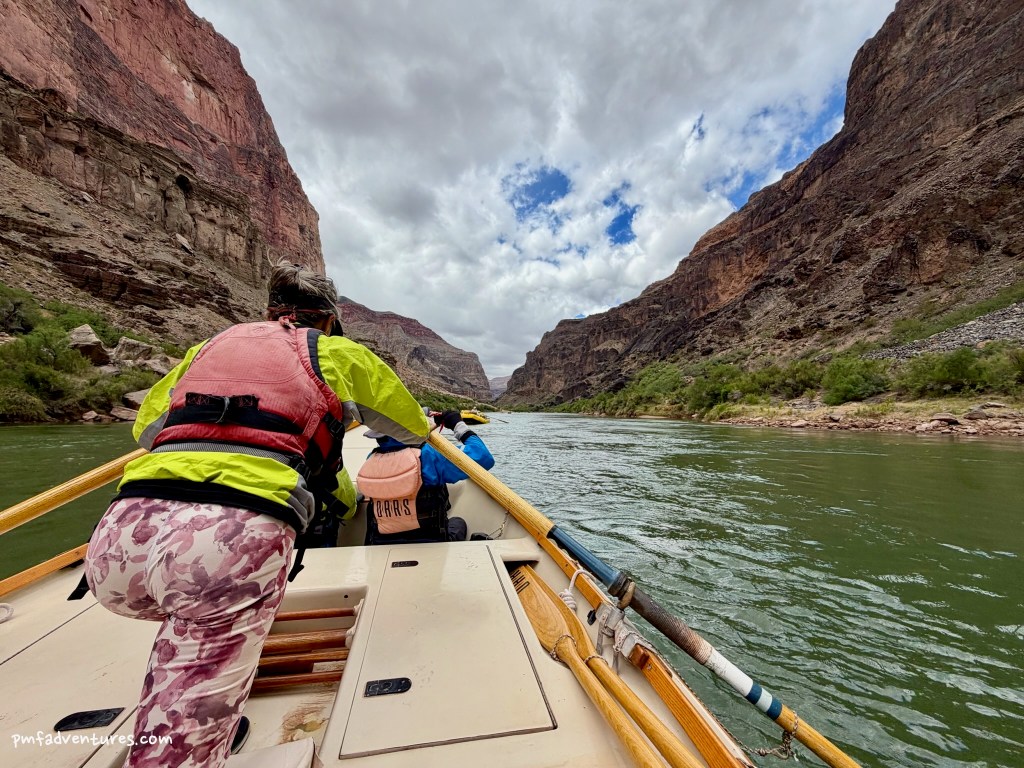
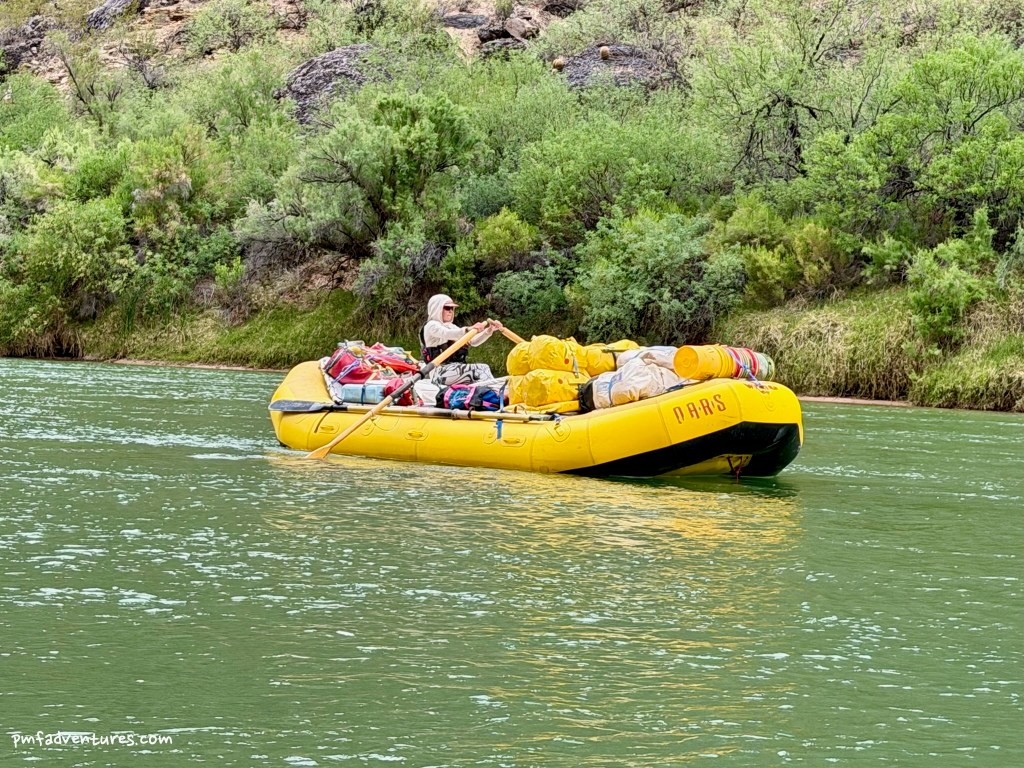
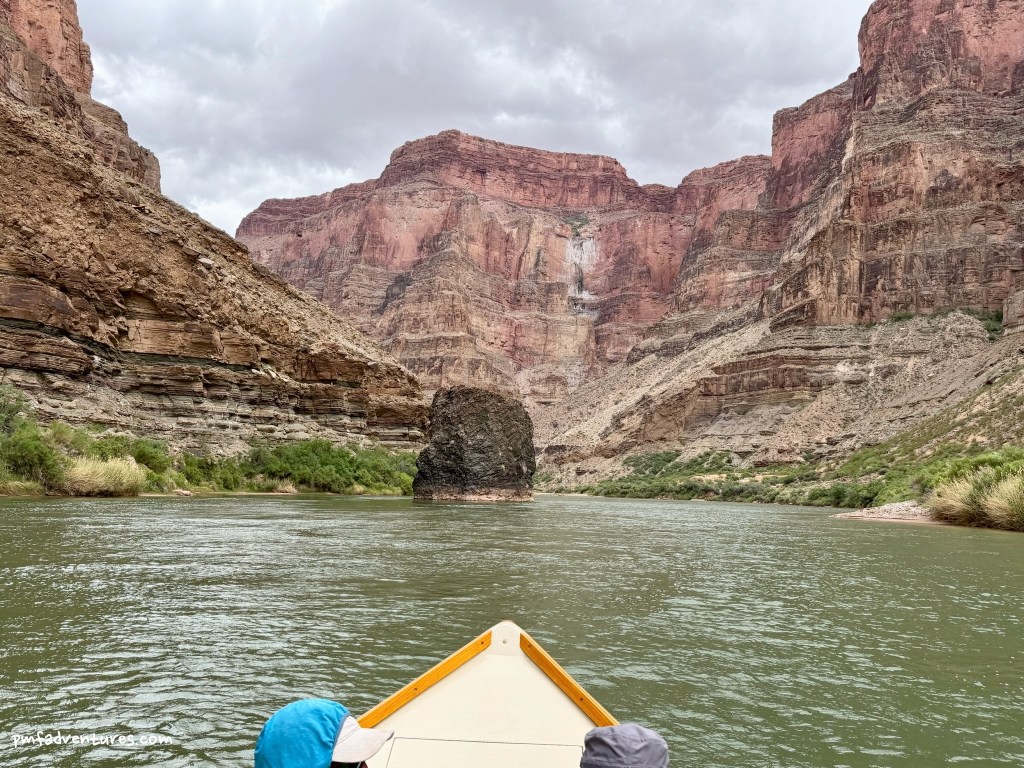
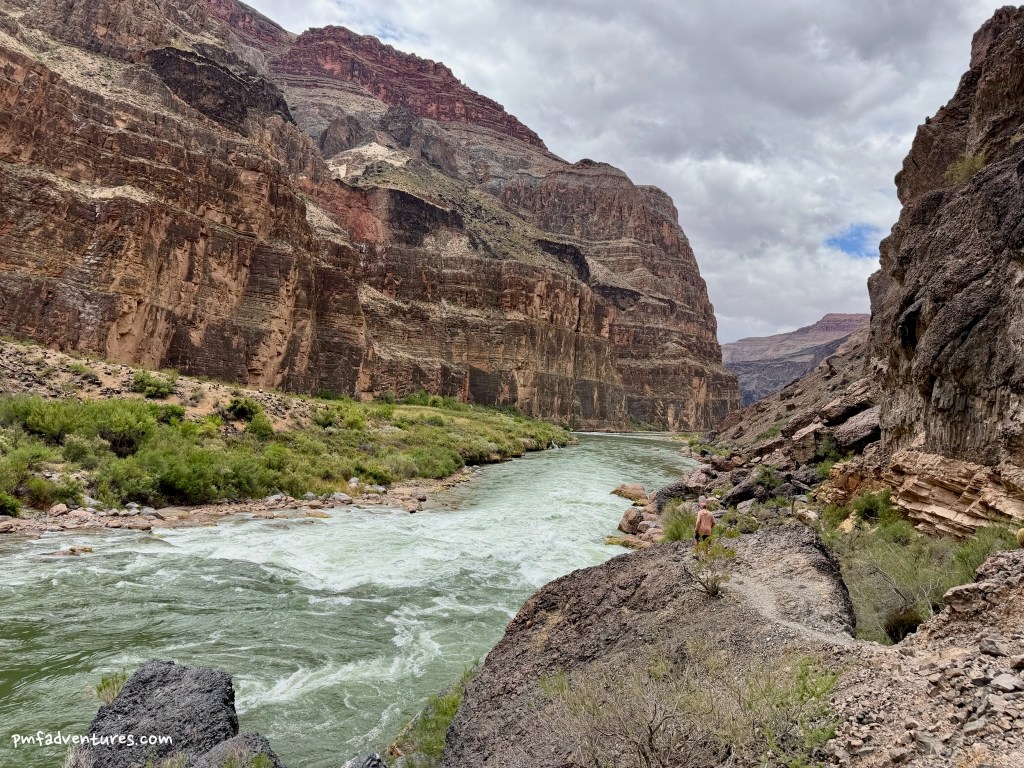
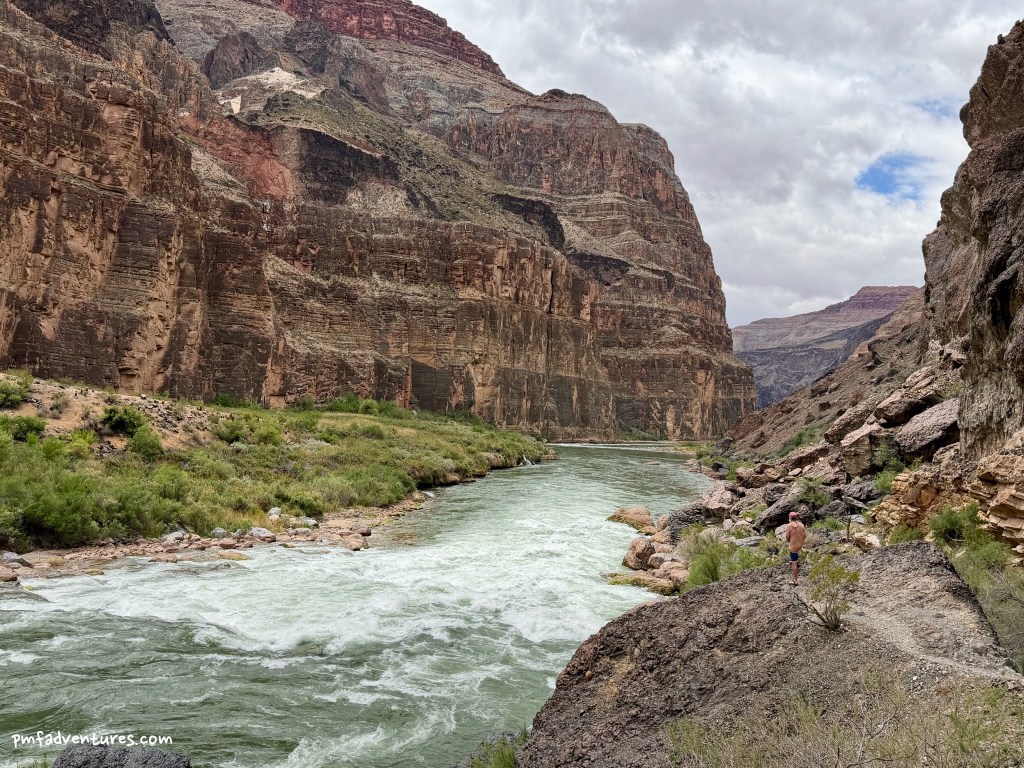
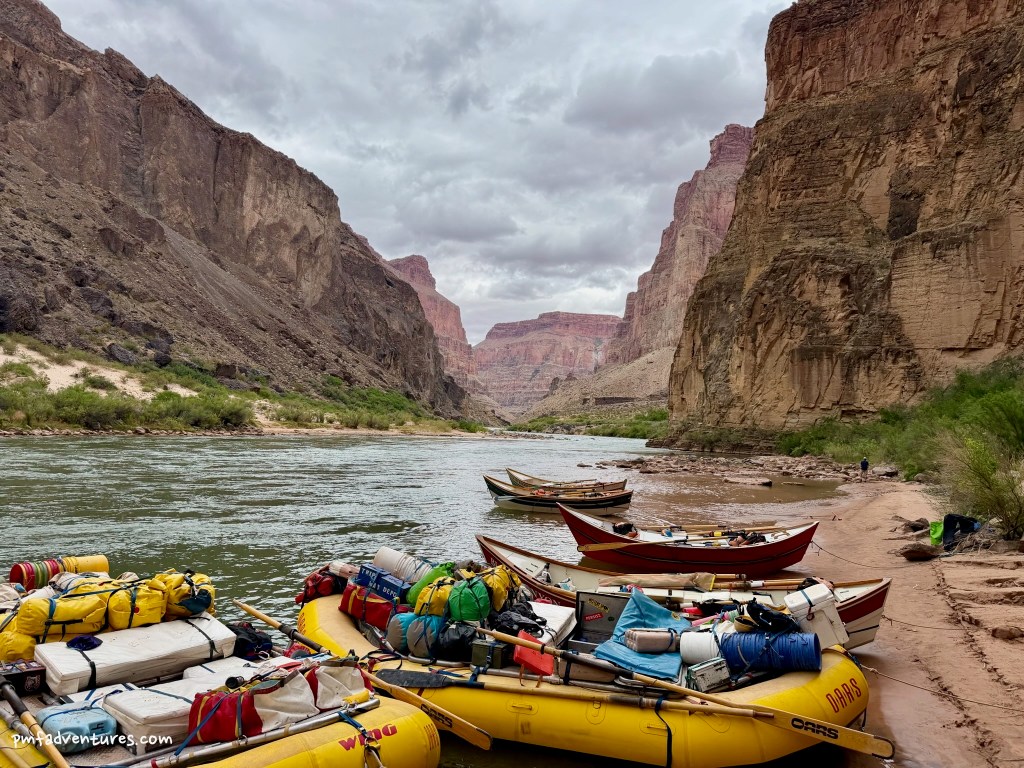
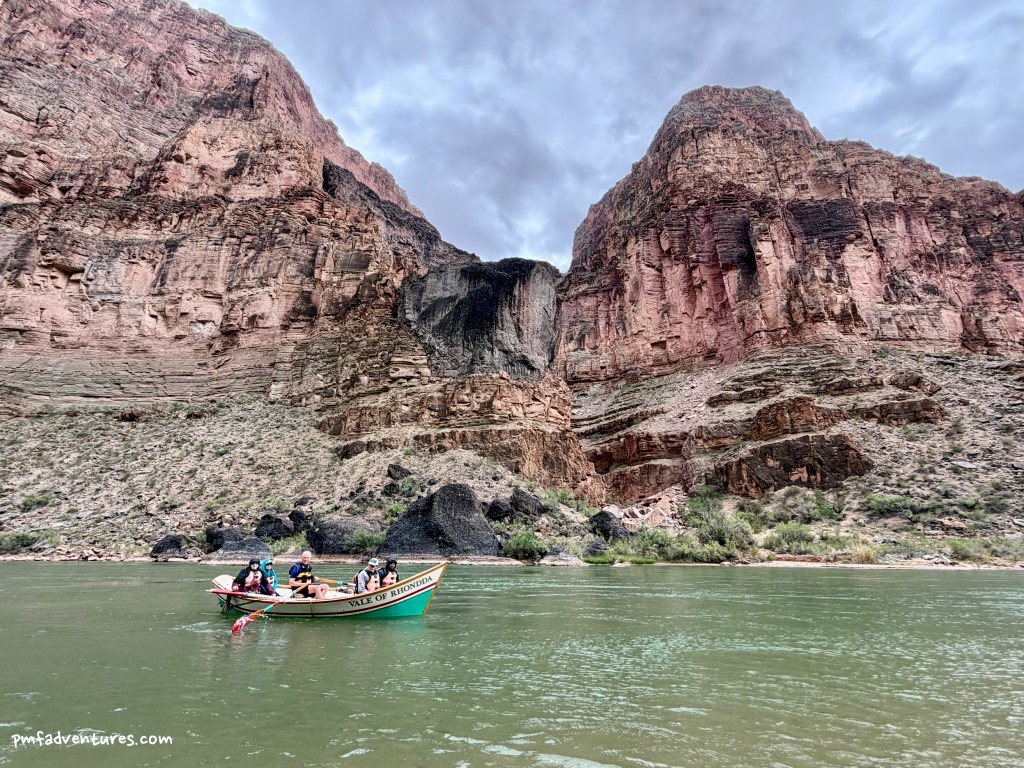
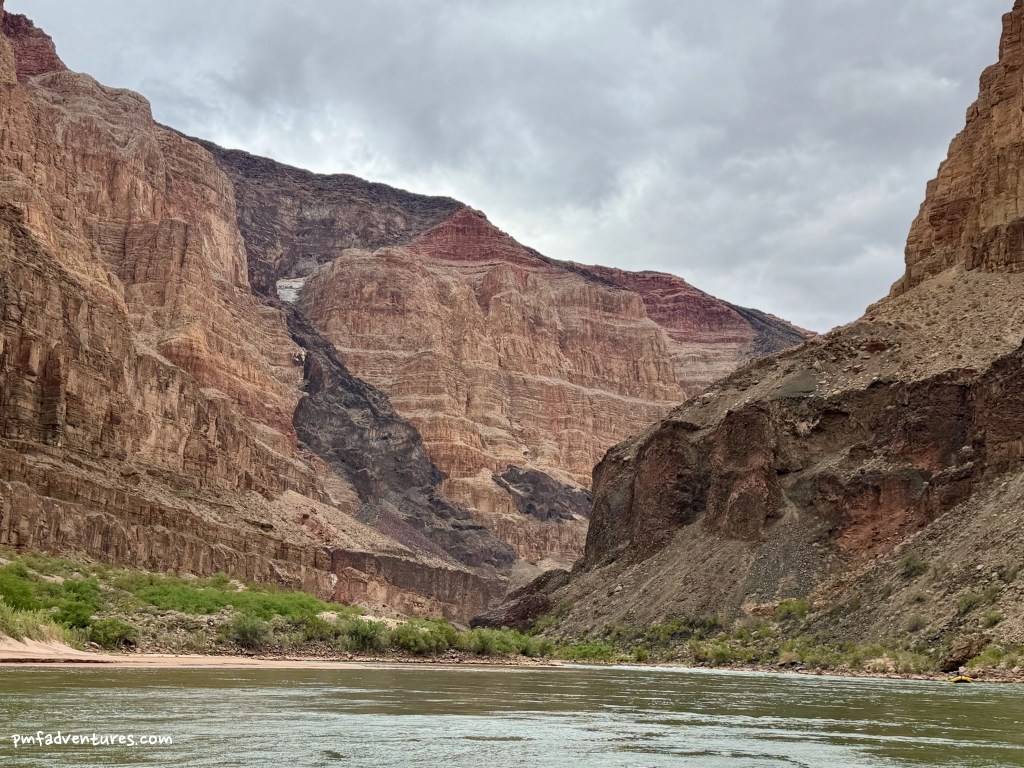
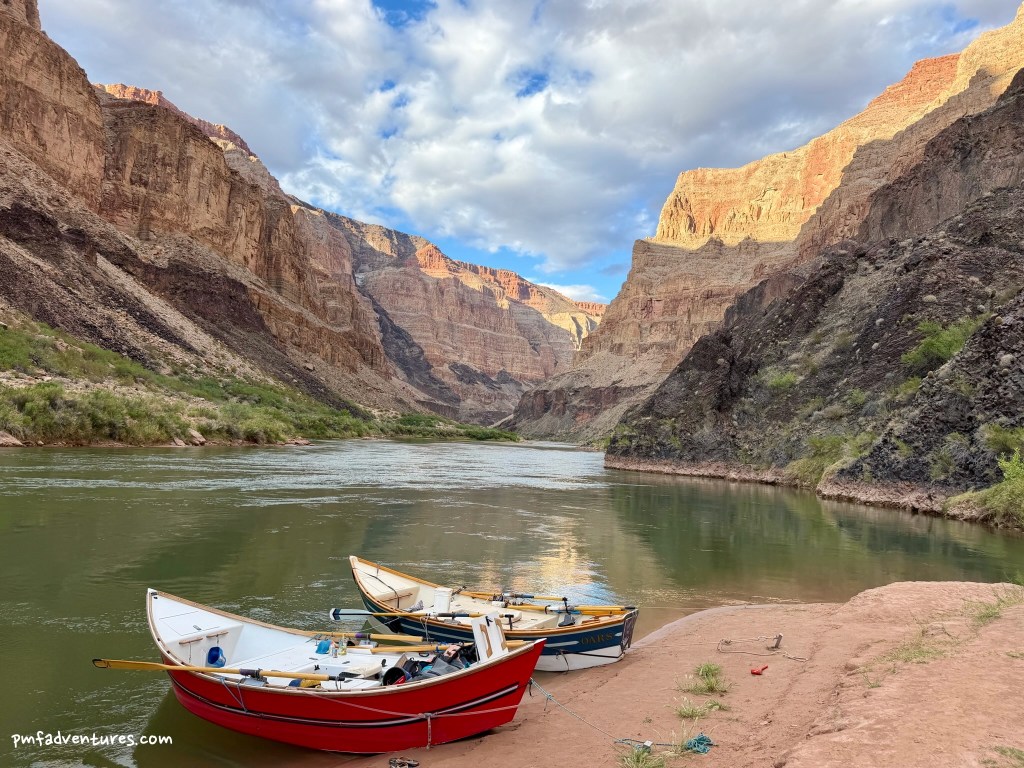
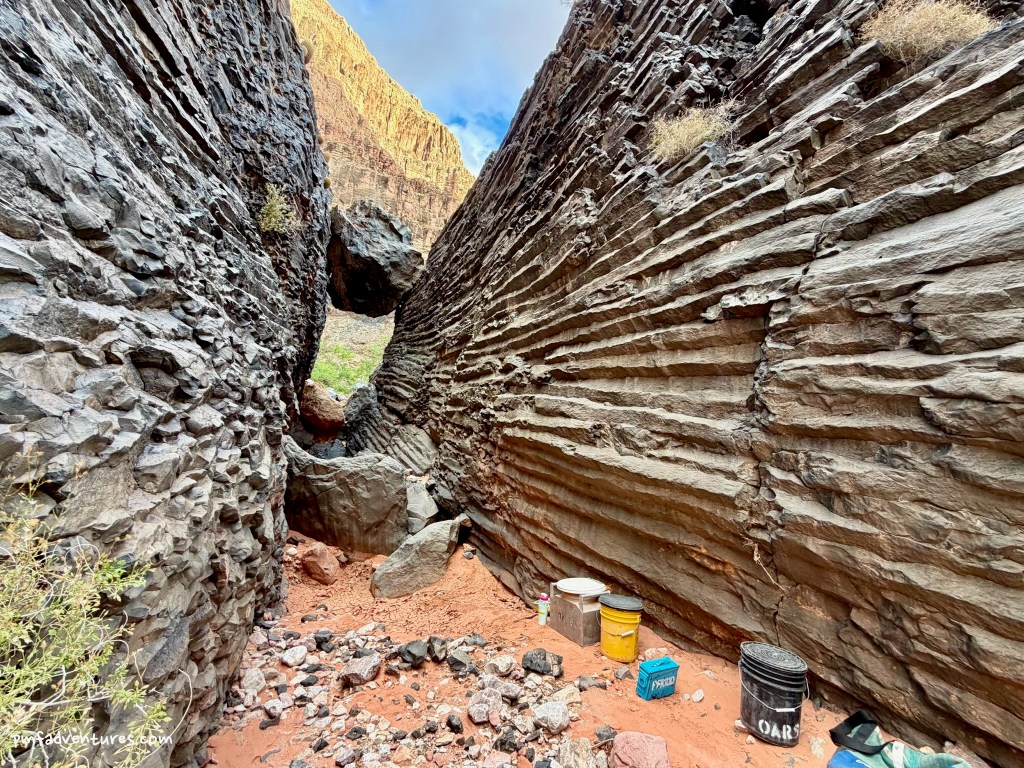
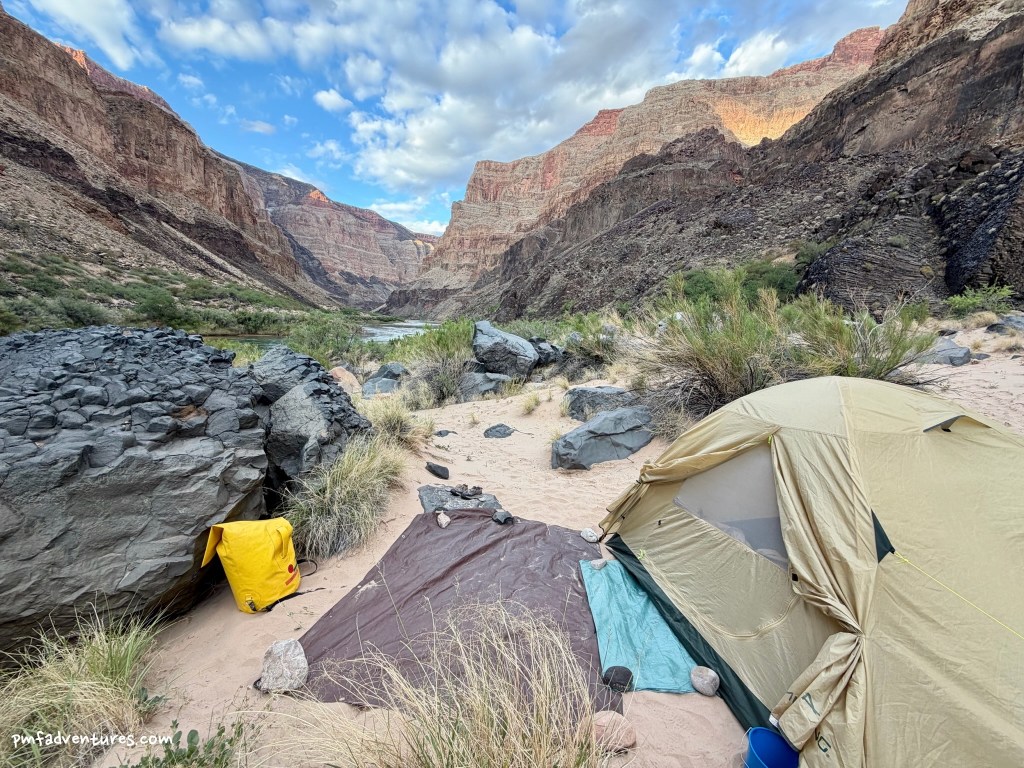
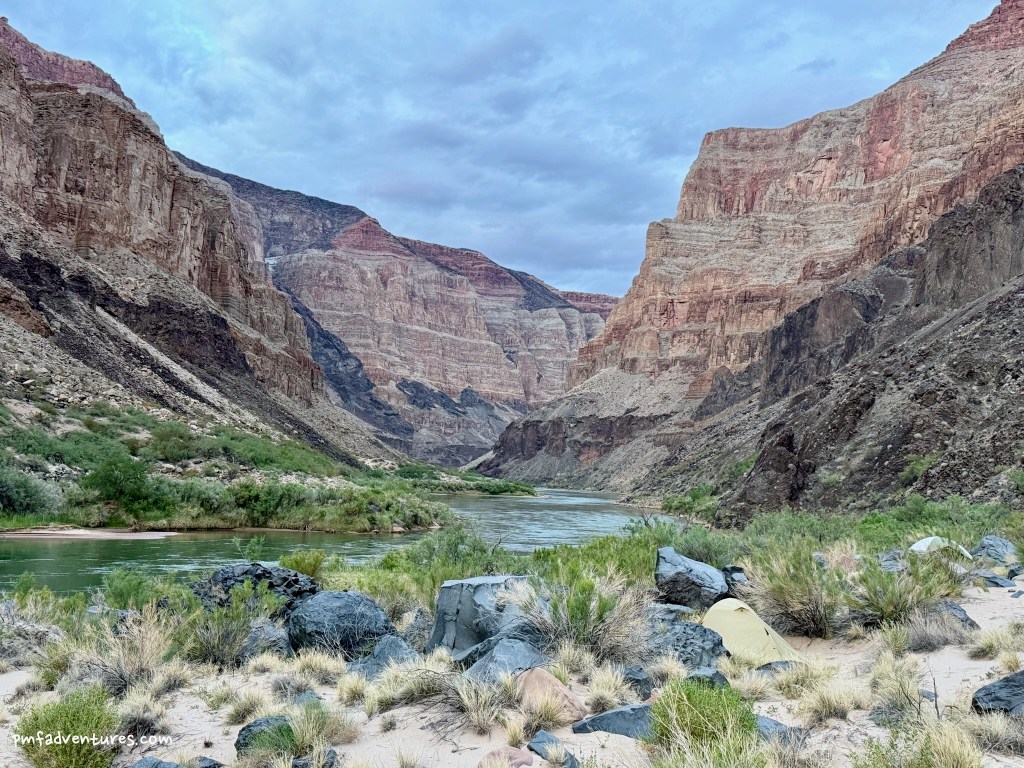
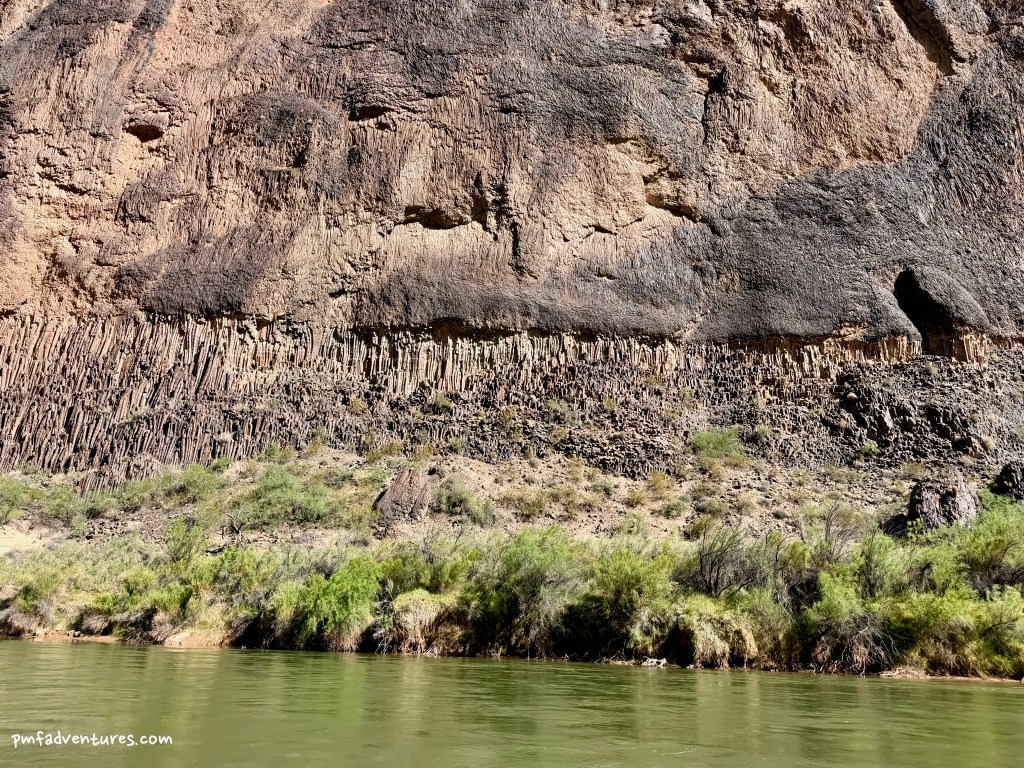
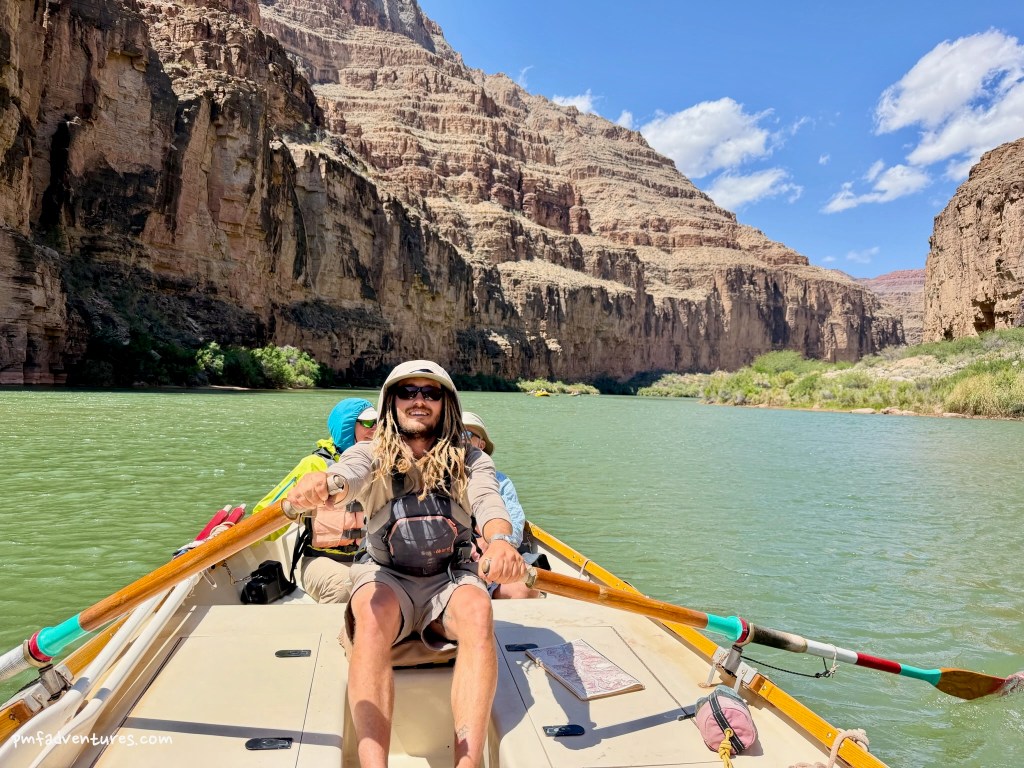
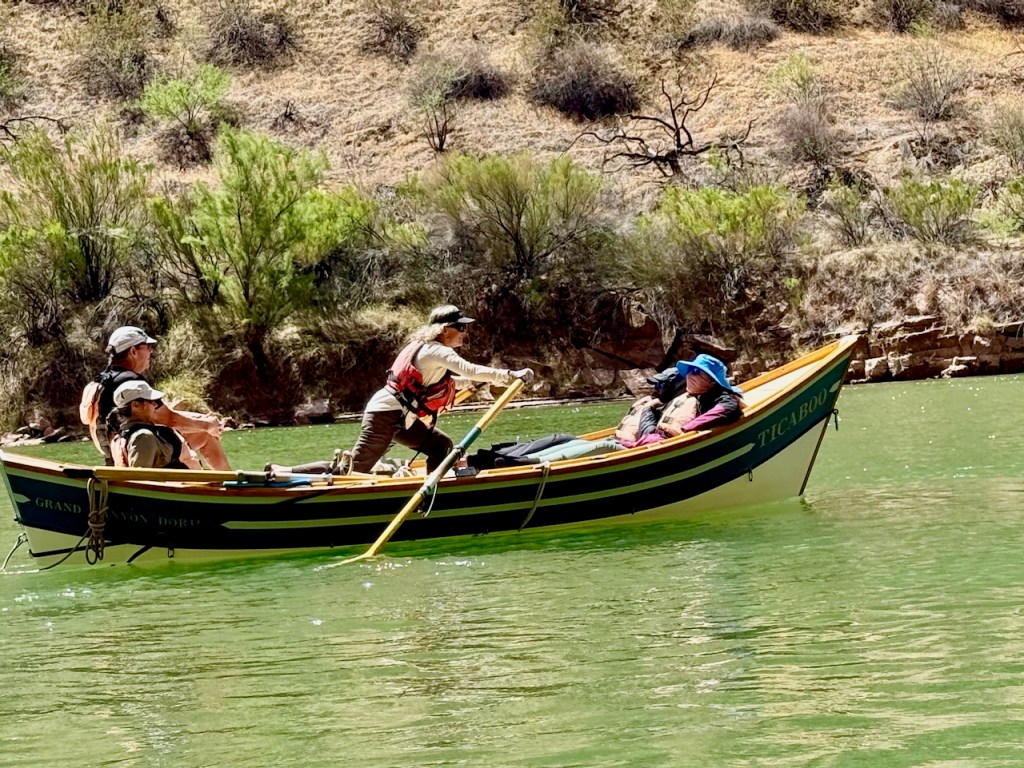
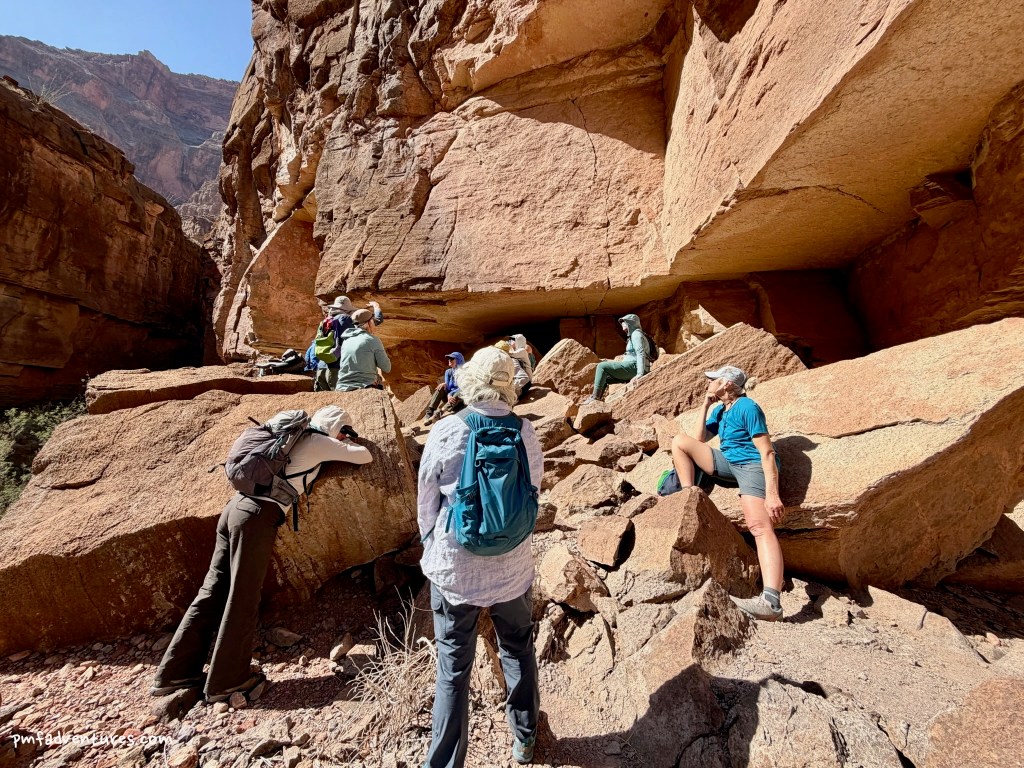
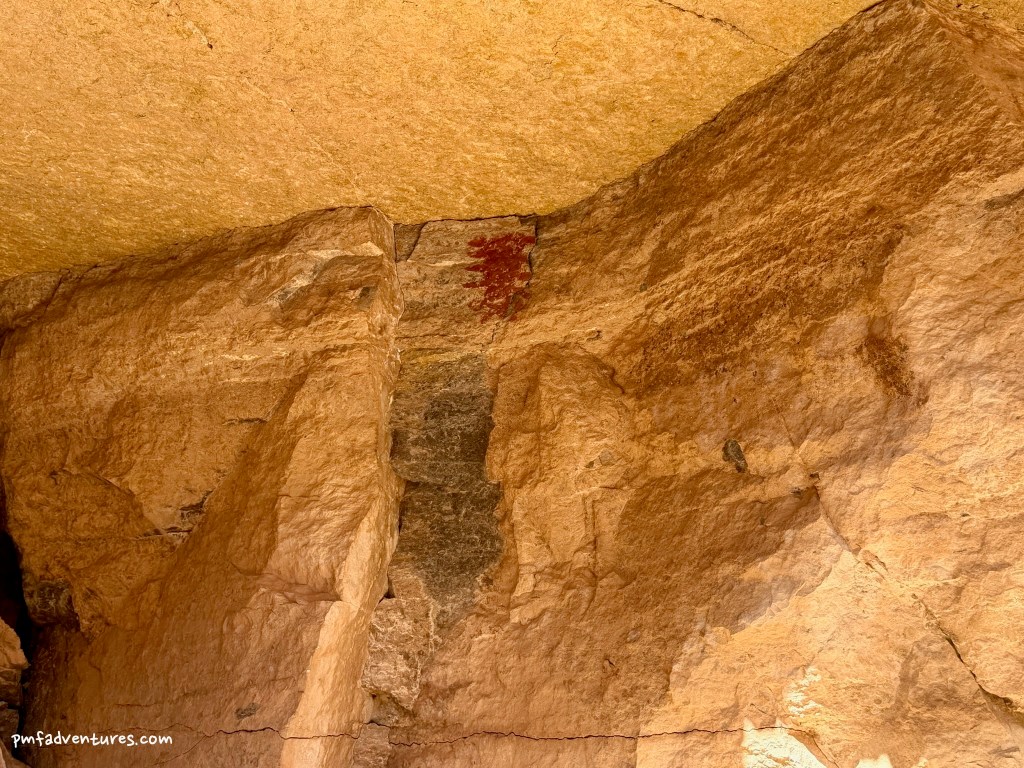
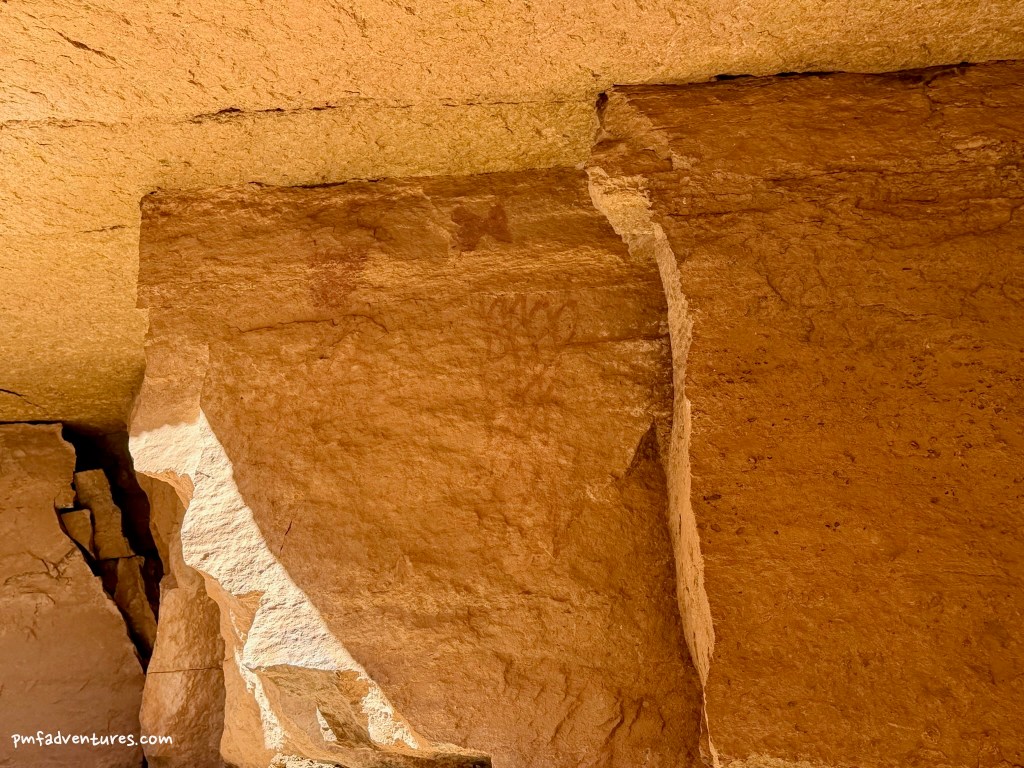
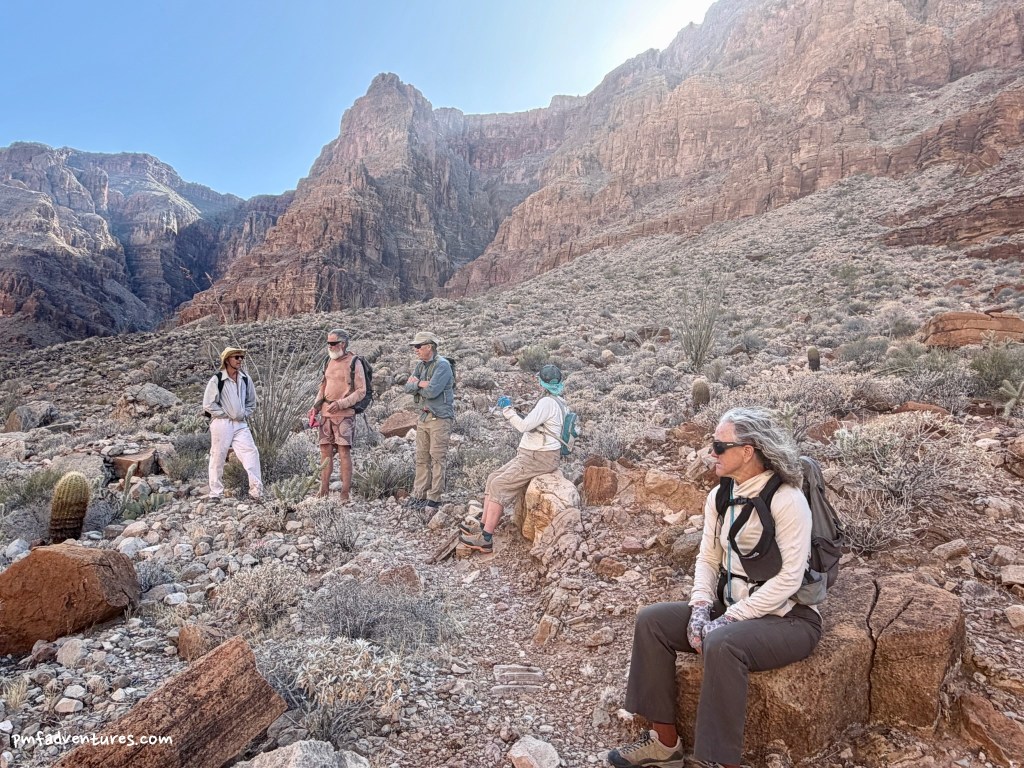
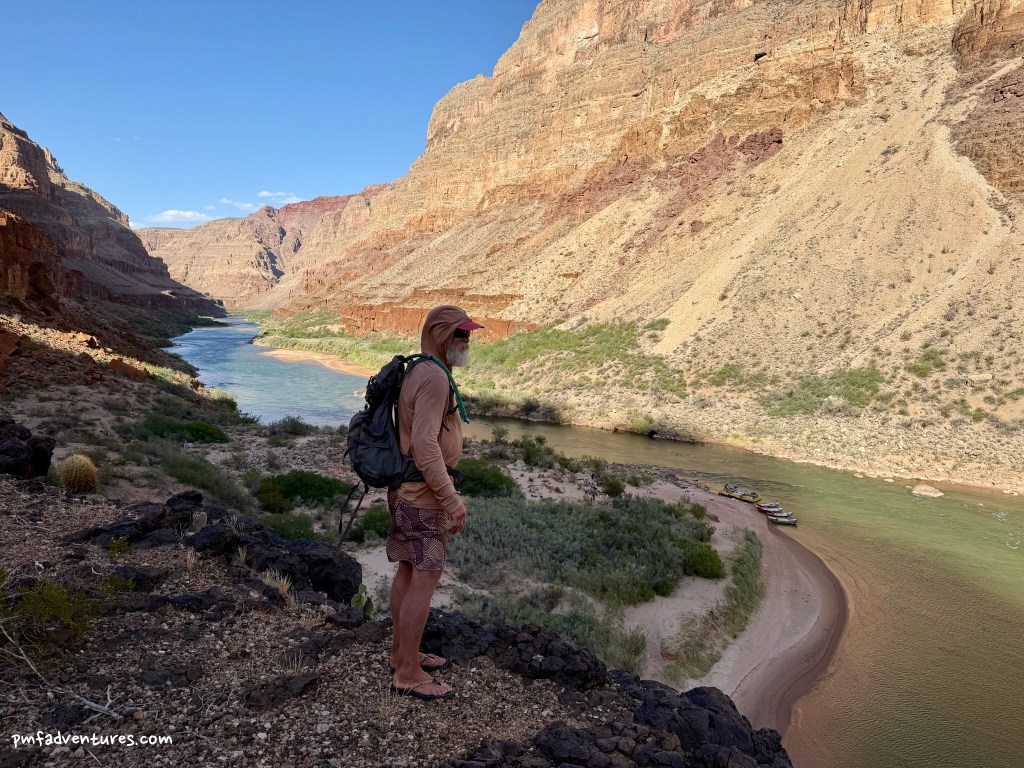
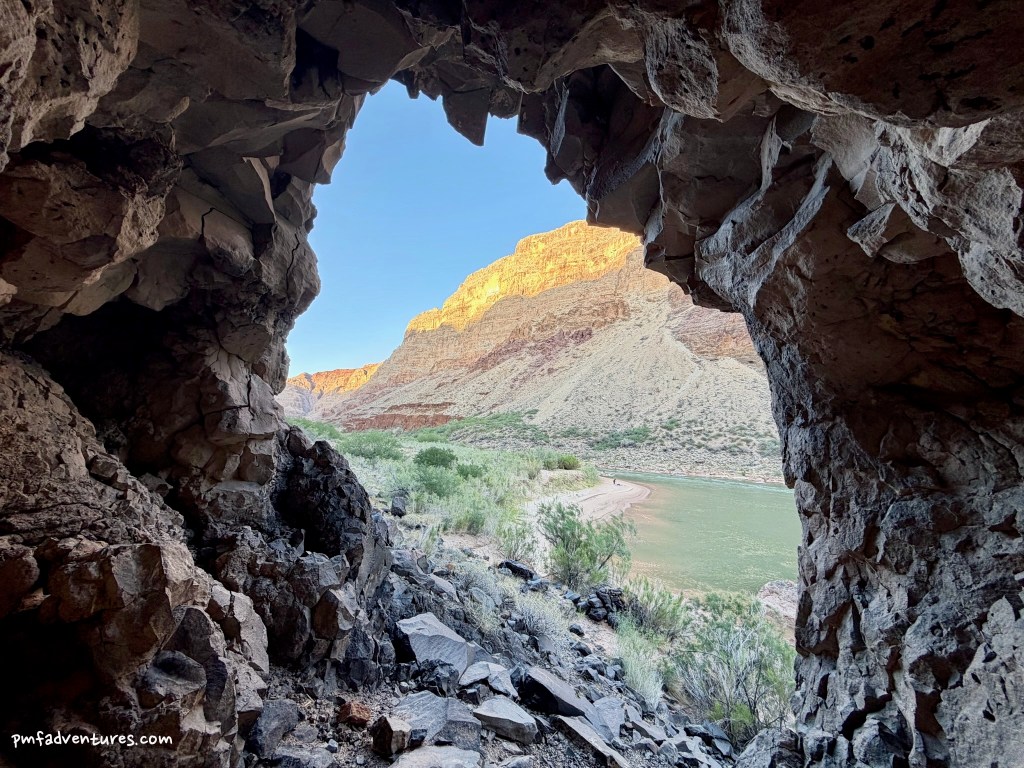
Day 14 (4/27/2026) – 186.4 Mile Camp to 202 Mile Camp: After two days of rowing into stiff headwinds, the crew was ready for an easier day and thankfully that is what was on offer today. I choose to ride in the Vale of Rhondda, but Monte and Cam switched places, so Cam was rowing the dory while Monte rowed a baggage raft. It was fun to spend the morning chatting with Cam and he clearly enjoyed getting a chance to put the dory through her paces. The morning was calm and we only had a few riffles to run, so it was a very mellow day on the water. The wind did start to pick up just before we got to 202 Mile Camp, but that didn’t matter, as we did a much-needed lunch over. And with all that time in camp, we got to do two hikes — one up the creek bed to see some rock art and another to the top of the basalt flow behind camp.
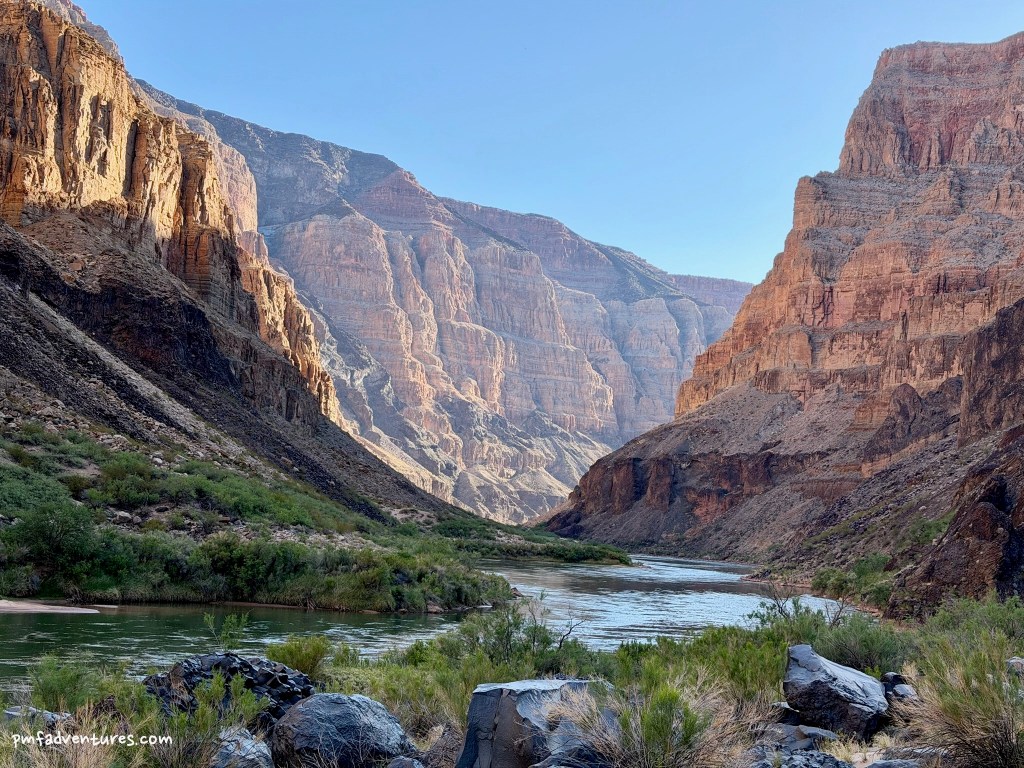
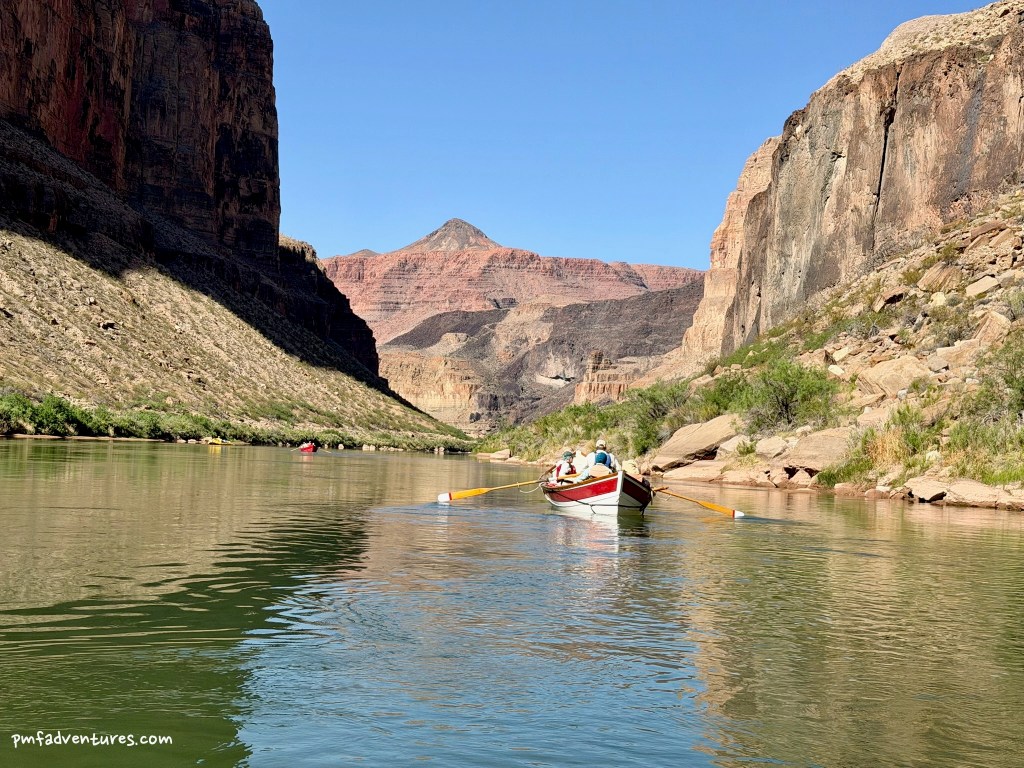
Day 15 (4/28/2026) – 202 Mile Camp to Truckstop: At this point in the trip, there were only two more rapids that the guides were worried about, and one of them, 205 Mile Rapid (aka Kolb Rapid), was up shortly after we left camp. In addition to having more exposed rocks, another challenge of running rapids in low water is that the waves become sharper. At higher water levels, the waves are bigger, but the increased volume tends to smooth out the waves. And at 6,000 cfs, the waves in 205 are particularly sharp.
I was riding in the Santa Ana with Roger today, sitting in back with Enrique, while Alison and Naveen were up front. This was going to be Alison’s first time riding up front in a big rapid and I think Roger was aiming for her to have a memorable day, but maybe not quite as memorable as it turned out. Roger entered 205 on his line, but the first big wave hit us and surfed us to the left of where he wanted to be. When I looked up from high siding for that wave, the next wave was four feet over the bow of the boat and my fleeting thought was “This doesn’t end well.” And then everything went all topsy turvy, as the boat flipped up and over to the right. I was only under the boat for a few seconds and I did not like that at all — it was dark and disorienting, but I quickly felt my way to a gunnel, popped out from under the boat, and worked on getting the bow line over the hull as we had been instructed to do in case of a flip.
Dellie was following closely behind us as we entered 205, as the second boat should, and when we flipped she took charge. She positioned the Ticaboo near the Santa Ana and pulled Naveen into the Ticaboo, directed Alison to swim to the Black Canyon, and then had Jim step onto the upturned hull of the Santa Ana, so that he could help right the boat. Once Roger and I also got on the hull, we easily righted the boat. And then Dellie was on the Santa Ana, pulling me, Roger, and Enrique into the boat. Less than 90 seconds after our flip, the boat was righted and everyone was out of the water, although it sure felt like a whole lot longer. We spent the next hour on a beach just below the rapid, putting on dry clothes, warming up, and getting checked out for injuries. Fortunately, no one was seriously hurt — Roger banged his knee pretty good and Enrique sprained a finger, but that was it.
Thankfully, the rest of the day was uneventful, although the wind did come up in the afternoon. Our goal was to get to a camp called Truckstop that is just below Diamond Creek, but it requires catching an eddy right below a rapid, so you never know if you are going to be staying there until all the boats have caught the eddy. The camp also has a very small, rocky beach, so there’s no place to tie up the dories and they have to be pulled up on the sand using rollers. After dinner, we did a debrief of the flip, with everyone involved sharing their perspective on what happened. I had a hard time falling asleep that night, with images of the flip playing over and over in my head and wondering what, if anything, our crew could have done differently to keep it from happening.
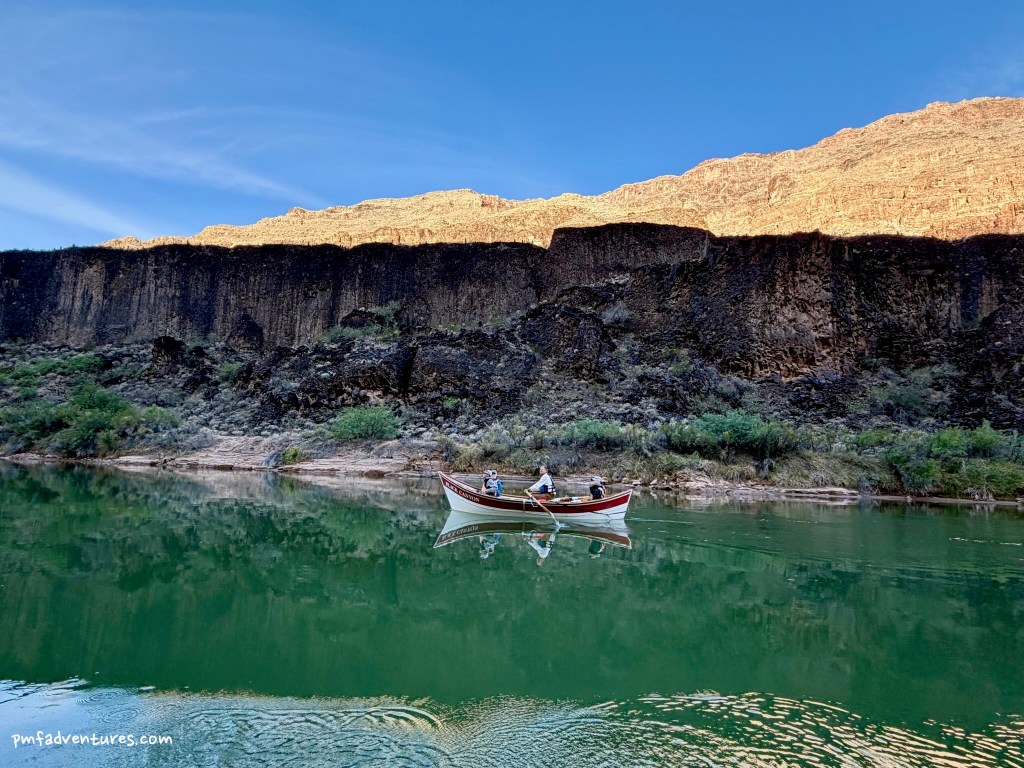
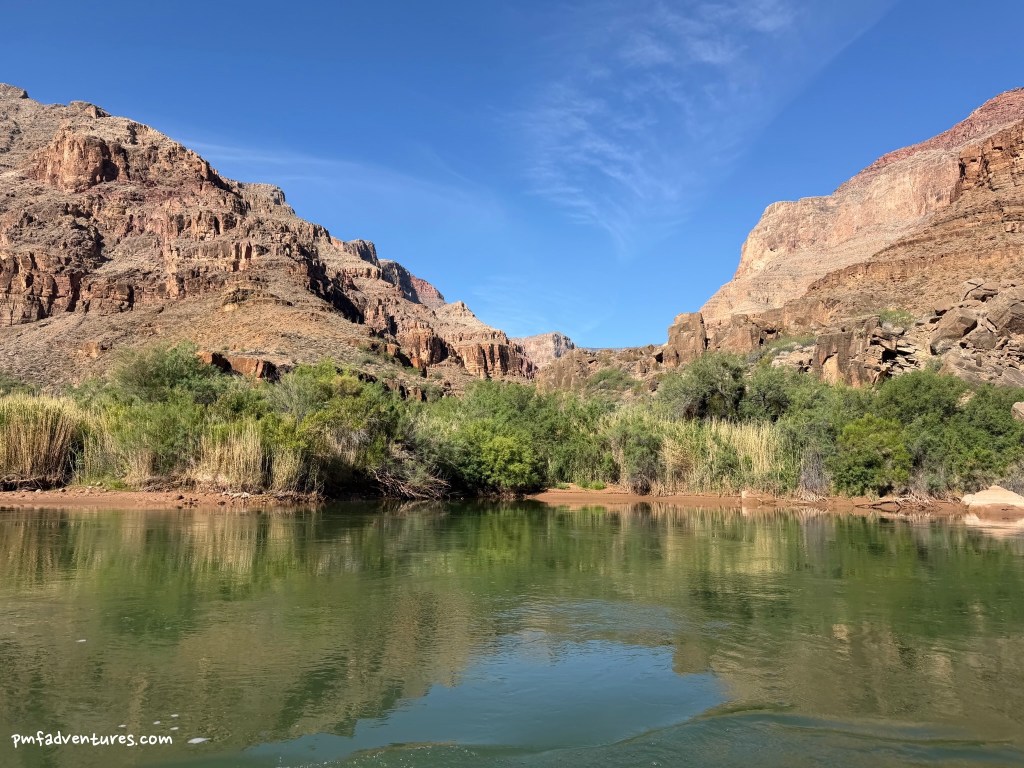
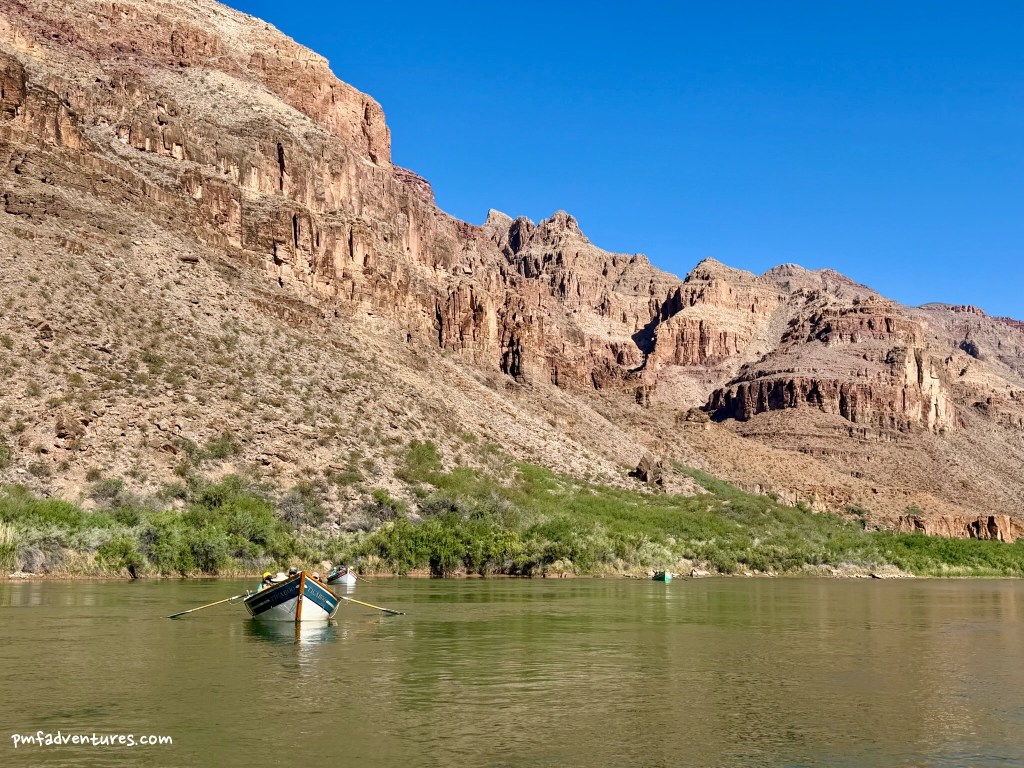
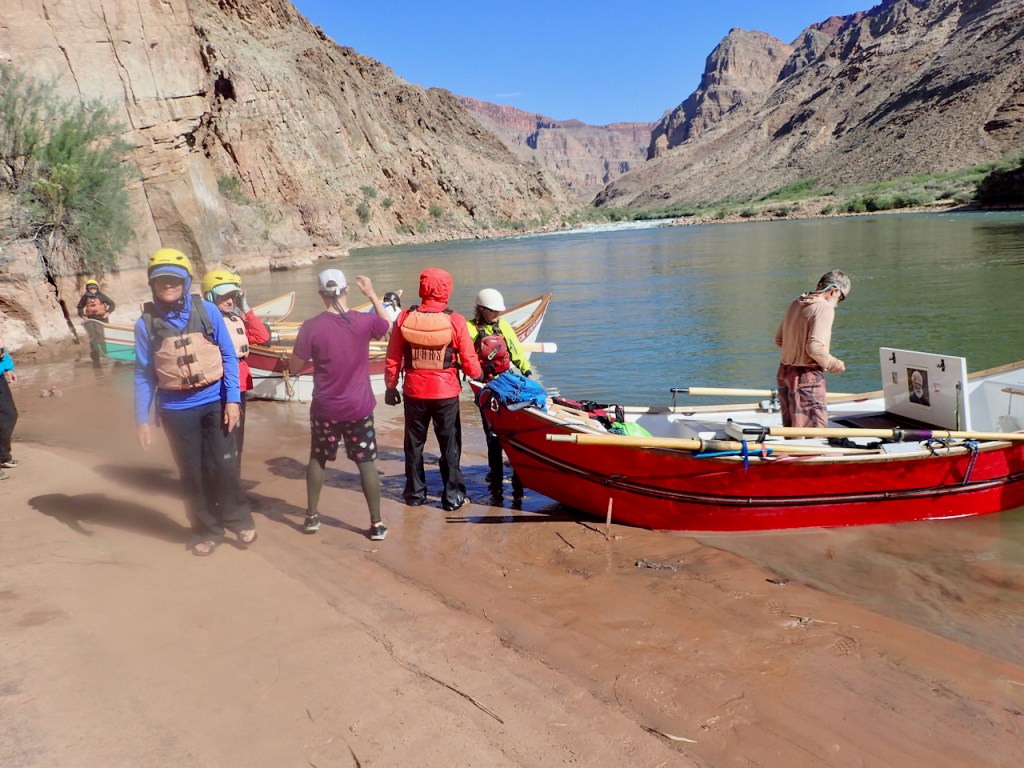
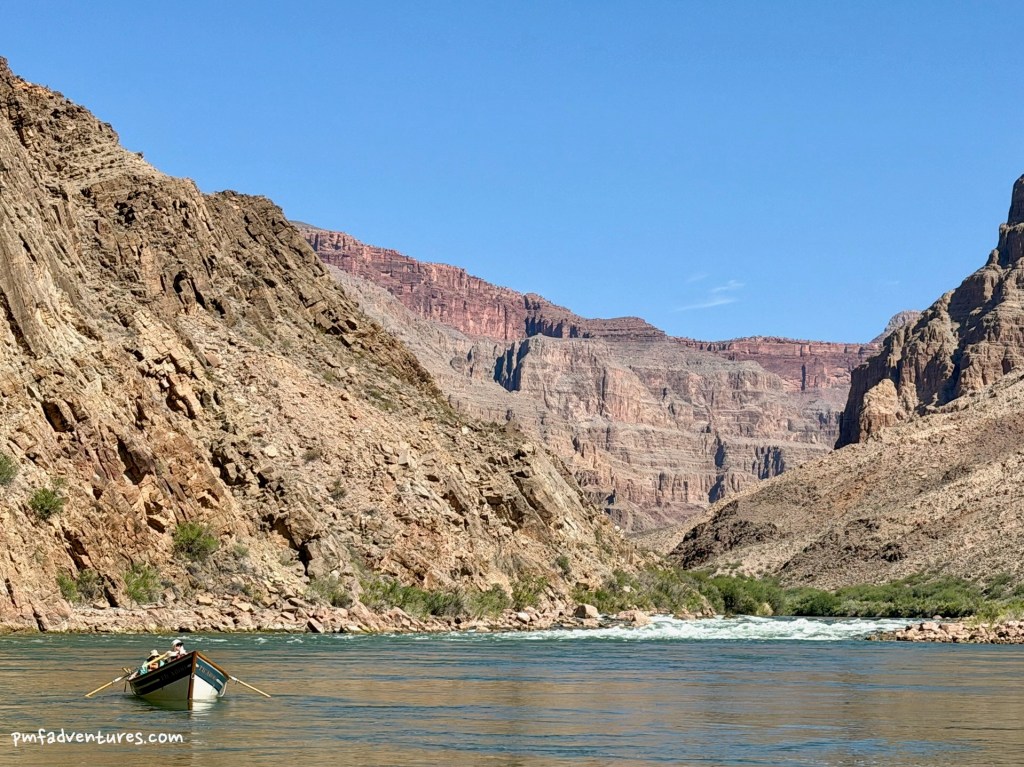
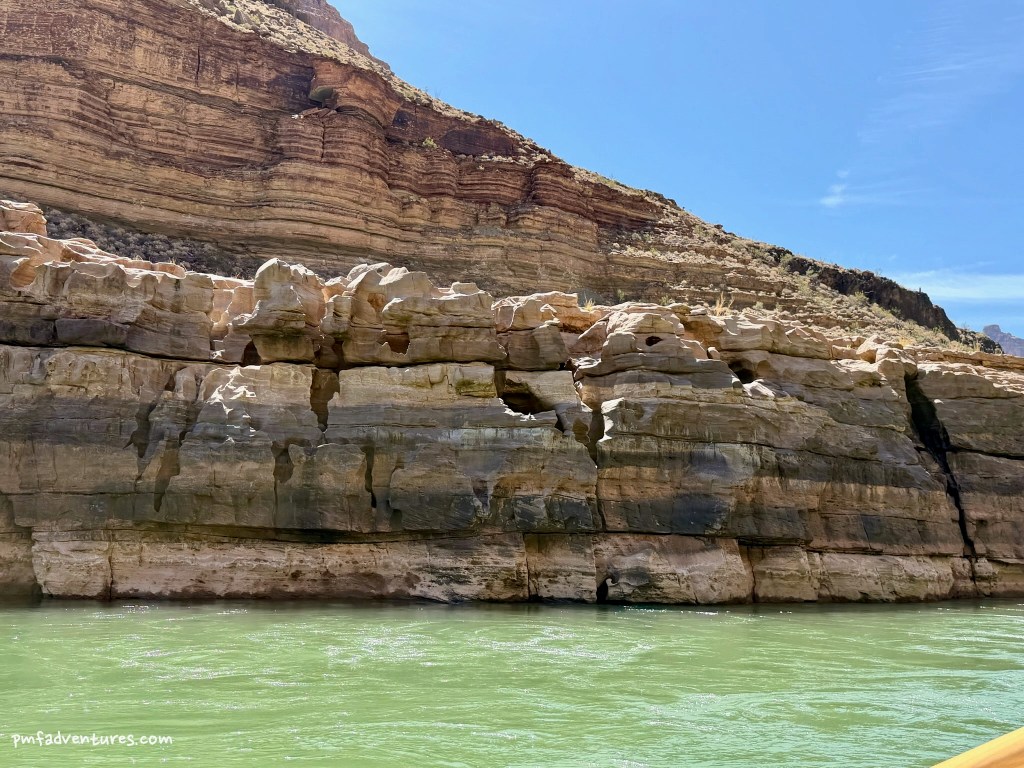
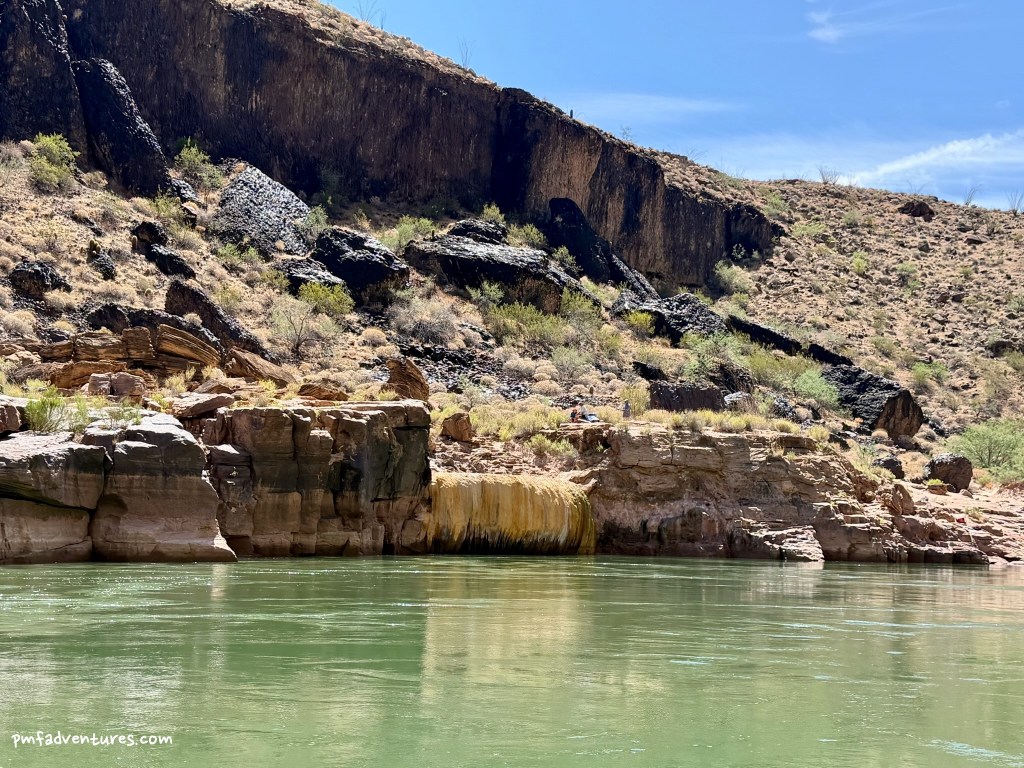
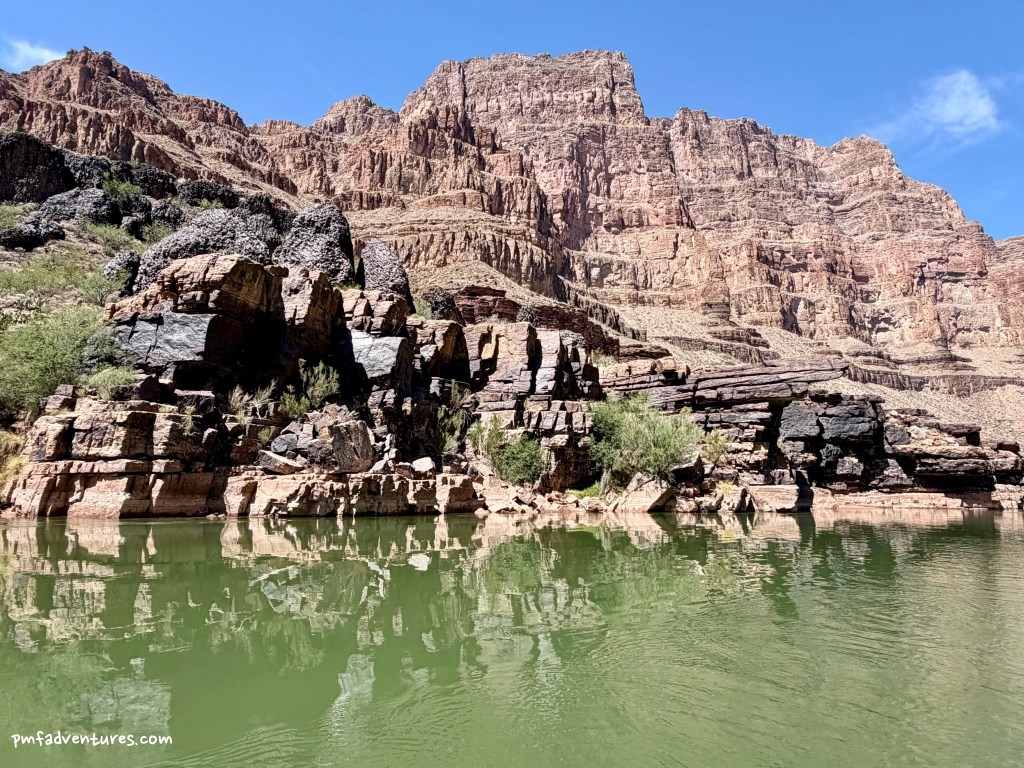
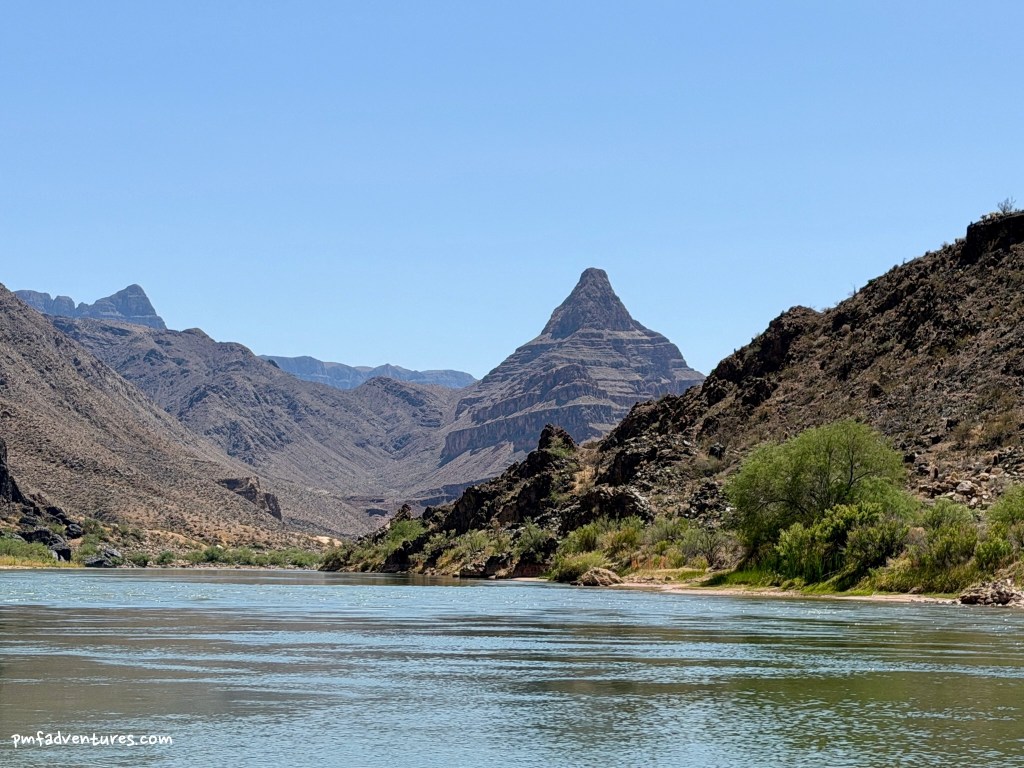
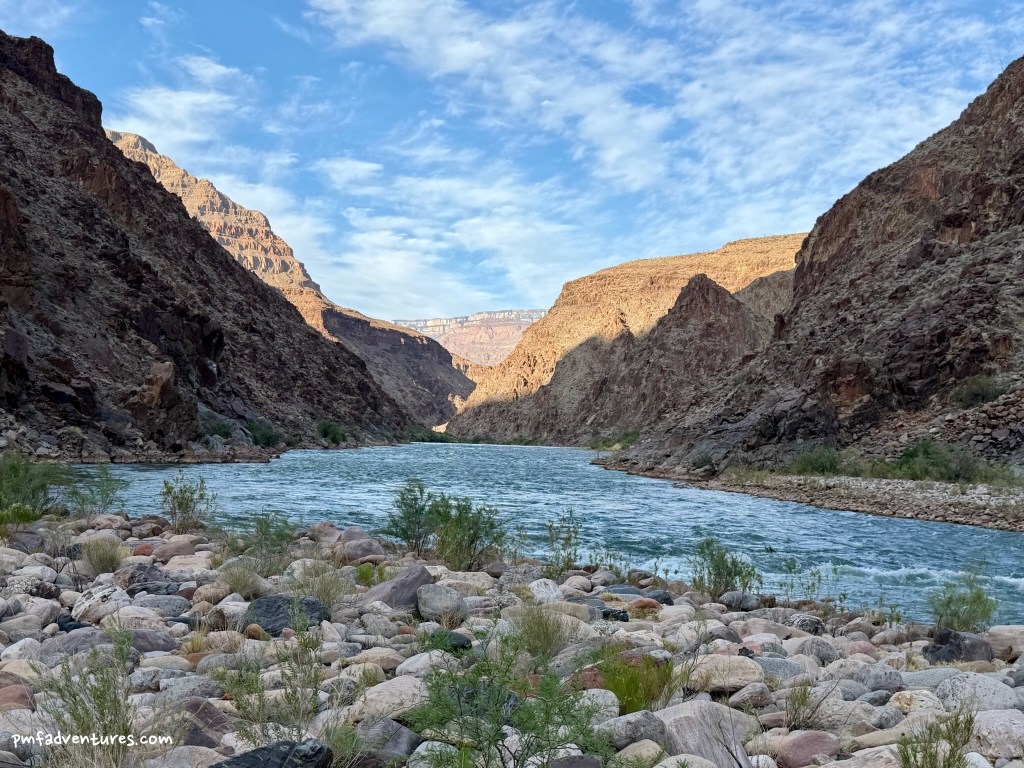
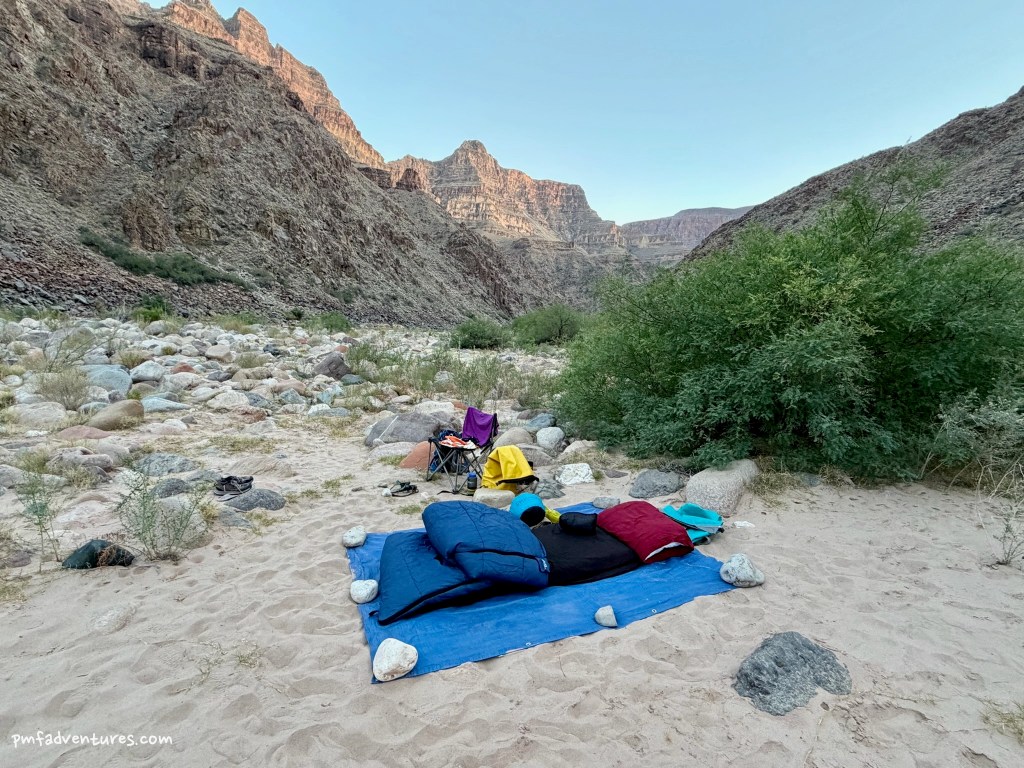
Day 16 (4/29/2026) – Truck Stop to Mile 251: Today was our last day in the dories, as we would be taking a jet boat to Pearce Ferry on our last day. After the excitement of the previous day, I wanted a mellow day to end the rowing portion of the trip. So I got our gang back together and arranged to ride with Dellie. We had one last tricky rapid to get through, 232 Mile Rapid, also known as The Fangs because of the schist fins in the current line at the bottom of the rapid that must be avoided. We stopped to scout the rapid and the crew had to figure out a new line because the normal left run wasn’t doable at this low water level. It was a very technical run and Dellie nailed it, as I knew she would.
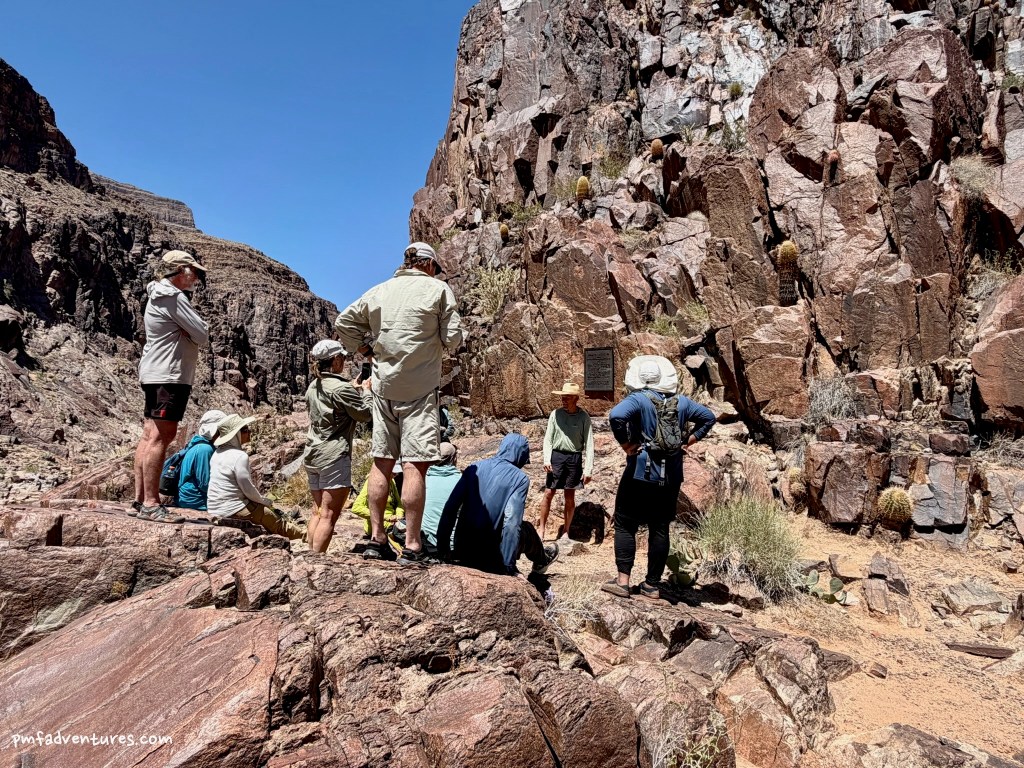
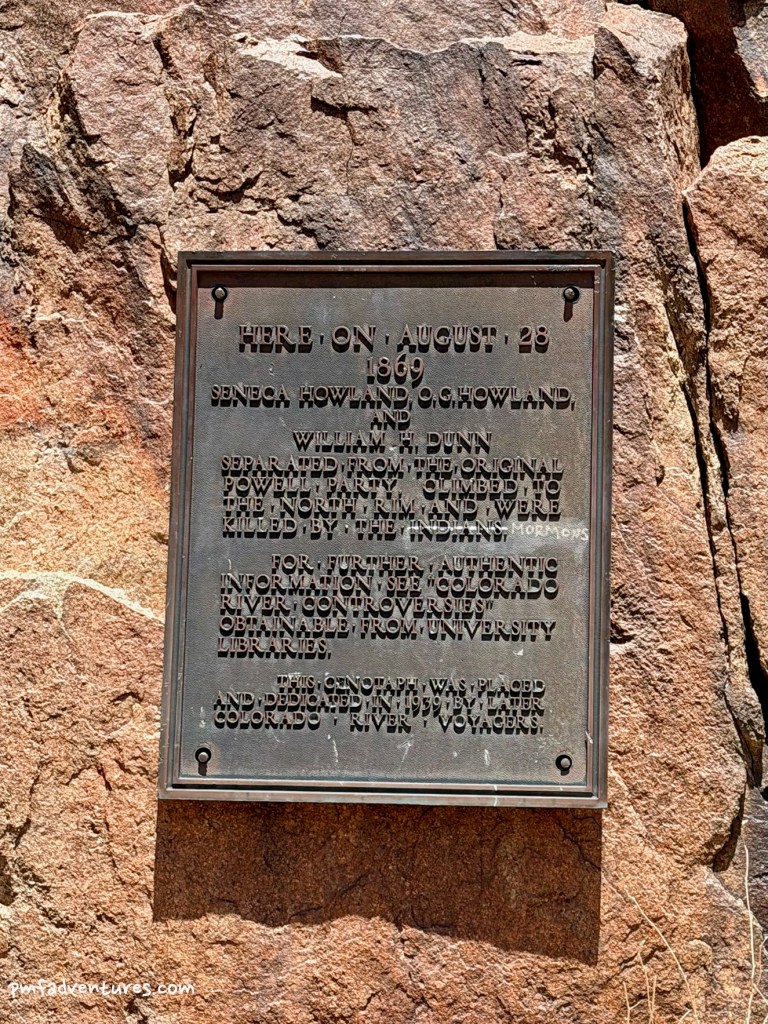
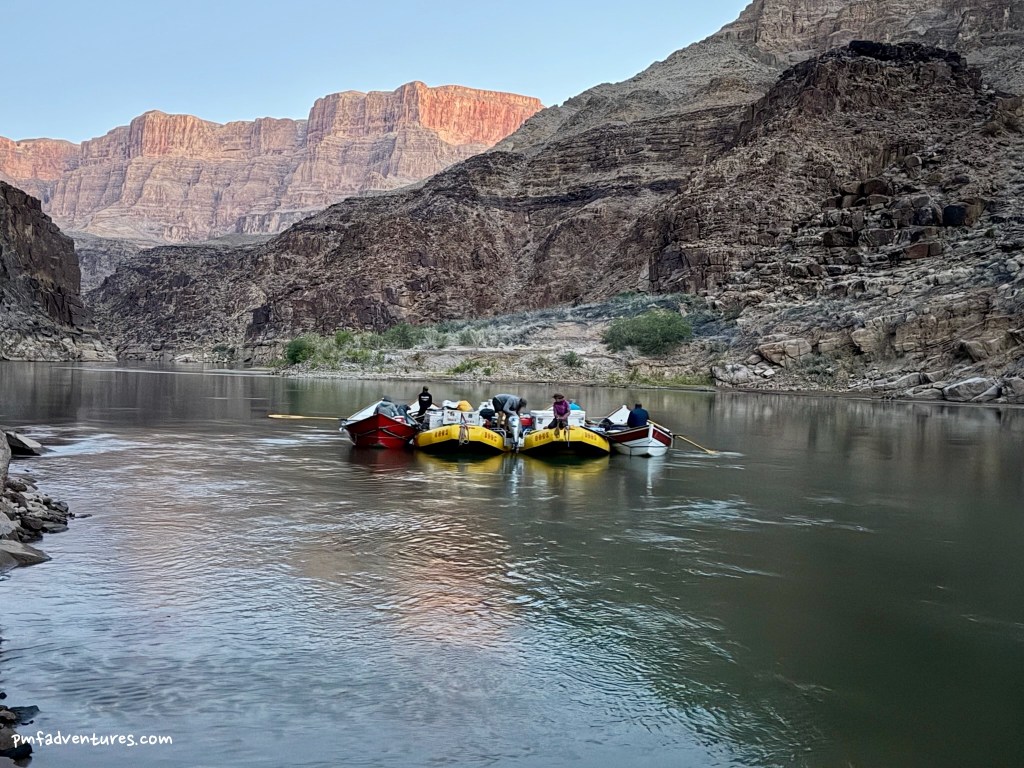
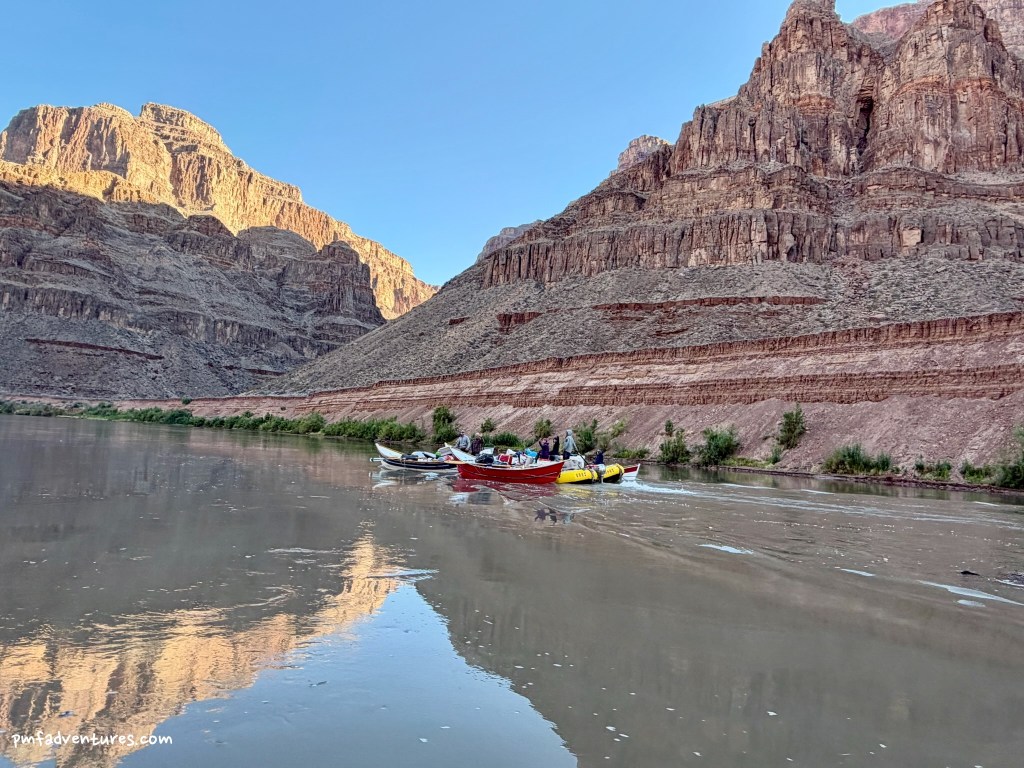
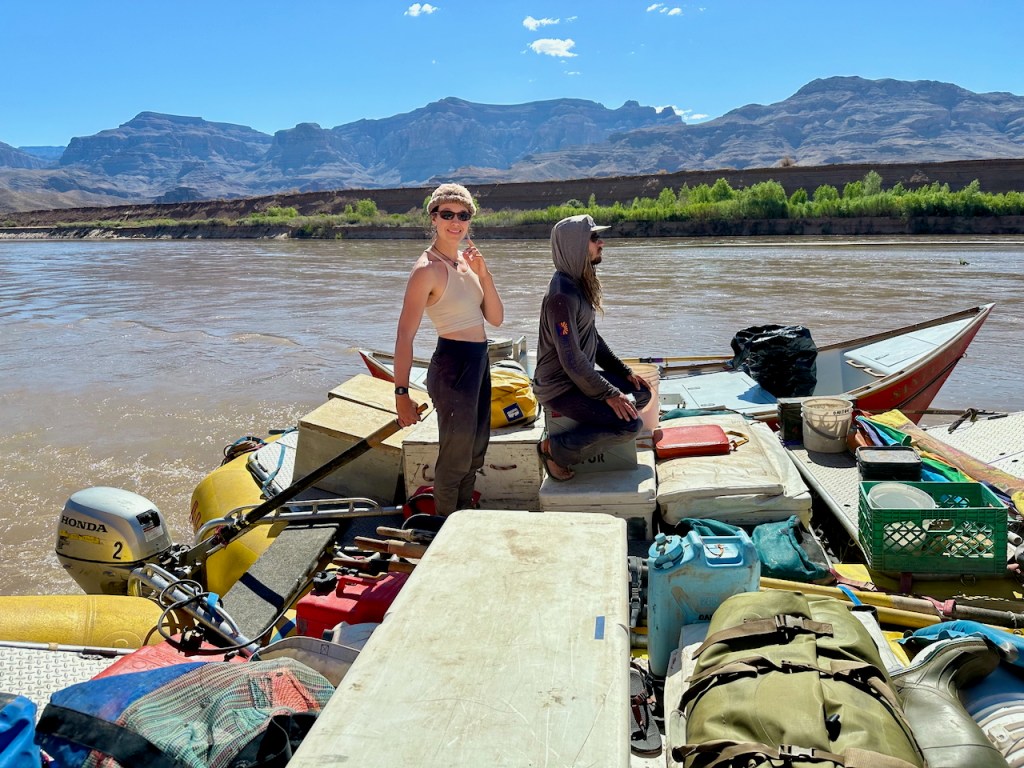
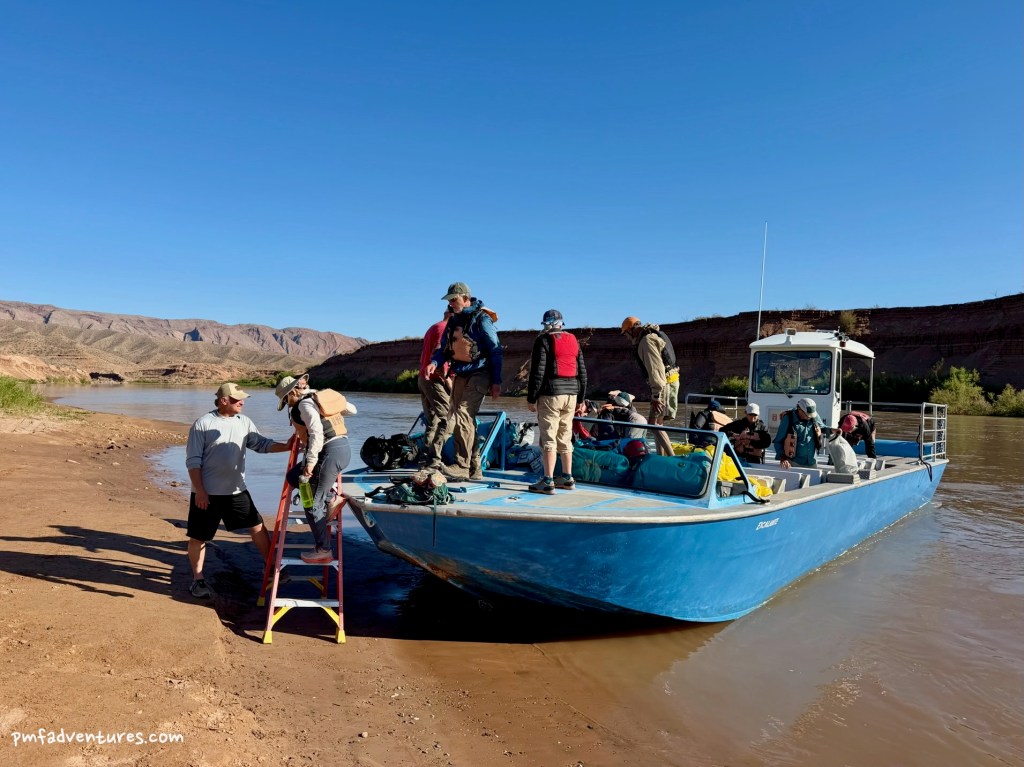
We stopped for lunch at Separation Canyon and walked up to the see the cenotaph for the three men who decided to leave John Wesley Powell’s party in August 1869 and were never seen again. It was a hot afternoon on the water without much wind, so I was thankful to have a sarong that I could get wet to keep cool. The camp at Tomahawk was taken, so we kept going until about Mile 251, where we found a small beach that would work for camp and was also deep enough for the jet boat to land. The jet boat arrived as we were scouting for a camp and brought us our dinner, as well as the outboard motor that the crew would be using to pilot all the boats down to Pearce Ferry. After we got to the camp, most of the crew was busy packaging up the three rafts and four dories into a single unit, while Dellie cooked a great farewell dinner of grilled halibut, asparagus, rice and salad. After dinner, we all shared our highlights of the trip and got treated to ice cream bars brought by the jet boat.
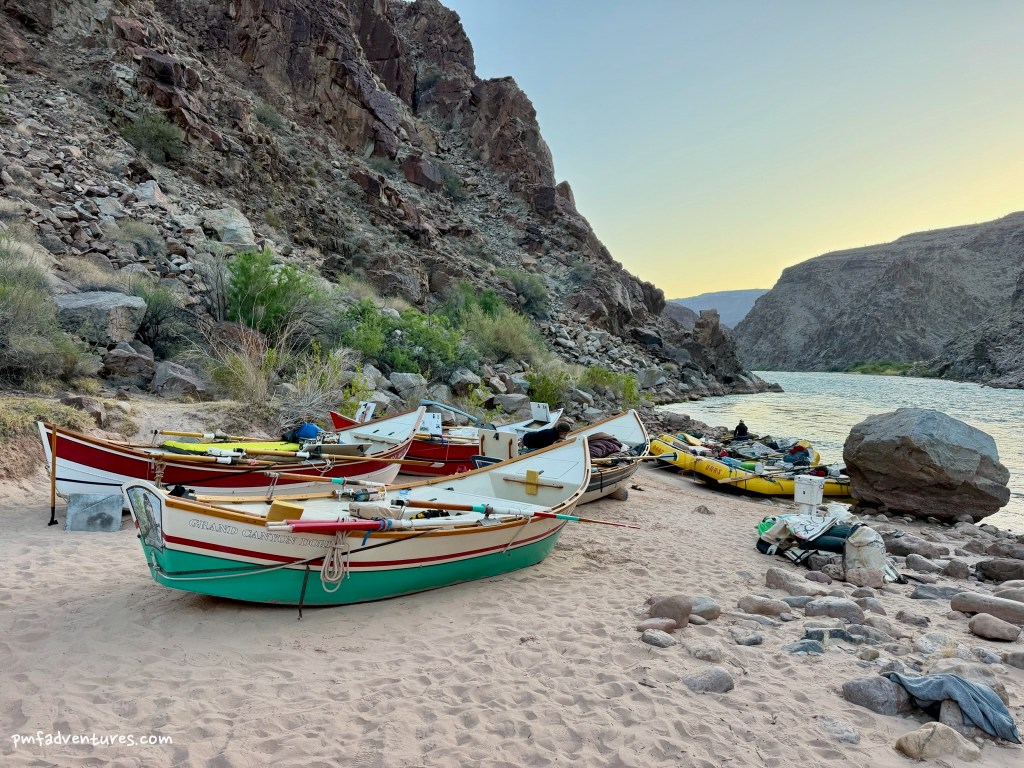
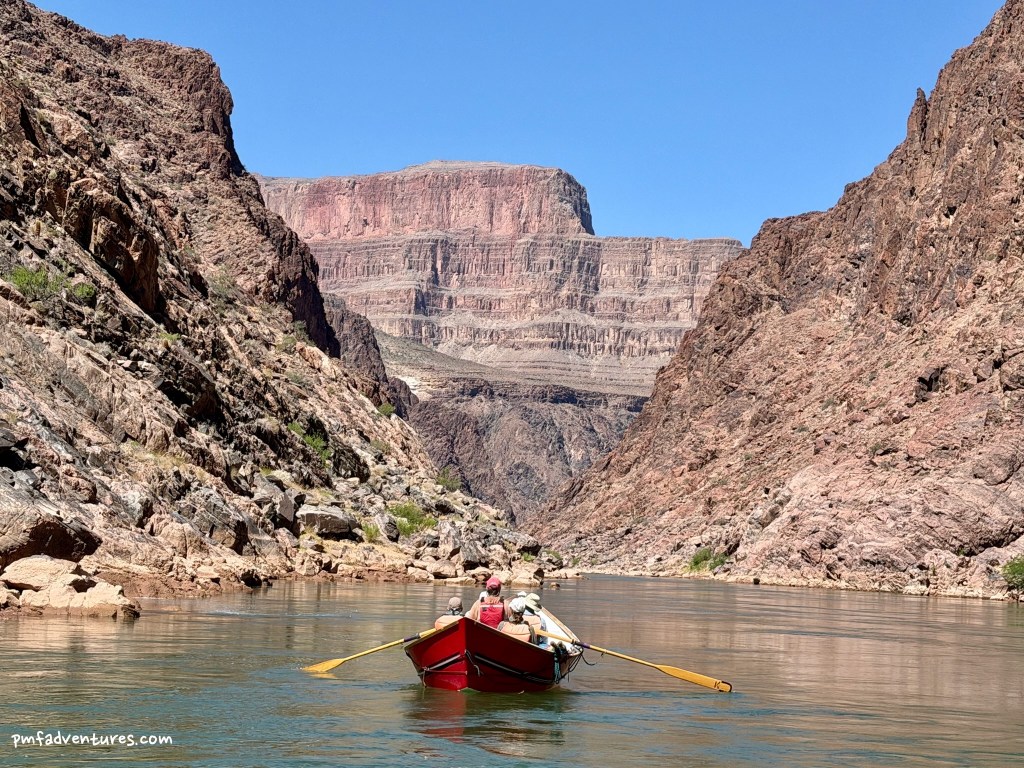
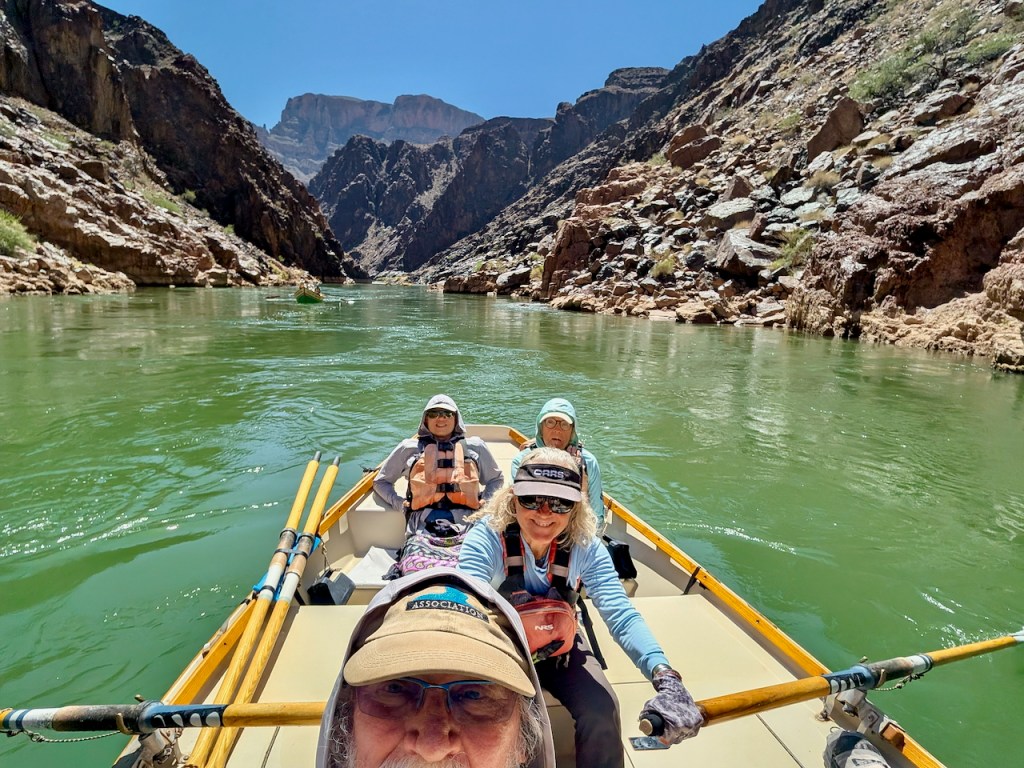
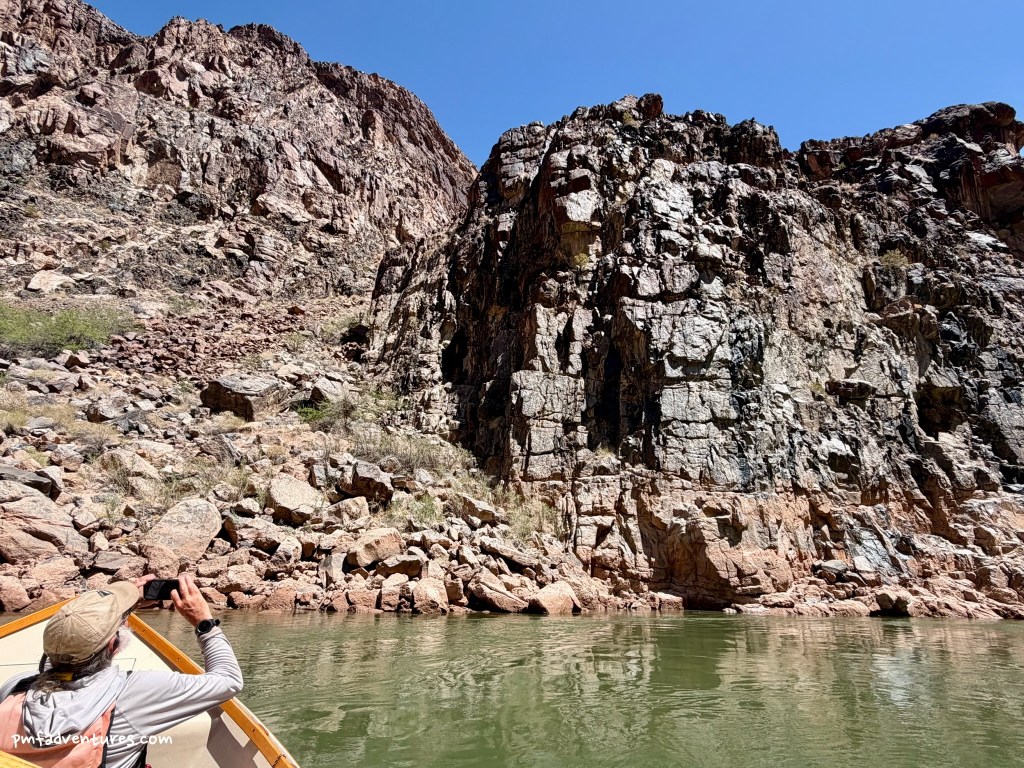
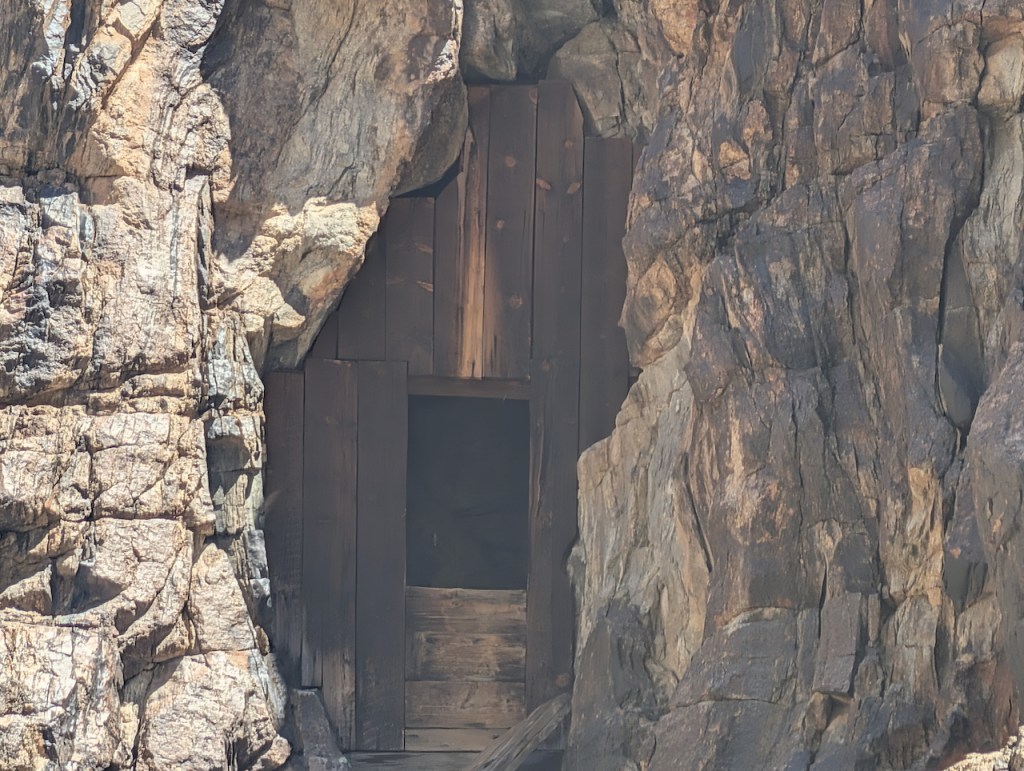
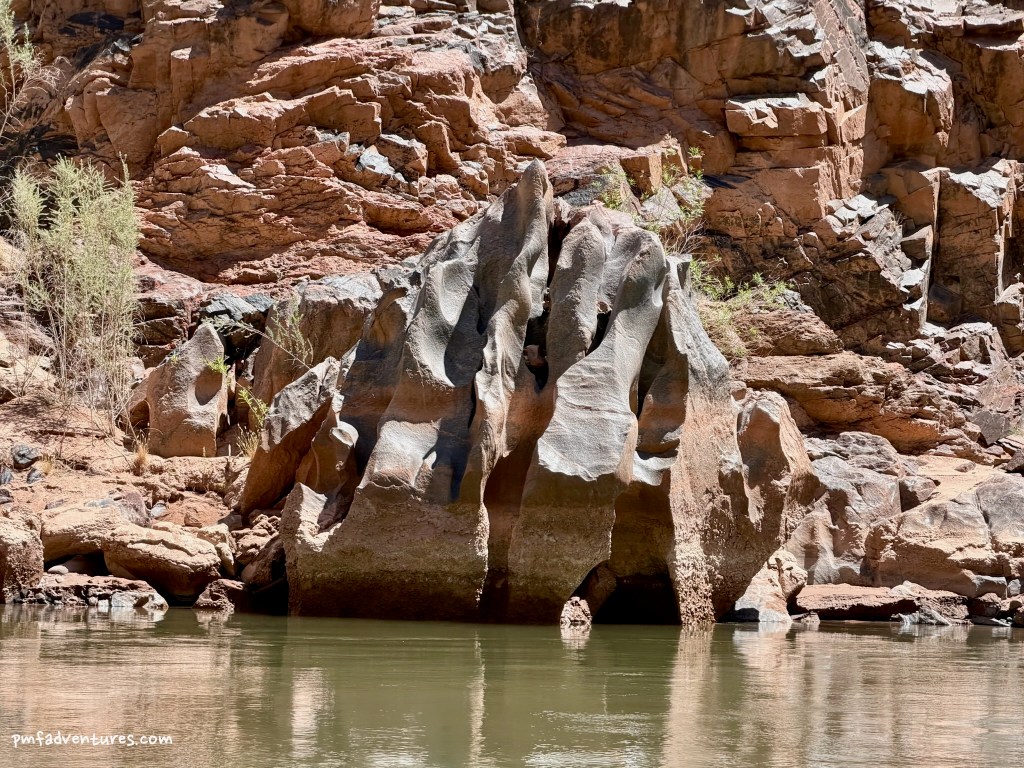
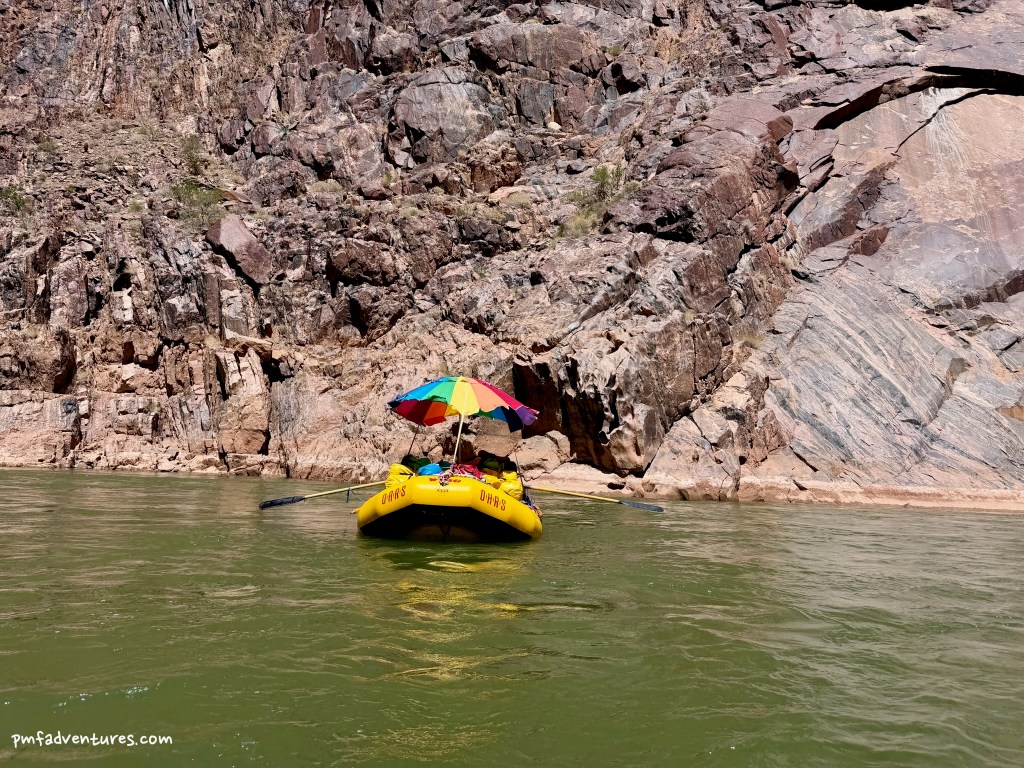
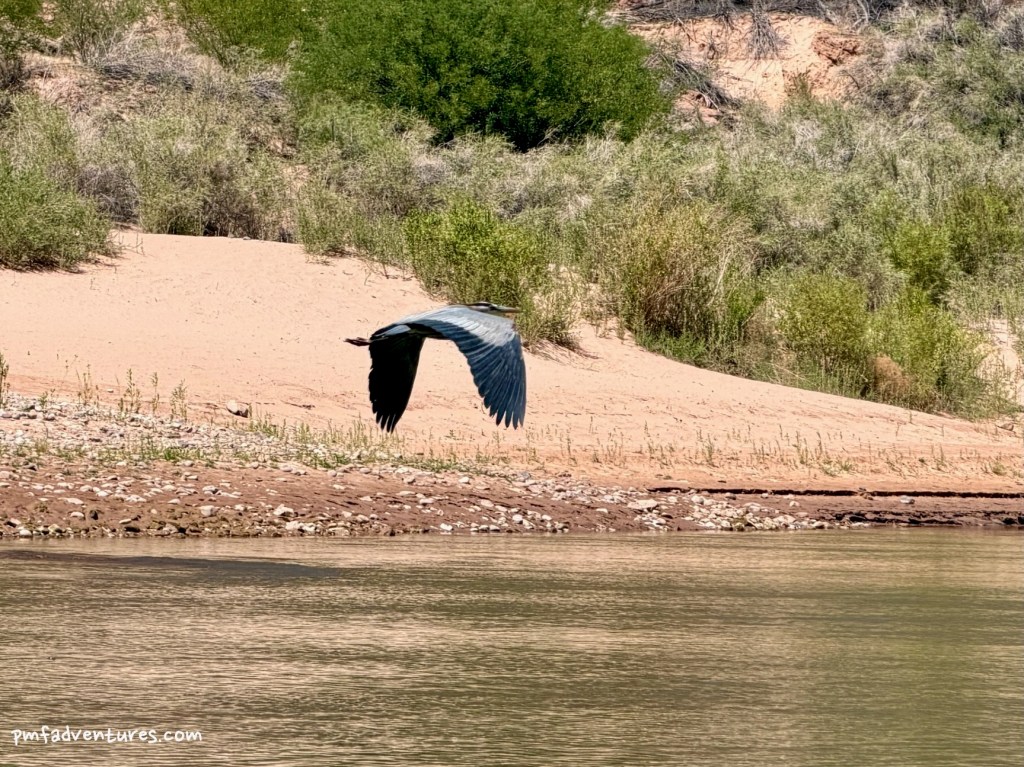
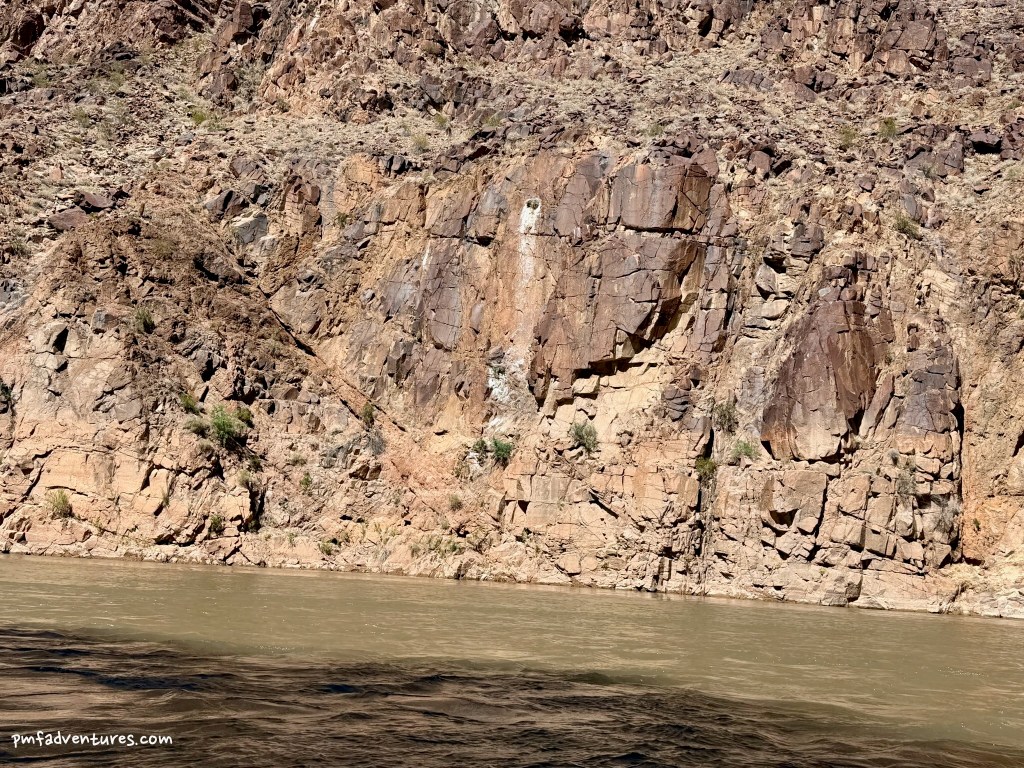
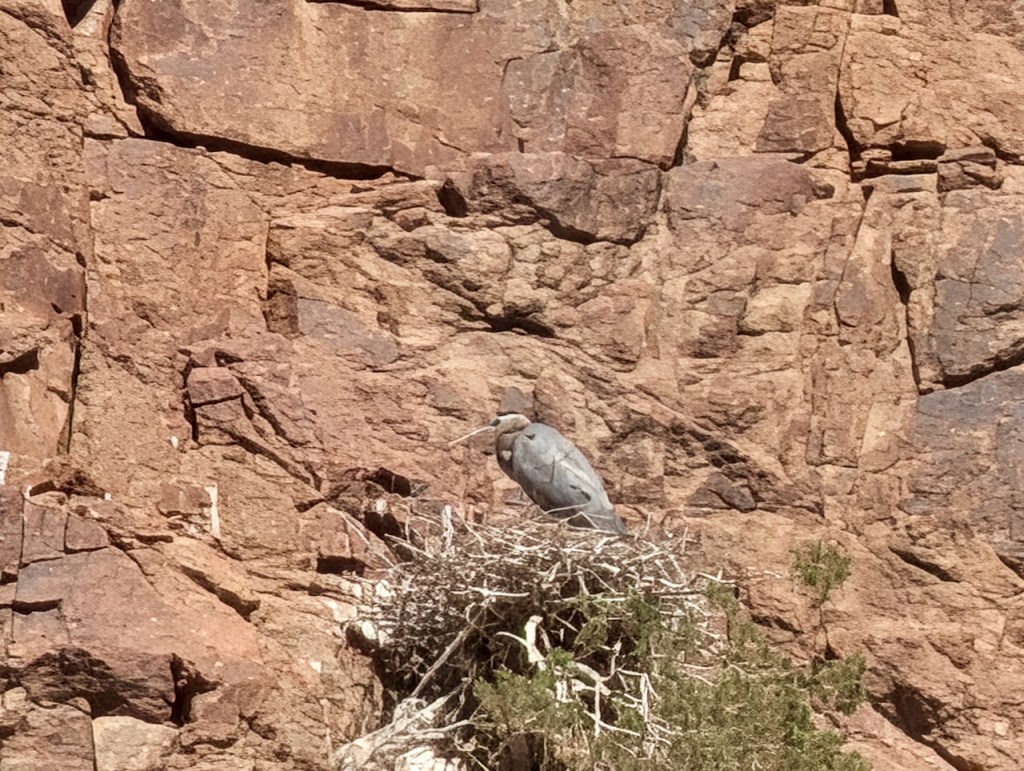
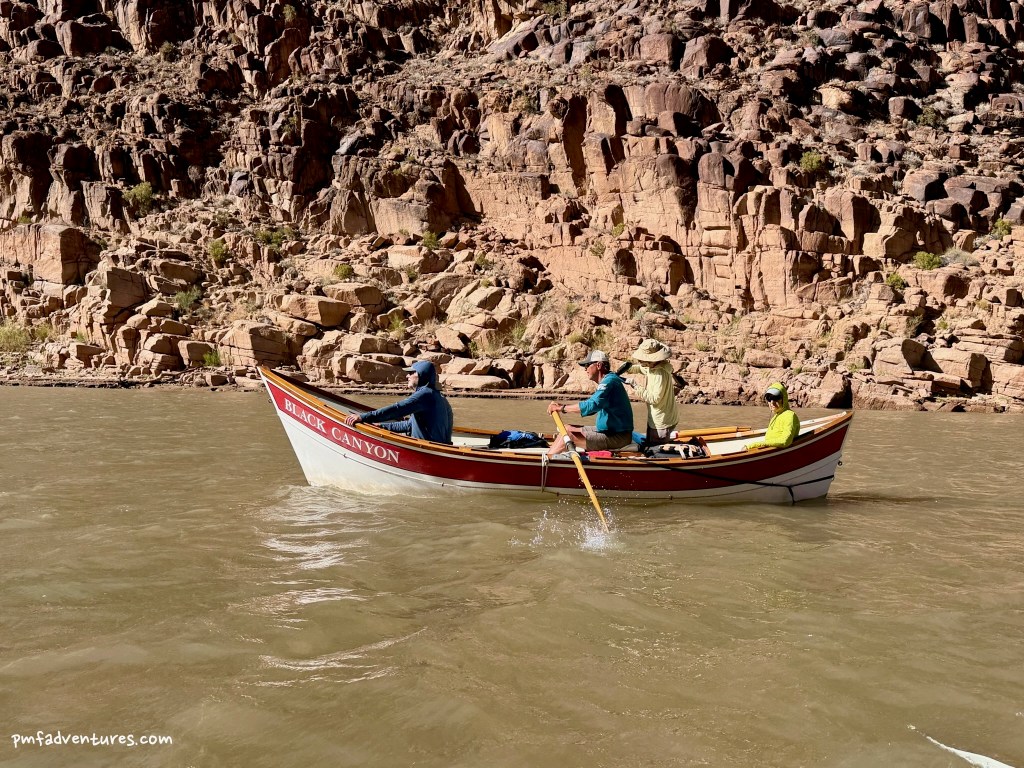
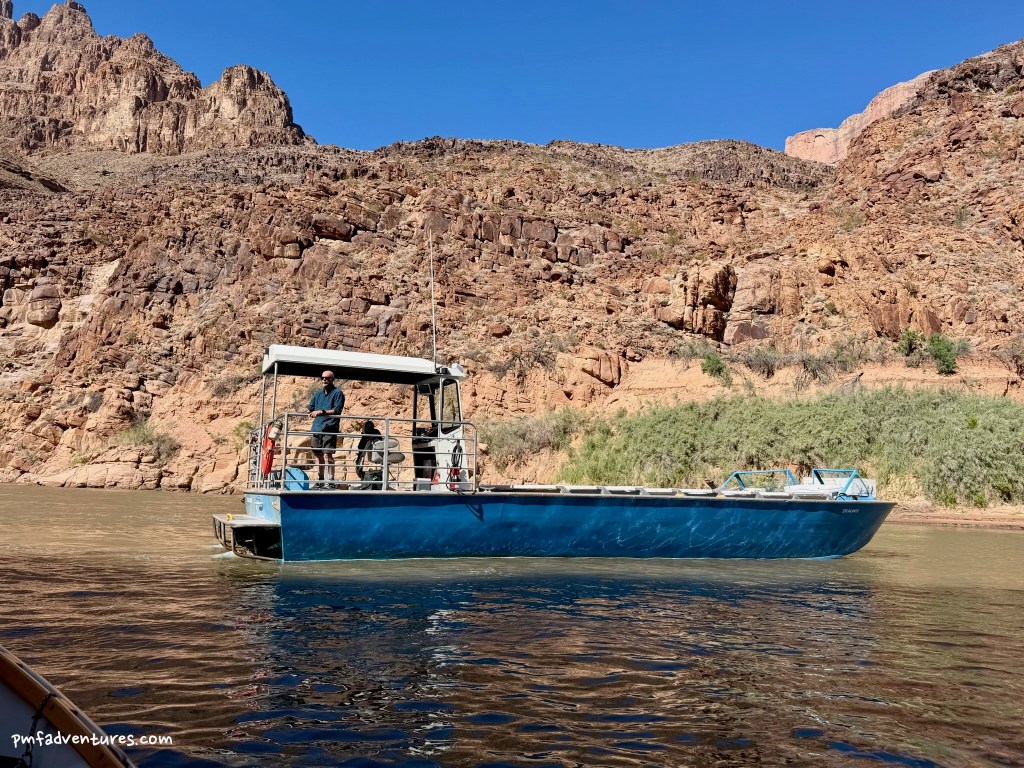
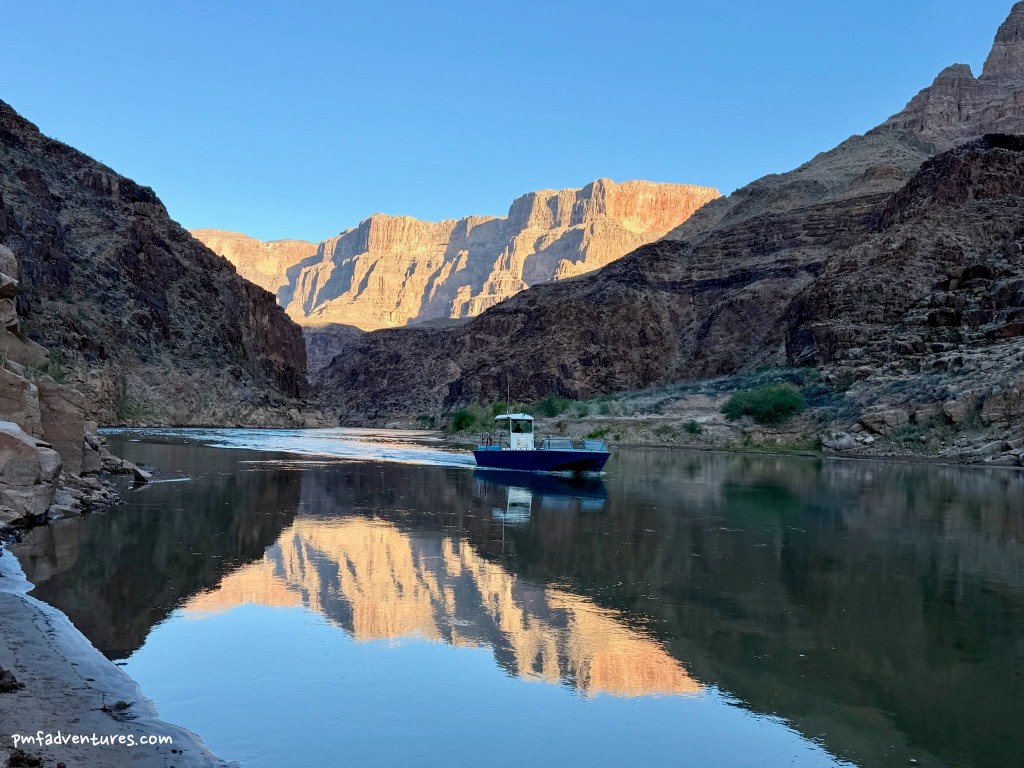
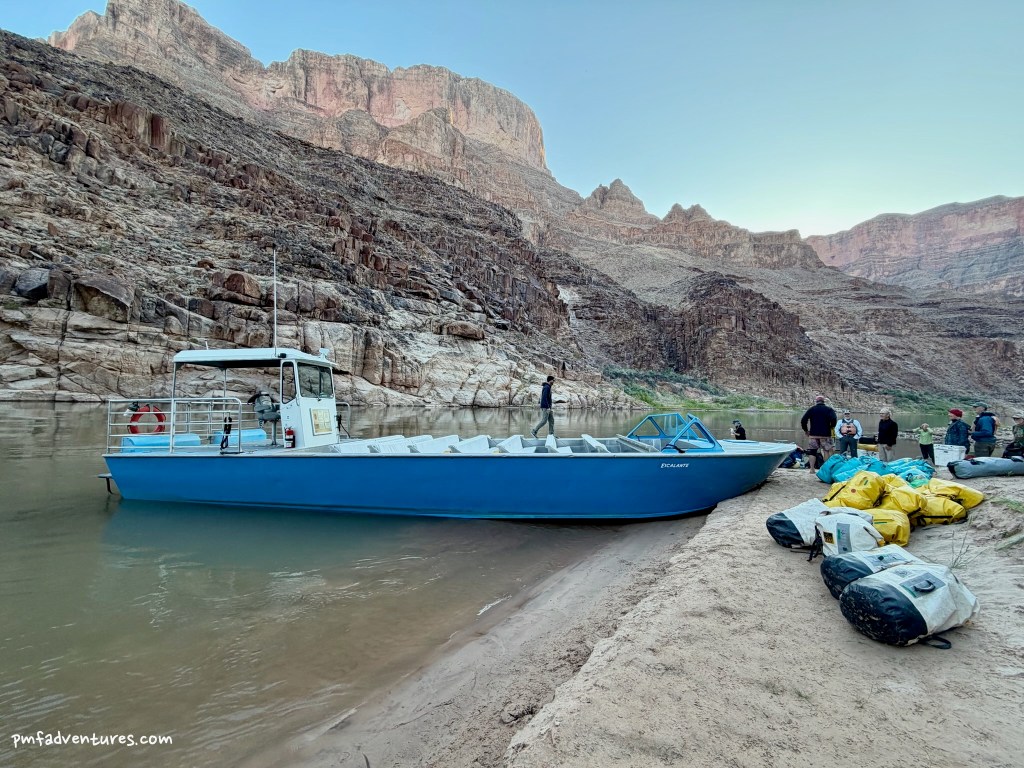
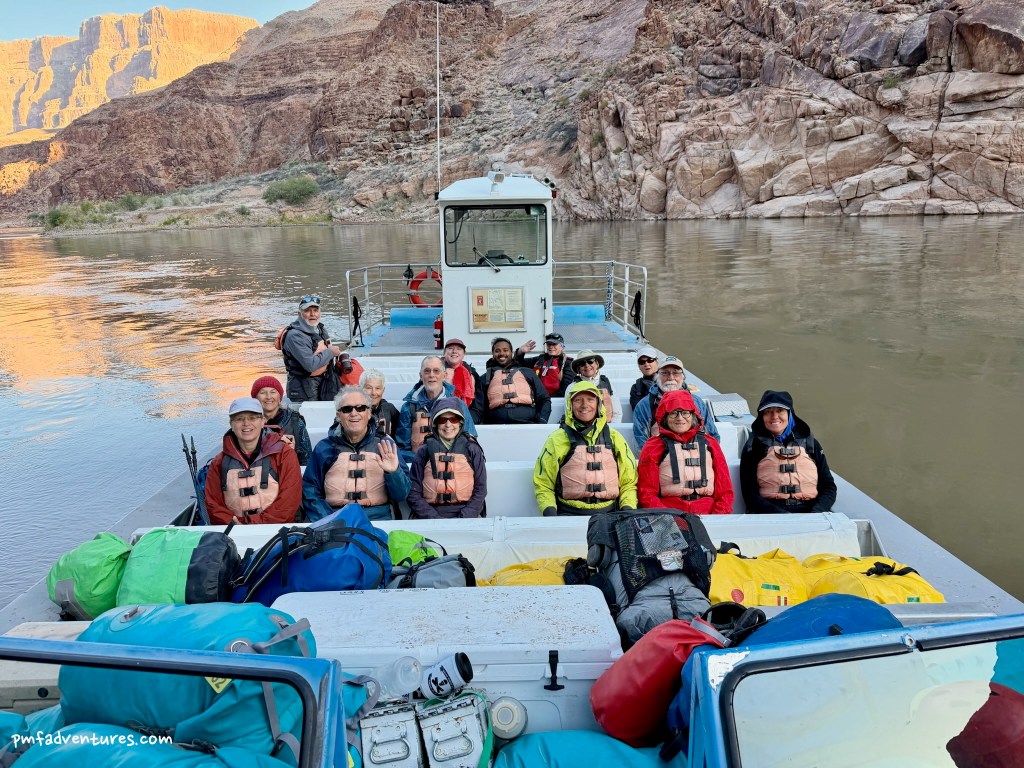
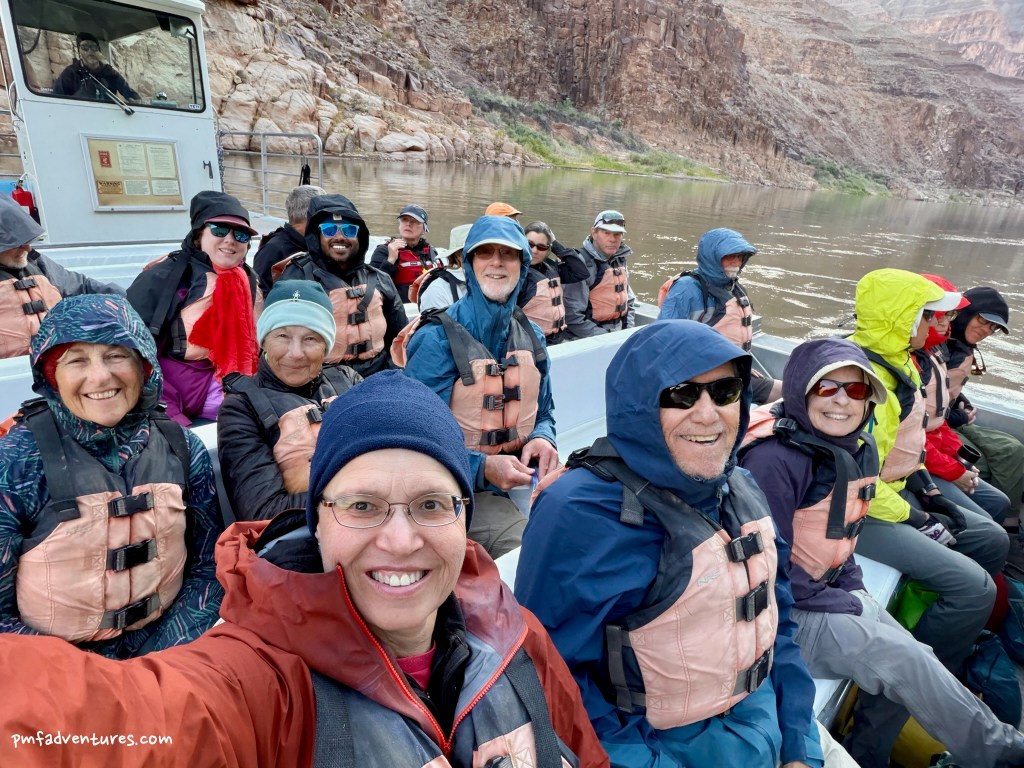
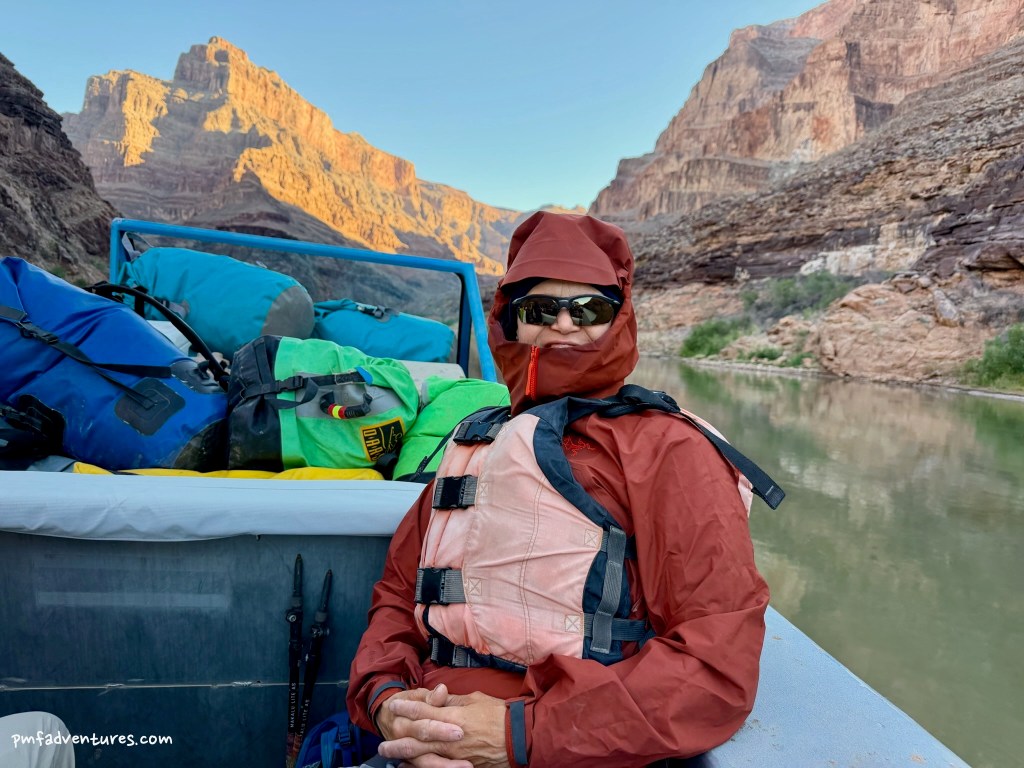
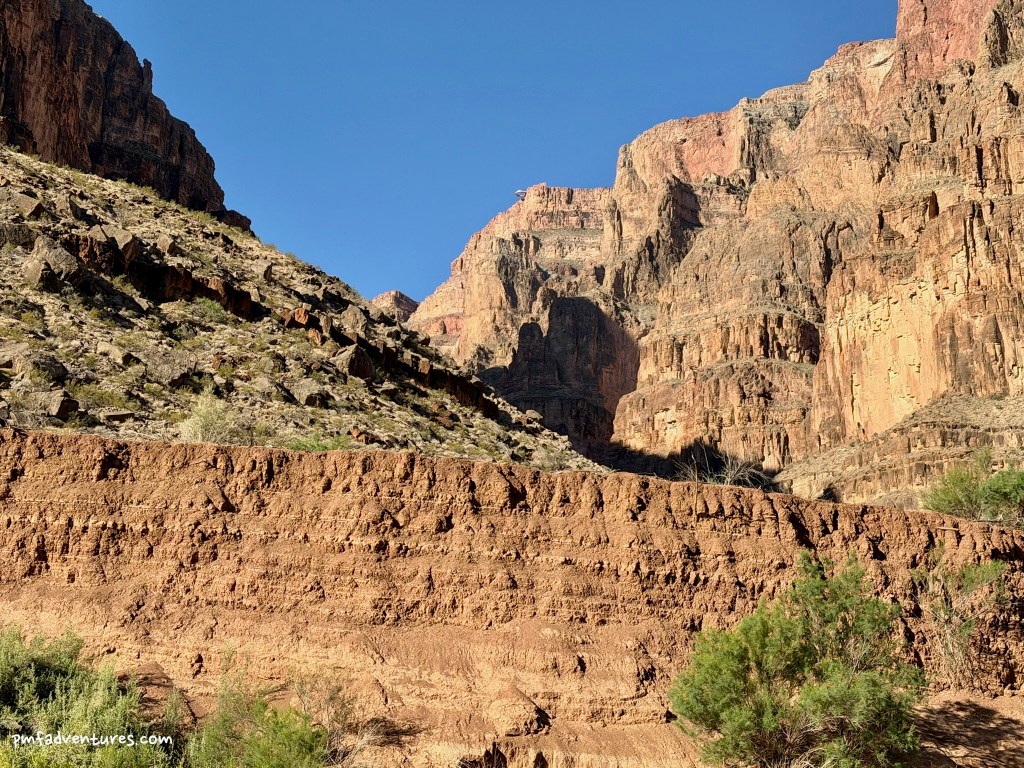
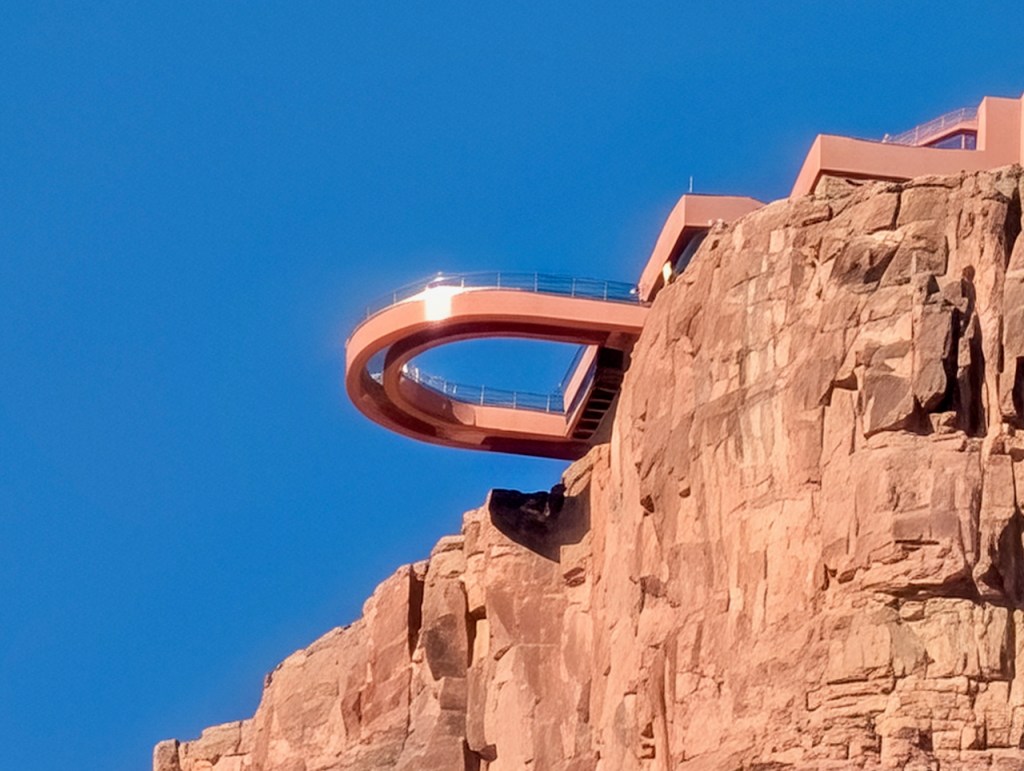
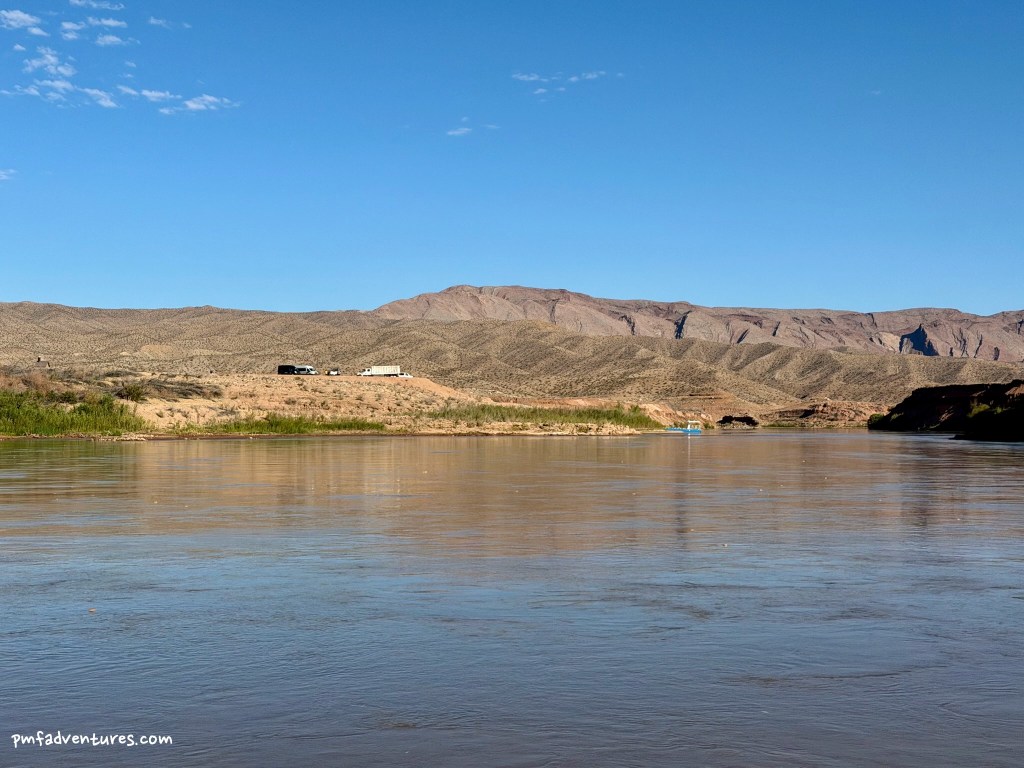
Day 17 (4/30/2026) – Mile 251 to Pearce Ferry: The crew was up and off at first light, as they had a long day ahead — motoring down to Pearce Ferry, derigging all the boats and loading the trailer, driving back to Flagstaff, and unloading at the warehouse. The jet boat arrived for us clients and Roger just before 7. We helped load all our personal gear and then climbed aboard and bundled up for the ride. The jet boat travels at 30 mph, so it was a breezy ride, and we covered the 30 miles to Pearce Ferry in just over an hour. Along the way we cruised through Helicopter Alley, but thankfully it was too early for the helicopters to be flying. We also got to see the Hualapai Grand Canyon Skywalk. And before we knew it, we were passing the Grand Wash Cliffs and arrived at Pearce Ferry shortly after 8.
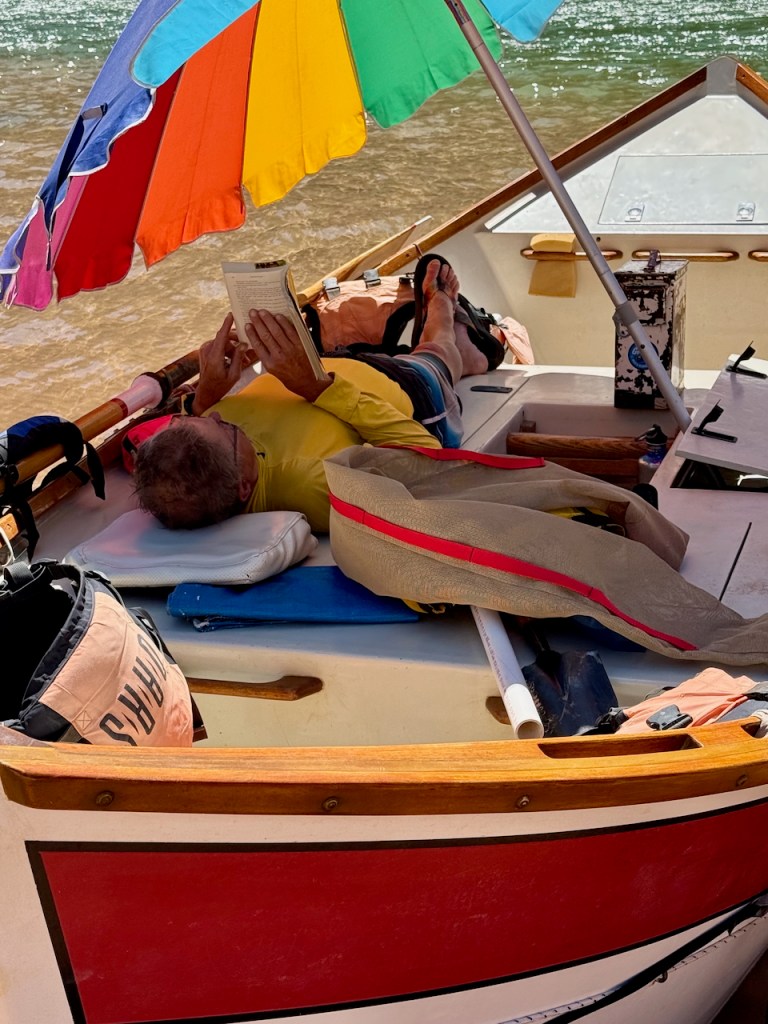
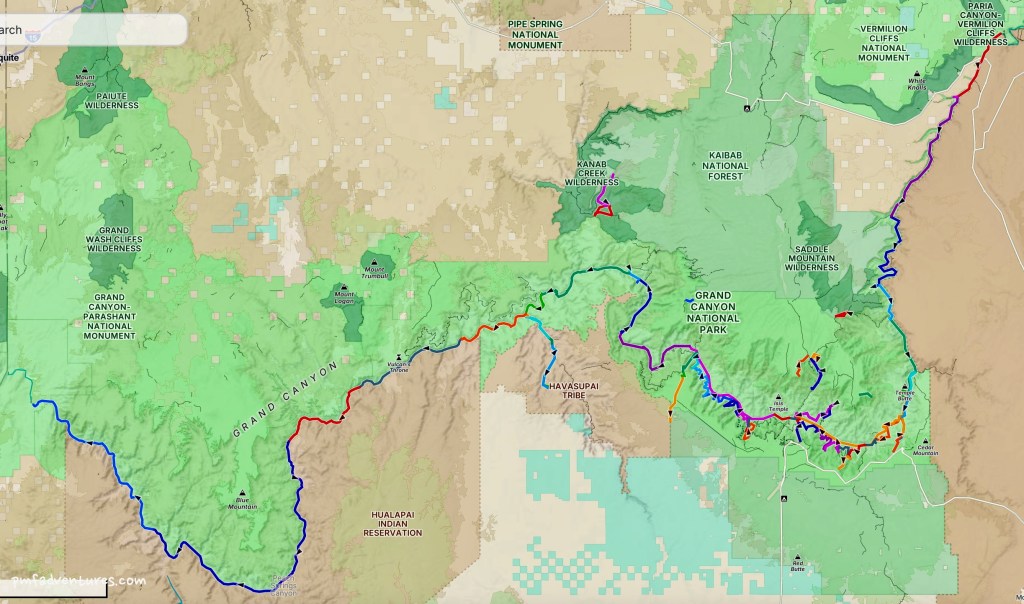
Trip Recap: What a great trip! It was amazing to spend 17 days in the canyon. Despite the challenges of very low water, the OARS guides delivered an exceptional trip. Riding in a dory is very different from being in a raft and way more exciting; I’m very thankful I had the opportunity to do a dory trip while it is still possible. We covered 280 miles on the Colorado River — 250 by dory and 30 by jet boat — and I hiked another 19+ miles over the course of the trip.


Very nicely done Paula!!! I put on my Facebook page – hope you don’t mind. Appreciate your efforts. tt
LikeLike
Glad you liked it! And happy to have you share on Facebook.
LikeLike