
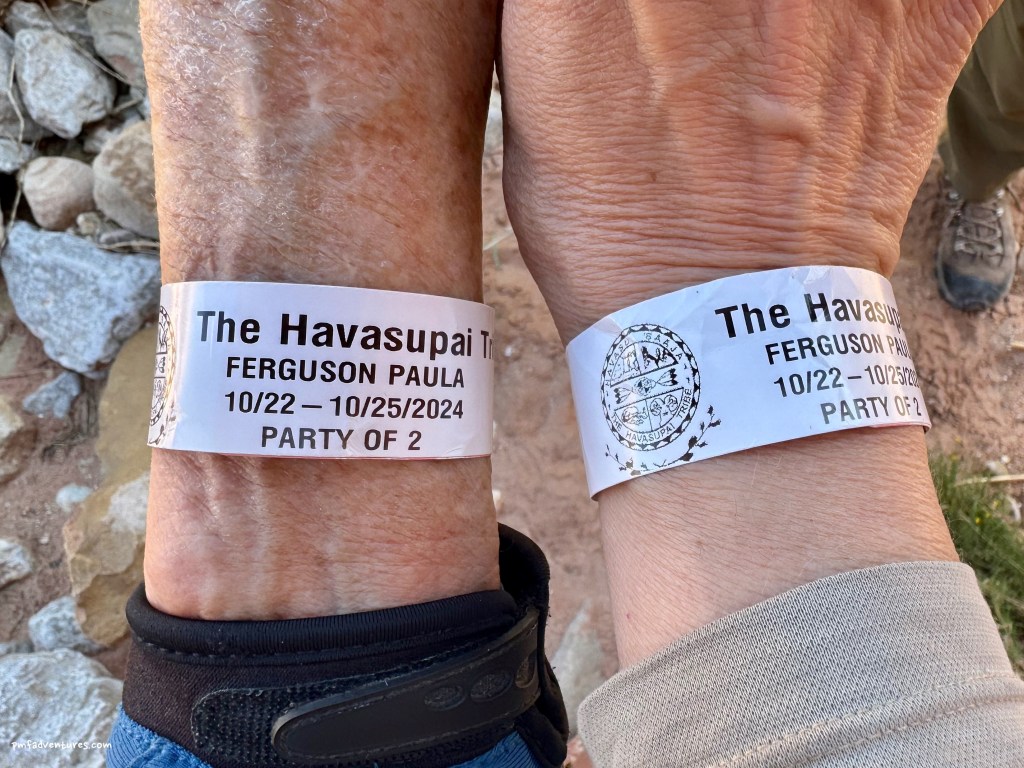
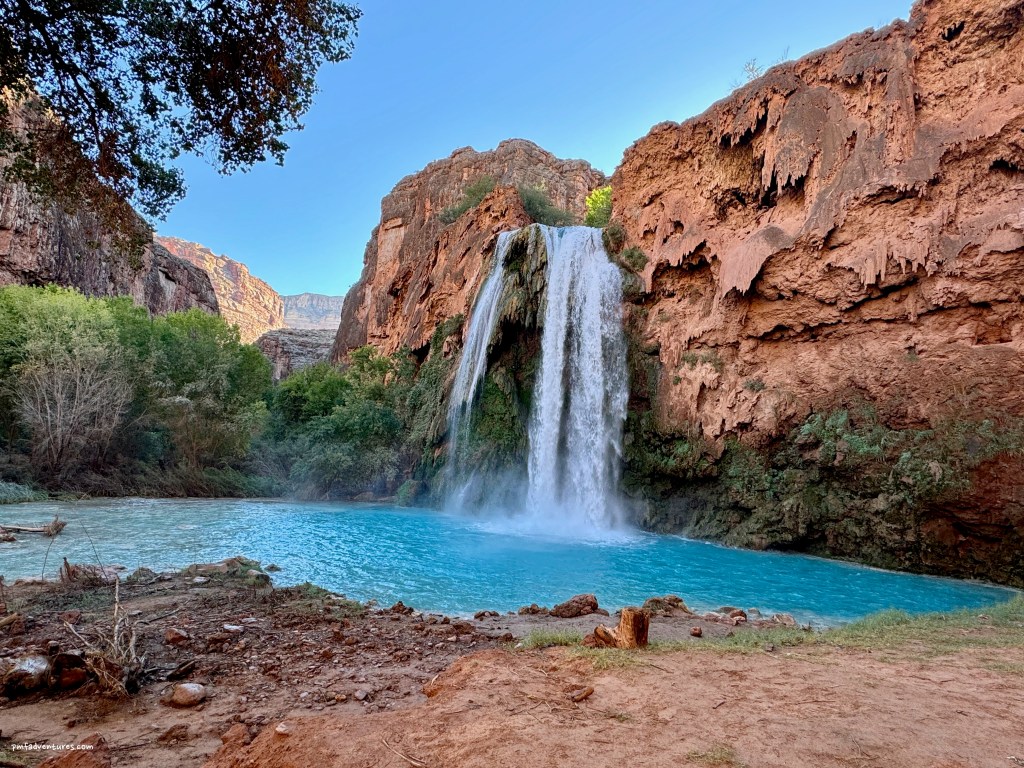
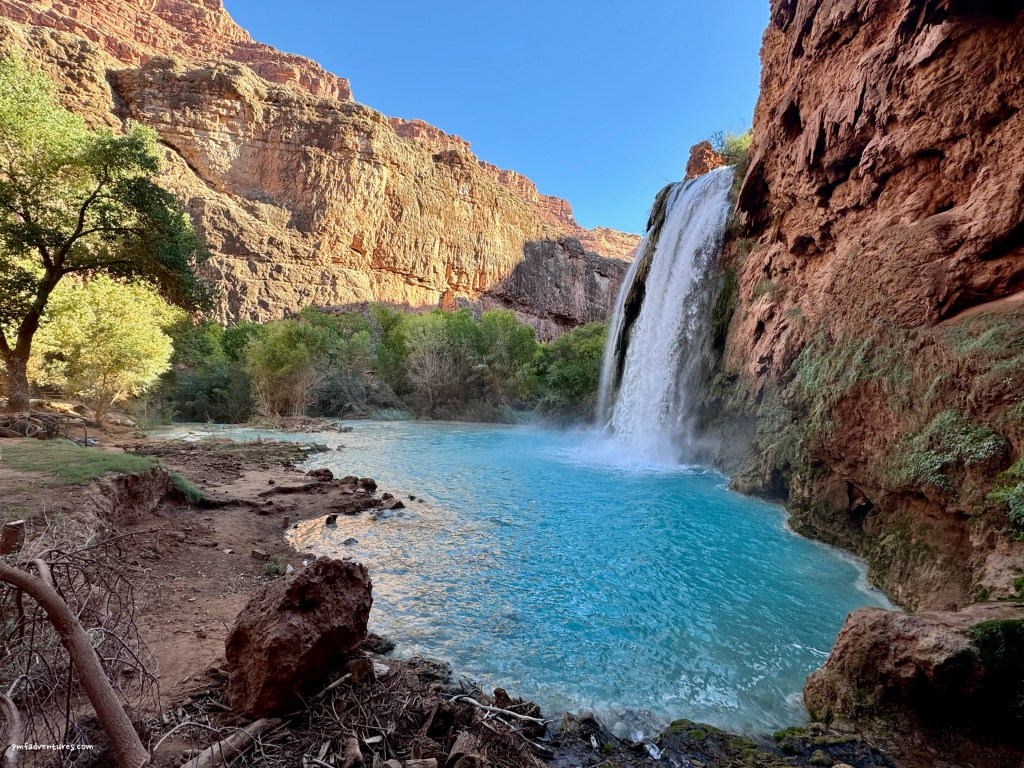
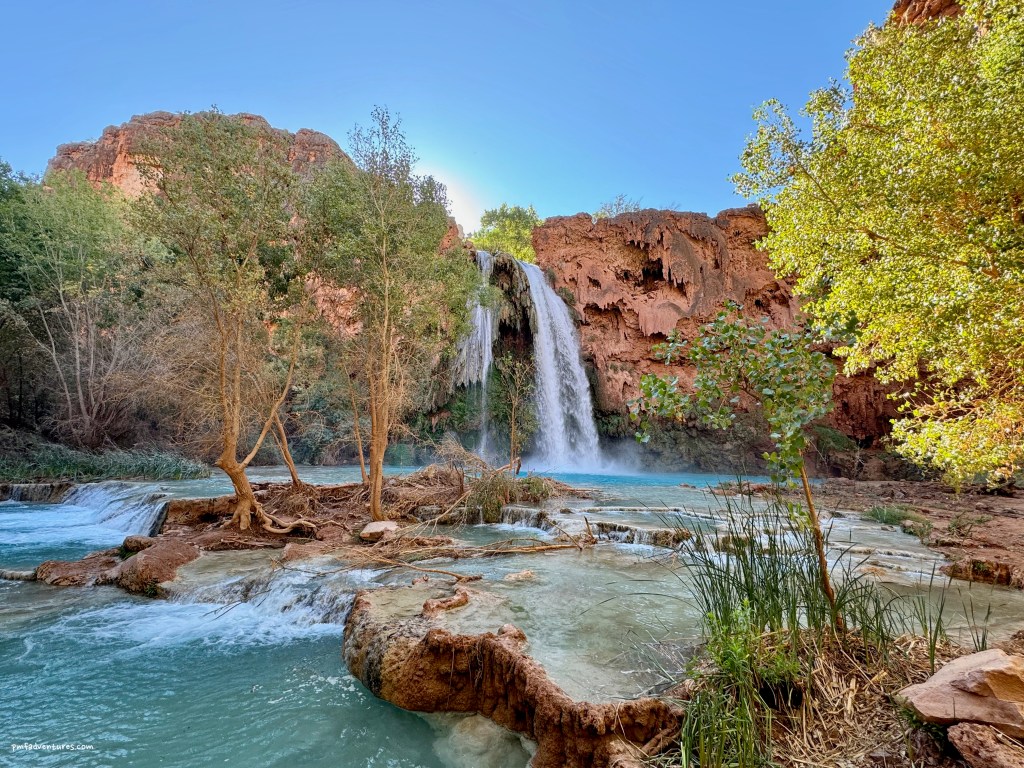
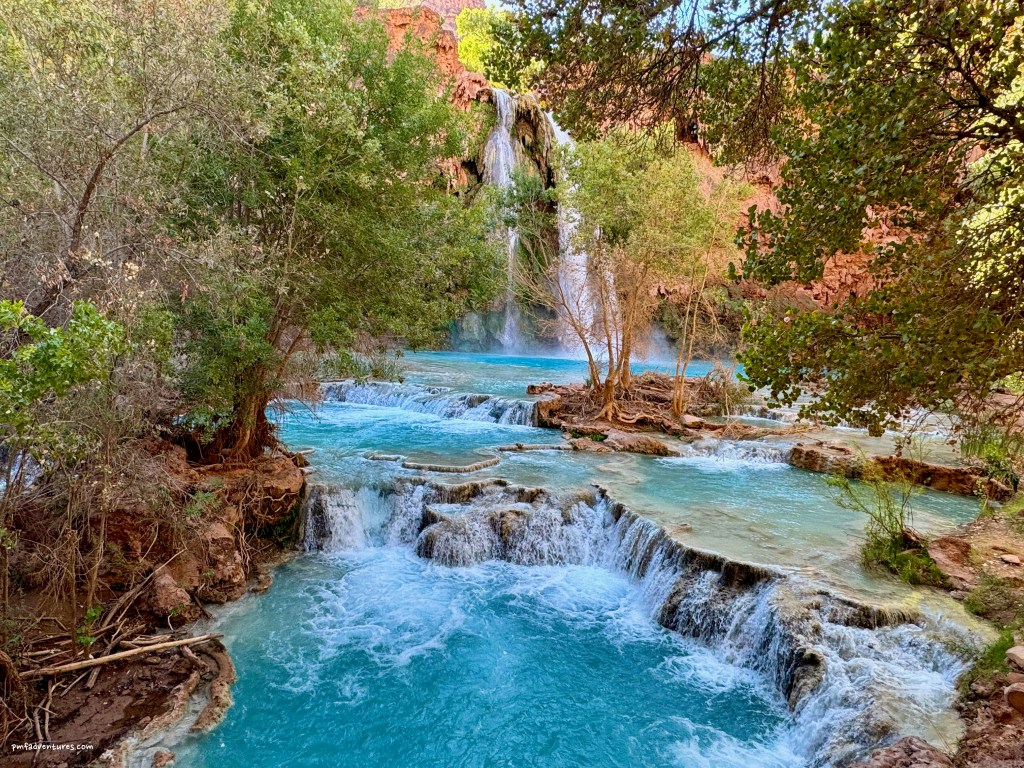
Havasu Creek, one of the biggest tributary streams in the Grand Canyon, is renowned for its blue-green color and spectacular waterfalls. The creek emerges from Havasu Spring just above the village of Supai, passes through the Havasupai Campground and then flows for a few more miles through the Havasupai Indian Reservation before entering Grand Canyon National Park and emptying into the Colorado River. Back in January, we scored a much coveted reservation for three nights at the Havasupai Campground for October 22-25. The Havasupai tribe allows about 300 people to camp there at a time, so it isn’t exactly a solitary experience, but that’s just the way it is. We were excited to get to see this amazing place and planned the rest of our Northern Arizona trip around the dates of our Havasupai reservation.
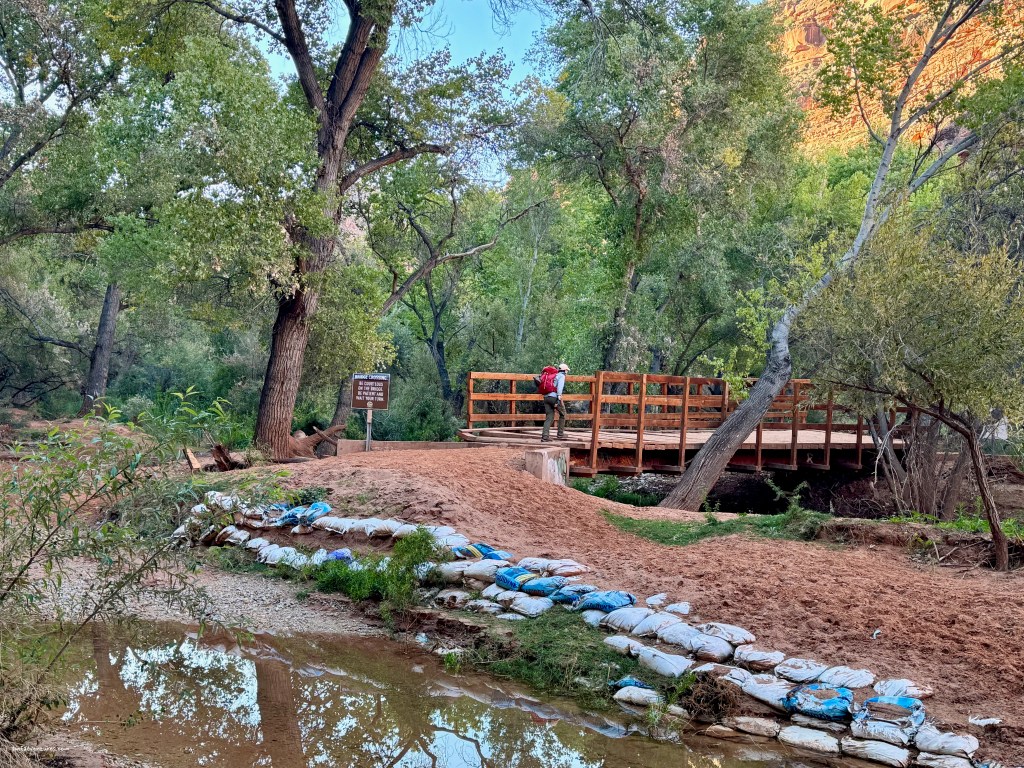
On August 22, a flash flood swept through Havasu Canyon, making the trail into Supai impassable and causing extensive damage in the campground. The tribe closed Havasupai to tourists on August 24 in order to assess the damage and begin the process of clean up and repairs, and based on videos we found of the devastation, we were pretty sure our trip wouldn’t be happening. But the tribe did an amazing job of getting the trails rebuilt and the campground cleaned up enough to reopen on October 1, so we were still able to visit as planned.
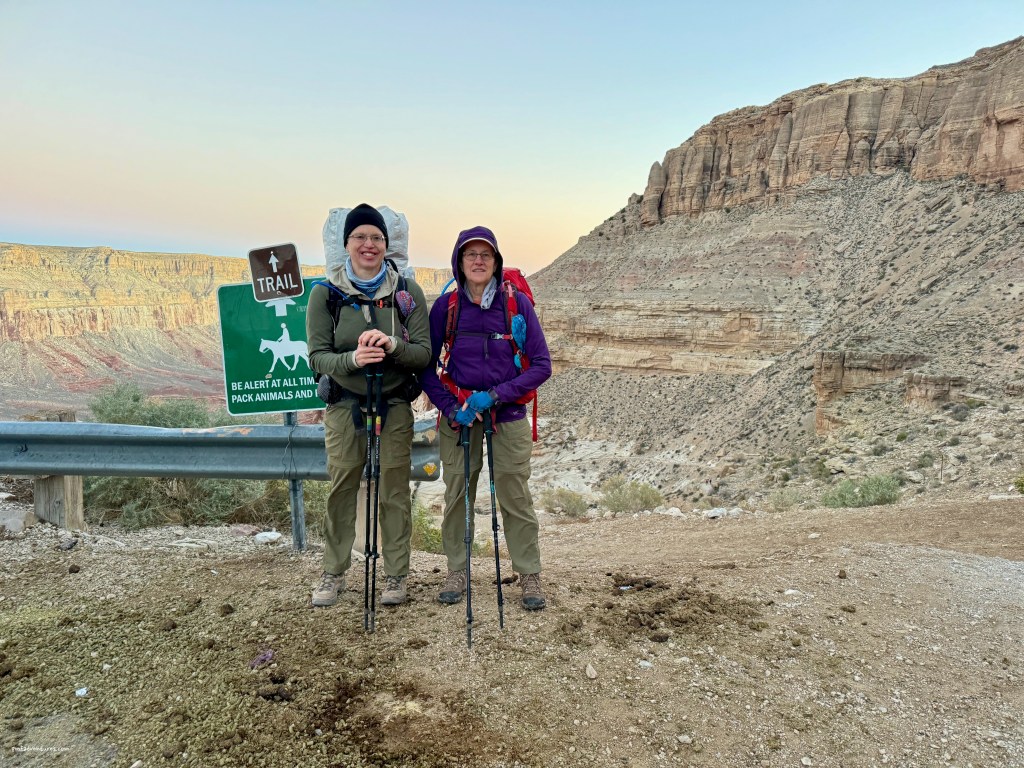
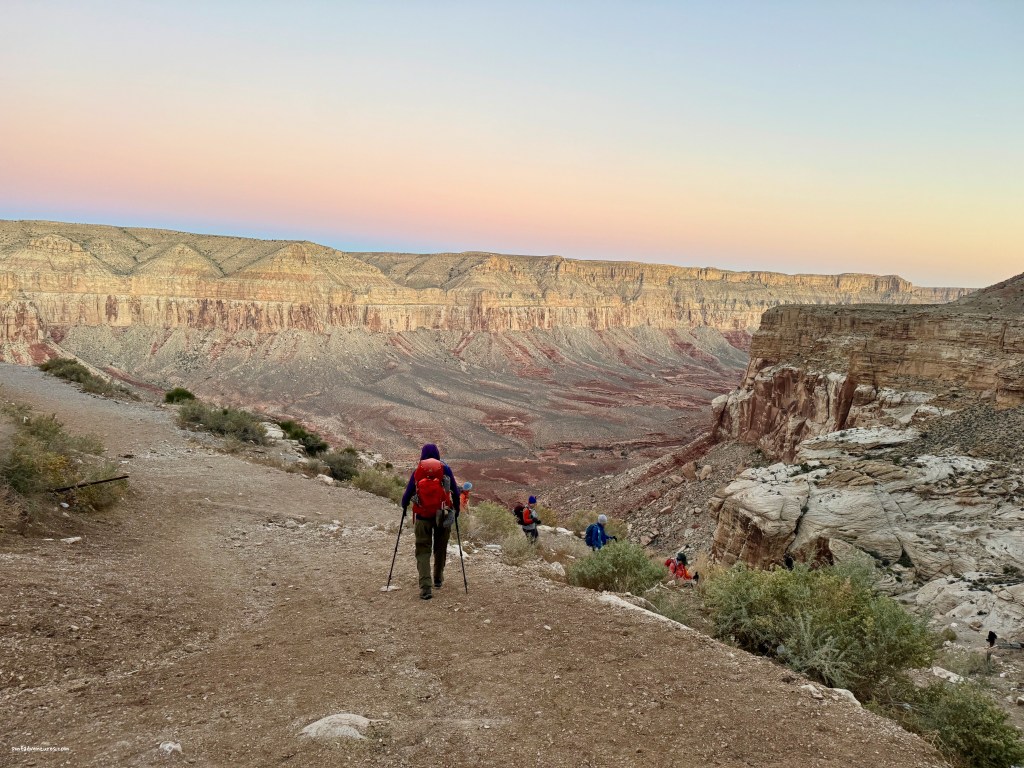
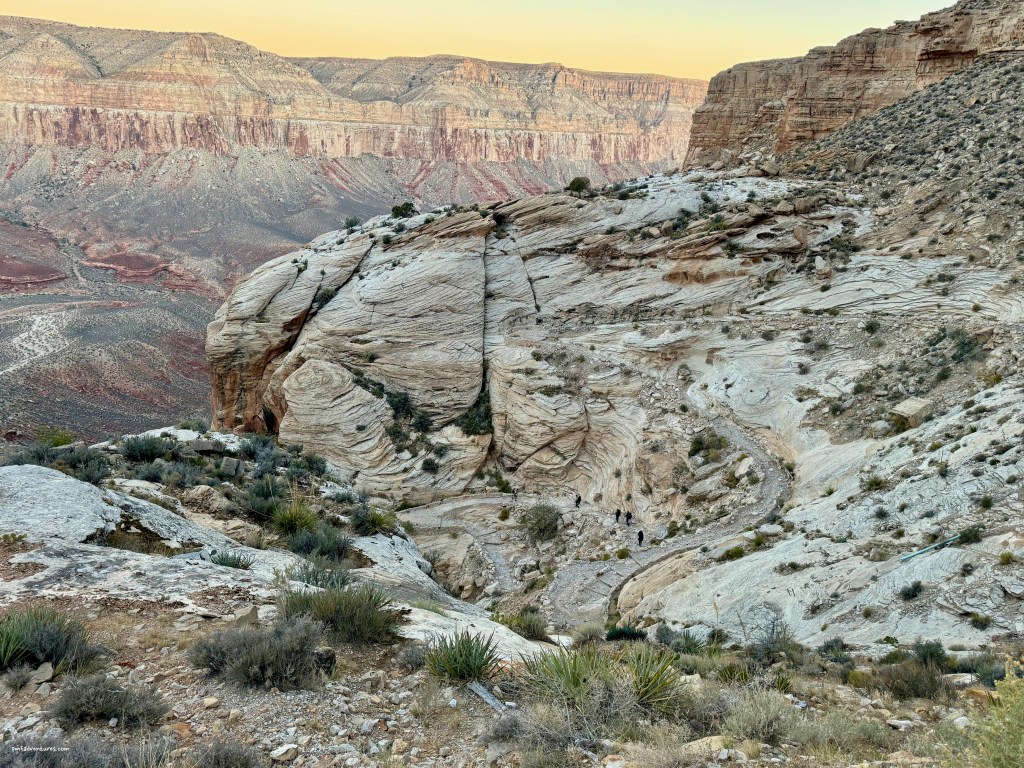
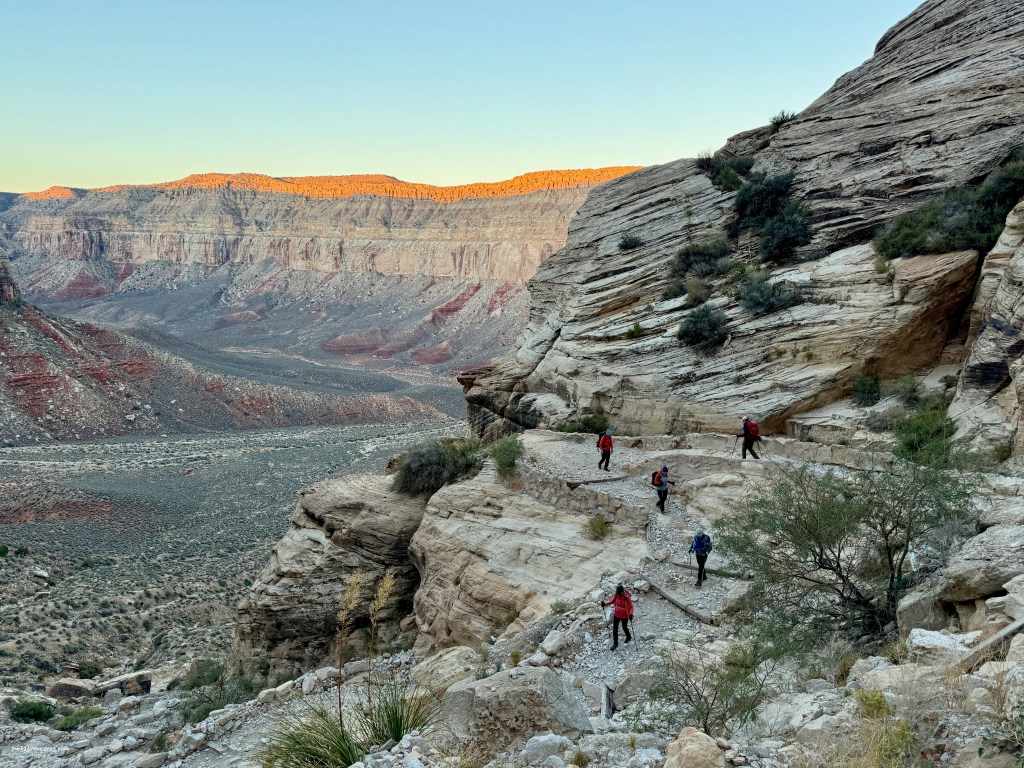
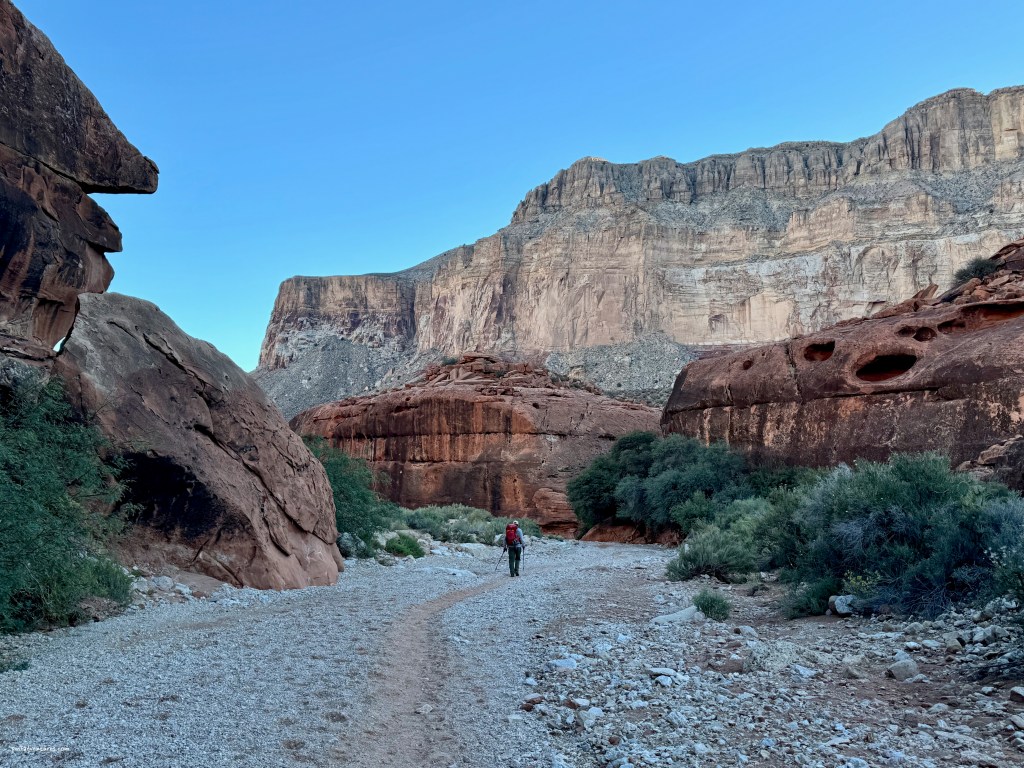
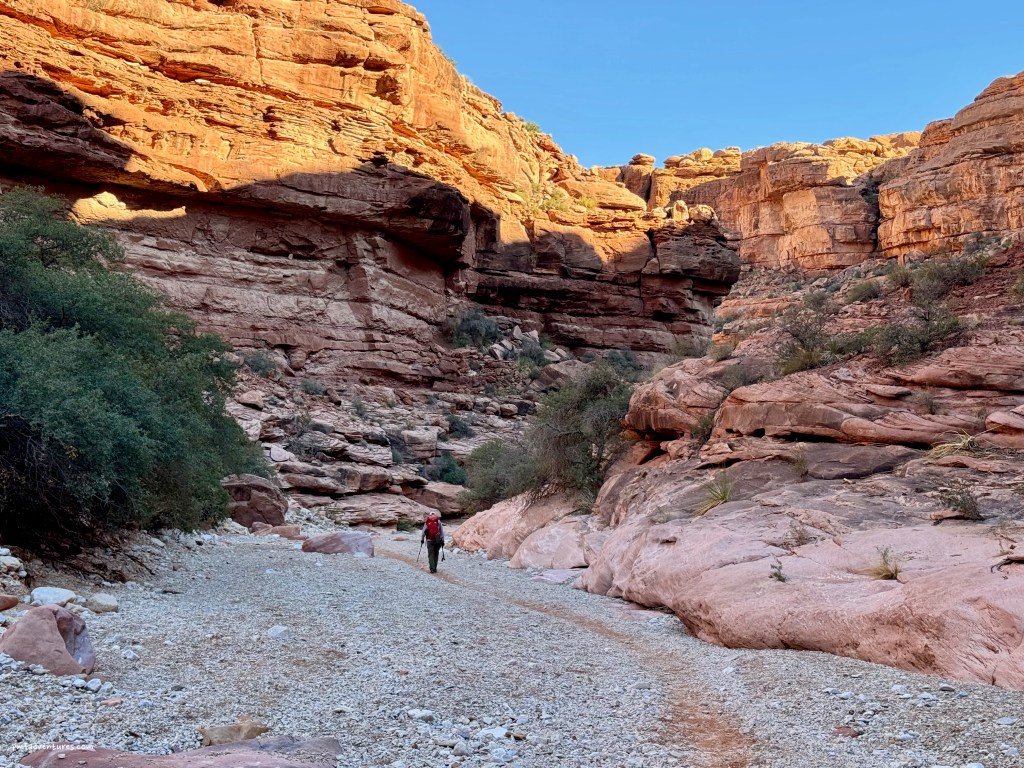
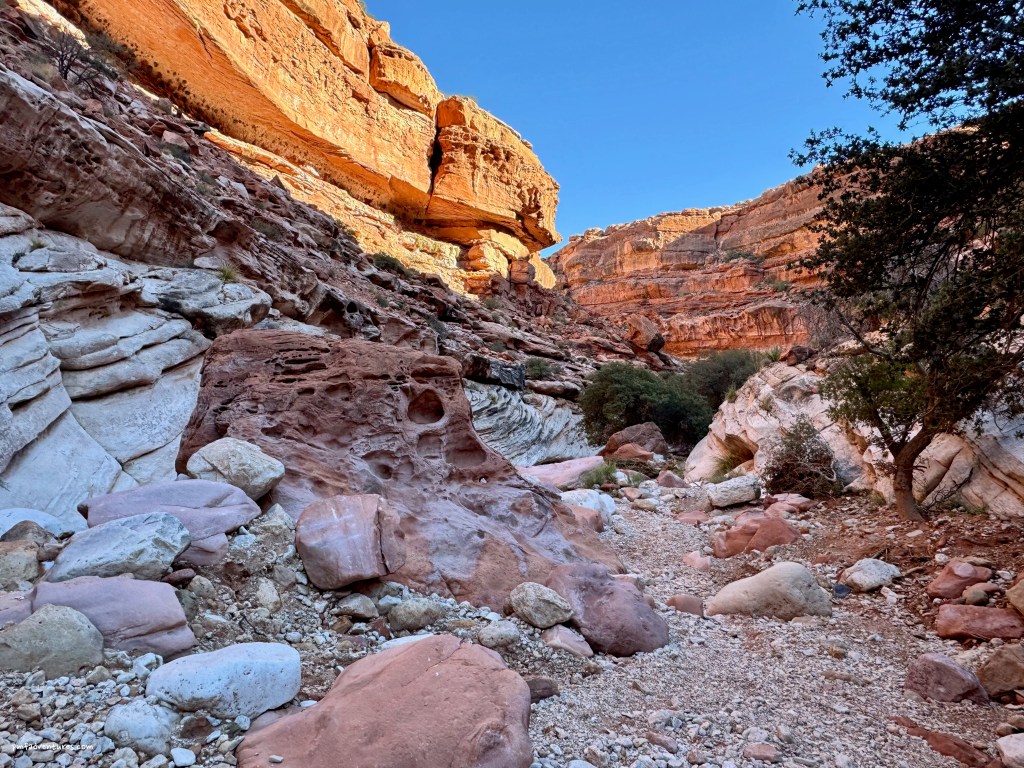
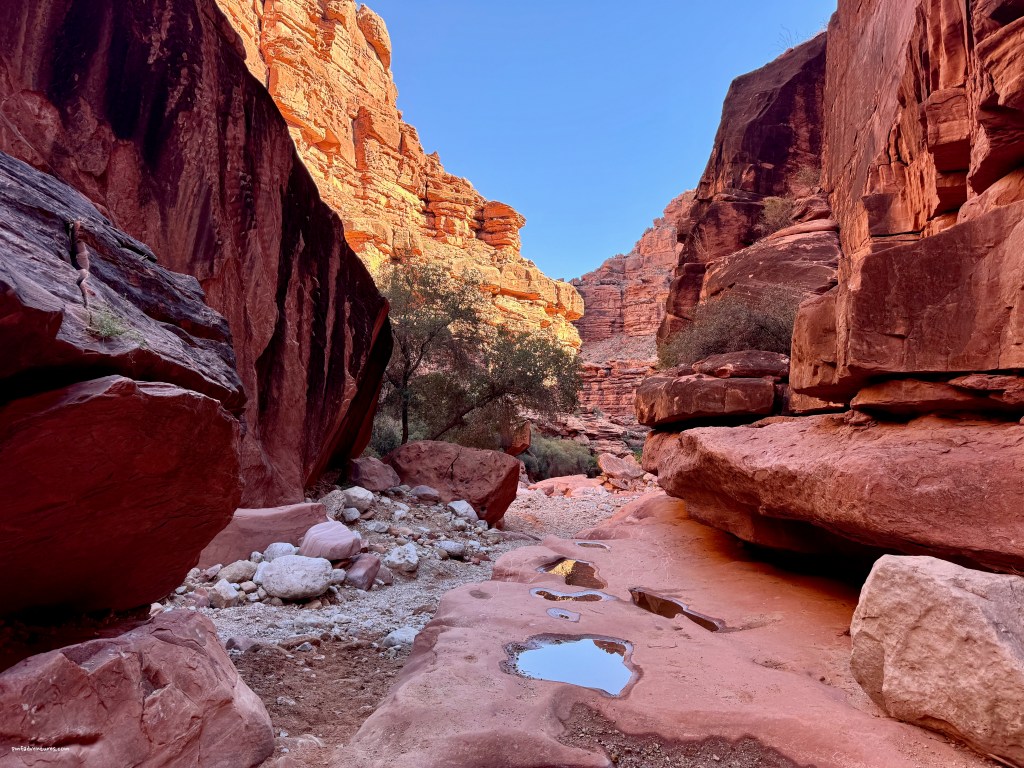
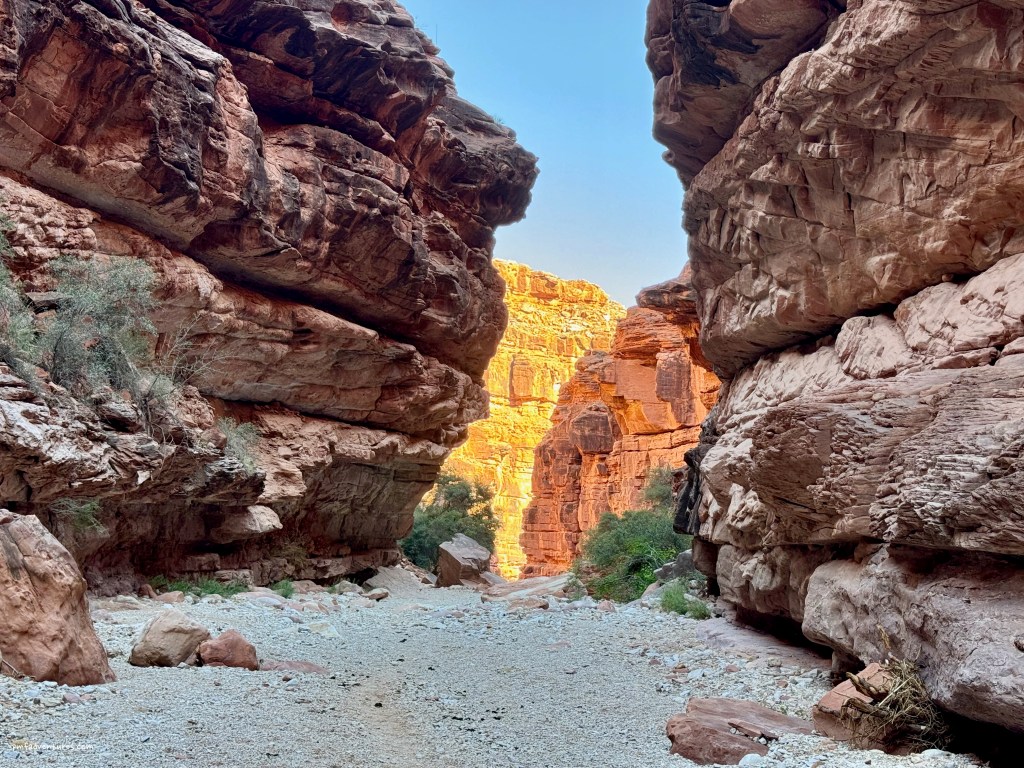
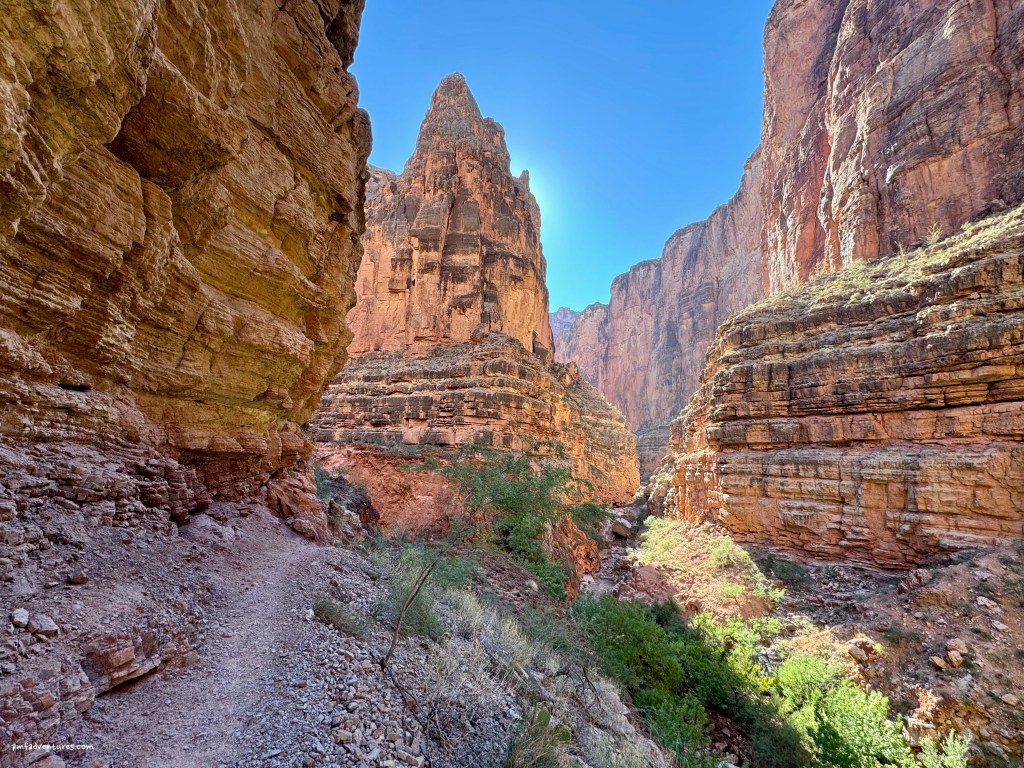
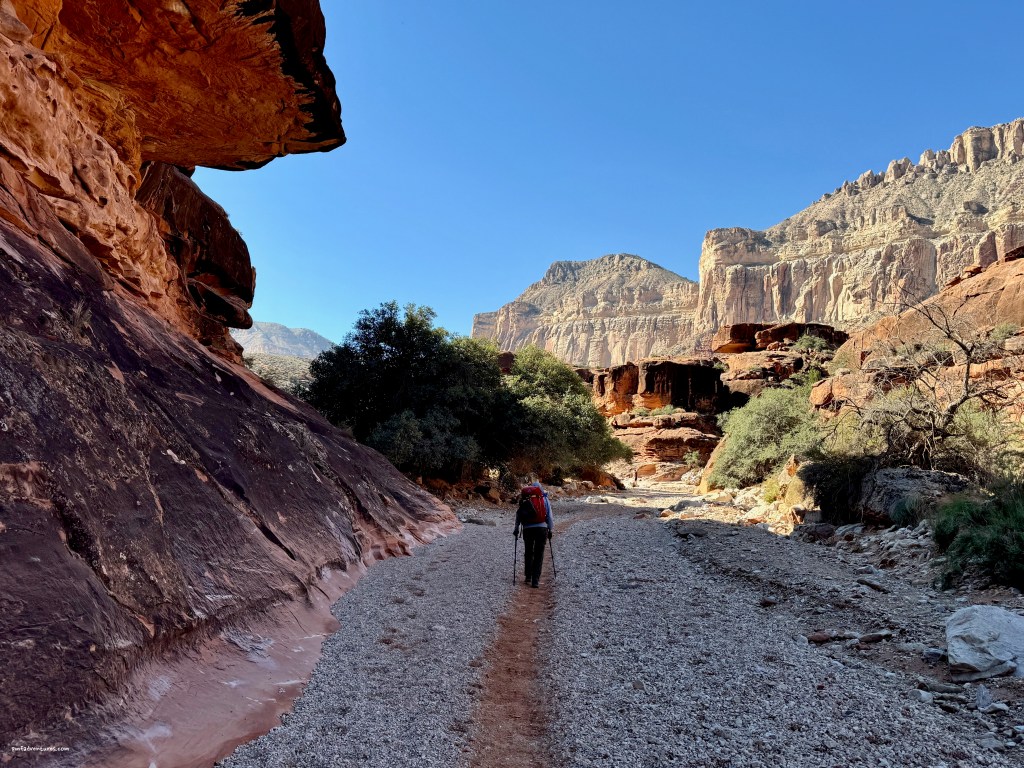
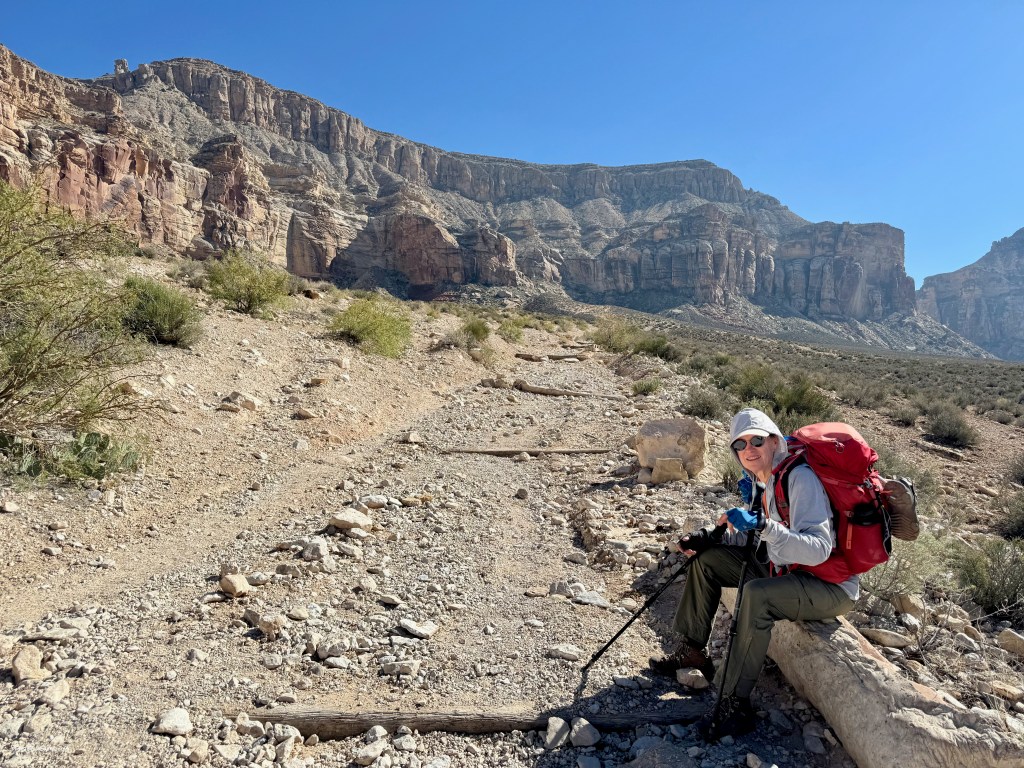
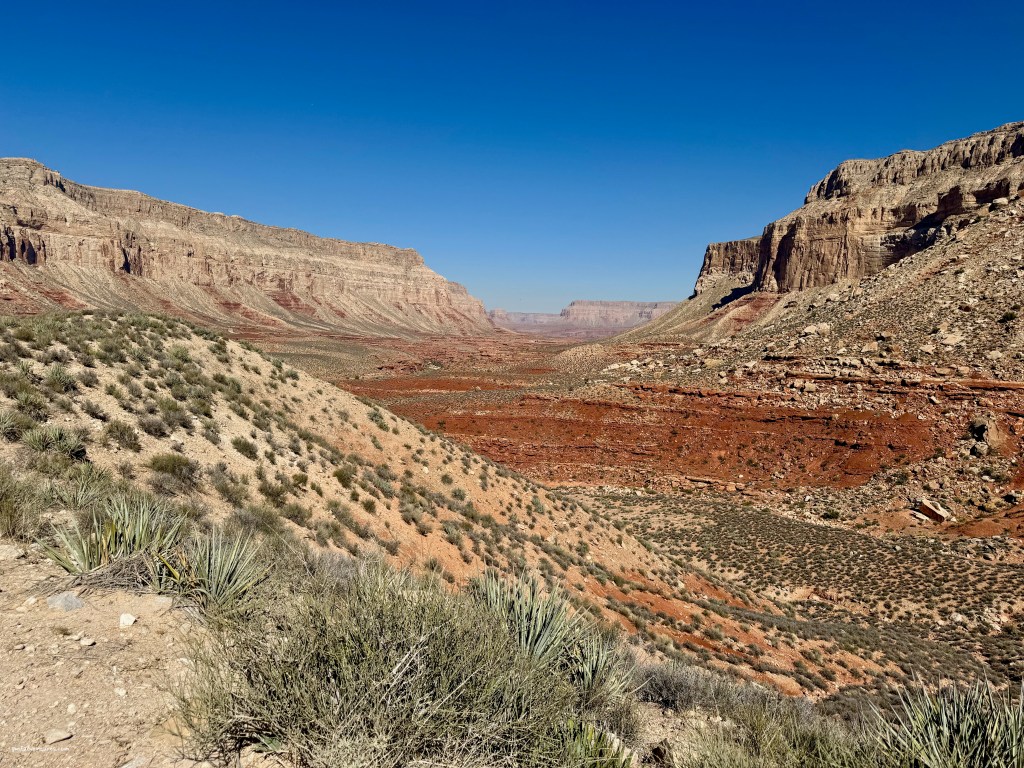
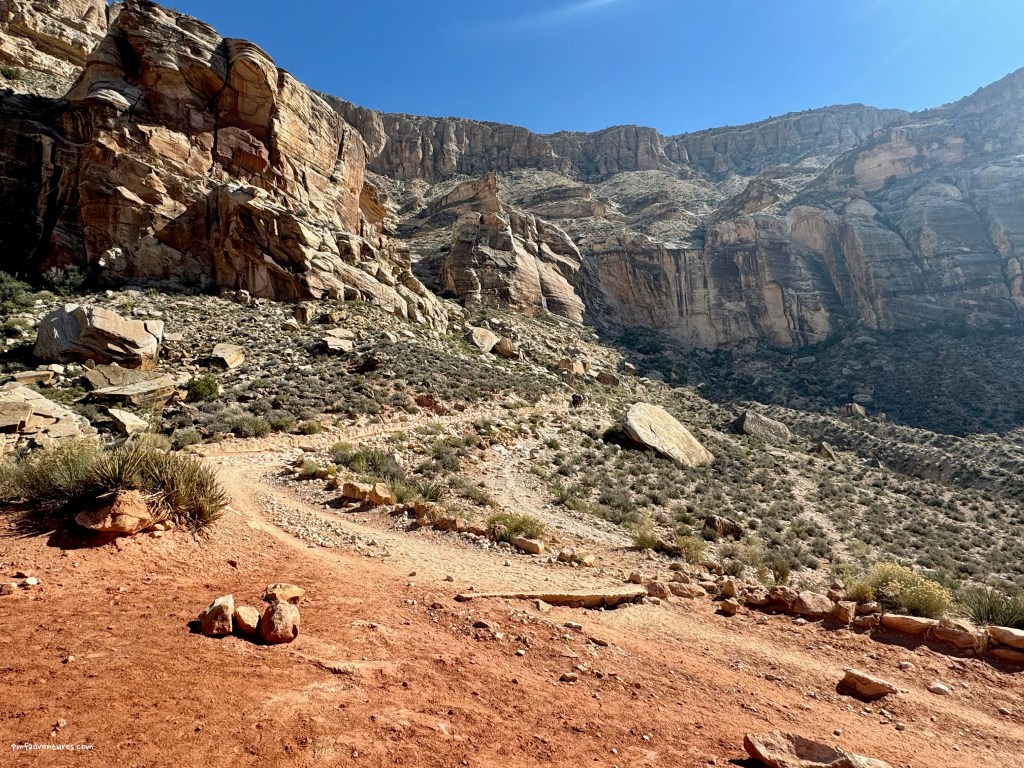
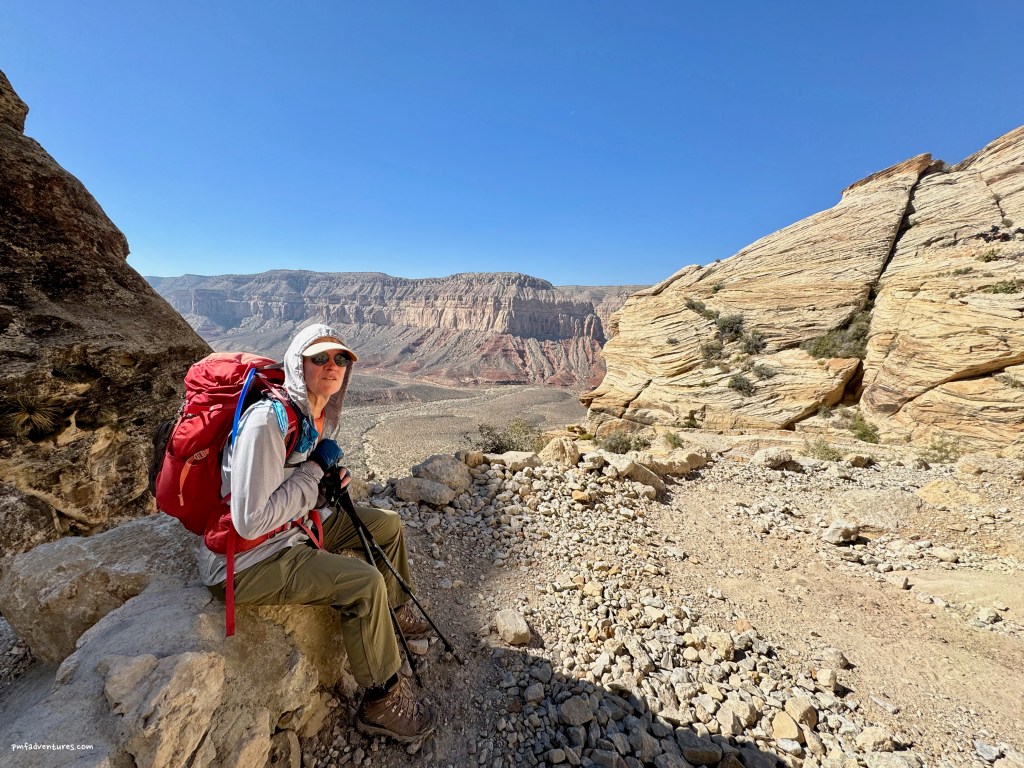
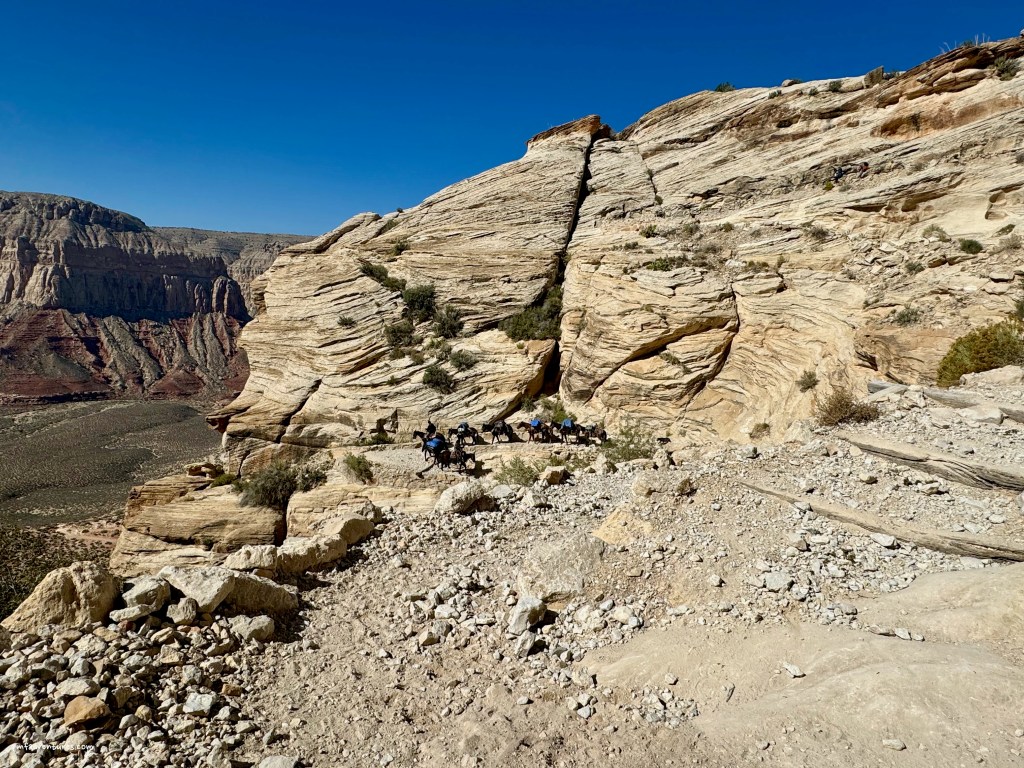
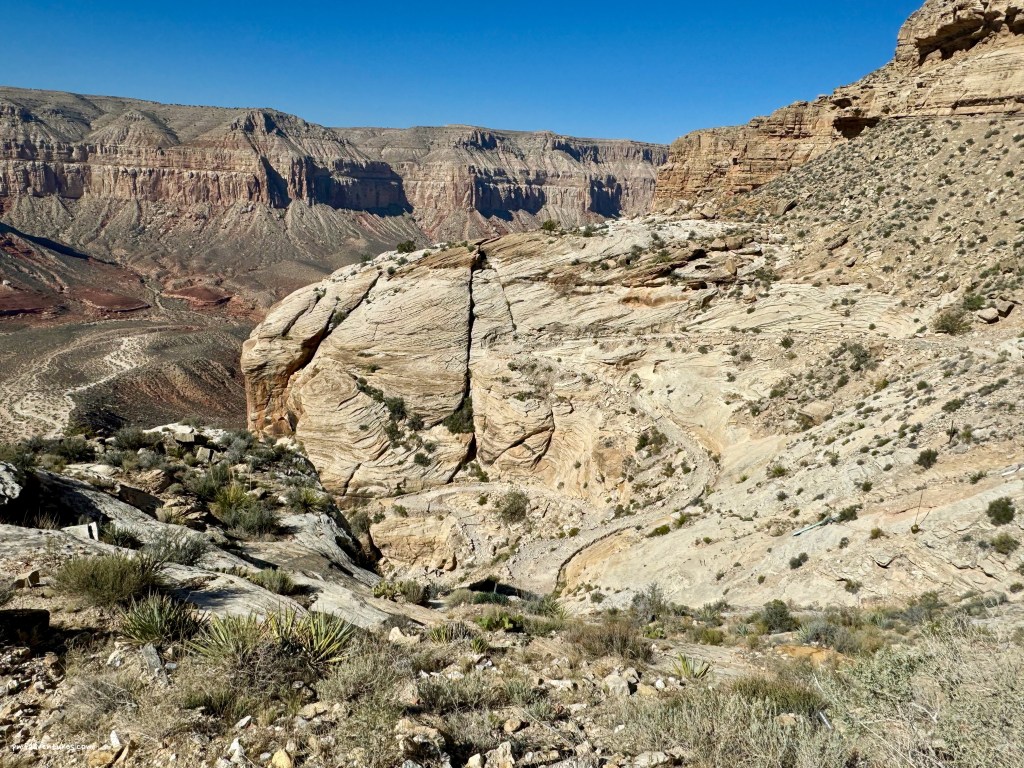
Day 1 (10/22/2024) – Hualapai Hilltop to Havasupai Campground: On October 22, our day started with the alarm going off at Grand Canyon Caverns Campground at 4 AM. We wanted to get to the trailhead at Hualapai Hilltop around sunrise at 6 AM to make sure we got a spot in the main parking lot, so we did the 60 mile drive on Indian Route 18 in the dark. Thankfully it is a good paved road. After a quick breakfast in the car at the trailhead, we donned our packs and started hiking just after 6:30. It’s 10 miles to the campground, with a descent of about 2,400 feet. A lot of the elevation loss is in the first mile and a half, on steep switchbacks that cut through cliffs of Coconino Sandstone and a long talus slope that leads to Hualapai Canyon. Once we got to the canyon floor, the trail descended more gradually and we enjoyed the ever changing rock formations as we got deeper and deeper into the canyon.
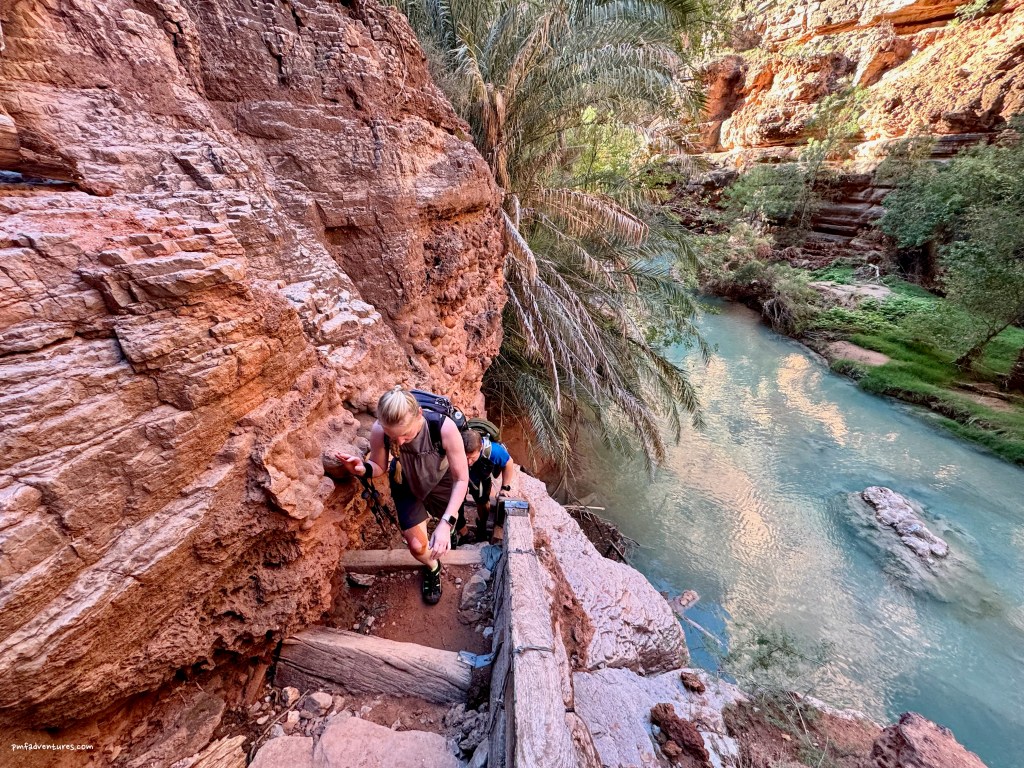
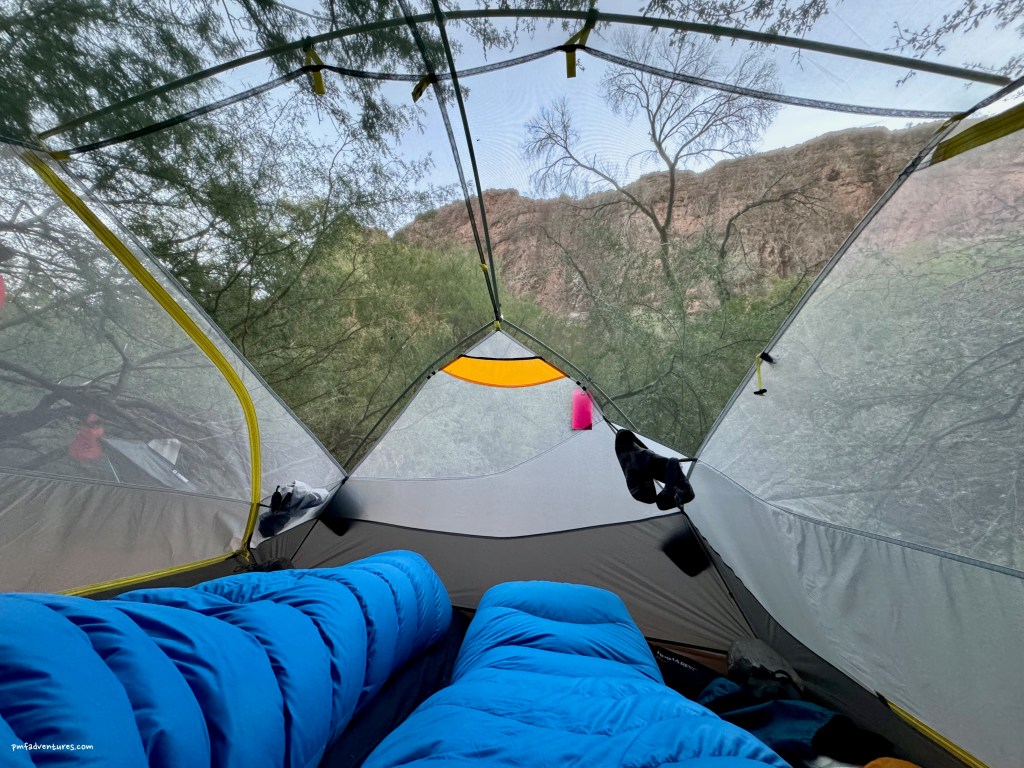
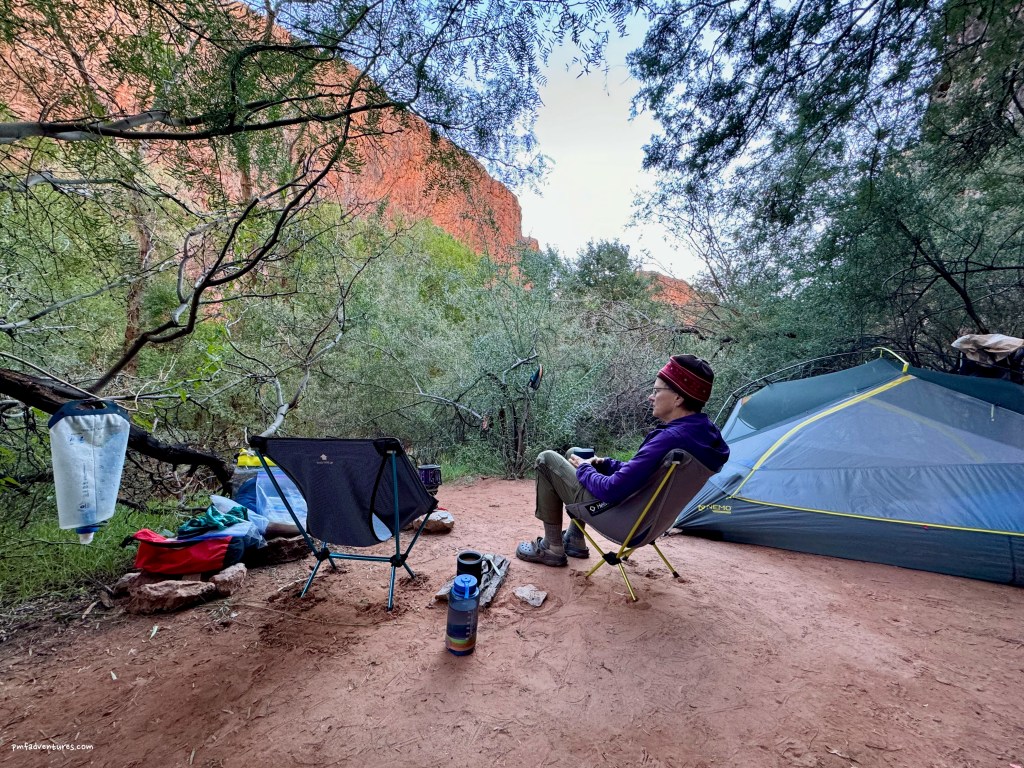
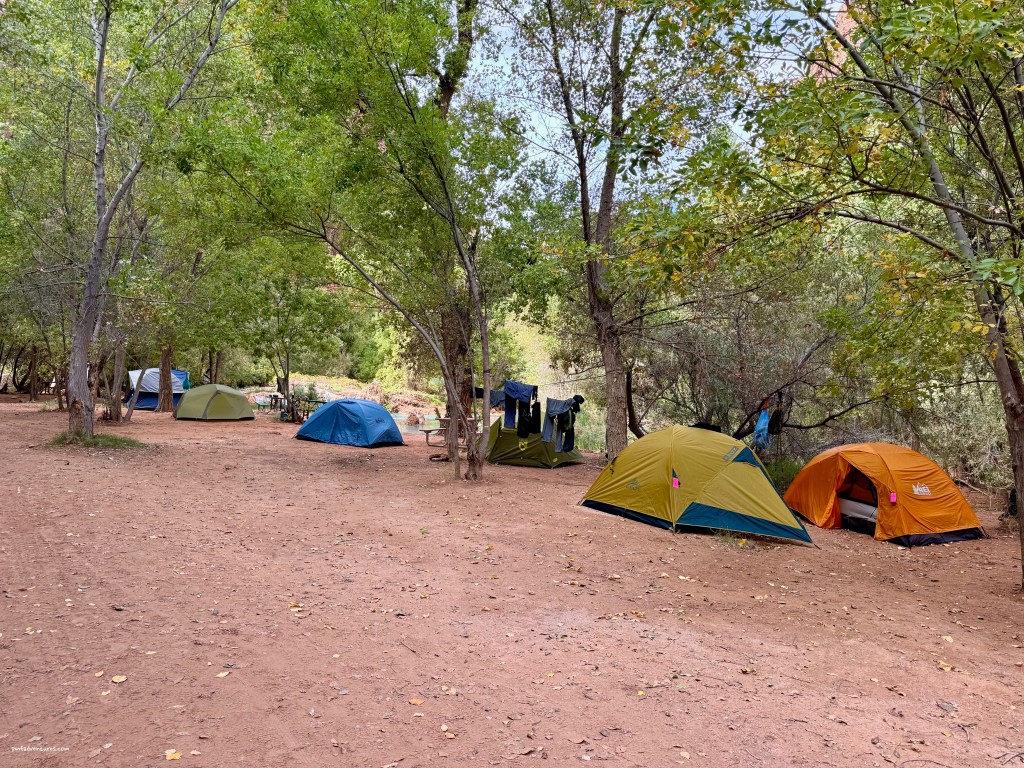
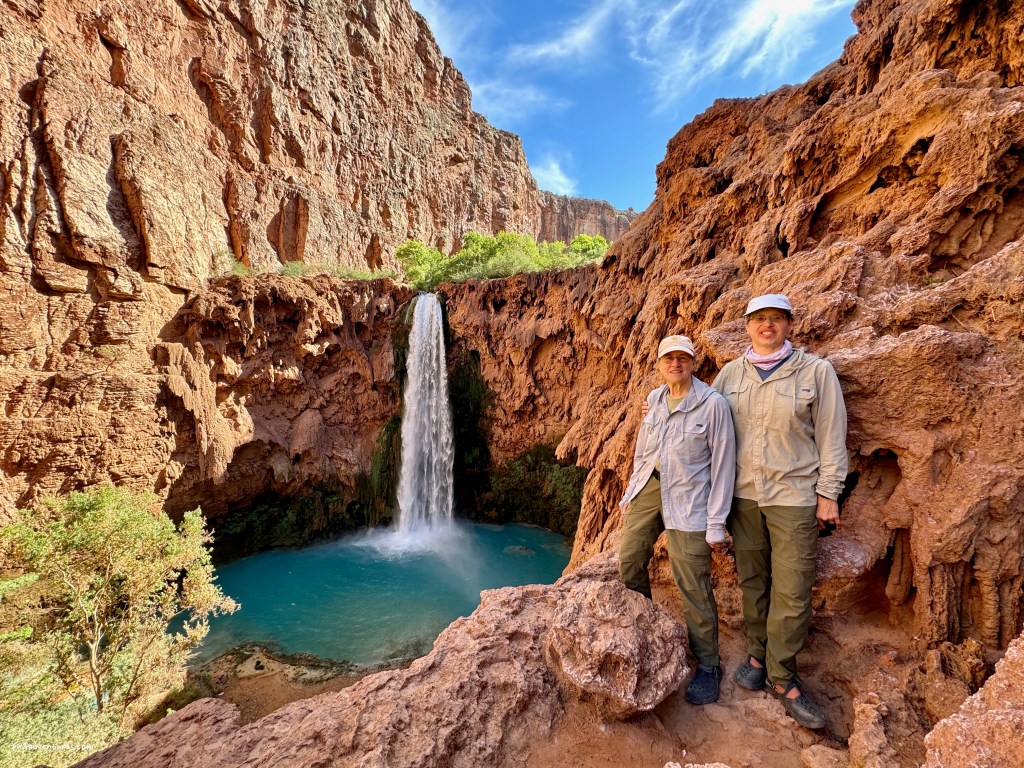
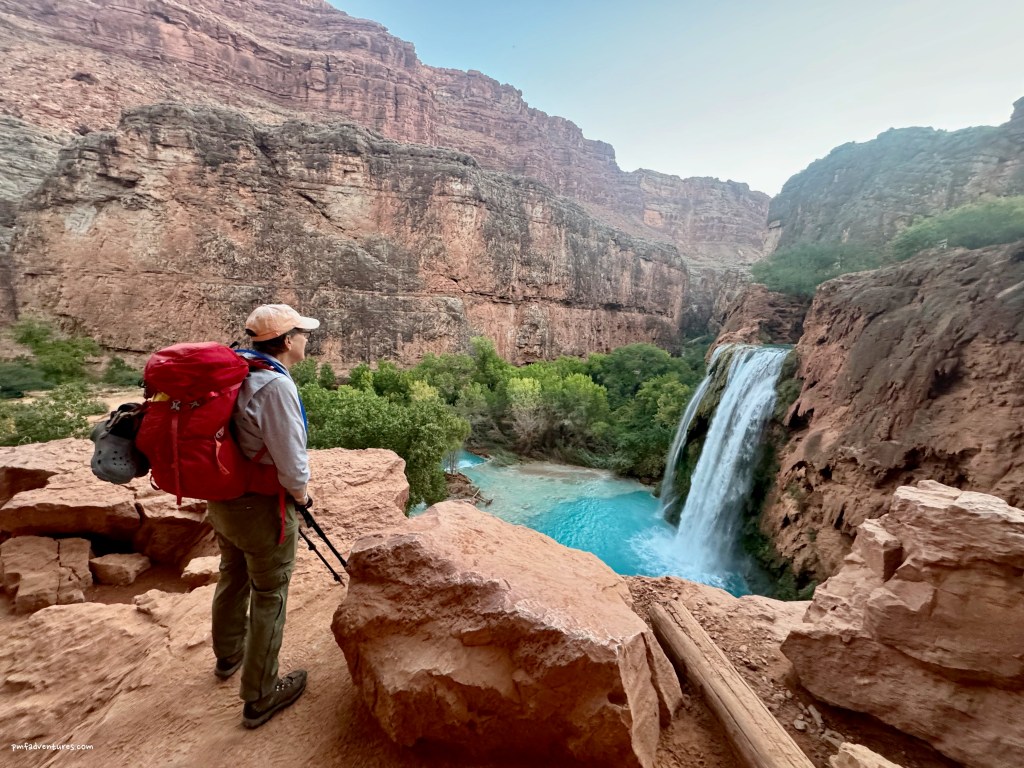
We arrived at the junction with Havasu Canyon around 10:30 and took a long snack break by the creek before heading through Supai village and continuing down the last two miles to the campground. The final descent to the campground is on a steep trail that hugs the cliff of Redwall Limestone and offers stunning views of Havasu Falls. The campground is about a mile long, stretching from just below Havasu Falls all the way to Mooney Falls, and it was pretty full when we got there at 12:30. After quite a bit of searching, we were able to find a small campsite that was up by the cliffs off the main trail and had some privacy from neighboring sites — a perfect spot to spend the next three days!
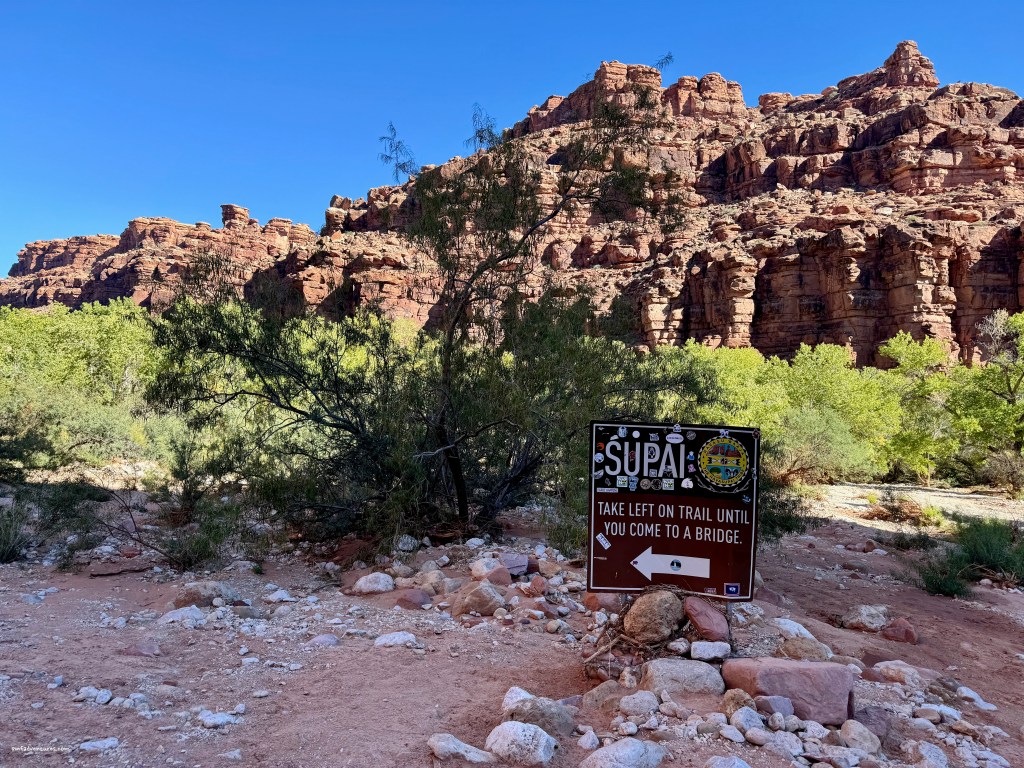
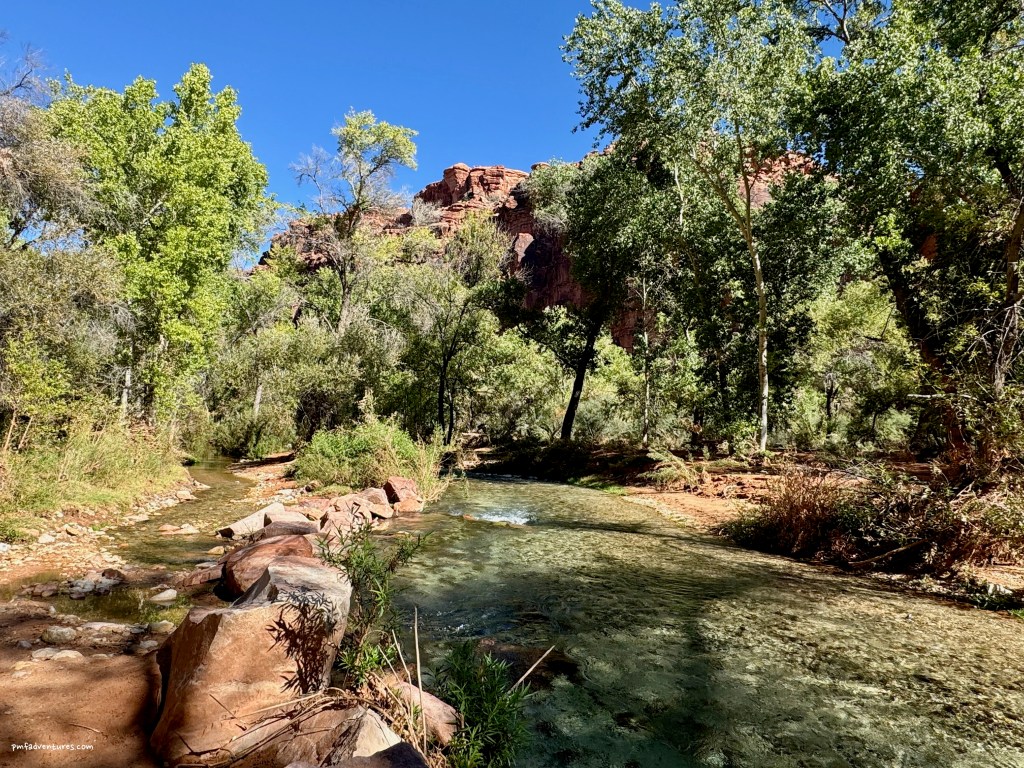

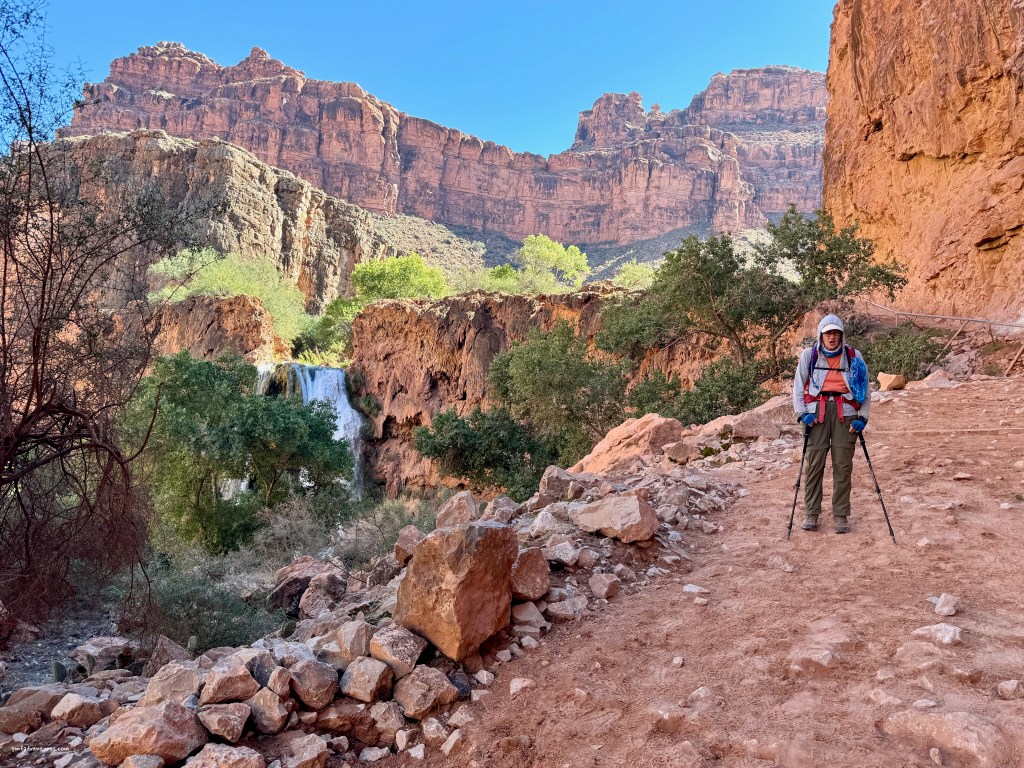
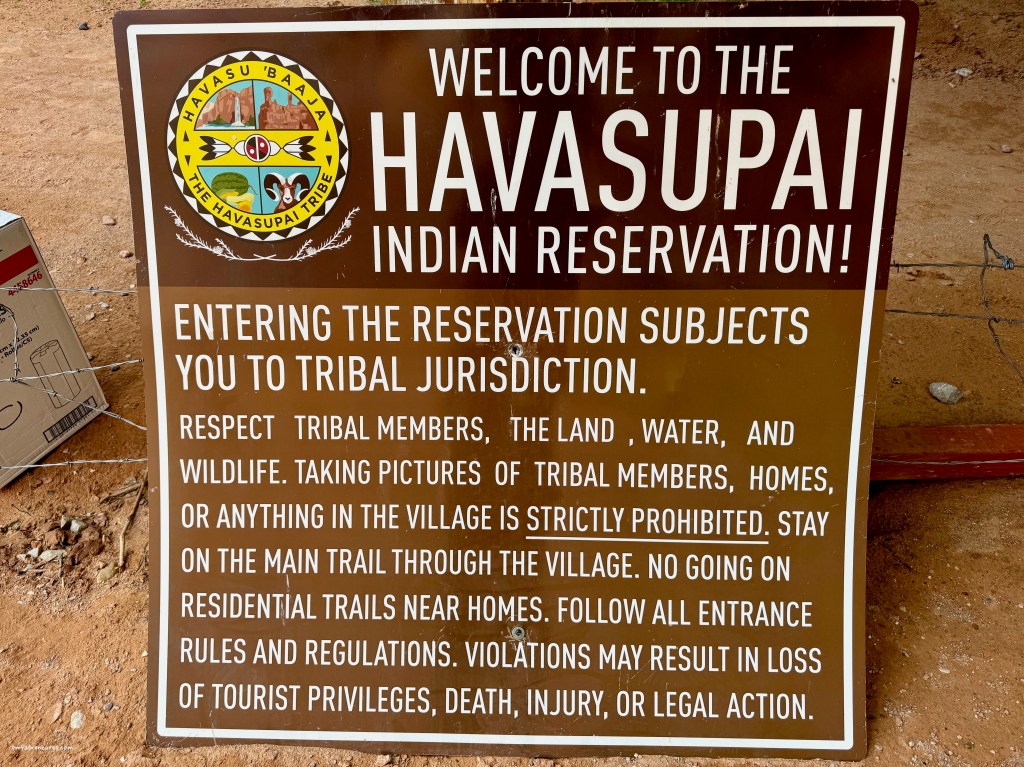
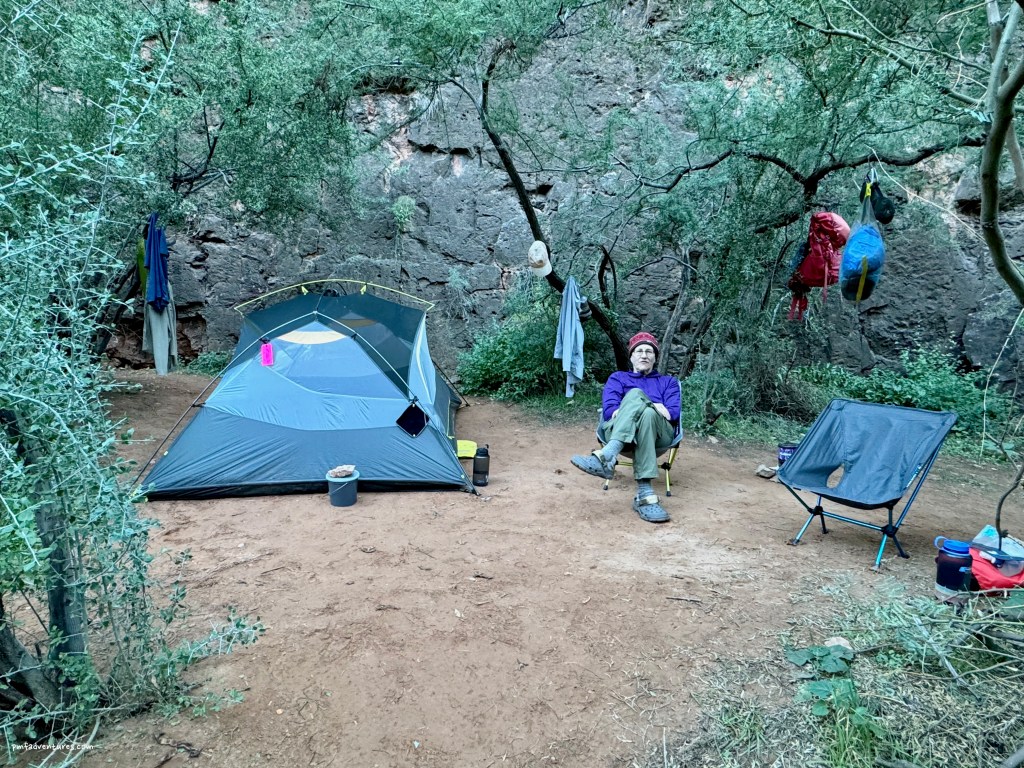
Day 2 (10/23/2024) – To The Confluence: On Day 2, I decided to hike down Havasu Creek to its confluence with the Colorado River. It’s about 7 miles to the confluence, with some route finding and about 10 creek crossings, so getting there and back is an all-day endeavor and I knew I needed to get an early start. I got up at 6 AM, had a quick breakfast, and was on the trail by about 6:45.
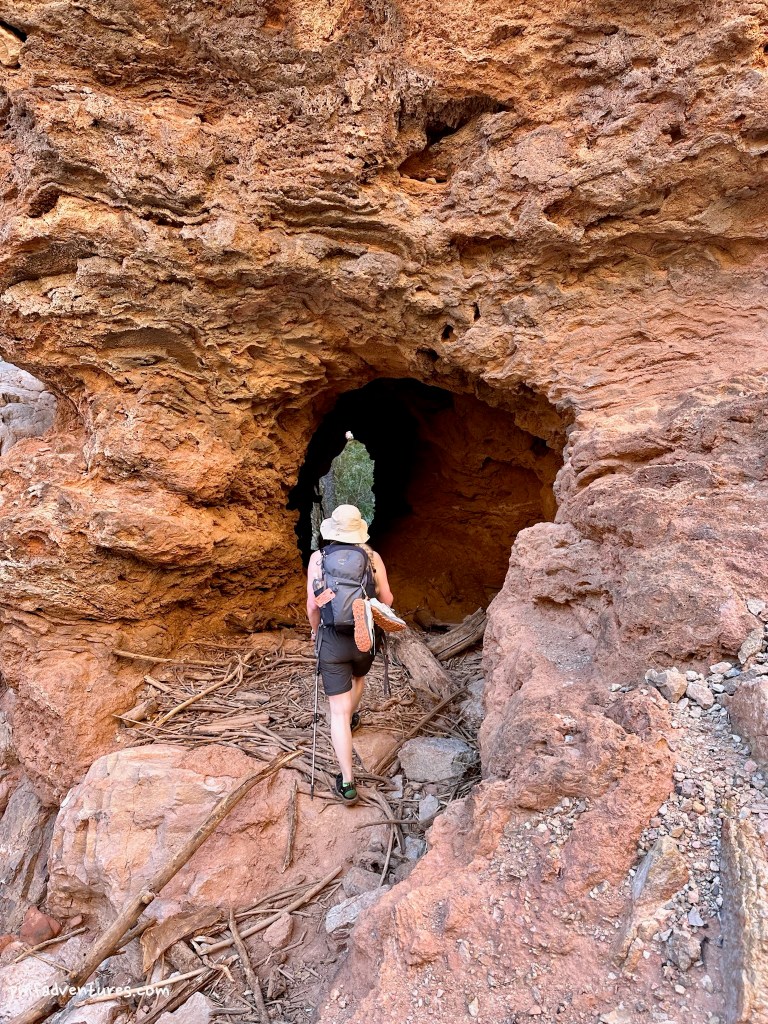
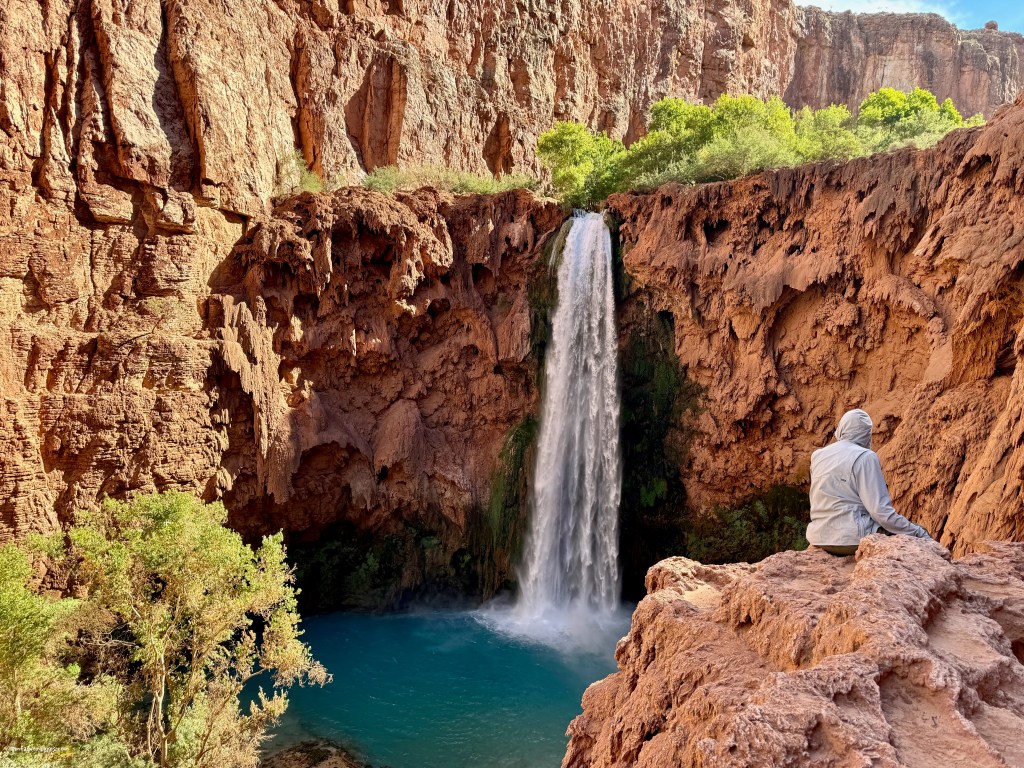
The first major obstacle in getting to the confluence is actually right out of camp, when you have to descend Mooney Falls. I knew that I wanted to get this descent done before there were too many people on the trail, as it can be a real bottleneck. The trail winds down several narrow ledges in the travertine, then goes through two slanting tunnels that have been blasted through the rock before the final steep downclimb to the base of the falls. The travertine in the tunnels has become polished and slippery from repeated use, and when you get out of the second tunnel, the rest of the downclimb is even more slippery, as it is soaked and muddy from the spray of the falls that is now just upstream. The downclimb is protected in places with chain railing and it has iron spikes for use as hand and footholds, thick chains to use as additional assistance, and a couple of wooden ladders at the bottom. As people that know me know, there’s not a lot that phases me, but I DID NOT LIKE this descent.
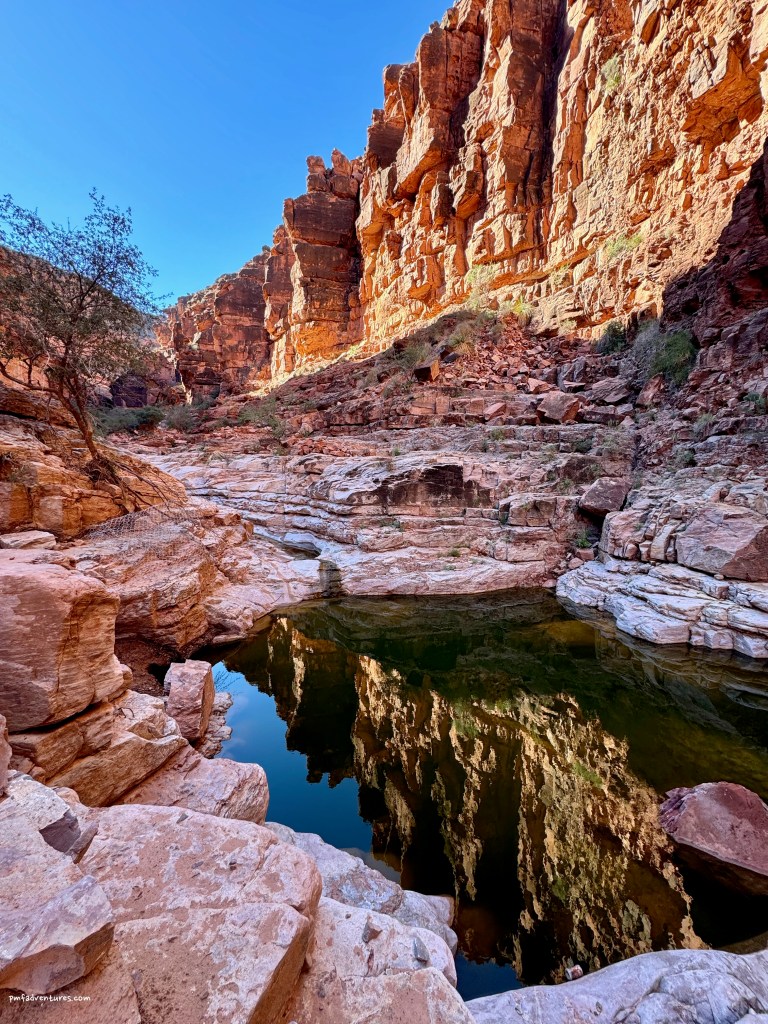
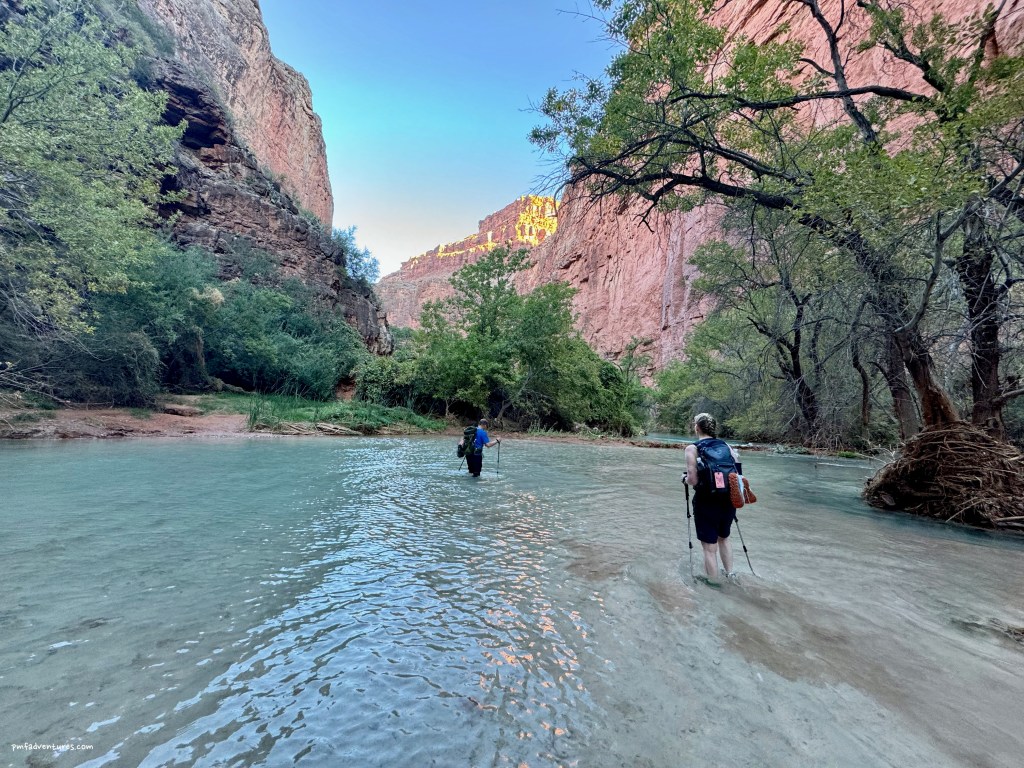
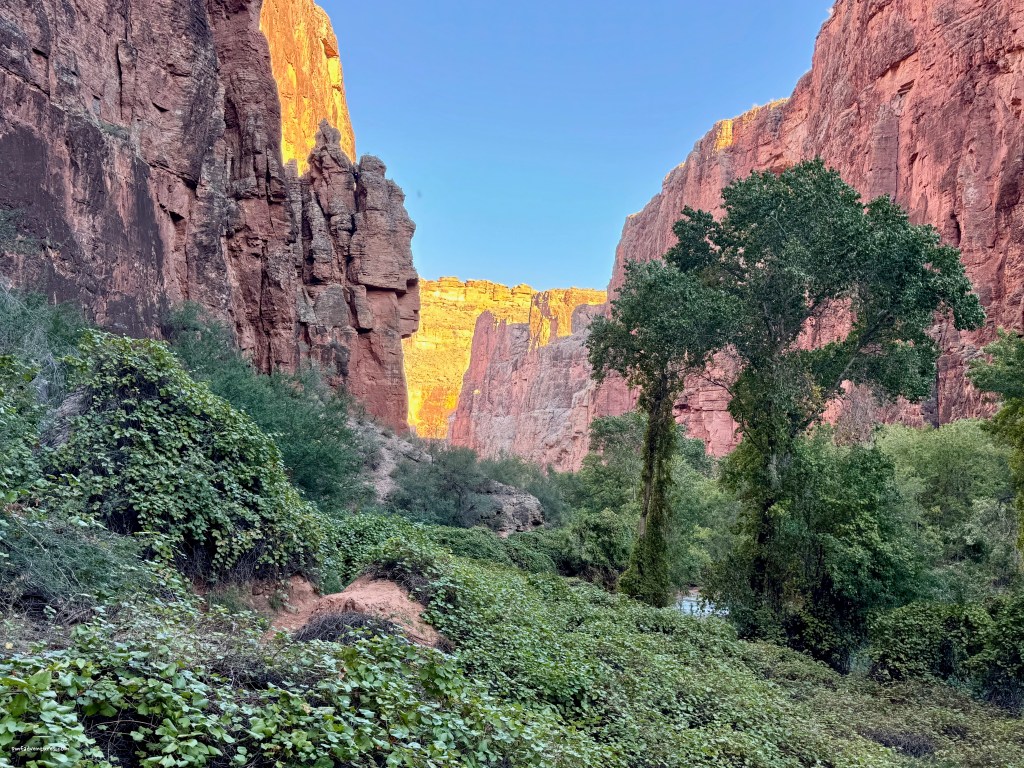
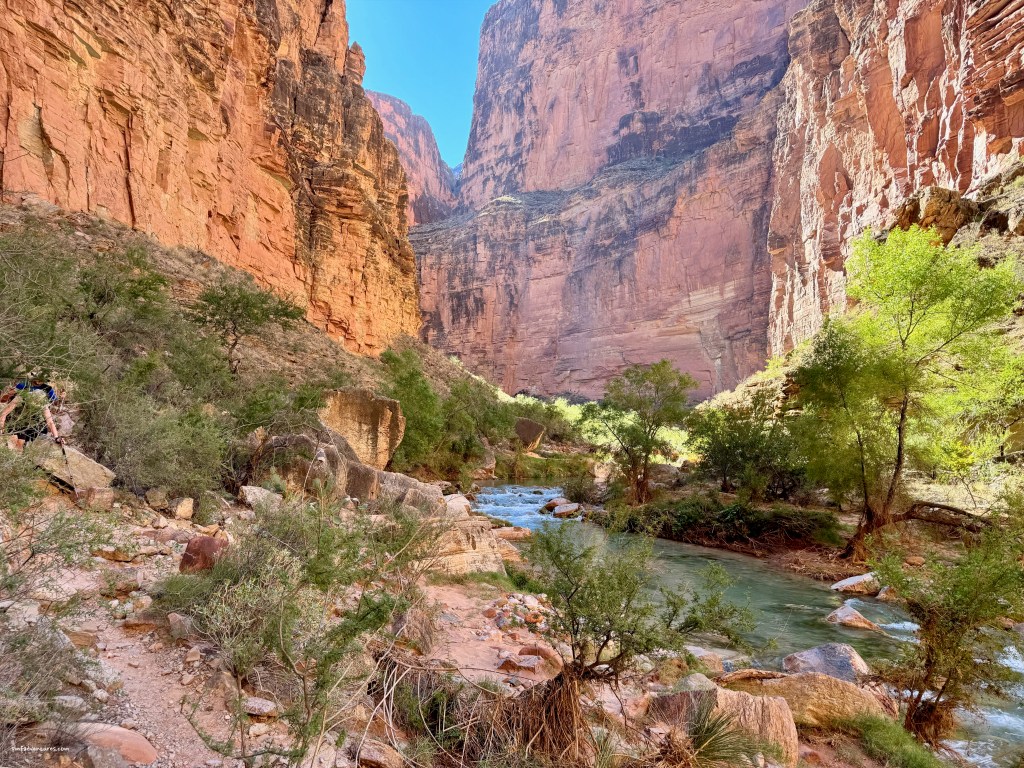
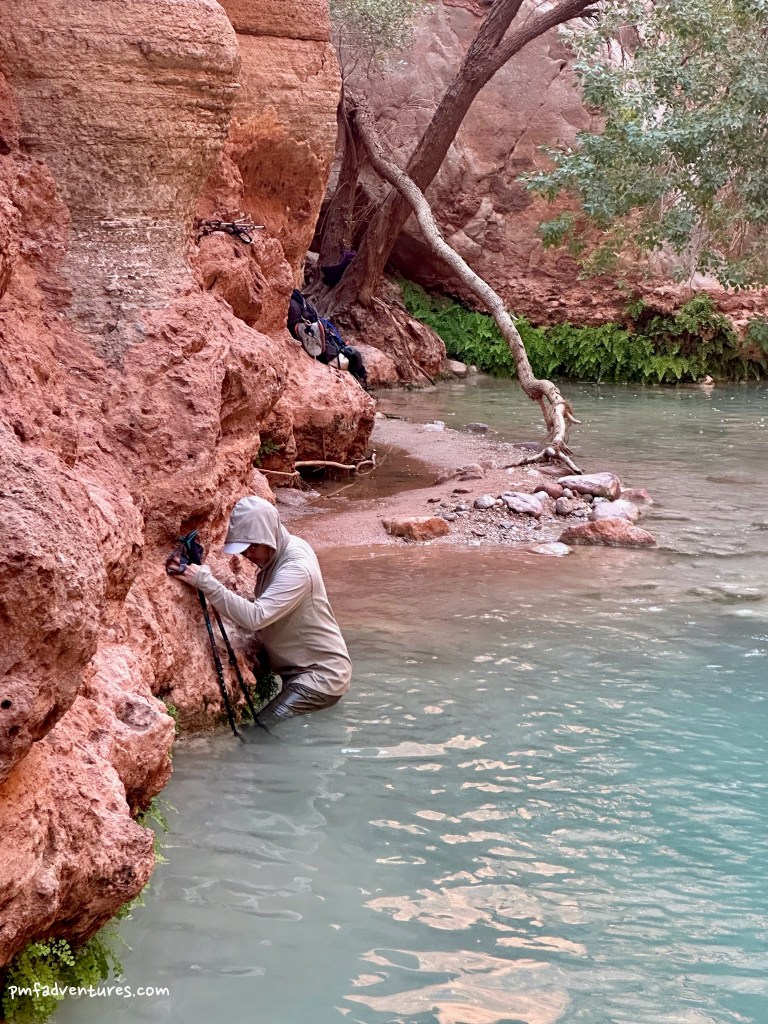
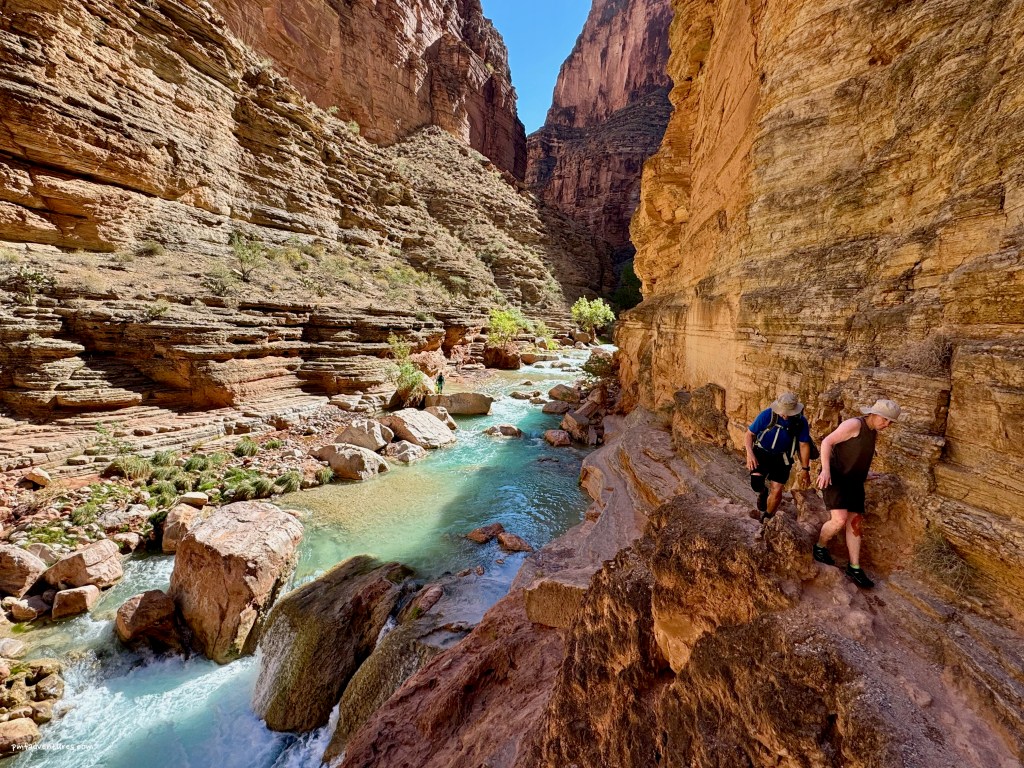
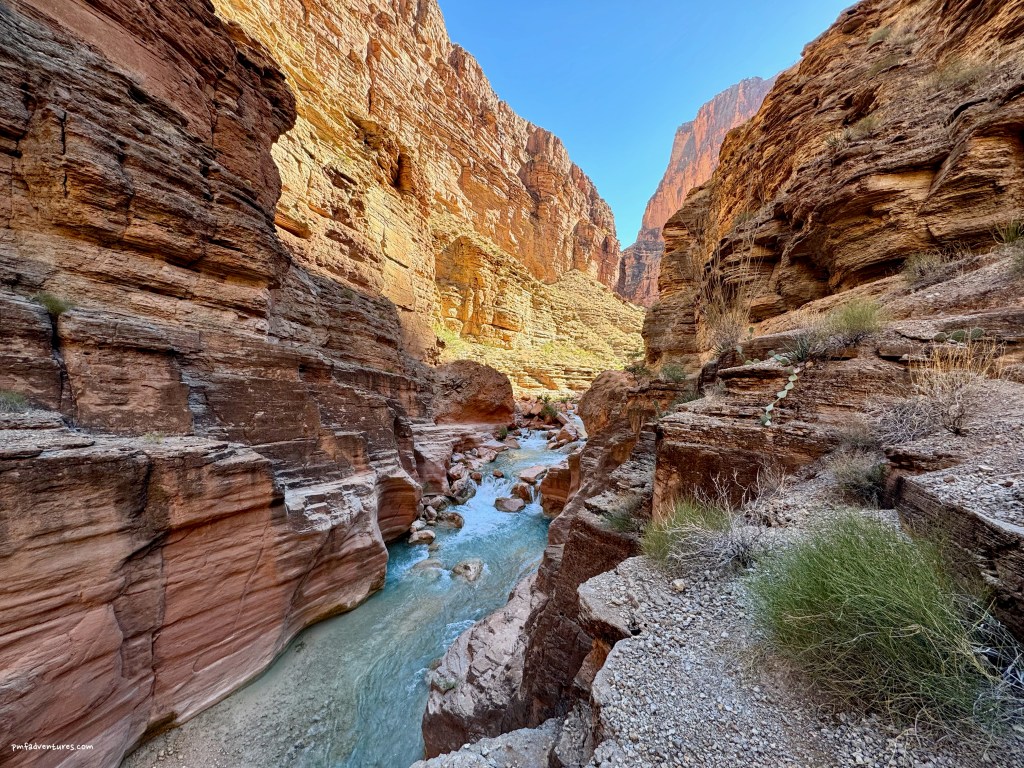
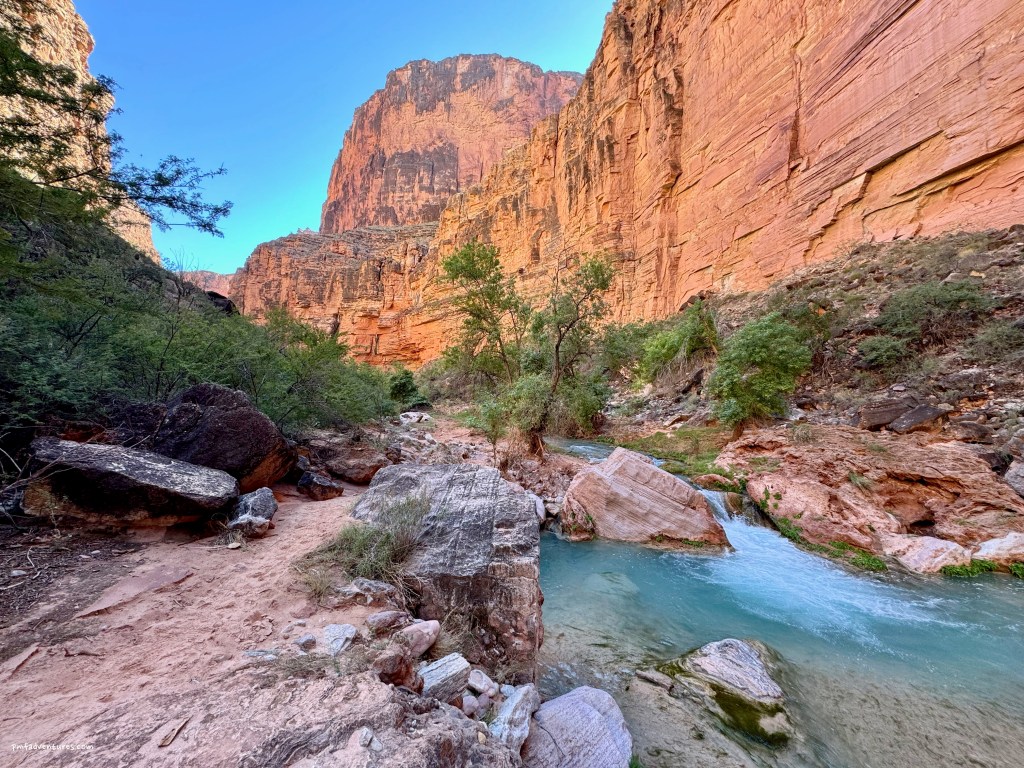
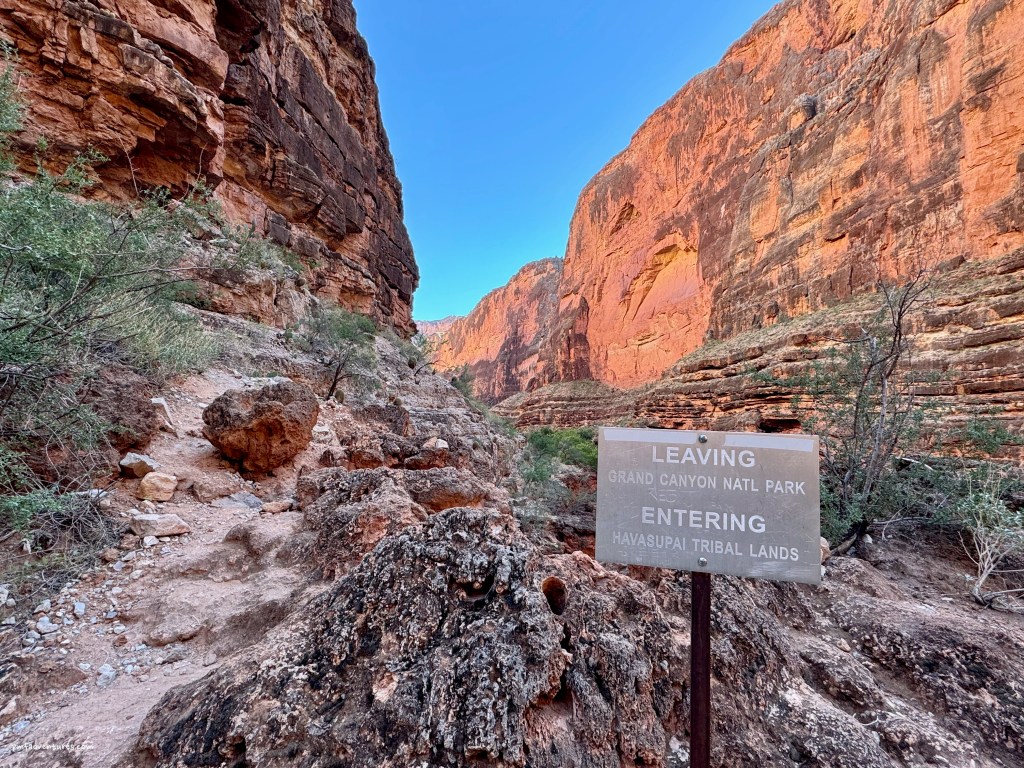
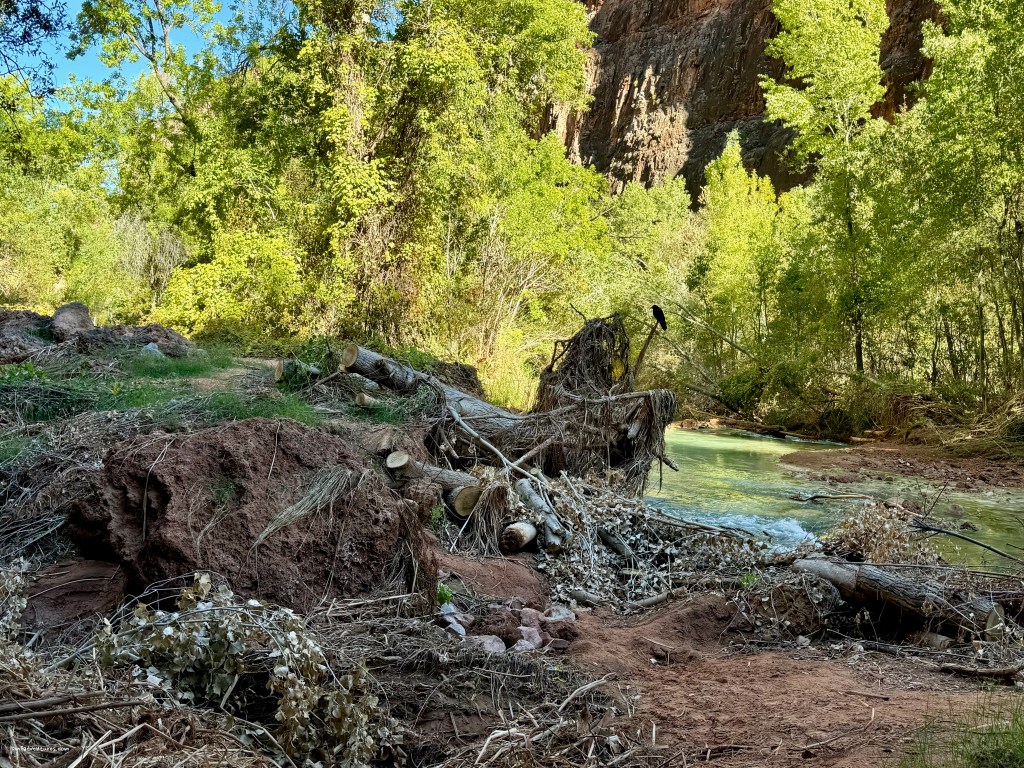
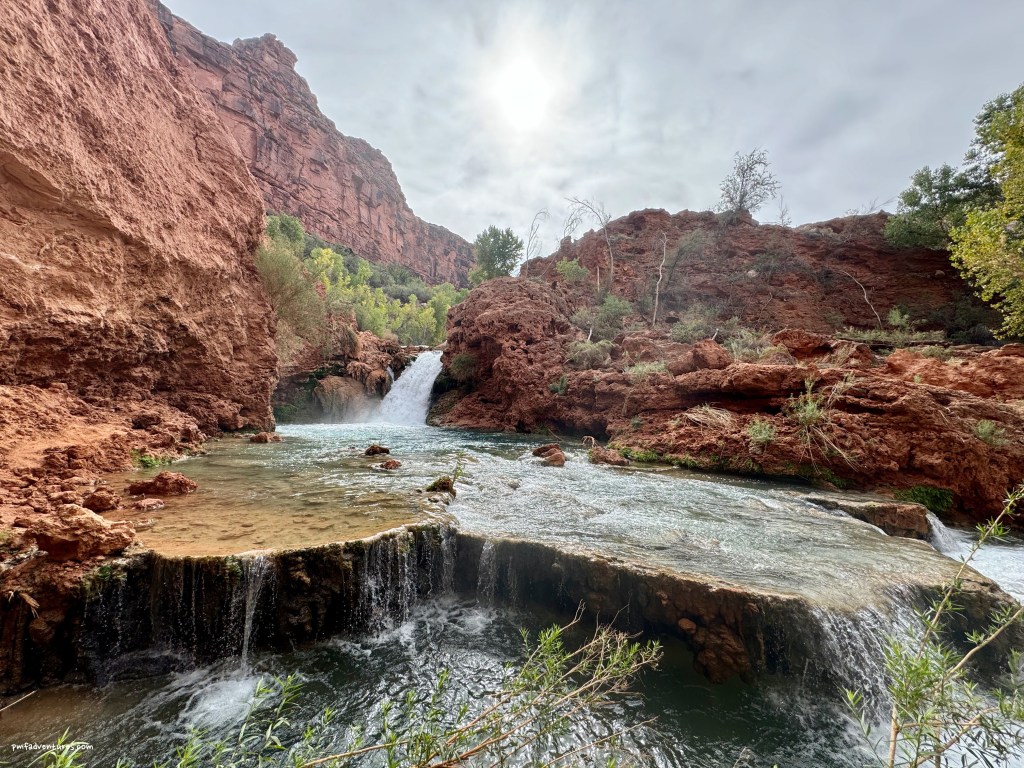
After I got to the bottom, I took a short break to get my adrenaline under control, and ended up getting to watch two people make the descent. It turns out that they were also headed to the confluence, so I teamed up with Mike and Jennine and we did the rest of the hike together. It was really nice to have some help with the route finding, as it wasn’t always obvious where to go, especially when crossing the creek. The first few miles past Mooney Falls are an amazing riparian oasis — it’s hard to believe you are in the desert. After following the creek for about three miles and crossing it a few times, the trail ascends the east side of the creek to some high ledges above the last of Havasu’s five waterfalls, Beaver Falls. And then the trail passes out of the Havasupai Reservation and into the Grand Canyon proper before dropping back down to the creek. It is another four miles or so to the confluence and we briefly lost the trail several times, especially where the August flash flood had strewn debris in the canyon.
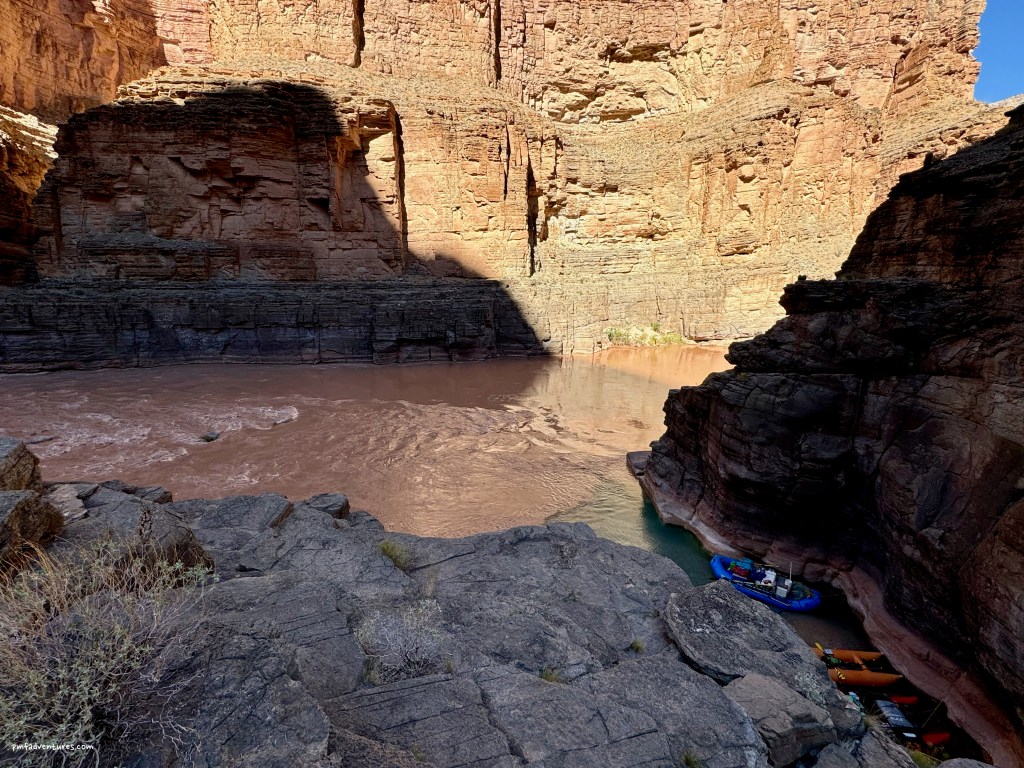
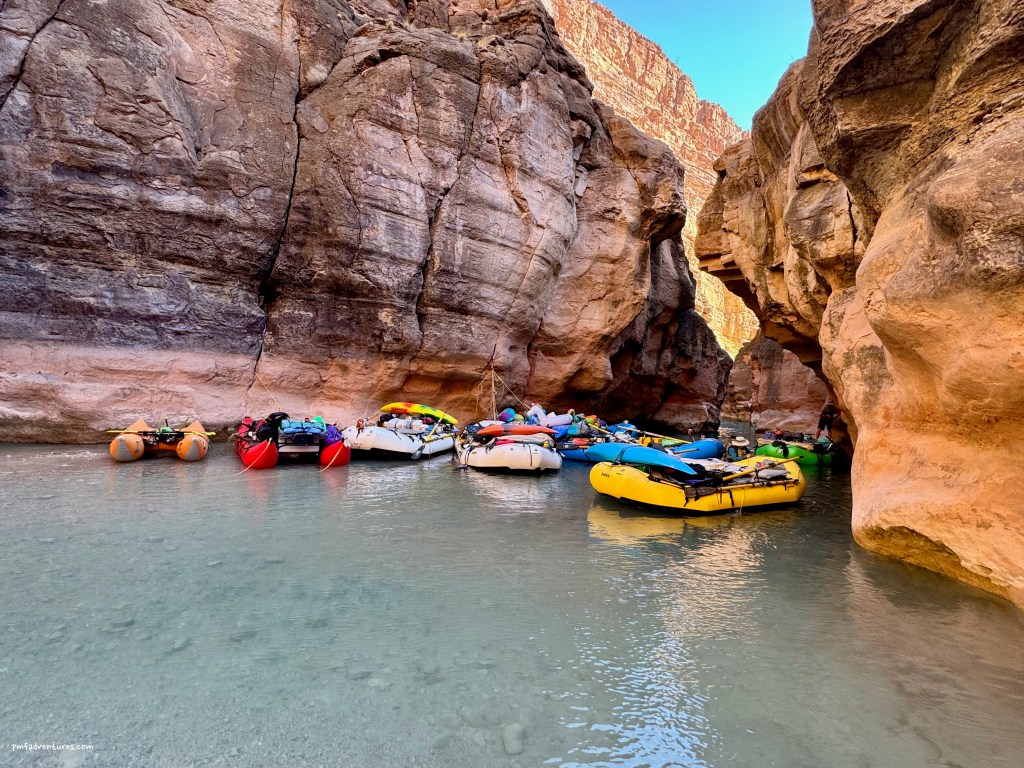
As we got to within a mile of the confluence, the scenery started to look a bit more familiar to me, based on the hike that Sue and I did up Havasu Canyon while on our Grand Canyon rafting trip in 2018. When we got to a short natural tunnel that cuts through a outcrop of travertine, I was definitely feeling like I knew where we were. But then we came out the other side of the tunnel and there was a huge pool of water, not the trail that I remembered! At this point, we met a group of rafters who were swimming across to explore upstream and one of them confirmed that this pool had formed as a result of the recent flash flood. We left our packs, made the chest deep crossing, and hiked the rest of the way to the confluence, arriving about 11:30. The clear blue water of Havasu Creek was flowing into a muddy brown Colorado River, just like I remember from our raft trip.
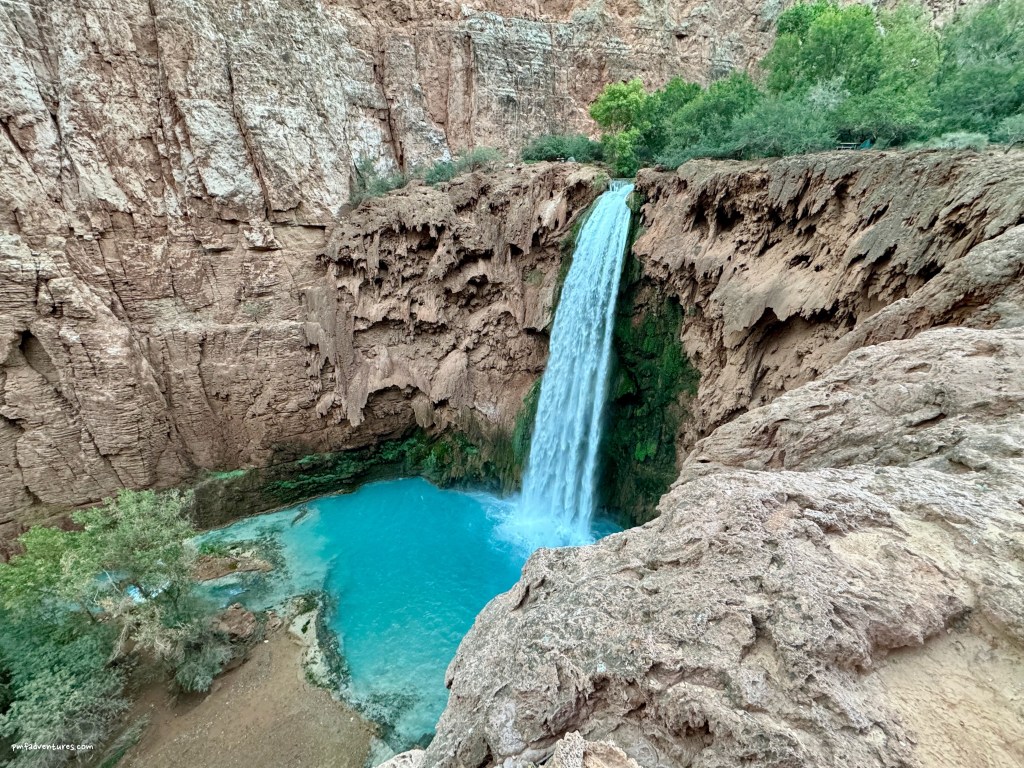
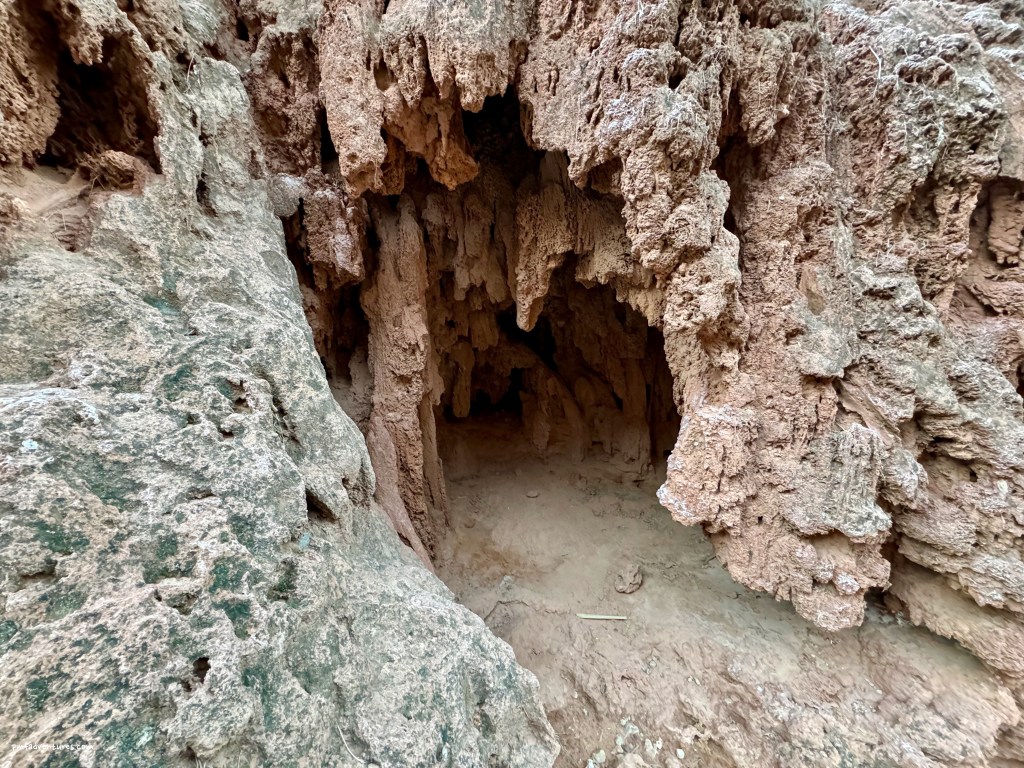
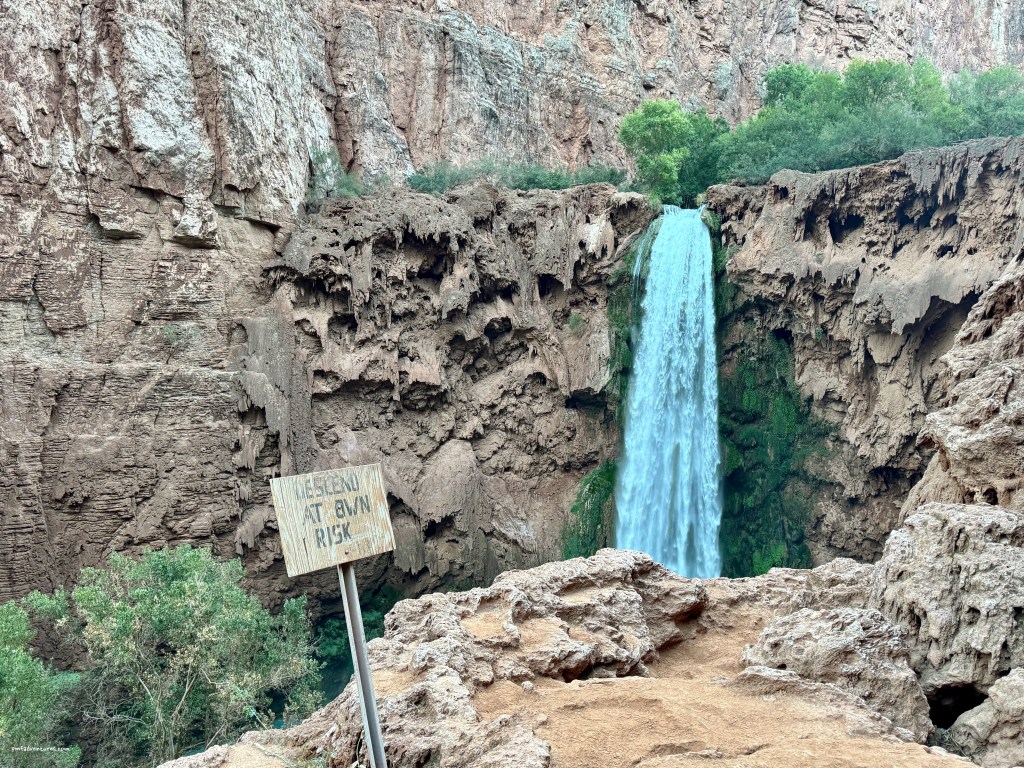
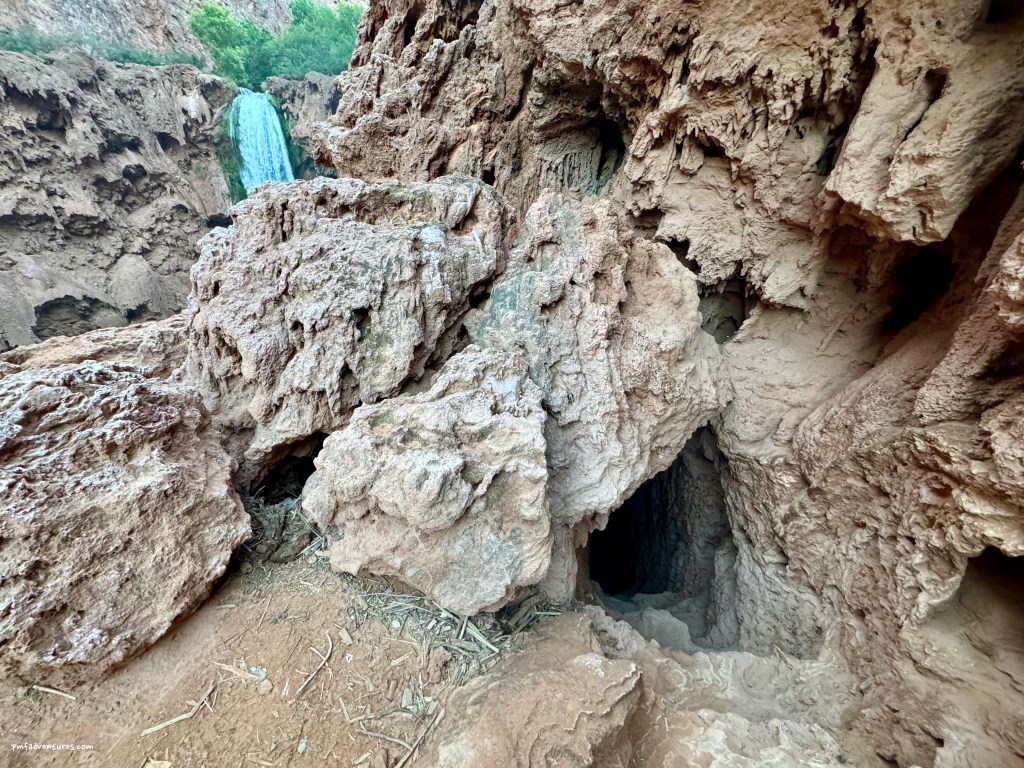
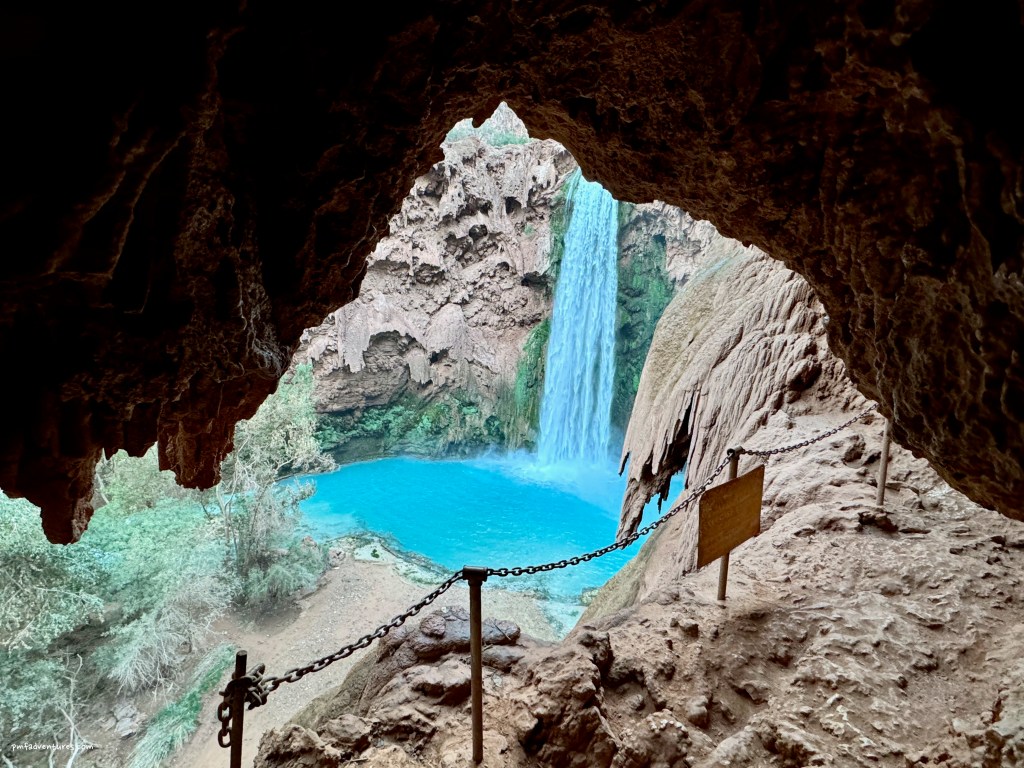
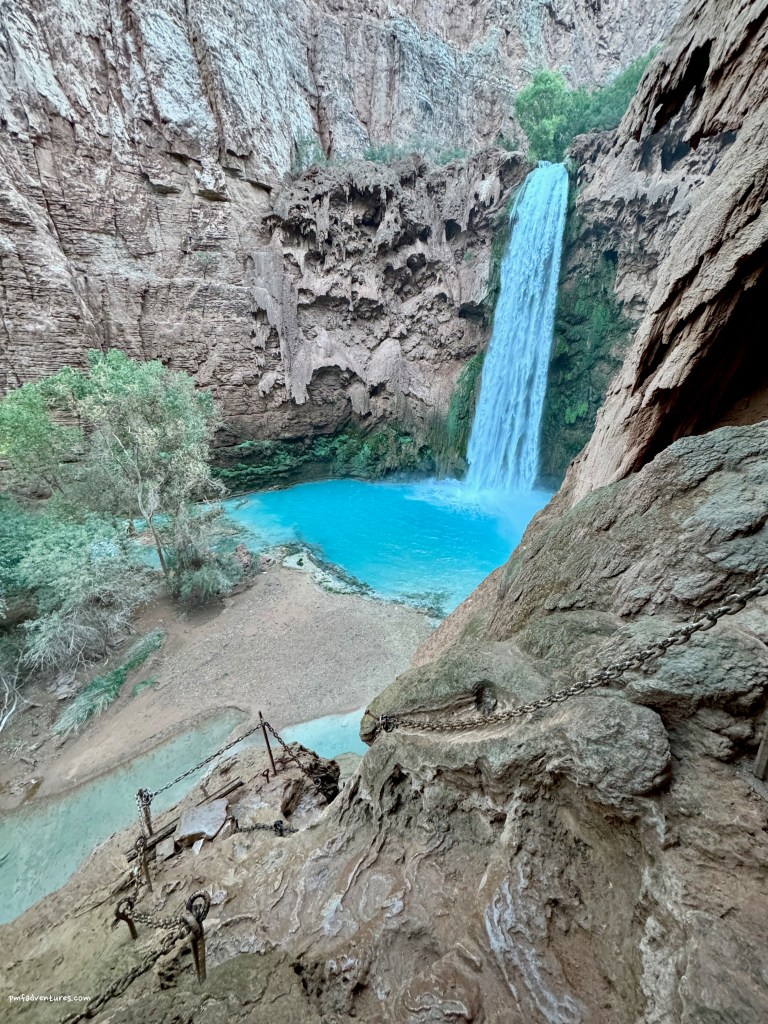
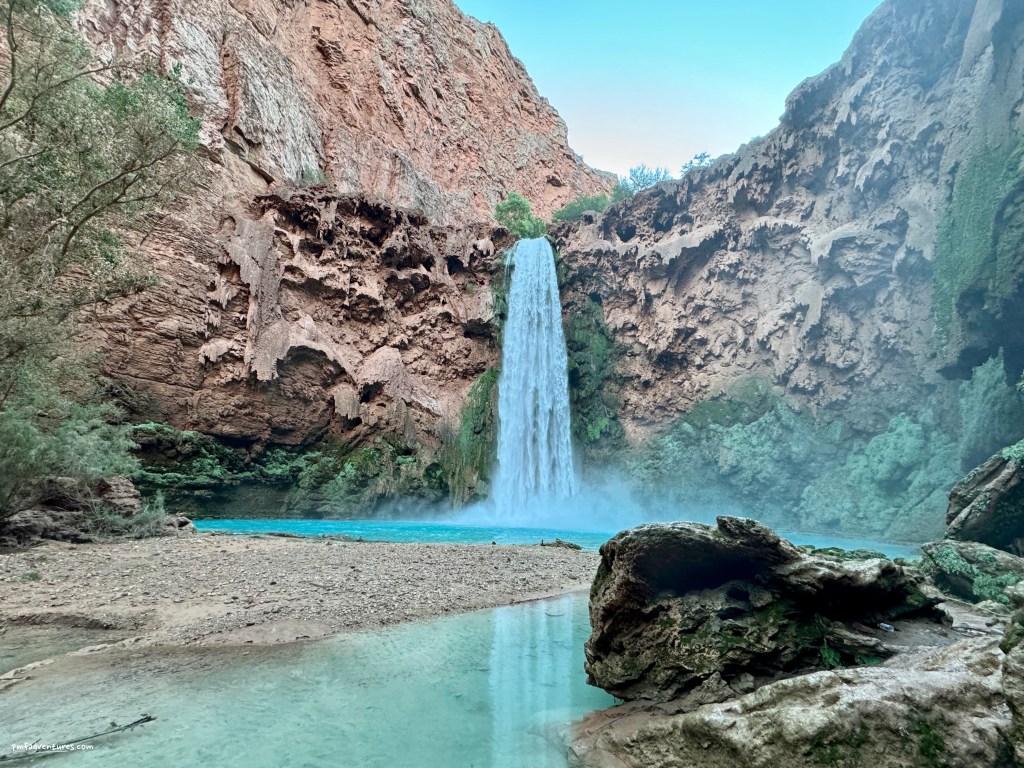

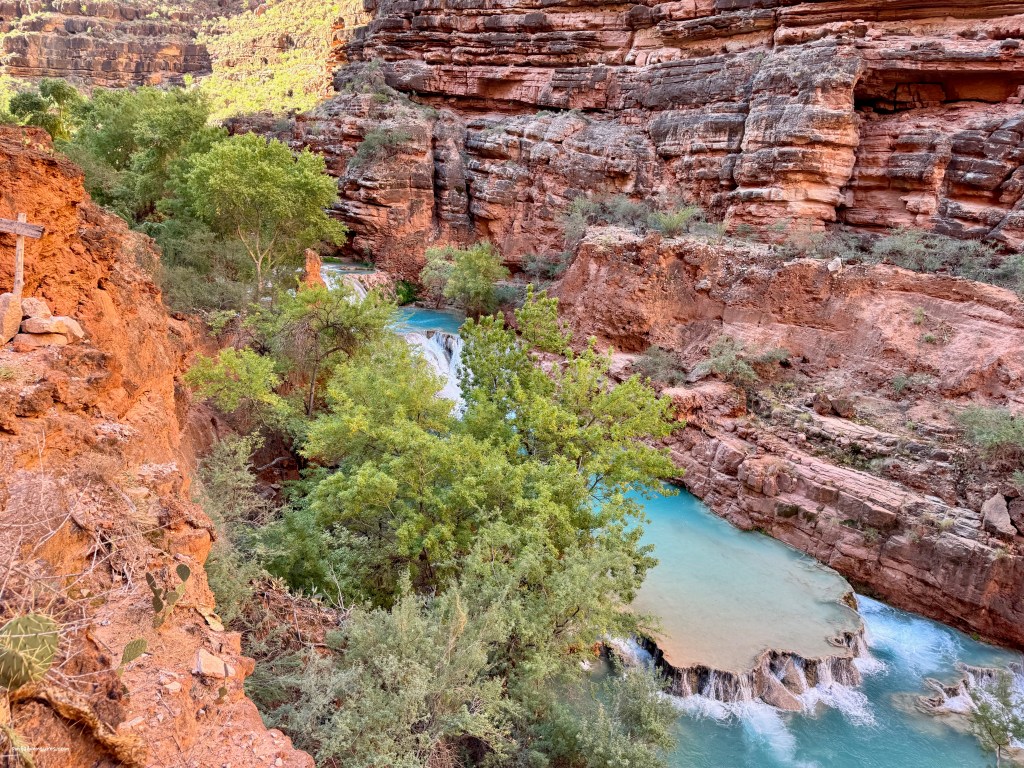





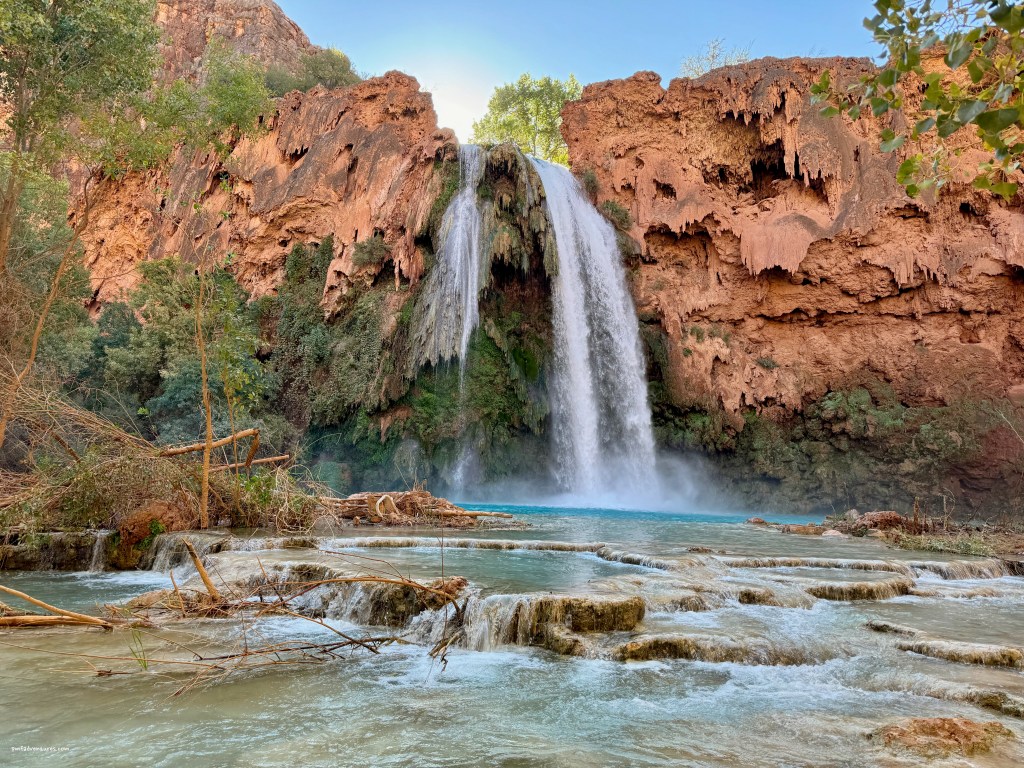
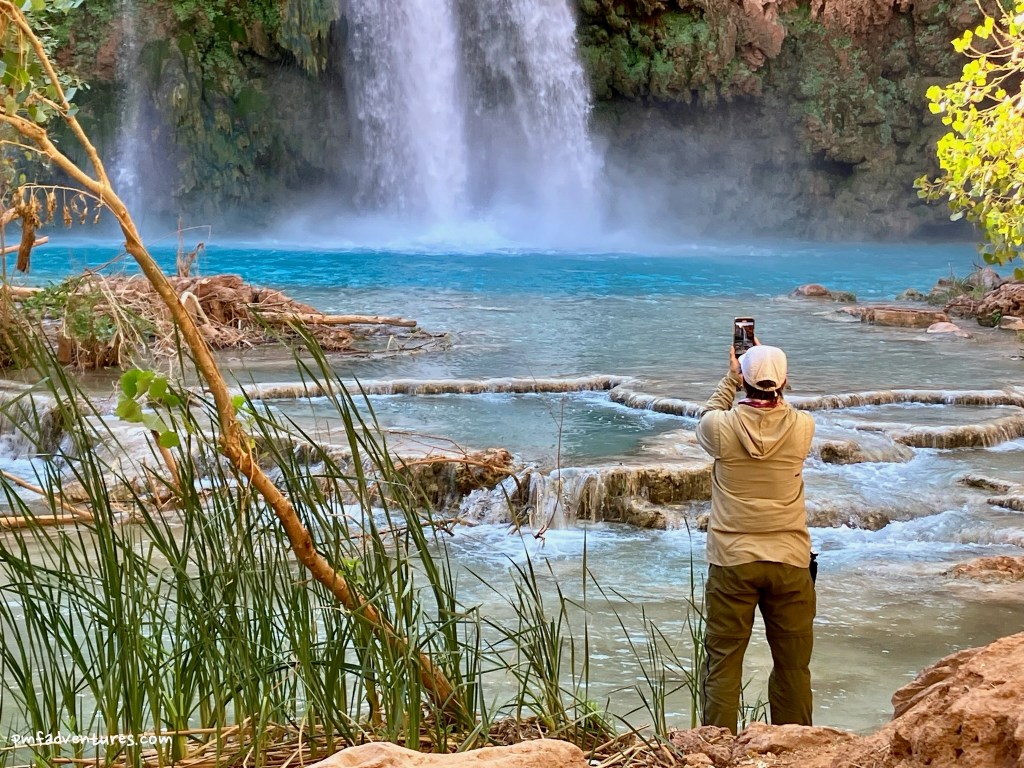
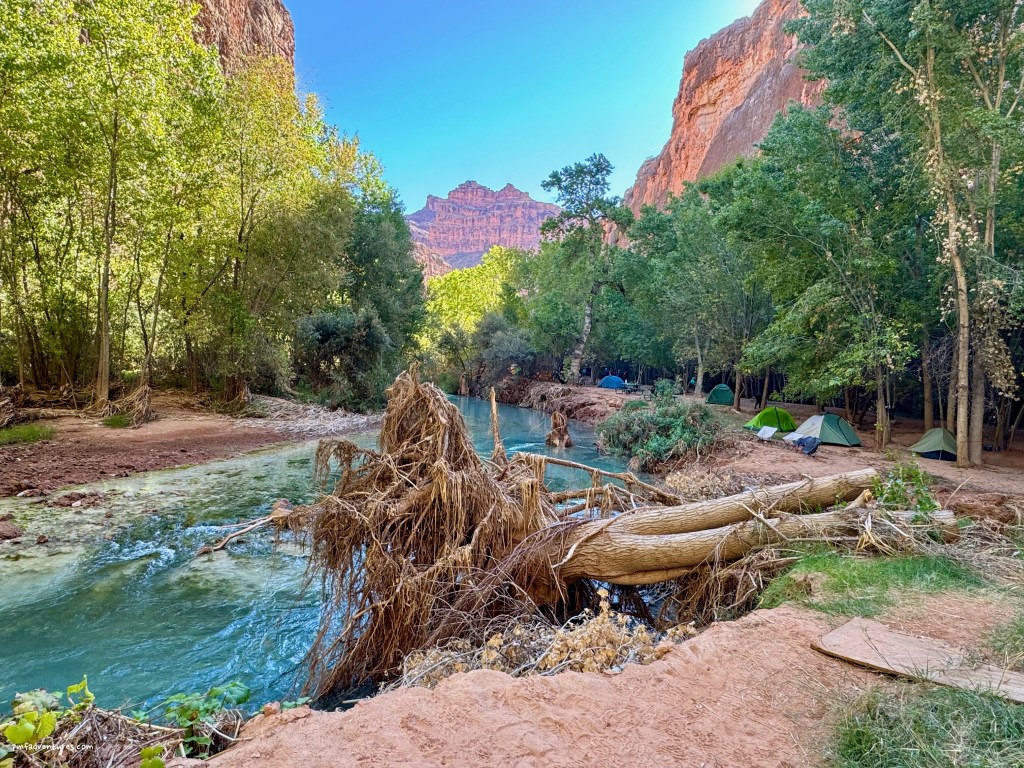
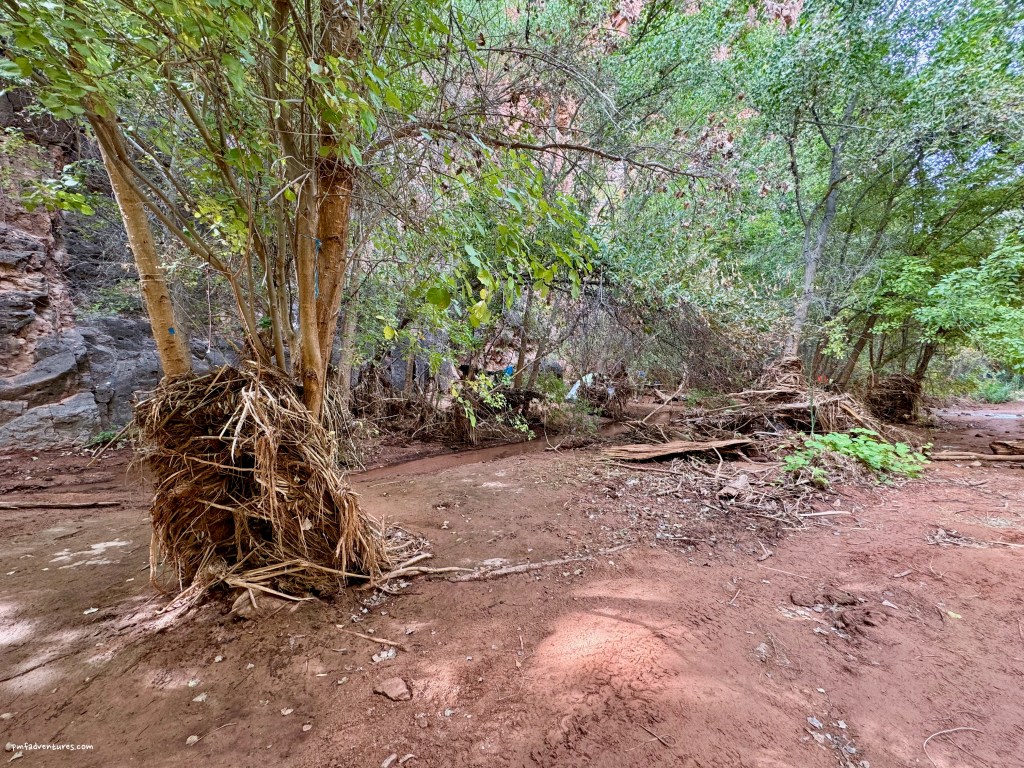
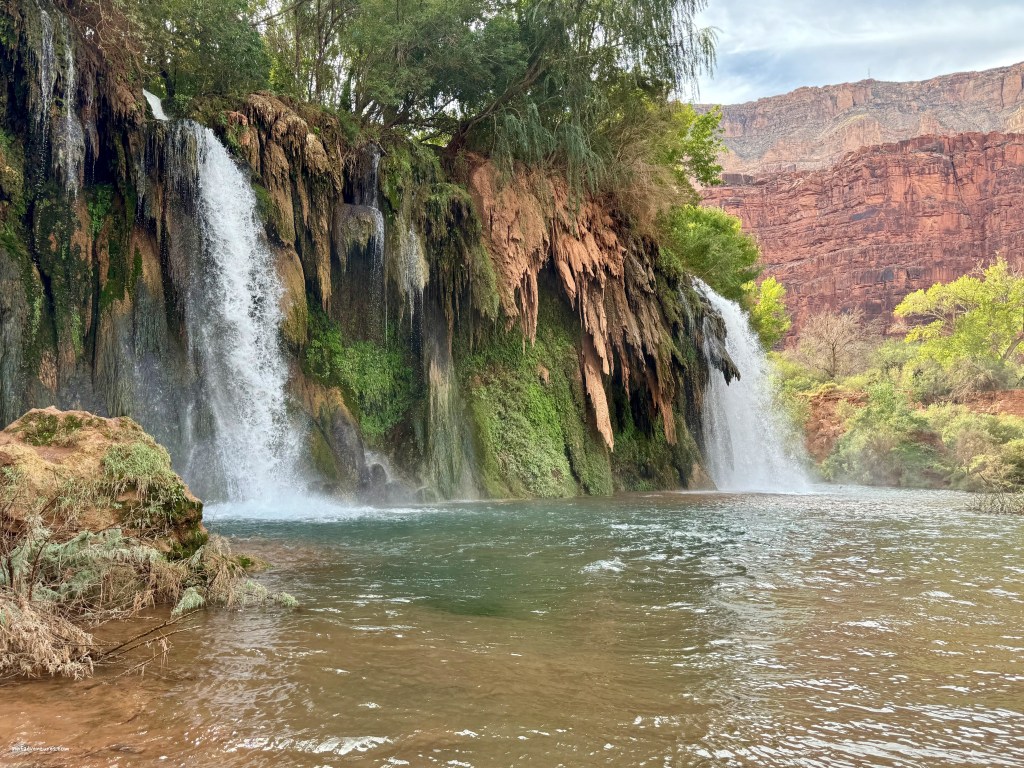
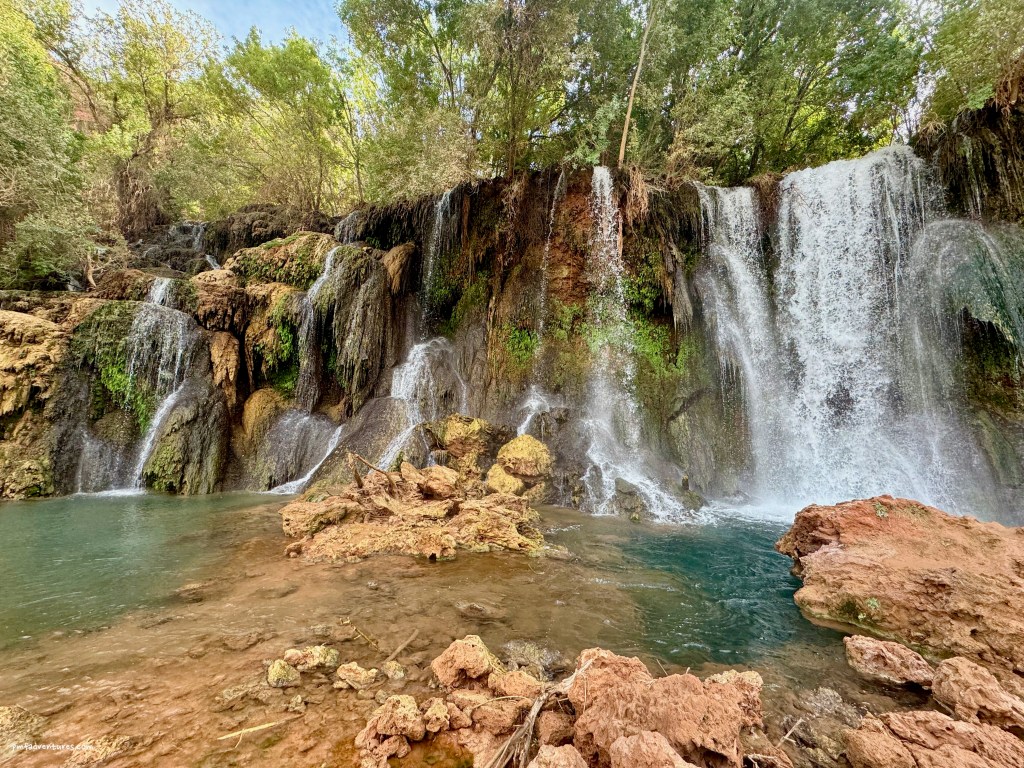
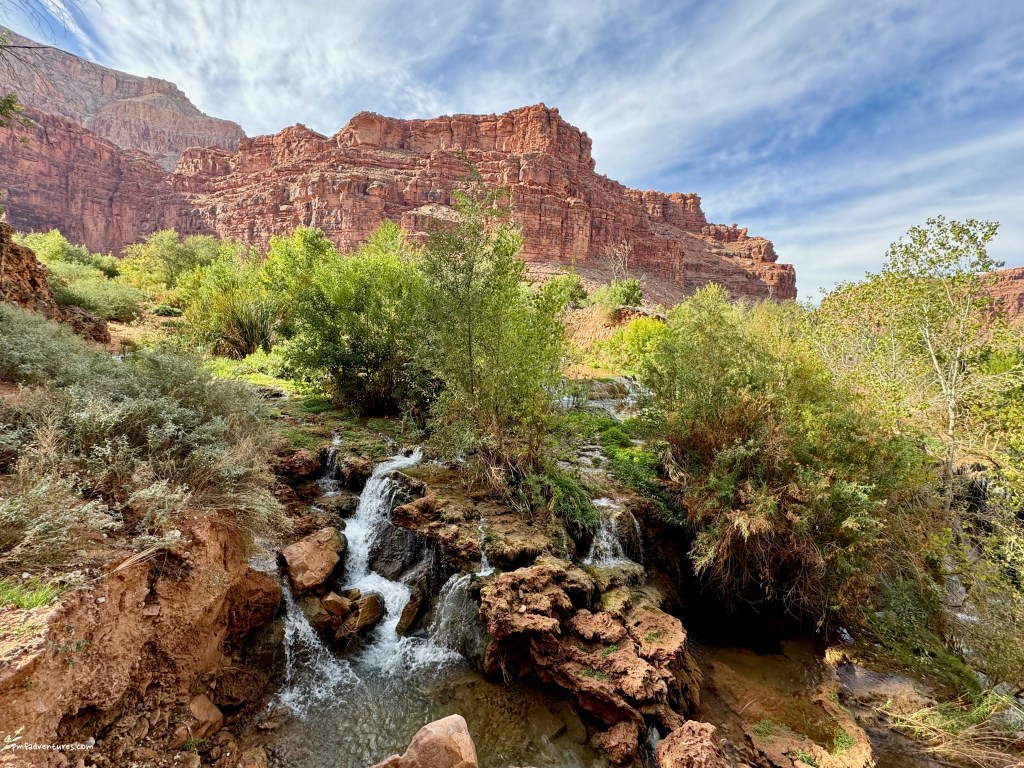
Day 3 (10/24/2024) – Exploring the Falls: After two days with early starts and lots of mileage, I was ready for a rest day! Day 3 started with a nice sleep in (until 7 AM) and then a leisurely morning watching the sun rise over the canyon walls and hit our campsite. We headed up to Havasu Falls around 9 AM, to get some photos before it was overrun by the masses. And then we wandered down to the other end of the campground, so that Sue could check out Mooney Falls. I didn’t think she’d be happy on the descent, so we just looked down on Mooney from the ledge before the first tunnel. After lunch, Sue hung out in camp while I headed back up the trail towards Supai village to check out the waterfalls that we had bypassed on our hike in — Hidden Falls, Fifty Foot Falls, and Navajo Falls. I also tried to capture a few photos that showed some of the debris and devastation left behind by the flash flood.
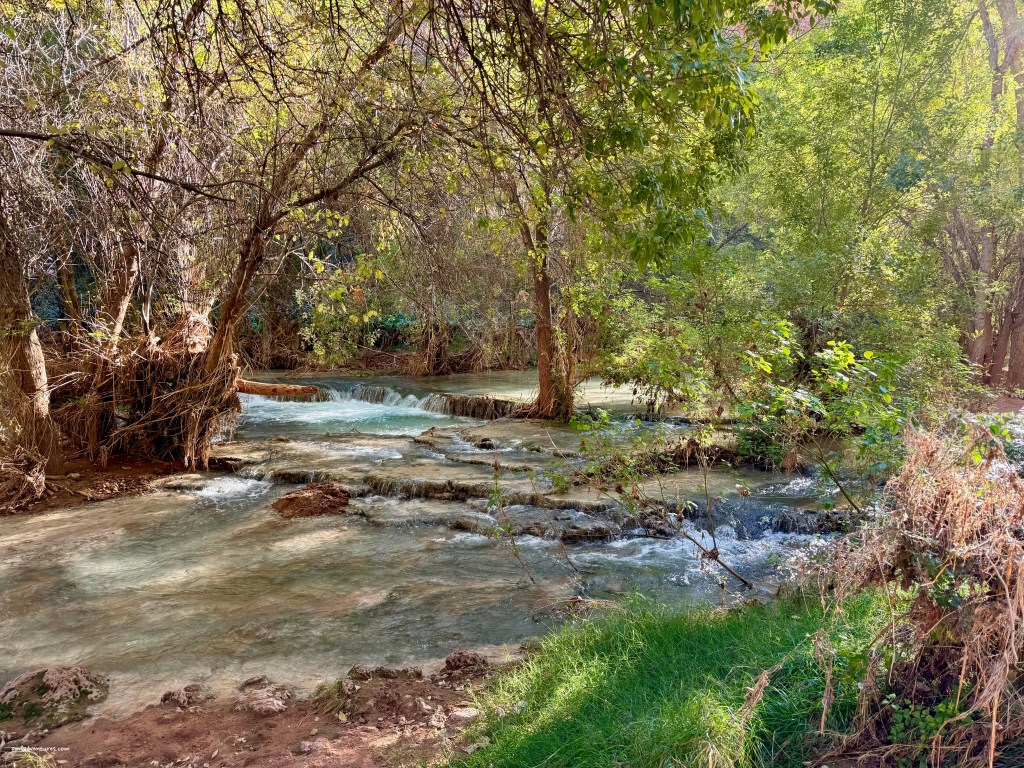
The blue-green color of Havasu Creek and its spectacular waterfalls are what make it so special. So here’s a brief explanation of the unique geology that’s at work in Havasu Canyon. When Havasu Creek emerges at Havasu Spring, it is saturated with calcium and carbonate that it has dissolved during its passage through the Kaibab and Toroweap Limestones. It is this huge load of dissolved minerals that gives the water its distinctive color. The water also produces a tremendous amount of travertine, which is a type of limestone deposit. Carbonate forms carbon dioxide when it is dissolved in water, and when this water loses pressure, such as when it is agitated by cascading over a dam, the carbon dioxide bubbles away (like when you open a soda) and travertine precipitates out of the water. The big waterfalls like Havasu and Mooney plunge over large travertine plugs that formed in the past and are slowly being eroded, while the constant movement of the water over debris creates the pools that you see in Havasu Creek.


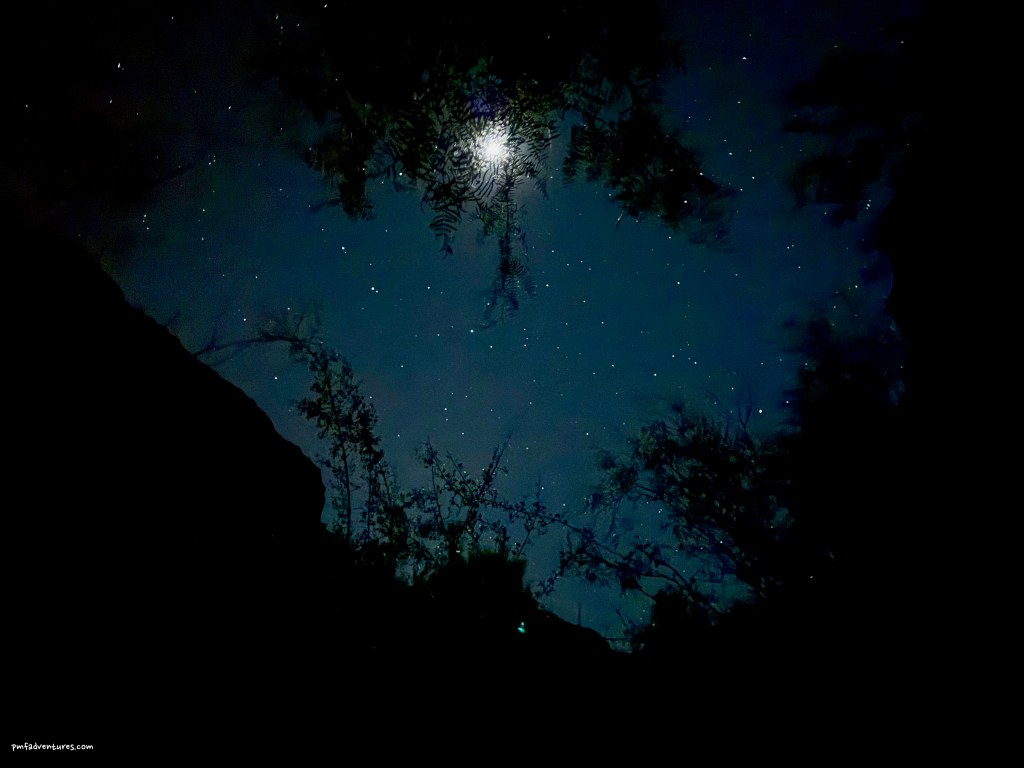
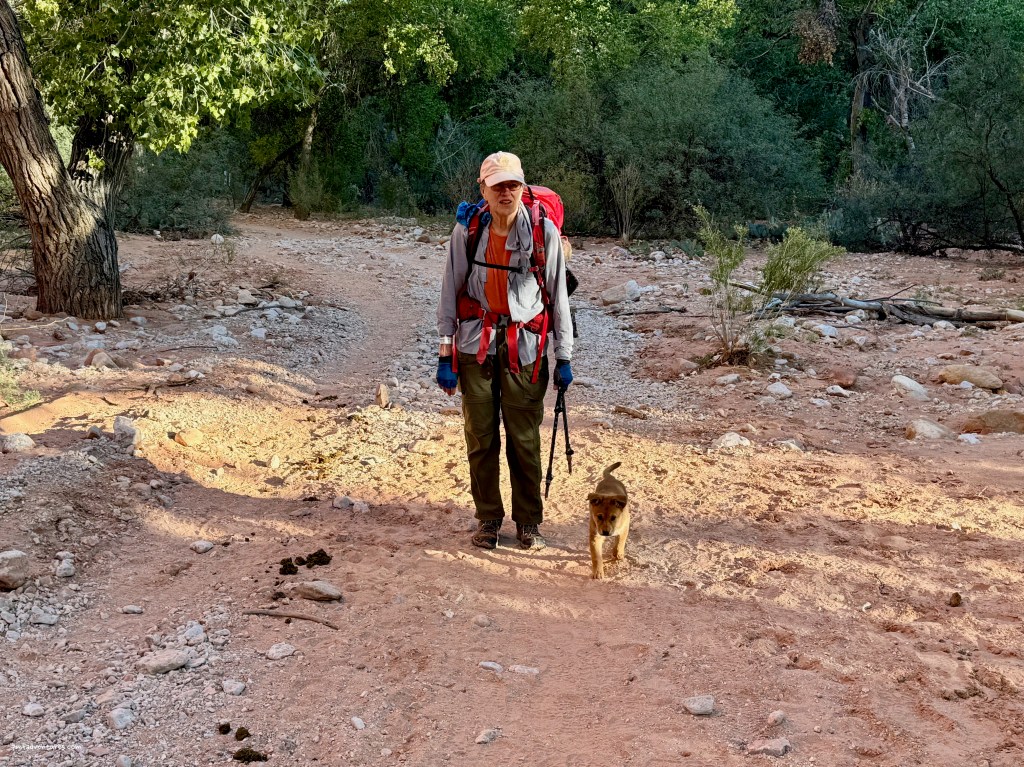
Day 4 (10/25/2024) – The Hike Out: We knew that the hike back out would be a challenge, with the steepest part in the last mile and a half when we would already be tired. And we also expected the last few miles to be quite warm, as we climbed out of Hualapai Canyon and on to the south facing switchbacks. So we planned to get up at 5 AM and be on the trail by 6:30. But we were both awake at 4:20, so we got up earlier than planned, packed up and ate breakfast by the light of the waning crescent moon. We started hiking about 6:15 and the initial climb up the Redwall past Havasu Falls was an abrupt awakening for our muscles. As we hiked through Supai village, kids were on their way to school and there was already quite a line to pay for a helicopter flight out. Shortly after leaving Supai, we got adopted by a cute rez puppy that hiked with us for about half a mile before it thankfully got distracted by a group of hikers heading into the village.
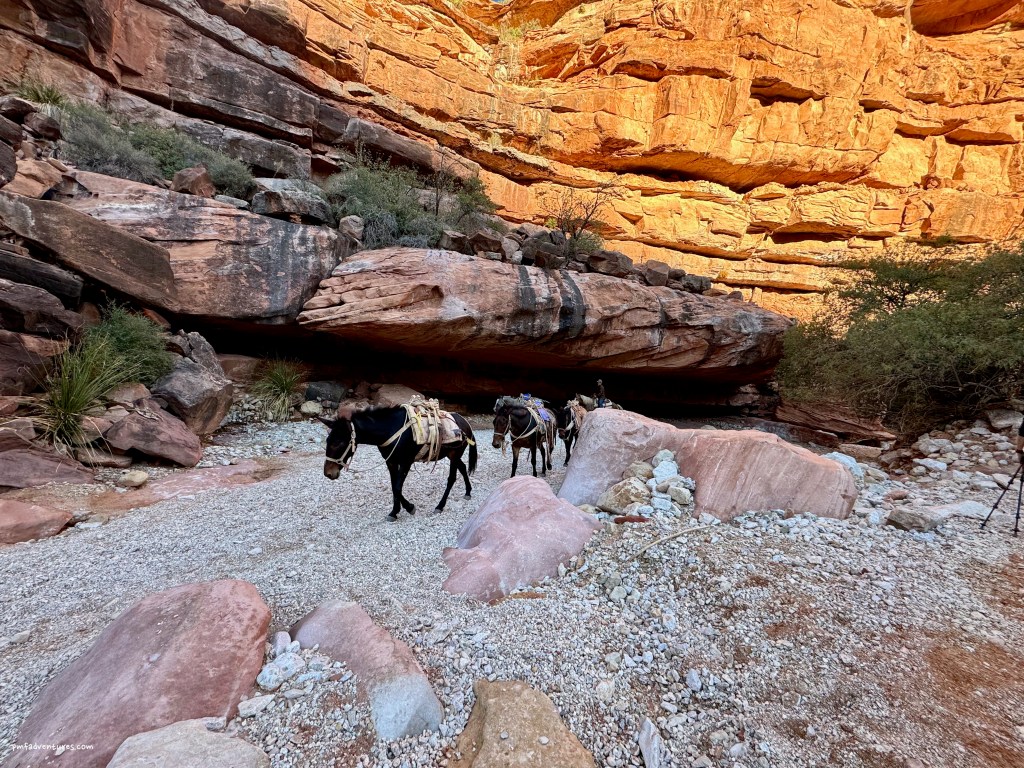
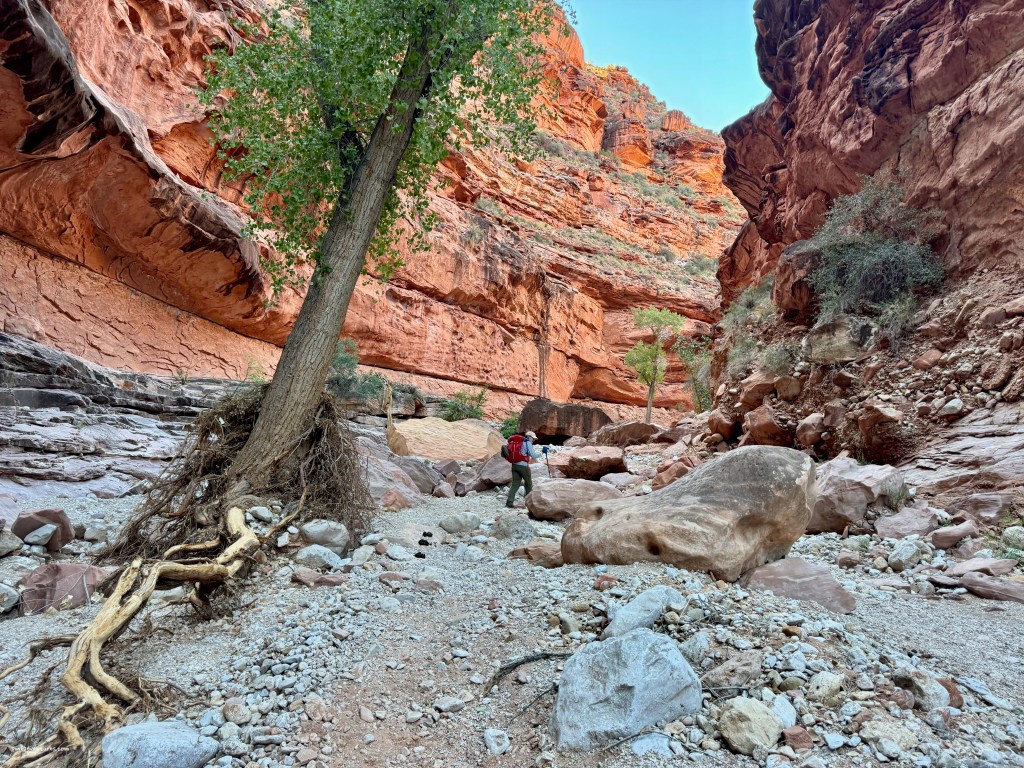
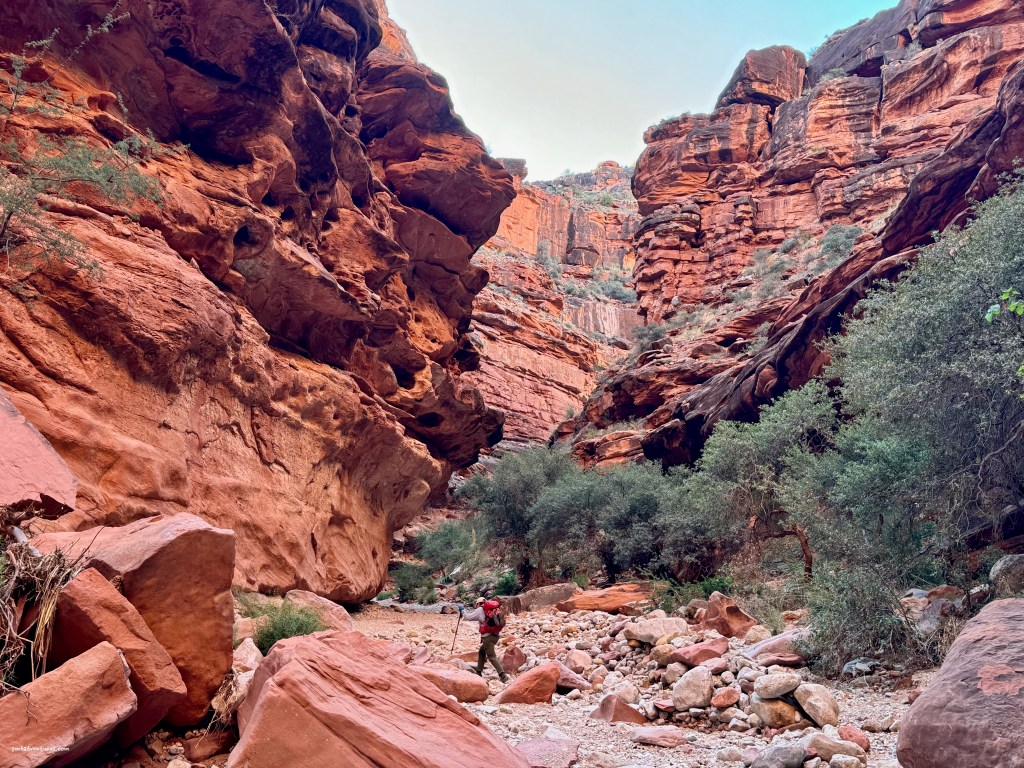
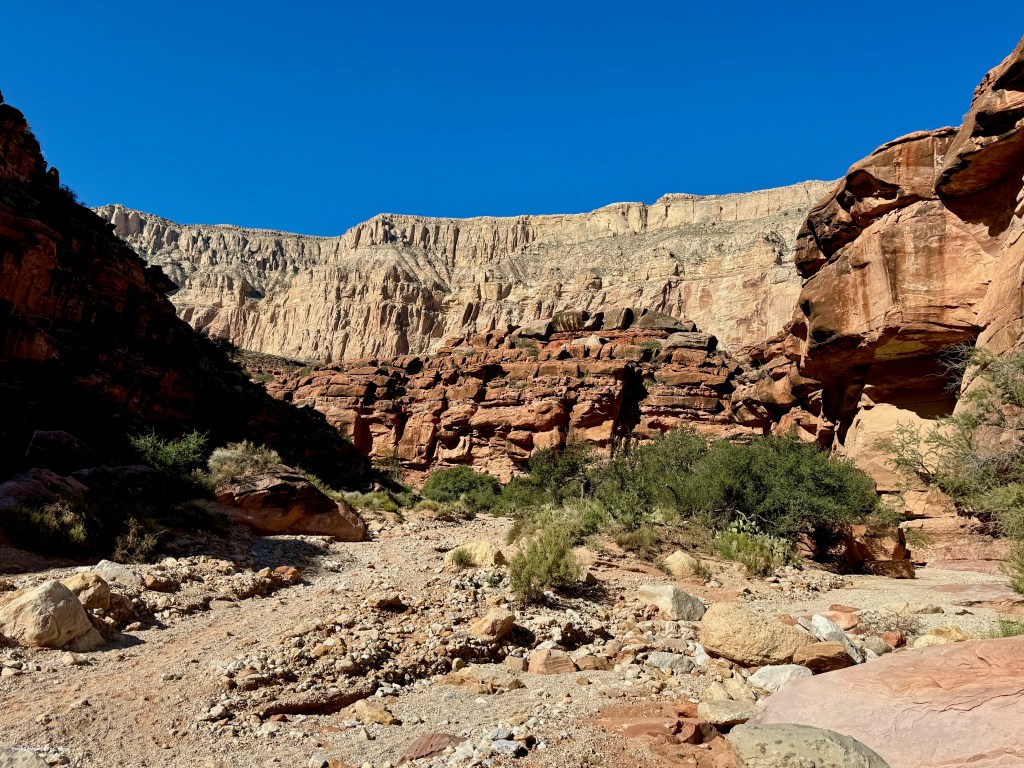
The hike up lower Hualapai Canyon was quite nice, as it was in the shade and the rock formations were a great distraction from the gradual ascent. We did have to step aside several times to let mule trains pass, not to mention the clueless groups of downhill hikers that didn’t want to yield the trail. It wasn’t until we got to the upper part of the canyon around 11 that we were consistently in the sun, but I was carrying an extra liter of water to pour on our shirts and that made all the difference. The climb up the long talus slope out of the canyon was quite a grind, but I was happier going up it than I had been going down due to all of the loose rocks. And by the time we got to the switchbacks, many of the corners were in the shade, which made for welcome rest breaks. We arrived at Hualapai Hilltop just before 1, elated to have been able to experience such an amazing place.

 PMF Adventures
Thanks Paula — I really enjoyed seeing these photos and reading about your trip. It is beautiful. I share your disdain for descending on loose rock!
I still, lazily, prefer watercraft adventures.
Best to you and Sue,
Maureen
LikeLike